In old age, conditions such as depression, anxiety, memory loss or confusion tend to appear differently than in young people. Sometimes family members notice the change — but do not know if it is natural aging, emotional overload or the onset of an illness.
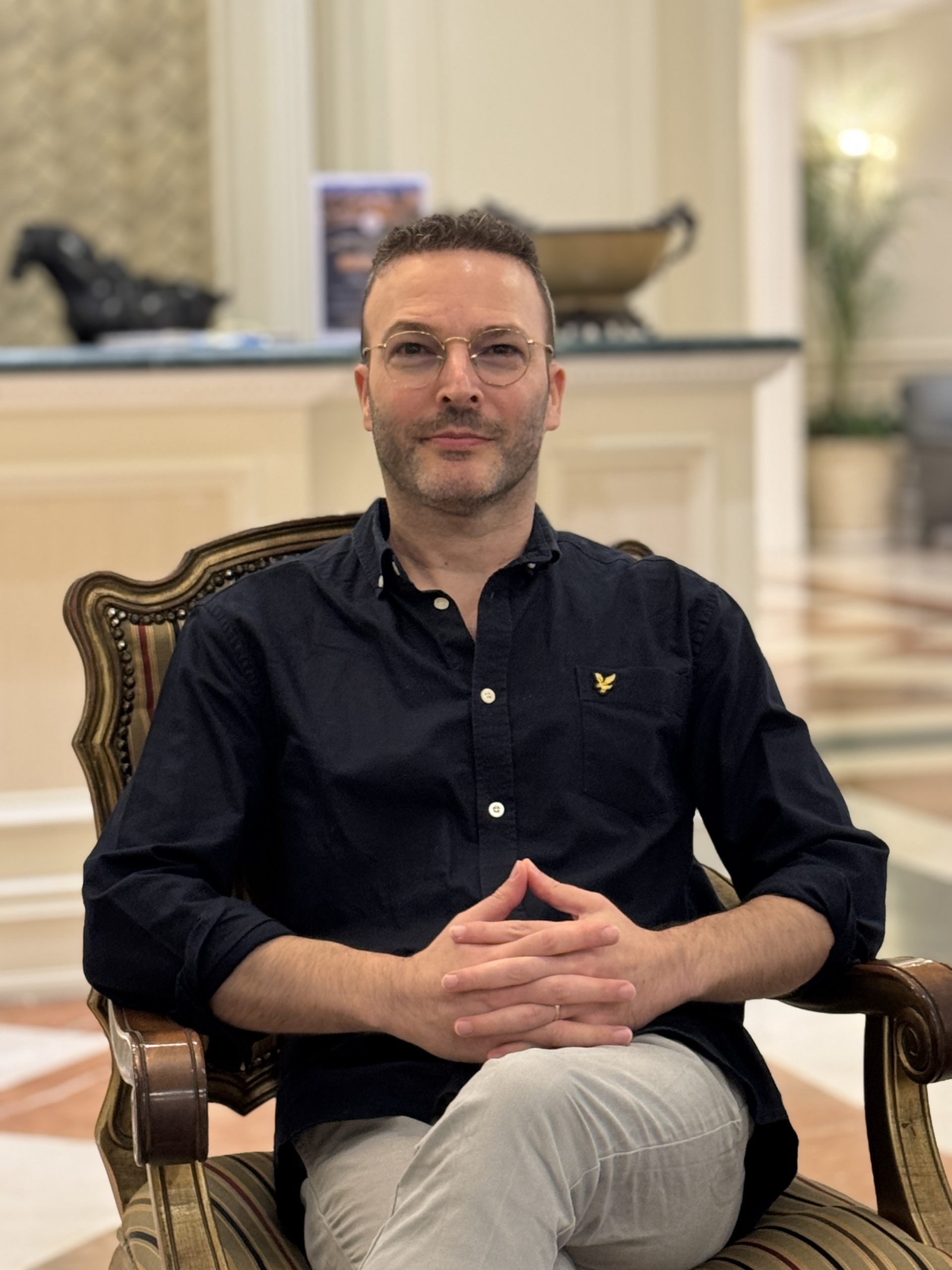
In the following written podcast, Dr. Dan Menaches, a psychiatrist specializing in psychogeriatrics, explains in depth and sensitively how to recognize symptoms, when to seek help, and what good treatment looks like in the elderly.
1. How do you recognize symptoms of depression in an elderly person who does not talk about feelings?
Depression in the elderly almost never looks like “I am sad”. It appears through the body: fatigue, decreased initiative, slowing down, physical complaints, withdrawal or loss of interest. A change in memory can also be depression and not dementia. You need to listen not only to what he says — but to what he has stopped saying.
Expansion – Dr. Menaches Dan’s words:
One of the biggest illusions in working with the elderly is to think that depression always looks like depression. In a young person, we expect to hear formulations like “I’m sad,” “I don’t feel like it,” “I feel worthless.” But in old age, emotion is translated into the body, into behavior, into silence. The elderly do not always speak the language of emotion; sometimes they speak the language of pain, of fatigue, of somatic (physical) complaints, of resignation.
Depression in the elderly is sometimes “silent depression.” It tends to appear through slowing down, withdrawal, lack of initiative, self-neglect, decreased eating or sleeping, and sometimes also through anxiety, irritability, or excessive preoccupation with the body and health. When a person says “I don’t have the strength to get up,” “What’s the point?”, or “I don’t want to be a burden,” it is not just a description of a physical condition, it is an expression of emotional distress.
What is special about depression in the elderly is that the emotional expression is replaced Sometimes in cognitive or physical expression. We see a decline in concentration and memory (“pseudo-dementia”), multiple physical complaints (“somatoform depression”), or a change in behavior (“he just became a different person”).
It is important to understand that emotional silence is not just “unawareness”, it is sometimes a defense mechanism of years. An elderly person who does not talk about feelings may have grown up in a generation where emotion was a weakness, or experienced losses throughout his life that forced him to “hold himself together” in order to survive. Therefore, when we ask him “How are you feeling?”, he may shrink. But if we ask “How are you today?”, “What has changed since your wife passed away?”, “What do you feel in your body when you wake up in the morning?” A subtle window will open to an inner world that is inaccessible to direct words.
Here too, my role is to translate. Understand that depression in adulthood does not speak in words, it is expressed in their absence. Sometimes it is precisely the silence, the indifference, the excessive order, or the difficulty in giving up control, that are the emotional expressions of pain.
Therefore, to recognize depression in an elderly person who does not talk about feelings, is to listen not to what he says, but to what he has already stopped saying.
2. Why does depression look different in older age?
In the third age, depression is less “dramatic” and more “off”: fatigue, slowing down, decreased desire, physical complaints, and apathy. This happens because of brain changes, underlying illnesses, losses, loneliness, and decreased mental resources.
Expansion – Dr. Menaches Dan’s words:
Depression in adulthood is not just that “white-haired” disease, it is an emotional state that is woven into an entire life story. To understand why it looks different, you need to look at a complex of changes – biological, psychological and social – that reshape the way a person experiences pain.
Biologically, the aging brain changes. Serotonin, dopamine and noradrenaline levels decrease, there are changes in the blood vessels and white matter in the brain, and sometimes damage accumulates as a result of medications or chronic diseases. This means that emotional regulation becomes more vulnerable, and that there is a large overlap between depression, cognitive decline and physical fatigue. Therefore, instead of “dramatic” depression with crying and despair, we sometimes see flat depression, with fatigue, decreased initiative, psychomotor slowing, which is a kind of “slow shutdown” of mental energy.
Deep down, there is a change in attitudes here Life. Aging confronts a person with questions of loss, of role, of control, of body, of meaning. Sometimes, the elderly person does not allow himself to feel depressed, because he has learned throughout his life that he must “hold on”, “not complain”, “not be a burden”. The emotion is blocked and finds an outlet in the body or in behavior. We see depression that is expressed in indifference, distance, quiet rage, or existential anxiety.
Socially, there is also a change in contexts. Loneliness, the feeling of uselessness, the transition from an active role to a role of “needy”, bereavement – all of these create fertile ground for depression. But again, depression does not express itself in crying but in giving up relationships, in disinterest, in saying “leave it, I don’t have the strength for this anymore”.
Therefore, one can think of old age as bringing a person together with his unconscious in a more direct way. When there is no work, when there are no social roles that protect him, contents that have been repressed for years emerge. Depression in old age can be, in a sense A certain, an attempt by the soul to digest what it has not digested in the past – guilt, loss, aggression, death anxiety. Sometimes it looks like fatigue; sometimes like stiffness; sometimes like silence.
Therefore, depression in the elderly is not only a pathological condition but also an existential story. It occurs against the background of an entire life, and it speaks a different language. To understand it, you need to know how to translate this language – the “it doesn’t matter”, the “leave me alone”, the “I’m fine” – into words of pain and hope.
3. Is medication appropriate at age 80?
Yes. Medication in the elderly is possible and safe — when it is personalized, at a low dose, and gradually. Depression in older age is not “normal” and can be significantly improved with the right treatment.
Expansion – Dr. Menaches Dan’s words:
The short answer is yes — but wisely, sensitively, and with great precision.
Age itself is not a reason to avoid treatment, but a reason to adjust it.
In an 80-year-old, the body and mind are in a delicate balance. The metabolic rate is slower, there is more sensitivity to side effects, more interactions between medications, and sometimes also cognitive decline that makes accurate reporting difficult. But on the other hand, the suffering is real, and the response to treatment can be dramatic and significant.
Depression in old age is not “normal” and it does not “go away on its own.” If an 80-year-old person sits at home, gets up in the morning without meaning, eats little, doesn’t go out, doesn’t talk, then this is an illness that requires treatment. And in many cases, the right medicine can change the quality of his life: restore his energy, interest, ability to communicate, and sometimes even improve cognitive function.
The psychogeriatric approach speaks of balance: combining medication with psychotherapy, between emotional therapy and support Family. The goal is not to “eliminate symptoms,” but to restore life.
We choose medications that are appropriate for the age – medications with a low anticholinergic profile, with less risk of falls or confusion, in graduated doses (“start low, go slow”) and with close monitoring.
But perhaps more important than the medication is the attitude towards the medication. At this age, there is a deep fear of dependence, of loss of control, of external intervention. Therefore, the therapist must know how to present the medication not as surrender, but as a bridge to a better life: “This is not a medication that replaces you, it only helps you rediscover your strengths.”
We can say that medication at age 80 is also an act of correction. It allows a person to age out of connection, not out of contraction. It does not “beat” the emotion – it sometimes releases it, allows the emotion to exist, the thought to be free, the connection to be renewed.
So the real question is not “Is the medication appropriate for age 80?” But “Are we willing to allow an 80-year-old person to feel alive again?”
4. How does loneliness affect mental health?
Loneliness in older adults is a significant risk factor for depression, cognitive decline, anxiety, and medical deterioration. It is not just about “lacking people,” but about a sense of disconnection and meaninglessness.
Expansion – Dr. Menaches Dan’s words:
Loneliness may be the “silent plague” of old age, but it is far more than a social condition – it is an existential, emotional, and even biological condition.
Loneliness is not just the absence of people around you, it is an experience of disconnection, of lack of resonance, of living without witness. An elderly person can be surrounded by children, caregivers, and grandchildren and still be lonely. True loneliness is the feeling that no one really sees me, that my words have no echo, that there is no point in sharing because “no one hears me anymore.”
Loneliness harms the sense of meaning and the sense of identity. When a person loses the roles that defined them – work, active parenting, relationships, they lose parts of their self. Loneliness then becomes a mirror that brings back to them the question: “Who am I now?” For some elderly people, this triggers a process of convergence, but for others, a feeling of deep emptiness, depression, and even cognitive decline.
Biologically, we know that loneliness is not only emotional – it is also physiological. It raises cortisol levels, damages the immune system, and increases the risk of dementia and early death. We could say that the human brain “shrinks” a little when it has no one to be with because connection is a basic biological need, not an emotional luxury.
Loneliness in the elderly sometimes touches a deep existential root: it brings a person together with their finitude, with the knowledge that they are left alone with their memories. It also has a dimension of mourning for what has been lost, for relationships that did not last, for versions of themselves that have been forgotten. Sometimes, such loneliness triggers depression; and sometimes it is actually existential anxiety because if no one sees me, do I still exist?
Clinically, we see that loneliness changes the emotional picture: it causes a decrease in motivation, passivity, to impaired sleep and appetite, to cognitive decline — and sometimes creates a vicious cycle: the lonelier a person is, the more they come together, and the more they come together, the lonelier they become.
But it is also important to say something human: Loneliness is not a fate. Even a small connection, a real dialogue, can change the course of an older person’s life. When a person feels that someone is truly interested in them — not just in their health, but in their story — something in them is reawakened.
Therefore, when we talk about mental health in old age, we are actually talking about connection. About the possibility of continuing to feel part of the world, even when body and mind change.
5. Is it possible to incorporate emotional therapy for the elderly?
Many in older age are more open than expected to emotional therapy — especially when a safe, gentle, and non-judgmental space is created.
Expansion – Dr. Menaches Dan’s words:
Absolutely — not only is it possible, but sometimes it is one of the most significant things that can be offered.
The basic premise that “old people no longer change” stems from an old perception, which confuses cognitive decline with mental inflexibility. But precisely at this age, when social masks fall off, when a person looks at their life in a summary view, space is made available for a real emotional touch.
Emotional therapy in older age allows a person to process entire chapters of their life that have so far been repressed or remained unresolved — losses, parental relationships, identity questions, death anxiety. There is a feeling of “this is the last chance to make peace with myself.” More than once, therapy at the age of 80 is a treatment of kindness, of late healing, of reconciliation.
It can be said that old age creates unique conditions for emotional depth. When there is no longer a need to “prove,” one can feel. When the body weakens, sometimes the mind opens up. Often, precisely at this stage there is a greater readiness for contact with Vulnerability, with guilt, with dependency – substances that were threatening at a younger age. Therefore, emotional therapy in older age is sometimes no less profound, but simply quieter, softer.
Clinically, it is of course important to adjust the type of treatment: sometimes short-term and focused treatment, sometimes dynamic supportive therapy, and sometimes CBT or combined therapy with a family member. Some patients enjoy a fully verbal process, and others connect specifically to non-verbal emotional therapy – art, music, movement, presence.
And finally, emotional therapy at this age is an expression of faith in a person – a belief that even at the age of 90 it is possible to feel, change, grow. This is a healing message in itself. It is not just about “therapy”, but an encounter that restores a sense of vitality, value and meaning.
We can say that emotional therapy in the third age is not treatment “despite old age” – it is treatment from within old age: from the understanding that aging is not the end of the story, but an opportunity to deepen the story.
6. How can you help an elderly patient who refuses hospitalization?
Refusal almost always stems from a fear of losing control, fear of the unknown, and a sense of loss of dignity. The way to cope is through listening, gradual explanation, adapting alternatives, and building trust.
Expansion – Dr. Menaches Dan’s words:
Resistance to hospitalization in old age is not necessarily a “problem”, sometimes it is a deep expression of the need for identity, control and respect. For a person of eighty or ninety, hospitalization is not just a medical event; it is also a symbol of loss of freedom, of the end of the road, of becoming someone who makes decisions for someone who is decided upon.
Therefore, the first step is not to break the resistance, but to listen to it. Understand what hospitalization means to the patient. Some are afraid of pain, some are afraid that they will “not come home”, some feel that the moment they cross the threshold of the ward they no longer belong to the living world. Sometimes resistance is the person’s last way to feel that they have a voice.
In addition, refusal to hospitalization can be an expression of an internal struggle between the dependent self and the autonomous self. As the body weakens, deep anxiety arises around dependence and hospitalization is experienced as a total surrender to this dependence. Sometimes the dialogue around refusal is a therapeutic moment in itself in which the person He experiences that his wishes are respected, that even in his condition he has a choice.
From a clinical perspective, there are several guiding principles:
- Understand the medical and psychological background – does the resistance stem from rational fear, cognitive decline, depression, delirium, or simply a need for control?
- Build trust – speak at eye level, explain what is expected, share decisions, even in small details (“Which ward would you prefer?”, “What is important to you that they take from home?”).
- Offer alternatives – sometimes day hospitalization, home supervision, or a temporary rehabilitation setting can be an interim solution that reduces anxiety.
- Involve the family, but also protect the patient’s independence. When family members pressure, he sometimes clings to refusal even more, precisely to maintain a sense of control.
Only when there is a real risk to himself or others is the possibility of forced hospitalization considered – but even then, it is important to remember that this is always a last resort, and that the goal It is rehabilitation, not control.
But perhaps the central message is different: an elderly person who refuses hospitalization asks to be recognized for his humanity. That he is still a thinking, feeling person, with a will, even if that will is not “comfortable.” Sometimes the way to help him is not to force, but to stay by his side to listen, to calm, to hold the fear together with him, until one more step is possible.
We could say that the real test of medicine in the third age is not how much we managed to treat – but how much we managed not to harm the person’s dignity when we tried to save him.
7. What to do when you have anxiety after hospitalization or illness?
After a serious illness, many experience existential anxiety: fear of worsening, fear of being alone, anxiety or restlessness. Emotional care and support restore a sense of control.
Expansion – Dr. Menaches Dan’s words:
After hospitalization or a serious illness, many people experience a sense of anxiety, sometimes with intensities that surprise even them. It is not just a fear of the illness itself, but something deeper: the fear of being vulnerable. In adulthood, a physical illness is not just a medical event, it is an existential shock that reminds a person of the fragility of life and dependence on others.
Psychologically, this anxiety stems from a clash between two forces: on the one hand, the desire to return to routine and control life; on the other, the knowledge that there is no longer complete control. The body, which was once taken for granted, suddenly becomes a source of uncertainty. Every feeling of a pulse, every small pain arouses fear of worsening, of death, of the next hospitalization.
From a deep internal perspective, one can think of this anxiety as “dissolution anxiety” – the fear that the body is no longer protecting me, that the self is dissolving. Sometimes this is expressed in excessive attachment to family members, And sometimes in complete denial, pretending that “I’m fine.” These two extremes — clinging and denial — are different ways of dealing with the same existential fear.
Clinically, it is important to know how to recognize this anxiety, because it can be missed. Sometimes it looks like restlessness, insomnia, loss of appetite, avoidance of medical tests, or depression. Sometimes it leads to specific fears – leaving the house, being alone, being away from the hospital (“What if something happens to me again?”).
What can be done?
- Legitimize – explain that anxiety is a natural response to physical trauma, and that “being strong” does not mean “not being afraid.”
- Restore a sense of control – through a daily routine, gentle physical activity, setting small goals (“Today I will go outside for five minutes”).
- Treat the anxiety itself – through supportive psychotherapy, CBT, relaxation techniques, and sometimes short-term medication Range.
- Strengthen the support system – family members, support groups, or an ongoing therapeutic relationship that creates a sense of continuity and security.
In conclusion, we can say that anxiety after an illness is the soul’s attempt to digest the new vulnerability. It is not an enemy but a call for readjustment, an invitation to be in touch with the body again, but this time from a place of compassion rather than control. And sometimes, it is precisely from this anxiety that a new insight is born: that life is not taken for granted, and that even at the age of 80, it is possible to feel anew the value of each day.
8. Can exercise replace medication?
No. Exercise is very important, improving mood and memory — but in major depression it is often not enough without medication support.
Expansion – Dr. Menaches Dan:
Exercise is perhaps one of the most effective and available medicines we have, but it is not a complete substitute for drug treatment, but an integral part of a comprehensive approach to mental health in older age.
We know today from many studies that exercise affects the brain no less than the muscles: it increases serotonin, dopamine and norepinephrine levels, improves blood flow to the brain, increases neurogenesis in areas such as the hippocampus, and improves sleep quality, concentration and emotional regulation. It also strengthens the sense of control – a critical component in recovery from depression and anxiety.
But there is an important difference: exercise is a powerful but slow treatment that depends on motivation. It is excellent for prevention, maintaining improvement, and reducing medication doses. But in an elderly person with significant depression, with lack of energy, decreased appetite, guilt or thoughts of death, it will be difficult to build a process of exercise without pharmacological support Initial.
Therefore, we can say that the medicine restores the strength to start and the physical activity restores the desire to continue. The medicine restores the person’s ability to get out of bed; the physical activity helps him feel alive again.
Therefore, in psychogeriatric work we do not ask “medicine or physical activity?” but “How do we combine them correctly?”
Sometimes you start with a low dose of medication to allow a window of energy to open; then you add short walks, movement groups, and physical therapy with an emotional dimension, so that the body becomes an ally again and not an enemy.
Ultimately, physical activity in adulthood is not just “exercise”; it is a language of living, of presence, of returning to the body and life. But when it comes to significant depression, there is no reason to burden an older person with the demand that they “cope alone through movement.” Sometimes biological help is needed to restore the ability to even want to move.
So no, physical activity does not always replace medication, but it certainly heals what medication alone cannot: the sense of meaning, connection, and aliveness.
9. How does sleep deprivation affect mood?
Fragmented or insufficient sleep causes increased anxiety, decreased emotional regulation, cognitive fatigue, and sometimes worsening depression.
Expansion – Dr. Menaches Dan’s words:
Sleep is not just rest, it is a biological and emotional act of healing.
When we sleep, the brain “cleanses” itself of metabolic toxins, organizes memories, and regulates emotions.
Therefore, when there is no sleep, there is no regulation. There is no processing. There is no relaxation.
In older age, sleep becomes more fragile, there is less deep sleep, more awakenings, sometimes also the use of medications or underlying diseases that interfere with the cycle of wakefulness and sleep. But this lack is not just technical: it directly affects mood.
Biologically, lack of sleep causes changes in the dopamine, serotonin, and cortisol systems. Cortisol levels rise, and over time a cycle of hypervigilance is created – the body is “on guard”, the mind does not relax, and every small emotion intensifies. Studies show that lack of sleep increases the risk of depression, anxiety, and even cognitive impairment.
Psychologically, sleep is a kind of “A boundary between today and tomorrow.” When a person does not sleep, this boundary blurs – time gets mixed up, the existential experience becomes untenable. In the elderly, this may manifest itself in nervousness, irritability, easy crying, a sense of hopelessness, and sometimes even in pessimistic thoughts or existential anxiety (“I can’t sleep, maybe something has broken in me”).
In addition, sleep symbolizes a release of control, falling asleep, disappearing temporarily. In older people, especially after periods of loss or physical trauma, there is sometimes a latent anxiety about releasing this control. Lack of sleep then becomes a defense mechanism: “If I sleep, I may not wake up.” Therefore, sometimes behind insomnia lies a fear of death or fear of being alone.
Clinically, we see that lack of sleep can be both a symptom of depression but also a factor that worsens it. It is a self-feeding cycle: depression impairs sleep, and impaired sleep intensifies depression. Therefore, in psychogeriatric treatment Quality, addressing sleep is an integral part of mood treatment.
And what can be done?
- Improve sleep hygiene – regular hours, exposure to daylight, reducing caffeine, a regular bedtime ritual.
- Treat physical factors (pain, restless legs syndrome, sleep apnea).
- Use sleep medications with caution – especially those that do not impair cognition.
- And in many cases — treat the depression itself: when thoughts calm down, sleep also returns.
And finally, we can say that when an older person starts to sleep again, he actually starts to believe in the world again. Sleep restores a sense of inner security, that the night will pass and there will be tomorrow.
10. Should the family be involved in treatment?
Yes — but in a sensitive way. The family sometimes sees things that the patient does not, but the patient also needs to maintain autonomy.
Expansion – Dr. Menaches Dan’s words:
Absolutely – but in a smart, sensitive and adapted way.
In old age, the person is not just a “patient”, they are part of a complex family fabric in which every therapeutic step touches on old relationships: between parent and child, between patient and spouse, between control and dependence.
The family is a vital source of information: it sees the changes in functioning, sleep, appetite, behavior. Sometimes the patient himself downplays the symptoms or has difficulty describing them. Family members help to understand the course of the disease, the routine, the level of risk and the support network.
But beyond information – the family is also part of the treatment itself.
When we treat an 80 or 90-year-old person, we are actually also treating a daughter, a husband, a grandson – anyone who carries with them the anxiety of loss, the feeling of burden, the guilt (“I don’t do enough”) or the difficulty of parting with old roles.
Therefore, in treatment, the therapist is required to also include the pain of The children who are slowly losing their parents, and also the need for the parent to maintain autonomy.
Involving the family in treatment is not only about sharing medical information with them, but also about helping them go through an emotional process: acknowledging the parent’s vulnerability without taking away their dignity.
However, it is important to remember that family involvement should be tailored to the patient’s wishes. Sometimes, protecting their privacy is more important to them than anything else. In such cases, our role is to find the golden path: maintaining a therapeutic alliance with the patient, while gradually building trust with the family.
From a therapeutic perspective, when a family participates in treatment, the results are almost always better: there is less loneliness, fewer dropouts from treatment, and a greater sense of security. Family members also learn how to support without suffocating, how to listen without correcting, and how to be part of the recovery journey and not the cycle of anxiety.
Finally, treatment in the third age is a rare family opportunity: it allows for the correction of old dialogues, unspoken statements, and the softening of decades-old anger. Sometimes, the very The family conversation around the table with the therapist is a moment of kindness in which we rebuild a bond that has eroded over the years.
Therefore, yes – it is worth involving the family. Not only to “help with the treatment,” but to turn the treatment itself into a space where the family relearns what it means to be together, even when the body weakens but the bond remains.
11. What is the difference between depression and mental exhaustion?
Exhaustion is emotional exhaustion; depression is a deeper medical condition. Exhaustion improves with rest, while depression does not improve without treatment.
Expansion – Dr. Menaches Dan’s words:
Depression is an illness; mental exhaustion is a human reaction.
But in clinical reality, the line between them is thin, and sometimes passes through the patient’s personal story.
Depression is a medical-psychiatric condition characterized by a change in the functioning of brain systems related to motivation, emotion, and thinking.
There is a significant decline in mood, loss of interest and pleasure, impaired sleep and appetite, slowing down or psychomotor restlessness, guilt, decreased energy, and sometimes thoughts of death.
This is a state in which the mind is no longer able to recover on its own even when circumstances improve.
The world is experienced as dull, colorless, and hopeless.
In contrast, mental exhaustion (or in popular parlance “emotional burnout”) is a response to prolonged effort – physical or emotional. It occurs when a person gives more than they can handle over time – in caring for a sick loved one, in emotional overload, or in coping with Loss.
In exhaustion, the person is tired, impatient, drained, but there is still a spark in them.
If they are given rest, support, a vacation, a conversation, something begins to awaken.
In depression, on the other hand, even when they rest, the fatigue remains. Even when everything is fine, something inside does not lift.
We can say that exhaustion is a state in which the soul is worn out from holding on to the world but there is still movement in it.
Depression is a state in which movement itself stops: the soul folds in on itself, sometimes around a sense of loss, failure, or damaged self-worth.
In exhaustion, there is another tired “I”; in depression, sometimes the “I” itself disintegrates.
Clinically, there is also a difference in treatment:
- In exhaustion, we work on restoring strength – sleep, rest, boundaries, strengthening support, physical activity, reconnecting with meaning.
- In depression, we need to restore the system to biological and emotional balance – sometimes through medication, structured emotional therapy, and sometimes also close monitoring to prevent suicide.
Also, important Know that many times, prolonged fatigue that is not treated can deteriorate into real depression. Therefore, listening to burnout, to apathy, to “I have no more strength” – is not only support, but also early prevention.
And finally, we can say this:
In mental exhaustion – the person is tired of life; in depression – he no longer finds meaning in it.
And within this subtle difference lies all the compassion in our work: knowing when to offer rest and when to reach out and light the way back to life itself.
12. Are newer drugs also safer in older age?
Not necessarily. It’s not “new” that matters — it’s what’s physiologically and psychologically appropriate for the patient at that age.
Expansion – Dr. Menaches Dan:
Not necessarily – they are different.
Usually, newer drugs are indeed designed to be more targeted, with fewer classic side effects, fewer interactions, and sometimes a “cleaner” mechanism of action. But that doesn’t always mean they are safer, certainly not in the elderly, where the body is much more sensitive to any change.
In old age, the metabolic system changes: the liver and kidneys break down drugs more slowly, the volume of fluids in the body is smaller, and the brain is more sensitive to neurochemical effects. Therefore, even a drug that is considered “gentle” in young people can cause confusion, falls, or cognitive deterioration in an elderly person.
Clinically, when choosing a drug in the elderly, we ask less “what is newer” and more “what is safer and more appropriate.” There are older drugs that are considered preferred at this age – not because they are new, but because we know their profile, risks, and benefits well. On the other hand, very new drugs are still Lack of many years of experience in the geriatric population.
From a psychogeriatric perspective, the real question is not just “which medication is more up-to-date,” but how well it is adapted to the specific person.
For example, a person with cognitive decline – we would prefer to avoid medications with an anticholinergic effect.
A person with a tendency to falls – we would avoid sedative medications.
And a person with depression and anxiety – we would choose a medication that treats both without harming appetite or blood pressure.
We could say that the “best medication” is the one that manages to touch the soul without harming the body – and vice versa.
Drug treatment in the elderly is not only pharmacology, but also a therapeutic statement: “We still believe in your ability to get better.”
Therefore, yes – new medications are sometimes more convenient, but the safest are those that are chosen carefully, in the right dosage, and within an ongoing therapeutic context.
13. How do you deal with feelings of worthlessness in old age?
Expansion – Dr. Menaches Dan:
The feeling of worthlessness in old age is not just a passing emotion – it is an existential experience of a person who feels that the world has already moved on, and that he has been left behind. It is born from a combination of external and internal changes: the body weakens, roles disappear, children are busy, and society itself glorifies youth, productivity and beauty. In the midst of this, the older person may ask himself – “What do I actually have left to give?”
Psychologically, the feeling of worthlessness stems from the collapse of identity systems. Everything that held the sense of self – work, parenthood, physical ability – is undermined, and sometimes there is still no new identity to take its place. The person may feel unnecessary, transparent, or a burden.
The treatment here is not just about restoring “employment,” but about building a new meaning, a meaning that is not based on doing, but on presence.
Beneath the surface, worthlessness is sometimes an expression of grief for what was not done. But for who I was, for what did not happen, for a life that passed too quickly. Coping then requires courageous emotional processing, not to “encourage,” but to allow the person to grieve, to acknowledge the loss, and from that to reconnect with the life that is.
This is perhaps one of the profound tasks of old age: to move from the question “What am I worth?” To the question “What is left for me to be?”
Instead of a value measured in productivity, a value is built that is based on presence, on listening, on wisdom, on transferring knowledge, on an existence that adds meaning to others.
When an older person feels that they are being listened to, that their opinion is asked, that they are influential, the value returns.
From a therapeutic perspective, the intervention combines several levels:
- Emotional therapy that allows for the processing of losses, strengthening self-worth, and creating a complete life narrative.
- Valuable social activity – volunteering, teaching, accompanying young people – anything that restores the person’s sense of need.
- Family dialogue – in which children learn to see the parent not only as someone in need of help, but as a life partner.
- And sometimes also gentle medication, when the lack of value stems from depression that has lost its ability to heal itself.
And finally, we can say this:
Coping with a feeling of worthlessness in old age is not “restoring value,” but discovering new value.
A value that is not measured by what the person does, but in what he is present, feels and shines for others, even if silently.
14. How to maintain hope even in old age?
Hope at this age is not an illusion, but the ability to see meaning even when things are already complicated. Human connection restores the feeling of aliveness.
Expansion – Dr. Menaches Dan’s words:
Hope in the third age is not a naive hope that “everything is still ahead of me” but a mature, sober hope that understands that life is finite, and yet chooses to believe that there is still something to live for.
It is not confidence that everything will be fine, but the ability to hold onto meaning even when things are no longer complete.
Hope can be seen as an existential regulation mechanism. It helps the soul to face the limitations of the body, in the face of losses, and to say: “I have more value, more someone to love, more stories to tell.”
Older people lose a lot – partners, health, independence, but they maintain hope when they have something left to get up for in the morning. Sometimes it’s a grandchild, sometimes it’s a garden, sometimes it’s a book waiting on the nightstand.
Hope is renewed precisely when a person allows themselves to truly grieve. Because only after the soul accepts the finality of life can they find life again within the finality. The hope is then no longer “that everything will go back to the way it used to be,” but that it will be possible to live what is there fully.
Therefore, hope at this age is related to the question of identity and meaning: Who am I when I no longer work, am not strong, am not the center of the world?
It is born from relationships and from the connection to another – to the therapist, to the child, to the community. It is created when an older person feels that they are still visible.
Sometimes, the very small conversation, the interest, the smile are what sustains hope.
Clinically, we know that hope can also be cultivated:
- Through supportive or dynamic psychotherapy, which restores a sense of meaning and value.
- Through action A small daily routine that strengthens a sense of competence (“I managed to go out onto the balcony today”).
- Through a spiritual or cultural connection — not necessarily religious, but a sense of belonging to something bigger than myself.
- And sometimes also through biological balance — because when the mind is depressed, it is difficult for the soul to believe.
We could say that hope in old age is not just an emotion — it is a form of existence.
It is not measured by how much a person smile, but by how much they are still willing to be in contact with the world, even when it is delicate, fragile, imperfect.
And in the deepest sense – hope in old age is the understanding that until the last moment, it is still possible to feel, love, connect, and create.
It is not a denial of death, but a celebration of the life that remains
To schedule an appointment with Dr. Menaches Dan:
📞 Phone: +972-73-374-6844
📧 Email: [email protected]
💬 WhatsApp: +972-52-337-3108
Podcast with Dr. Dan Menaches