



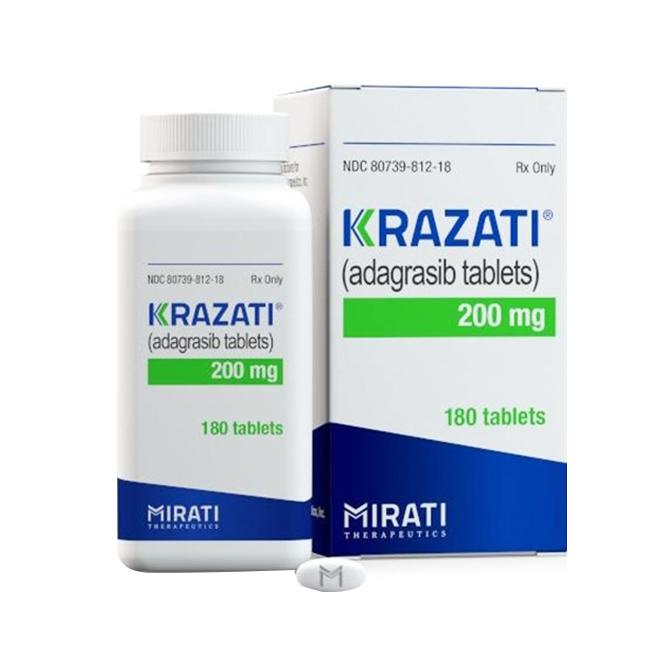
Adagrasib (Krazati) — targeted therapy for KRAS G12C-positive tumors
What adagrasib is in simple patient language
Krazati is the brand. Adagrasib — the drug name. Not chemo. Not immunotherapy. A separate class.
Comes as a capsule taken at home. Oral format does not mean low risk. Liver, gut, heart rhythm, lungs — all need watching throughout.
Why it comes up at all: a KRAS G12C mutation was found in the tumor. No confirmed mutation — no clear reason to use this drug. Molecular testing comes first, before the diagnosis name decides anything.
How adagrasib works
Certain tumor cells have a KRAS G12C mutation. A protein inside the cell stays active when it should switch off. The cell keeps getting a grow signal it should not be receiving.
Adagrasib binds to that altered protein. The grow signal gets cut. Lesions can shrink. Or the disease stops accelerating. Which of those happens — and whether either matters enough — depends on the full clinical picture.
Where the disease is located, which treatments came before, current lab values, symptoms, organ function — all of that feeds into whether adagrasib belongs in the plan right now.
Which cancers adagrasib may be used for
KRAS G12C has to be confirmed first. The diagnosis name alone is not enough.
- lung adenocarcinoma or other NSCLC subtypes with KRAS G12C
- disease that has spread or reached an advanced stage
- tumor that progressed through prior systemic treatment
- certain colorectal cancer cases — only in specific combinations when the oncologist has a defined rationale
- situations where targeted therapy needs to be weighed against chemo, immunotherapy, or a trial
Same mutation, different patients — the plan can look completely different. Prior drugs, organ function, disease pace, and treatment goal all shape the decision.
When adagrasib can be especially relevant
Usually comes up when the oncologist needs to act on disease progression and KRAS G12C is already confirmed.
- tumor grew again after the last treatment line
- mutation is confirmed and targeted therapy is being evaluated
- several next-line options need to be compared side by side
- spread is present and imaging trend needs to be assessed
- a second opinion before the next decision makes sense
Naming the drug is step one. Step two is the oncologist explaining what it is supposed to accomplish — reduce tumor burden, hold the disease, ease symptoms, or buy time without heavy toxicity.
What needs to be checked before starting
One old discharge summary is not enough. The doctor needs current data — especially after several prior treatment lines.
- pathology-confirmed diagnosis
- molecular test showing KRAS G12C
- which prior treatments were given and why each stopped
- recent CT, PET-CT, or MRI
- CBC and blood chemistry
- liver and kidney panels
- ECG, electrolytes, cardiac history
- full list of current medications
- symptoms — cough, breathlessness, diarrhea, fatigue, pain
- weight, appetite, general condition, tolerance of prior treatment
Medications get close attention. Some drugs interact with adagrasib or push cardiac rhythm in an unsafe direction. One such finding can delay the start, require a medication swap, or point to a different drug altogether.
How treatment with adagrasib goes
Capsule taken by mouth on the oncologist’s schedule. No self-adjusting doses. No skipping. Nothing added without checking first.
Treatment happens at home. Monitoring does not stop. Labs, scans, symptoms, weight — all tracked throughout.
What gets checked regularly:
- daily condition and how the drug is being tolerated
- gut symptoms — nausea, vomiting, loose stool, appetite, weight
- liver enzyme values
- electrolytes, creatinine, chemistry panel
- ECG where cardiac rhythm risk is present
- cough, breathlessness, new chest symptoms
- scheduled imaging to track disease
A reaction during treatment does not automatically mean stopping. A short break, adjusted dose, or added supportive medication often keeps the plan running.
Possible side effects
Reactions vary. One patient’s main problem is gut symptoms. Another struggles with tiredness or liver values. A third notices heart rhythm changes.
What can appear:
- nausea, vomiting, eating less
- loose stool, cramping, gut pain
- tiredness, reduced strength, weight dropping
- raised liver enzymes
- electrolyte changes, creatinine going up
- dizziness, palpitations, ECG changes
- cough, breathlessness, lung inflammation
- muscle or joint aching
- shifts in blood count or chemistry
Symptoms do not have to be severe before calling the doctor. Earlier reporting keeps more options open.
When to contact a doctor urgently
Call without waiting for a scheduled visit if any of these appear:
- severe or repeated vomiting
- heavy diarrhea, dehydration, cannot drink normally
- skin or eyes turning yellow, urine going dark
- breathlessness that appeared or got noticeably worse
- cough with fever or chest pain
- fainting, strong dizziness, marked palpitations
- sudden extreme weakness or fast overall decline
- new severe pain that does not ease
Whether or not a symptom seems drug-related — that is the doctor’s call. Checking early is always the right move.
Why adagrasib is not right for everyone
KRAS G12C in the report is a starting point. The clinical picture has to support the choice too.
Situations where a different path gets chosen:
- KRAS G12C not confirmed or test needs repeating
- disease pace and prior treatment point somewhere else
- liver function is significantly impaired
- cardiac rhythm problems are serious
- drug interactions cannot be safely managed
- active lung symptoms need to be investigated before starting
- overall condition does not allow safe treatment
A different choice is not a judgment on the drug. Sometimes adagrasib simply does not fit what this stage requires.
Can adagrasib be combined with other treatments
In selected situations it can be part of a broader plan. Nothing gets added to make a regimen look heavier — each component needs a purpose.
- after prior treatment lines in a sequenced approach
- in certain colorectal cancer combinations with an anti-EGFR agent
- with supportive drugs for nausea, diarrhea, or electrolyte management
- after local treatment of isolated lesions as part of the overall strategy
More drugs mean more to track. The oncologist needs a defined goal and a monitoring plan for the combination.
What no quick response to treatment can mean
Targeted therapy does not always show a clear result fast. Early scans rarely give a final answer.
Shrinking lesions — one kind of good outcome. Disease stopped accelerating — another. In advanced cancer, the second one can be just as meaningful as the first.
Imaging, symptoms, labs, tolerability — the doctor reads all of it together. Direction matters more than any single data point.
Oncology consultation in Israel about adagrasib
At Tel Aviv Medical Clinic, patients with a KRAS G12C-positive tumor can discuss whether adagrasib makes clinical sense for their specific situation.
A consultation may help when:
- the KRAS G12C result needs clinical context
- the reason for proposing Krazati is not clear
- adagrasib needs to be compared with other next-line options
- liver, cardiac, pulmonary, or GI risk needs a specialist view
- a second opinion is needed before the next treatment decision
- questions need to be prepared for the next oncologist appointment
- treatment or further evaluation in Israel is being considered
We do not prescribe remotely and do not replace the treating oncologist. We help patients and families understand the medical reasoning — and walk into the next conversation prepared.
Frequently asked questions — answered by Dr. Stefanska
- How is adagrasib different from regular chemotherapy?
Chemo hits fast-dividing cells broadly. Adagrasib goes after one specific altered signal — KRAS G12C. That is why the molecular result matters as much as the diagnosis. And oral does not mean mild. Gut, liver, heart rhythm, lungs — all of that still needs close attention throughout treatment.
- Why does the KRAS G12C test matter so much before starting?
No confirmed mutation — no defined target. In my practice I also ask how the test was done, which tumor tissue was used, and when. After several prior lines the tumor can shift. A result from two years ago may not reflect what is there now. Sometimes retesting is the right step before making any decision.
- Can adagrasib be given after other treatments?
Often that is exactly when it comes up. Prior treatment alone does not give the answer though. I look at what was given, how the disease responded, and what made it stop working. When the tumor is active I also go through recent scans, current labs, symptoms, and what other options exist. A second opinion at that point is often worth getting.
- Why does the doctor ask for an ECG and a full medication list?
Adagrasib does not sit quietly alongside every other drug. Some medications people take daily — for blood pressure, infections, pain — can interfere with how this drug is processed or push cardiac rhythm somewhere unsafe. I ask for the full list before anything else. Sometimes one swap fixes it. Other times the ECG or the interaction profile leads me to a different drug entirely.
- What if nausea, vomiting, or diarrhea become bad?
Call the doctor. Do not push through it. GI reactions with adagrasib can be significant. Anti-nausea support, dietary changes, a temporary pause, dose adjustment — options exist. What I ask patients not to do is wait until they are dehydrated or cannot keep fluids down. Earlier contact means more room to manage it.
- Can adagrasib be used in colorectal cancer?
In selected situations, yes — when KRAS G12C is confirmed and a specific combination approach makes sense. But the mutation alone is not enough. I need to know which prior lines were given, what other mutations are present, how the disease behaved, and what the reasoning is behind proposing this now. Without that full picture the decision is too thin.
- What documents should I bring to a consultation?
Pathology report. Molecular test with KRAS G12C. Recent CT or PET-CT. List of all prior drugs with dates. CBC, liver enzymes, kidney markers, ECG. Current medication list. A short written timeline also helps — diagnosis date, what was treated, when it stopped working, what side effects mattered. That history lets the doctor see real clinical logic rather than just a label.
Important information
The content on this page is general medical information only. Not a treatment recommendation. Adagrasib is considered only after full review of the diagnosis, molecular tumor profile, imaging, prior treatment history, lab results, and overall patient condition.
Do not start, stop, or change any treatment without speaking with your treating physician first.
Contacts
To arrange a consultation about adagrasib:
📞 +972-73-374-6844
💬 WhatsApp: +972-52-337-3108
