



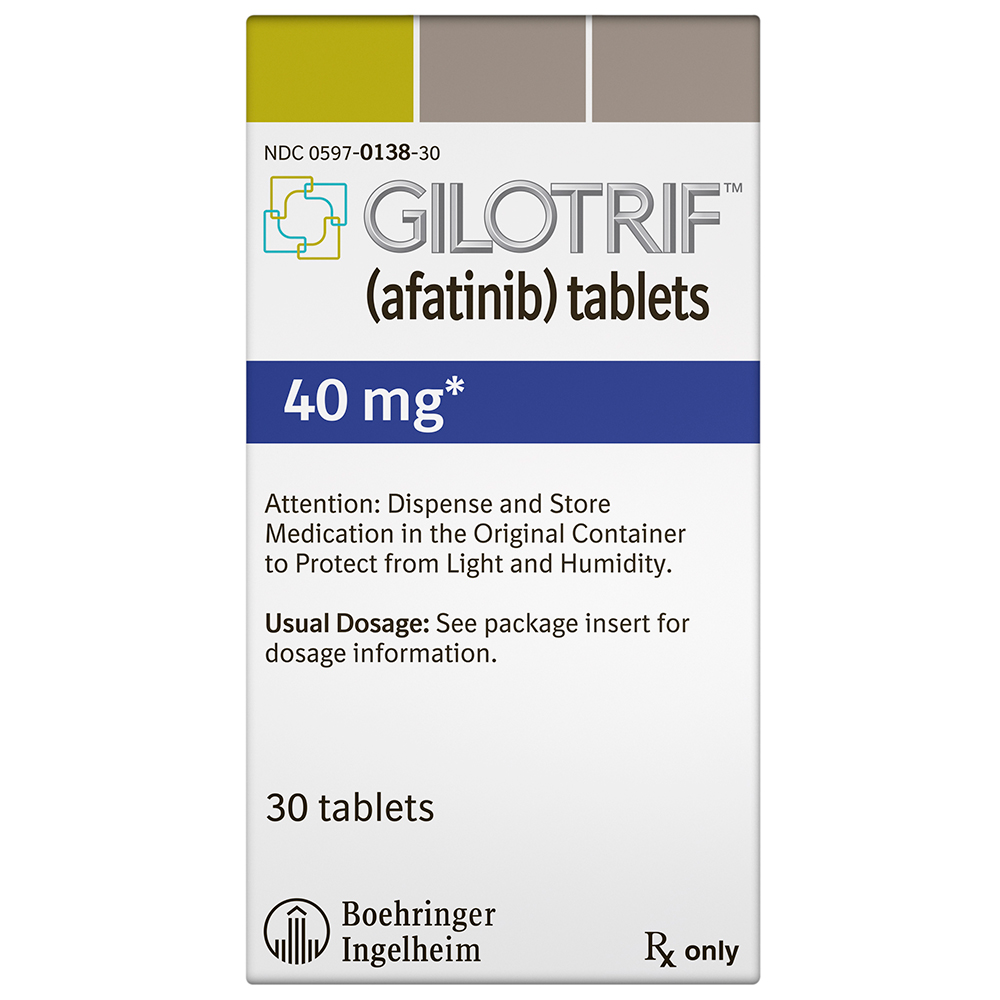
Afatinib (Gilotrif) — targeted treatment for lung cancer with an EGFR change
What afatinib is in simple patient language
Gilotrif — brand name. Afatinib — the drug name in the file. A cancer tablet. A targeted drug. Not regular chemotherapy. Not immunotherapy. And not a pill to start just because the diagnosis says lung cancer.
Why it comes up: some lung tumors use an EGFR signal too strongly. The report must show the exact EGFR change. Without that, the choice is shaky.
The doctor looks at the mutation, scans, past treatment, bowel history, skin, mouth sores, breathing symptoms, liver tests, other medicines, and the patient’s strength. The tablet is small. The decision is not.
How afatinib works
EGFR is one of the switches that can push a lung cancer cell to keep growing. In some tumors that switch is stuck too far on. Afatinib is used to press down that signal.
That does not mean every spot shrinks after the first weeks. Sometimes the useful sign is slower growth. Sometimes a cough eases. Sometimes the scans are the only place where the answer can be seen.
The point is simple: the drug must have a job. If the tumor is not living from an EGFR reason, another plan usually makes more sense.
Which diseases afatinib may be used for
Afatinib is mostly discussed in lung cancer when the tumor report shows an EGFR reason that fits this type of tablet.
- a lung tumor with an EGFR driver that fits this treatment idea;
- lung adenocarcinoma with a sensitive EGFR change;
- advanced disease where treatment for the whole body is needed;
- some less common EGFR changes, if the doctor sees a real reason for Gilotrif;
- situations where Gilotrif is compared with another EGFR tablet.
Same disease name, different answer. One patient may need afatinib. Another may need a different EGFR drug. A third may need a new biopsy, a brain scan, chemotherapy, or a trial discussion. The diagnosis line alone is not enough.
When afatinib can be especially relevant
The conversation usually starts after molecular testing. The doctor is not asking, “Do we have a lung cancer tablet?” The better question is: does this tumor still give afatinib something useful to block?
- the EGFR result is clear, not guessed;
- the patient needs an EGFR-directed tablet now;
- Gilotrif is being weighed against osimertinib, gefitinib, erlotinib, or another option;
- the doctor wants to discuss a specific uncommon EGFR change;
- bowel, skin, mouth, eye, liver, and lung risks have been checked before starting;
- the family wants a second opinion before choosing the next step.
Newer is not always better. Older is not always worse. The right question is whether the drug fits the mutation, the stage, the symptoms, and the person sitting in front of the doctor.
What needs to be checked before treatment
A fresh plan needs fresh facts. A scan from months ago and one line in an old report can send the patient in the wrong direction.
- the tumor type, not only the word “lung cancer”;
- the exact EGFR change and how it was tested;
- current CT, PET-CT, or MRI reports when they matter for the decision;
- brain imaging if there are symptoms or a reason to check;
- all earlier cancer treatment and why it stopped;
- blood count, liver and kidney values;
- bowel problems, past severe diarrhea, weight loss, or poor fluid intake;
- skin, nails, mouth, and eye complaints before the first tablet;
- breathing getting worse, new cough, fever, or chest pressure;
- regular medicines, supplements, and “only when needed” pills.
Small details matter with afatinib. A patient who already has daily diarrhea or a strong lung complaint needs a different level of caution than a patient who feels well and has stable labs.
How treatment with afatinib goes
Afatinib is taken by mouth. The schedule comes from the oncologist. The patient should know when to take it, what to do after a missed dose, and which symptoms are not to be hidden.
The first weeks are often the test of tolerance. Skin may react. The bowel may react. The mouth may hurt. Appetite can drop. None of that should be left for “next time” if it is getting stronger.
What usually gets followed:
- diarrhea: how often, how much fluid the patient can drink, and whether there is weakness;
- rash, dry skin, cracks, nail pain, or infection around the nails;
- mouth sores and trouble eating;
- eye redness, pain, or new vision trouble;
- cough, breathing, fever, or chest discomfort;
- blood work, with attention to liver values;
- weight, appetite, tiredness, and daily function;
- planned scans, compared with the old ones.
A dose change is not a failure. Sometimes a pause or a lower dose is exactly what lets the patient continue safely. The doctor should make that call, not the patient at home.
Possible side effects
Afatinib often shows itself through the gut, skin, mouth, and sometimes the eyes or lungs. Some people have mild problems. Some need quick help.
- loose stool or diarrhea, sometimes more than once a day;
- dry skin, red bumps, itching, soreness, or cracks;
- nail fold pain, swelling, or discharge;
- mouth sores, burning, or pain while eating;
- poor appetite, nausea, weight loss, or weakness;
- eye irritation, tearing, redness, or blurred vision;
- changes in liver blood tests;
- new cough or shortness of breath;
- rare but serious lung or skin reactions.
Do not wait until diarrhea causes dehydration. Do not wait until the skin is open and painful. Earlier contact often means fewer interruptions later.
When the treating team needs to know fast
Call the treating team quickly if any of these appear:
- strong diarrhea, repeated stools, dizziness, or dry mouth;
- not being able to drink enough;
- rash spreading fast, painful skin, blisters, or fever with skin changes;
- new shortness of breath or breathing that is getting worse;
- cough with fever or chest pain;
- yellow skin or yellow eyes;
- mouth sores that make eating or drinking difficult;
- eye pain, strong redness, or sudden vision change;
- a sharp drop in strength or any sudden worsening.
The patient does not need to prove at home that afatinib caused it. The job is to report early. The medical team can decide what is connected and what is not.
Why afatinib is not right for everyone
Afatinib can be a good option. It is not a good option for every patient with lung cancer. Sometimes the EGFR result does not fit. Sometimes another EGFR drug is cleaner for this moment. Sometimes the risk is simply too high.
- no confirmed EGFR change that supports this choice;
- a different EGFR drug fits the mutation or brain situation better;
- severe diarrhea risk or poor ability to drink enough;
- serious skin, mouth, or eye problems before treatment;
- active breathing symptoms that need an answer first;
- liver concerns or weak general condition;
- medicine interactions or poor tolerance of similar tablets in the past.
Choosing something else does not mean Gilotrif is a bad drug. It may simply be the wrong tool for this patient now.
Can afatinib be combined with other treatments
Afatinib is usually handled as its own targeted plan. Around it there may be support: treatment for skin, diarrhea, mouth pain, nausea, nutrition, or breathing symptoms. That support is part of keeping the plan safe.
- after surgery or radiation, if systemic treatment is needed for a separate reason;
- after earlier treatment, when the next line is being chosen;
- with medicines for diarrhea, skin, mouth, or eye symptoms when the doctor advises them;
- with scans and lab monitoring that show whether the plan is working;
- with another cancer treatment only if the oncologist has a clear reason.
Adding more drugs just to look stronger can backfire. More treatment can mean more toxicity. Order, timing, and safety matter more than a long list of names.
What no quick response can mean
A patient may expect a fast sign: better breathing, less pain, or a scan that suddenly looks different. Afatinib does not always answer that quickly.
Sometimes symptoms lag behind scans. Sometimes the patient feels worse because of diarrhea or rash while the cancer is not growing. Sometimes the opposite happens: the side effects look manageable, but the disease is still moving.
So the doctor reads the whole picture. Current scans against old scans. Cough. Breathing. Weight. Blood tests. Side effects. Daily function. One number rarely gives the whole answer.
Oncology consultation in Israel about afatinib
At Tel Aviv Medical Clinic, afatinib can be discussed in the context of a real lung cancer case, not as a drug name taken out of the file. This can help when the patient has an EGFR result and the family is not sure why Gilotrif was suggested.
The consultation may help to:
- read the EGFR report in plain language;
- understand why Gilotrif is being considered;
- compare afatinib with other EGFR tablets;
- prepare questions about diarrhea, rash, mouth sores, lung symptoms, and dose changes;
- review whether the current scans are enough for a decision;
- organize a second opinion before the next treatment step.
We do not prescribe treatment remotely and do not replace the treating doctor. The goal is to help the patient and family understand the medical logic and prepare for the next conversation.
Frequently asked questions — answered by Dr. Stefanska
- When does afatinib come up at all?
Usually after the tumor report shows an EGFR change. Without that, I would not treat the word “lung cancer” as enough reason for Gilotrif.
I would first read the exact mutation, the scan story, the stage, and what has already been tried. Then the question becomes practical: does afatinib have a useful job now, or is another EGFR drug the better fit?
- Is Gilotrif the same as other EGFR tablets?
No. The family of drugs is similar, but the tablets are not copies of each other. They differ in where they fit, how they are used, and what problems they can cause.
I would not choose between them by name. I would look at the mutation, brain involvement, past treatment, diarrhea risk, skin history, breathing symptoms, and the aim of this line of treatment.
- Why do doctors talk so much about diarrhea and skin?
Because these are the places where afatinib often causes trouble. A few loose stools and a mild rash are one situation. Many watery stools, weakness, painful skin, cracks, fever, or mouth sores are another.
The earlier I know, the easier it is to act. Waiting until the patient is dehydrated or the skin is badly damaged can make the whole plan harder.
- Should the patient stop afatinib when a rash appears?
Not automatically. Some rashes can be managed. But the patient should not decide alone that it is “nothing”.
Send a photo or call the team, especially if the rash spreads, hurts, blisters, or comes with fever. Sometimes we use creams and supportive care. Sometimes we pause the drug or adjust the dose. The timing matters.
- What should be done with strong diarrhea?
Call early. Strong diarrhea on afatinib can become a fluid problem fast, especially in an older or weak patient.
The doctor needs to know how many times a day it happens, whether the patient can drink, if there is fever or blood, and whether there is dizziness. Do not wait several days to see if it passes.
- How do we know if the drug is helping?
Not from one good day or one bad day. I look at scans, symptoms, weight, blood tests, breathing, and whether the patient can stay on treatment without constant pauses.
Sometimes the first useful result is simply that the disease stops moving quickly. Sometimes the plan needs to change. The answer comes from comparison, not guessing.
- What should we prepare for a second opinion about Gilotrif?
Bring the biopsy report, the EGFR test, recent CT or PET-CT, brain MRI if it was done, blood tests, and the list of all cancer medicines already used. Dates matter. Why a drug stopped matters. Side effects matter.
A short timeline helps a lot: diagnosis, mutation, treatments, response, progression, and current symptoms. With that, the consultation becomes specific instead of general.
Important information
This page is general medical information. It is not a prescription and not a personal treatment plan. Afatinib can be discussed only after the doctor reviews the diagnosis, EGFR result, disease stage, scans, previous treatment, side effects, and general condition.
Do not start, stop, or change the dose of Gilotrif without the treating doctor.
Contacts
For a consultation about afatinib:
📞 +972-73-374-6844
📧 [email protected]
💬 WhatsApp: +972-52-337-3108
