



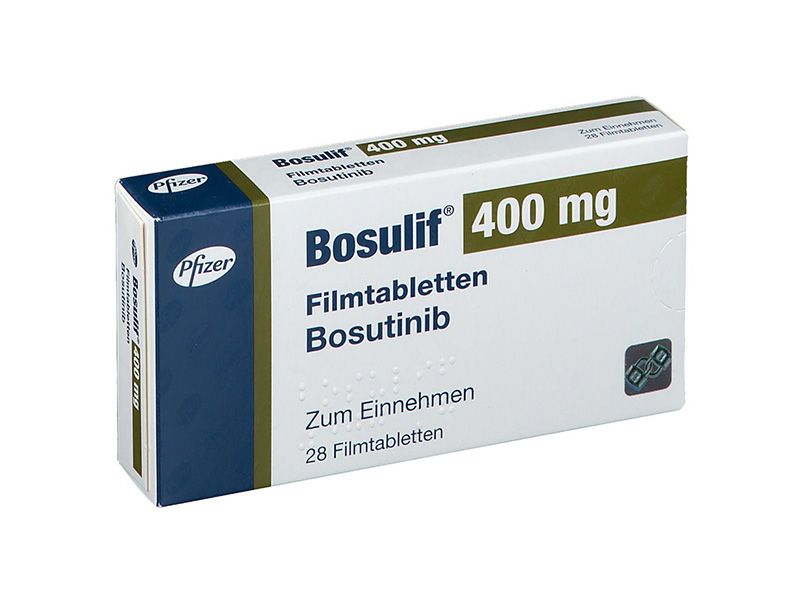
Bosutinib (Bosulif) — targeted treatment for chronic myeloid leukemia
What bosutinib is in simple patient language
Bosulif — brand name. Bosutinib — the name the doctor writes in the file. A TKI tablet for CML. Not an infusion. Not an immune drug. Still not a tablet to manage by instinct.
Why it comes up: in CML, the disease is often driven by the BCR-ABL signal. That signal keeps telling blood-forming cells to keep going. Bosutinib is one way to press on that signal.
The tablet is taken at home. The medical check is not. The doctor does not look at Bosulif alone. First: blood count. Liver. Gut problems. Older TKI pills. Medicines that clash. BCR-ABL numbers over time. Only then does the plan make sense.
How bosutinib works
CML has a driver. In many patients that driver is BCR-ABL. It acts like a stuck switch. The cell keeps receiving a growth order.
Bosutinib is a TKI. It leans on the BCR-ABL signal. The patient may feel nothing after the first few tablets. That tells us little. Blood counts and the BCR-ABL line tell more.
The mechanism sounds neat. Real life is not so neat. Was another TKI used before? Did the disease move, or did the body simply refuse the drug? Are liver tests high already? Is diarrhea already a problem? Are platelets low? These details can change the choice.
Which diseases bosutinib may be used for
Bosutinib is not a general leukemia tablet. It is mainly discussed when the CML story fits a BCR-ABL-directed plan.
- CML where BCR-ABL is part of the confirmed diagnosis
- a first TKI plan after the diagnosis and risk picture have been checked
- CML that did not respond well enough to an earlier TKI
- a previous TKI that had to stop because the side effects were too much
- comparison with other TKI options, not just a quick brand-name swap
- second opinion when Bosulif was offered and the reason is not clear
Same diagnosis line. Different patient. Phase of disease, old side effects, mutation work-up, liver and gut history, daily pills, and blood counts may point in different directions.
When bosutinib can be especially relevant
Bosulif often enters the discussion when the doctor wants BCR-ABL control, but the earlier plan is not enough or is no longer tolerable.
- the BCR-ABL result is clear and still needs long-term control
- the last TKI did not bring the response the team wanted
- another TKI caused a problem that the patient could not carry
- the doctor needs to weigh bowel symptoms, liver values, or low counts before choosing
- the patient uses medicines that may clash with the new plan
- the family needs a plain explanation of why this TKI and why now
The useful question is not “is it strong?” The useful question is smaller: what job should Bosulif do now, and can this patient stay on it without being harmed by the treatment itself?
What needs to be checked before treatment
Before Bosulif, one clean summary page is not enough. The doctor needs the whole map, including the messy parts.
- exact CML diagnosis and phase
- BCR-ABL results over time, not only the last value
- old TKI names, dates, doses, response, and reason for stopping
- mutation testing if resistance is suspected
- CBC with white cells, neutrophils, hemoglobin, and platelets
- ALT, AST, bilirubin, and other liver values
- kidney values
- loose stool, nausea, belly pain, poor appetite, or weight loss before the start
- swelling, cough, short breath, chest symptoms, and blood pressure
- full medicine list, including stomach drugs, heart drugs, antibiotics, antifungal drugs, seizure drugs, and supplements
- pregnancy or pregnancy plans, if relevant
Sometimes the start is delayed for a very practical reason. The liver needs checking. The diarrhea story is not clear. The platelet number is too low. A medicine conflict needs fixing. That is not paperwork. That is how trouble is avoided.
How treatment with bosutinib goes
Bosutinib is taken by mouth on the schedule set by the hematologist or hemato-oncologist. The patient should not cut the dose, pause it, restart it, or “make up” missed tablets without instructions.
The first weeks deserve attention. Gut symptoms and liver-test changes often show themselves early. Some patients pass through that period quietly. Others need quick support, a pause, or a dose change.
During treatment, the team usually follows:
- CBC
- liver values and bilirubin
- diarrhea, nausea, belly pain, appetite, and weight
- fever or infection symptoms
- swelling, cough, breathing, and general strength
- new medicines added by other doctors
- BCR-ABL at the time points chosen by the treating team
A dose change is not automatically bad news. Sometimes it is exactly what keeps the treatment possible. The unsafe part is making those changes at home without the team.
Possible side effects
With Bosulif, the first problem is often not dramatic. A few extra toilet trips. A poor appetite. A liver number that moved. Small changes still count.
- loose stool, nausea, vomiting, stomach discomfort, or belly pain
- poor appetite, weight loss, tiredness
- rash, itching, dry skin
- higher liver tests
- low platelets, low neutrophils, or lower hemoglobin
- headache, fever, low energy
- swelling, fluid retention, cough, or harder breathing
- less often, reactions that need a separate urgent check
Waiting until the symptom becomes severe rarely helps. A short message early may save a longer break later. Especially with diarrhea, fever, bleeding signs, or yellow skin.
When the treating team needs to know fast
Call the doctor the same day if any of these start:
- diarrhea again and again, signs of dehydration, or trouble drinking enough
- fever, chills, sore throat, or another infection sign
- heavy weakness, fainting, or strong dizziness
- yellow skin or yellow eyes, dark urine, or strong pain on the right side under the ribs
- new trouble breathing, chest tightness, or a strong new cough
- bleeding, unusual bruises, black stool, or blood in urine
- a fast drop in general condition
- any symptom that is getting worse quickly or scares the patient
Do not sit at home trying to sort out blame. Send the message. The team decides what belongs to Bosulif and what does not.
Why bosutinib is not right for everyone
Bosutinib may be a good TKI in the right setting. It is not a universal replacement for every other CML drug.
- the BCR-ABL-driven diagnosis is not confirmed
- the disease phase or mutation result points elsewhere
- liver problems are already significant
- diarrhea or bowel disease is active before the start
- blood counts are too low
- daily medicines create a serious interaction risk
- pregnancy is present or pregnancy risk is not safely managed
- the patient is too weak to start or continue this plan safely
Choosing another TKI does not mean Bosulif is a bad drug. It may simply be the wrong tool for this phase, this mutation story, or this body.
Can bosutinib be combined with other treatments
In many CML plans, bosutinib itself is the main targeted treatment. Around it, there may be support, monitoring, and changes to other medicines.
Do not add “harmless” pills without asking. Stomach medicines, antibiotics, antifungal drugs, seizure drugs, heart medicines, and supplements can matter. The list has to be checked, not guessed.
- support for diarrhea, nausea, rash, or other symptoms if prescribed
- adjustment of other medicines to avoid unsafe combinations
- regular molecular monitoring to see the depth of response
- support when anemia, low platelets, or infection risk appears
- other treatment steps only when they are part of a planned strategy
What no quick response can mean
CML does not always answer in a way the patient can feel. The person may feel almost the same, while the blood picture is already changing. Or the opposite: the person feels worse because of side effects, not because the leukemia is worse.
The doctor looks at ordinary blood counts first, then BCR-ABL over time. One result is rarely the whole story.
If the response is slower than expected, the team checks simple but important things: missed doses, dose level, side effects, new medicines, mutation data, and the earlier trend. Only then does it make sense to keep the plan or move to another one.
Hematology consultation in Israel about bosutinib
At Tel Aviv Medical Clinic, the question is kept practical: does Bosulif have a real place in this CML plan? This matters when the drug was offered, but the family still does not understand why now, why this dose, or what must be checked first.
Documents we would look at: BCR-ABL over time, old TKI names, mutation test, CBC, liver numbers, bowel complaints, and the medicine list. Then we turn that into clear questions for the treating doctor.
We help put the story in order and write the questions. We do not prescribe treatment remotely and do not replace the treating physician.
Frequently asked questions — answered by Dr. Stefanska
- Is Bosulif chemotherapy?
No. I would not put it in the chemotherapy box. Bosulif is a TKI tablet. It is aimed at the BCR-ABL signal that drives CML in many patients.
Still, a tablet can cause real trouble. Bowels. Liver. Blood counts. Infection risk. Swelling. Medicine clashes. The patient may swallow Bosulif at home. The plan should not be managed alone.
- Why does BCR-ABL matter so much?
Because that result explains why a TKI is being discussed at all. Without the BCR-ABL story, Bosulif loses its logic.
I also want to see the numbers over time. Did BCR-ABL fall well on the earlier drug? Did it stop falling? Did it rise again? A single value is useful, but the trend is usually more honest.
- Why would a doctor move from another TKI to Bosulif?
Usually there was a problem with the earlier TKI. Either the CML was not controlled enough, or the side effects became too much. That is not the same as just changing a brand.
I would ask for the old drug names, dates, response, reason for stopping, and mutation test if there is one. I would also look at what the patient can handle now. With Bosulif, gut and liver history matter.
- If diarrhea starts, what then?
Tell the doctor early. Do not wait to see how far it goes. On Bosulif, diarrhea can dry a patient out fast and make the whole week harder.
The answer might be simple: fluids, diarrhea medicine, blood tests, a short pause, or a lower dose. Better before weakness and dehydration start.
- Why are liver tests checked during treatment?
Liver numbers can rise while the patient feels fine. That is why the test stays on the calendar. It is not paperwork.
Yellow eyes or skin, dark urine, strong nausea, heavy weakness, or pain on the right side under the ribs needs a same-day call.
- Can a patient just take Bosulif at home and see the doctor less often?
No. Home tablets still need a schedule of checks. CML is followed by blood counts, chemistry, BCR-ABL, symptoms, and side effects.
A patient may feel fine while a liver value or blood count is moving the wrong way. That is why follow-up is not optional.
- What should be prepared for a consultation about Bosulif?
Bring the CML diagnosis, BCR-ABL results over time, mutation testing if it was done, and a list of all previous TKIs with dates and reasons for stopping.
Fresh CBC, liver and kidney values, current medicines, bowel symptoms, infection history, swelling, cough, and a short timeline help a lot. The timeline should show when treatment started, when it worked, and when the problem began.
Important information
This material is general medical information. It is not a prescription and not a personal treatment plan. Bosutinib can be discussed only after review of the diagnosis, BCR-ABL data, previous therapy, blood counts, liver function, other medicines, symptoms, and general condition.
Do not start, stop, or change the dose without the treating doctor.
Contacts
For a consultation about Bosutinib:
📞 +972-73-374-6844
📧 [email protected]
💬 WhatsApp: +972-52-337-3108
