



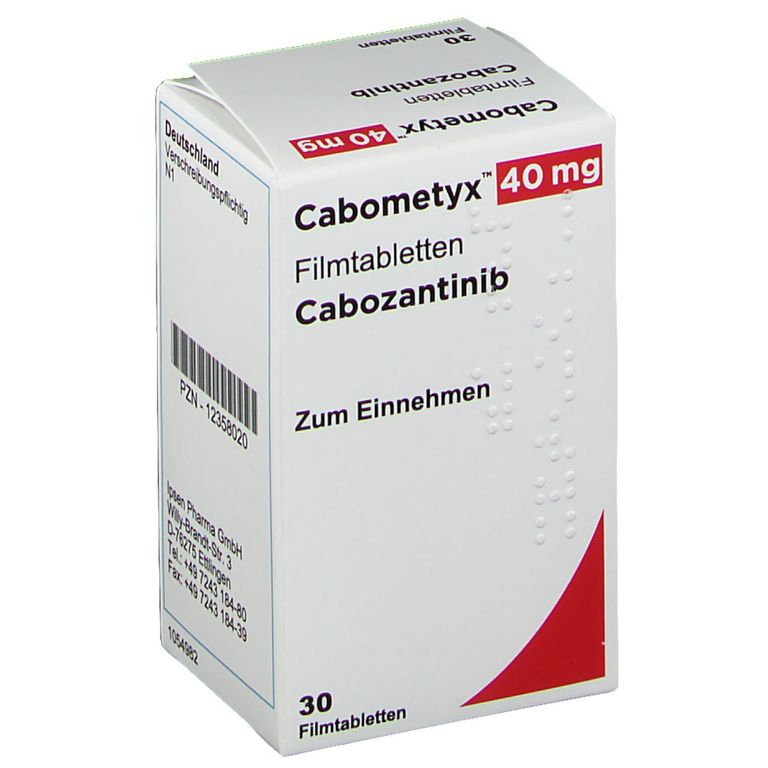
Cabozantinib (Cabometyx) – targeted treatment for kidney cancer, liver cancer, and selected other tumors
What cabozantinib is in simple patient language
Cabometyx – brand name. Cabozantinib – the drug name in medical records. A cancer tablet. A targeted drug. Not chemo by drip. Not immunotherapy. Not a light pill to manage alone.
Why it comes up: some tumors use several growth and vessel signals at the same time. Cabozantinib works around more than one of those messages. The aim is not to “clean the body”. The aim is to make the cancer less able to feed, move, and keep growing.
Before this drug, small details matter. Blood pressure. Liver and kidney values. Urine protein. Bleeding. Wounds. Diarrhea. Hands and feet. Recent surgery. Dental work. The full medicine list. The diagnosis name is only the beginning.
How cabozantinib works
Cancer cells do not grow by one switch only. They borrow help from nearby tissue, blood vessels, and internal signals.
Cabozantinib blocks several tyrosine kinase signals. In plain words, it presses on more than one road the tumor may use for vessel support, spread, and survival.
That can slow the disease. Sometimes a scan looks better. Sometimes the main win is that the cancer stops moving as fast. The doctor reads this together with symptoms, labs, pressure numbers, urine, and side effects.
The same action can touch normal tissue too. That is why high pressure, bleeding, gut trouble, slow wound healing, skin pain on hands and feet, and liver or kidney changes are not small side notes.
Which diseases cabozantinib may be used for
Cabozantinib is not a general cancer tablet. It is discussed only in selected settings, when the tumor type and the treatment stage fit.
- kidney cancer that has spread and needs whole-body treatment
- kidney cancer after an earlier drug stopped holding the disease well enough
- liver cancer when the doctor is choosing another systemic step and the liver can tolerate it
- selected thyroid cancer situations when previous treatment no longer gives control
- some neuroendocrine tumor cases after earlier approaches
- second opinion when Cabometyx was offered and the reason is not clear
Same tumor name. Different patient. Pressure, bleeding history, liver reserve, kidney function, prior drugs, wounds, speed of growth, and daily strength can push the plan in another direction.
When cabozantinib can be especially relevant
The drug usually enters the discussion when local treatment is not enough and the doctor wants a tablet that works on several growth and vessel-related signals.
- the disease has moved beyond surgery or a single local procedure
- a previous systemic treatment has lost control
- the scan shows spots that need a body-wide plan
- Cabometyx needs to be compared with immunotherapy or another targeted drug
- previous treatment caused toxicity and the next plan has to be chosen carefully
- the family wants a second opinion before changing the regimen
The question is not whether the drug is strong. The question is what job it has now: slow growth, reduce tumor burden, keep the situation stable, or buy time without too much damage.
What needs to be checked before treatment
One discharge letter is rarely enough. The doctor needs the current cancer picture and the current patient picture.
- tumor type, pathology report, and stage
- fresh CT, MRI, PET-CT, or the scans used for this case
- all previous cancer treatments, dates, response, and reason for stopping
- blood pressure record and the pressure medicines already used
- CBC, liver values, kidney values
- urine test, especially protein in urine
- bleeding history, clots, blood thinners, aspirin, or similar drugs
- diarrhea, belly pain, poor appetite, weight loss, mouth sores
- recent operation, open wound, dental work, biopsy, or planned procedure
- full medicine list, including heart drugs, pain pills, antibiotics, antifungals, herbs, and supplements
Sometimes the start waits. Not because the cancer name is wrong. Because pressure is not safe yet, a wound is still open, bleeding risk is too high, or another drug clashes with the plan.
How treatment with cabozantinib goes
Cabometyx is taken by mouth on the schedule set by the oncologist. No home dose games. No stopping for a few days and restarting by guess.
The patient may swallow the tablet at home, but the treatment is still medical. Early weeks often show the weak spots: pressure, stool, appetite, palms and soles, mouth, weight, and tiredness.
What usually gets watched:
- blood pressure and headaches
- blood tests, liver values, kidney values
- protein in urine
- diarrhea, nausea, food intake, and weight
- mouth soreness, taste change, hand and foot pain
- bruising, bleeding, clot symptoms, chest or breathing changes
- wounds, recent procedures, and healing
- planned scans for disease trend
A side effect does not always end the drug. The doctor may hold it, lower the dose, treat pressure, support fluids, protect the skin, or ask for extra labs. The patient should not build that plan alone.
Possible side effects
The pattern is not the same for everyone. One person mainly fights high pressure. Another has diarrhea. Another gets painful feet, mouth soreness, or heavy tiredness.
What can happen:
- blood pressure going up
- tiredness, low appetite, weight loss
- loose stool, nausea, belly discomfort
- pain, redness, peeling, cracks, or burning on palms and soles
- mouth soreness, dry mouth, taste change
- higher liver tests
- protein in urine or kidney value changes
- bruising, bleeding, clot problems in rare cases
- slow wound healing
- chest pressure, harder breathing, or heartbeat changes in selected situations
Waiting until a symptom becomes dramatic is a bad plan with this medicine. Small trouble is often easier to handle while it is still small.
When the treating team needs to know fast
Do not save these symptoms for the next routine visit:
- pressure suddenly much higher than usual, especially with a strong headache
- new blurred vision, confusion, or feeling unlike yourself
- black stool, red urine, blood when coughing, or bleeding that keeps going
- strong belly pain, repeated vomiting, or not being able to drink
- loose stool again and again, with weakness or dry mouth
- painful cracks, blisters, or open sore areas on hands or feet
- a wound after surgery or dental work getting worse instead of healing
- sudden heavy weakness, chest tightness, or breathing that becomes hard
- fever, chills, or a quick drop in general condition
Do not sit at home trying to prove whether Cabometyx caused it. The treating team should make that call.
Why cabozantinib is not right for everyone
Cabozantinib can help in the right setting. A diagnosis name alone still does not make it the right tablet.
The doctor may choose another path if:
- blood pressure is already unsafe or hard to control
- there is active bleeding or a very high bleeding risk
- surgery was recent or a wound has not healed
- liver or kidney function is too weak for this step
- diarrhea, weight loss, or general weakness is already severe
- regular medicines do not fit safely with cabozantinib
- the disease needs a faster or different type of treatment
- the goal of care is better met by another plan
Choosing something else does not mean Cabometyx is a bad drug. It may simply be the wrong tool for this patient at this time.
Can cabozantinib be combined with other treatments
Sometimes, yes. But more treatment is not automatically better treatment. Each part needs a reason.
- after earlier systemic treatment when the next step is needed
- in comparison with immunotherapy or another targeted drug
- beside an immunotherapy plan in selected cases
- after local treatment to selected spots when the full plan calls for it
- with support for pressure, diarrhea, pain, nausea, mouth sores, or skin problems
Sequence matters. The doctor has to know what comes first, what is being watched, and what would make the plan change.
What no quick response can mean
A fast scan change is not guaranteed. In the first weeks, the biggest issue may be whether the body can live with the tablet.
Good news is not always a dramatic shrinkage. Sometimes the disease stops moving as fast. Pain is quieter. Appetite holds. Blood work allows treatment to continue.
One bad day or one scan line is not enough. The doctor reads scans, symptoms, pressure, urine, blood work, side effects, and the earlier pace of the disease together.
Oncology consultation in Israel about cabozantinib
At Tel Aviv Medical Clinic, a patient can discuss whether cabozantinib has a place in the current plan. This is useful when Cabometyx was offered, but the goal, risk, or alternatives are not clear.
A consultation may help to:
- understand why this drug is being discussed now
- review which tests are needed before the first dose
- look at pressure, liver values, kidney values, urine, bleeding risk, and wound healing
- compare Cabometyx with other systemic options
- prepare questions for the treating oncologist
- discuss which options may be relevant in Israel
We do not prescribe remotely and do not replace the treating physician. We help the patient and family understand the medical logic and prepare the documents for the next step.
Frequently asked questions – answered by Dr. Stefanska
- Is cabozantinib chemotherapy?
No. It is not chemo in the usual patient meaning. Cabozantinib is a targeted tablet. It works on several signals that can help a tumor grow, build vessel support, and move forward.
Still, I would not call it an easy tablet. Pressure, stool, skin, mouth, liver, kidneys, urine, bleeding risk, and wound healing all need watching. This is not a drug to run by feeling alone.
- Why does blood pressure matter so much with Cabometyx?
Because pressure can rise on this treatment. Sometimes the patient feels almost normal, but the numbers are already high.
I want a plan before the first tablet: how often to measure, which numbers mean a same-day call, and which pressure medicines are allowed. This should not be invented during a crisis.
- Can Cabometyx be taken after another targeted drug?
Sometimes, yes. But I need to know what was used before, how long it helped, why it stopped, and which side effects were hard.
Changing one tablet for another is not automatically a better plan. I look at fresh scans, blood work, pressure, liver, kidneys, urine, wounds, and the patient’s strength.
- What if diarrhea or painful feet appear?
Tell the treating team early. Do not wait until walking is hard or drinking is poor.
Sometimes skin care, fluids, food changes, pressure treatment, a short hold, or a dose change is enough. Sometimes the plan has to change. The patient should not decide this alone at home.
- Why does the doctor ask about surgery, teeth, and wounds?
Cabozantinib can interfere with healing and can raise bleeding concerns. A fresh operation, dental extraction, biopsy, or open wound matters.
Sometimes treatment waits. Sometimes there is a planned pause around a procedure. This is not paperwork. It is safety.
- How can we know if the drug is helping?
Not from the first few days. The doctor looks at scans, symptoms, weight, appetite, pain, labs, urine, pressure, and side effects.
Sometimes spots shrink. Sometimes the better result is slower growth. If toxicity is heavy, the answer may still be to change the plan. The drug has to help the cancer problem and remain bearable.
- What should I bring for a consultation about Cabometyx?
Bring the pathology report, recent scans, blood tests, liver and kidney values, urine test, pressure records, and the full medicine list. Add dates of all previous treatments.
A short timeline helps a lot: diagnosis date, what was tried, what worked, when the disease moved again, and which complications happened. That tells the doctor the story, not only the name of the drug.
Important information
This page gives general medical information only. It is not a treatment recommendation. Cabozantinib is discussed only after review of the diagnosis, scans, prior treatment, blood pressure, blood tests, urine, liver and kidney function, wounds, other illnesses, medicines, and the patient’s general condition.
Do not start, stop, or change treatment without speaking with the treating physician.
Contacts
For a consultation about cabozantinib:
📞 +972-73-374-6844
📧 [email protected]
💬 WhatsApp: +972-52-337-3108
