



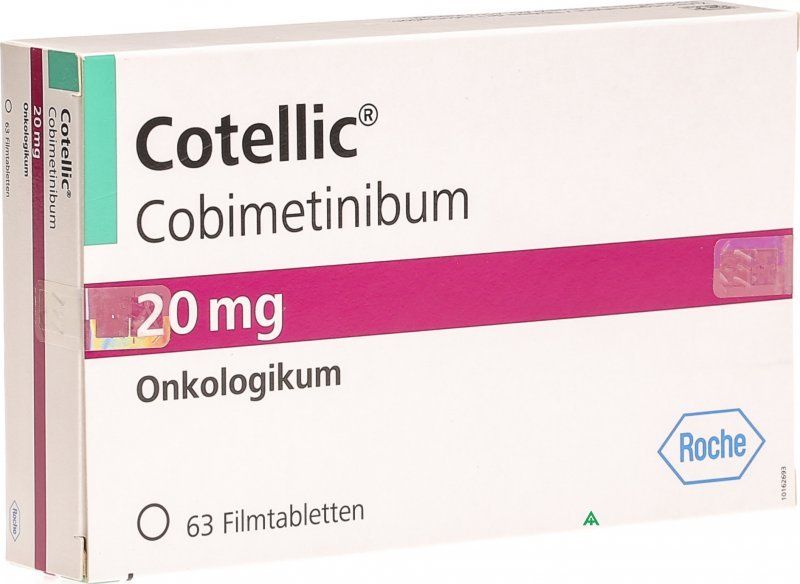
Cobimetinib (Cotellic) — targeted treatment for melanoma with a BRAF change
What cobimetinib is in simple patient language
Cotellic — brand name. Cobimetinib — the drug name in medical records. A cancer tablet. A MEK drug. Not chemo. Not immunotherapy. Not a tablet to manage by yourself at home.
Why it comes up: some melanomas run on a broken growth message in the BRAF-MEK line. Cotellic works lower on that line. It is usually discussed together with a BRAF-blocking drug, not as a lonely tablet.
The mutation is only the start of the conversation. The doctor still has to look at the disease stage, speed, prior treatment, skin, eyes, heart, liver tests, muscle symptoms, current medicines, and the goal of this step.
Same BRAF result. Different patient. Different plan.
How cobimetinib works
Inside the cell, BRAF and MEK sit on one growth road. When BRAF is damaged in a certain way, that road can stay switched on for too long.
Cobimetinib works at the MEK part of the road. In plain language, it makes the message quieter. Some tumor cells then lose part of the push that helps them keep growing.
The result is not always dramatic on day one. A scan may later show smaller spots. Or the better news may be slower growth. The doctor reads that together with symptoms, blood work, skin reactions, eyesight, and how the patient feels.
This treatment can touch normal tissue too. Eyes matter. Heart function matters. So do liver values, skin, bowel symptoms, muscle pain, and strong tiredness.
Which diseases cobimetinib may be used for
Cobimetinib is not for every cancer and not for every melanoma. The doctor needs a real molecular reason before it enters the plan.
- melanoma where a BRAF V600 result is confirmed
- disease that cannot be handled by surgery or one local procedure alone
- a plan where a MEK drug is being paired with a BRAF drug
- second opinion when Cotellic was offered and the reason is not clear
- comparison between targeted treatment, immunotherapy, another combination, or a study option
One word in the report is not enough. The exact BRAF result, the size and speed of the disease, prior drugs, symptoms, and risk of side effects can all move the plan.
When cobimetinib can be especially relevant
It usually enters the discussion when the cancer has a BRAF-driven route and the oncologist wants to work on that route more than one way.
- the BRAF V600 result is clear in the report
- the disease needs treatment for the whole body
- the doctor is thinking about a BRAF plus MEK plan
- fast control is being weighed against a longer immunotherapy route
- the patient already has questions about eye, heart, skin, liver, or muscle risk
- another recommendation was given and the family wants the logic checked
The question is not whether Cotellic is strong. The question is what job it has now: shrink visible spots, slow a dangerous pace, hold the disease, or bridge the patient to another step.
What needs to be checked before treatment
One old summary is rarely enough. The doctor needs the current tumor picture and the current patient picture.
- histology report and the exact melanoma diagnosis
- BRAF test result, with the V600 change written clearly
- fresh CT, MRI, PET-CT, brain imaging, or other scans used in this case
- what treatment was already given, when it helped, and why it stopped
- CBC and blood chemistry
- liver values
- heart history, breathlessness, swelling, exercise tolerance
- eye history: new spots, flashes, blurred areas, pain, or recent eye disease
- skin history, sun reactions, rash, peeling, painful areas
- muscle pain, weakness, dark urine, or old muscle problems
- full medicine list, including antibiotics, antifungal drugs, heart drugs, pain medicine, herbs, and supplements
Sometimes the start waits. Not because the mutation is missing. Because the eye story needs checking, the heart is unclear, liver tests are not stable, or another medicine creates trouble.
How treatment with cobimetinib goes
Cobimetinib is taken by mouth on the oncologist’s schedule. It is usually part of a cycle. It is usually not the only targeted drug in the plan.
No changing days at home. No stopping for a few days and restarting by guess. If the patient feels worse, the doctor needs to know what happened before the schedule is changed.
What usually gets watched:
- temperature and general strength
- skin, itching, sun sensitivity, rash, peeling
- eyesight — new spots, flashes, blurred zones, eye pain
- breath, swelling, chest discomfort, heart symptoms
- liver values
- muscle pain, leg weakness, dark urine
- stool, appetite, weight, nausea
- planned scans for disease trend
A side effect does not always end the treatment. A short hold, symptom treatment, a dose change, earlier blood work, or an eye or heart check may be enough. The doctor makes that call.
Possible side effects
The pattern is not the same for everyone. One person mainly gets a rash. Another has loose stool. Another notices tired legs, blurred vision, or swelling.
What can happen:
- rash, itching, dry skin, redness, painful sun reaction
- loose stool, nausea, stomach discomfort, low appetite
- tiredness or weak muscles
- liver-test changes
- new eye symptoms: spots, flashes, shadowed areas, sharp pain
- breathlessness, swelling, lower exercise tolerance
- muscle pain, heavy legs, dark urine
- fever
- rare but serious skin, eye, heart, or muscle problems
Do not wait until the symptom becomes dramatic. With this drug, early messages to the clinic can prevent a small problem from becoming the reason treatment has to stop.
When the treating team needs to know fast
Do not save these symptoms for the next routine visit:
- vision suddenly changes, lights flash, dark spots appear, or the eye hurts
- rash spreads fast, skin hurts, blisters appear, or fever comes with the rash
- new breathlessness, chest tightness, swelling, or sudden heavy weakness
- strong muscle pain, weak legs, or urine turns very dark
- repeated loose stool, vomiting, dry mouth, dizziness, or not being able to drink
- a yellow tint in the eye whites, urine the colour of strong tea, or pain high on the right side of the belly
- fever, chills, or a quick drop in general condition
Do not sit at home trying to prove whether Cotellic caused it. The treating team should make that call.
Why cobimetinib is not right for everyone
Cobimetinib can be useful in the right case. It is still not a universal melanoma tablet.
The doctor may choose another path if:
- the needed BRAF result is not confirmed
- the eye situation needs a separate answer first
- heart function or swelling already raises concern
- liver values are too unstable for this plan
- skin problems are already severe
- the disease needs a different urgent move
- another drug in the patient’s list makes the combination unsafe
Choosing another treatment does not mean Cotellic is bad. It may simply not fit this patient, this timing, or this risk balance.
Can cobimetinib be combined with other treatments
Cobimetinib is usually discussed next to a BRAF-blocking drug. That is not a random add-on. It is a way to work on the same growth road from two places.
Other treatments depend on the full plan:
- local treatment for a single painful or risky spot
- immunotherapy as a different strategy
- support for rash, diarrhea, nausea, pain, or fever
- a clinical trial when the standard choices are limited or unclear
- scans and blood work to decide whether the same plan still makes sense
More treatment is not automatically better. The order matters. Sometimes the first job is speed. Sometimes durability. Sometimes safety.
What no quick response can mean
With targeted therapy, patients often expect a fast change. Sometimes it happens. Sometimes the first weeks mostly show tolerability, not the final answer.
A scan that does not show quick shrinkage is not always failure. Slower growth can matter. Stable symptoms can matter. But if pain grows, breathing worsens, new spots appear, or blood work turns unsafe, the plan has to be reviewed.
The doctor does not decide from one feeling or one lab result. Scans, symptoms, side effects, speed before treatment, and the goal of therapy have to be read together.
Oncology consultation in Israel about cobimetinib
At Tel Aviv Medical Clinic, the consultation is a document-based discussion about whether cobimetinib has a place in this melanoma story. It can help when Cotellic was offered, but the patient still does not understand the BRAF result, the combination, the risk, or the order of options.
What can be reviewed:
- the BRAF test and whether it supports a MEK-based plan
- why a targeted combination was suggested
- how this plan compares with immunotherapy, another combination, or a study
- eye, heart, liver, skin, and muscle risks before treatment
- what questions to take back to the treating oncologist
- which documents are still missing for a serious discussion
We do not prescribe treatment remotely and do not replace the treating doctor. The purpose is to help the patient and family understand the medical logic and prepare for the next conversation.
Frequently asked questions – answered by Dr. Stefanska
- Is cobimetinib chemotherapy?
No. It is not chemotherapy in the usual sense. It is a targeted drug that works on the MEK part of a growth signal.
But I would not call it easy treatment. Home tablets still need real follow-up. Skin, eyes, heart, liver tests, muscles, bowel symptoms, and daily strength all matter.
- Why is the BRAF result so important?
Because without the right BRAF result, the whole idea becomes weak. The doctor has to see the exact report, not only hear that “a mutation was found”.
I also look at when the test was done, from what sample, and whether the current disease still fits that old result. In advanced melanoma, old paperwork is sometimes not enough for a new decision.
- Why is Cotellic usually paired with another targeted drug?
Because the growth road has more than one step. One drug works higher on that road. Cobimetinib works lower. That is the reason the combination is discussed.
Still, a combination is not automatic. I want to know the disease pace, symptoms, past immunotherapy, scans, and how much risk the patient can safely carry.
- What should I do if I get a rash or strong sun reaction?
Send a message early. Do not cover it with random creams for a week and hope it passes. A small rash and a dangerous skin reaction can look similar at the start.
Pain, blisters, fever, peeling, mouth sores, or fast spread are not for waiting. The team may ask for photos, blood work, a visit, a pause, or treatment for the skin.
- Why does the doctor ask about vision and the heart?
Because MEK drugs can sometimes affect places patients do not expect. Eyes can be involved. Heart function can be involved. It is not common for everyone, but it has to be watched.
New flashes, dark spots, blurred areas, eye pain, breathlessness, swelling, or unusual weakness should be reported quickly. The doctor decides whether this is urgent.
- Can I stop cobimetinib for a few days if I feel bad?
Not by yourself. A pause may be the right move, but it has to be recorded and planned. Otherwise the doctor cannot understand what really happened.
Was it the drug? The cancer? Infection? Another medicine? Too much sun? A missed dose? Guessing at home makes the next decision harder.
- What should be sent before a second opinion about Cotellic?
Send the biopsy report, the BRAF test, fresh scans, and the list of all past treatment with dates. Add blood work, liver values, eye and heart history, skin reactions, and the full medicine list.
A short timeline helps a lot. Diagnosis date. When BRAF was found. What was tried. What worked. What failed. Why Cotellic is being discussed now.
Important information
This page is general medical information. It is not a treatment prescription. Cobimetinib can be discussed only after review of the diagnosis, BRAF result, scans, prior treatment, blood work, liver values, eye and heart risks, skin history, other medicines, and the patient’s general condition.
Do not start, stop, or change treatment without your treating doctor.
Contacts
For a consultation about Cobimetinib:
📞 +972-73-374-6844
💬 WhatsApp: +972-52-337-3108
