



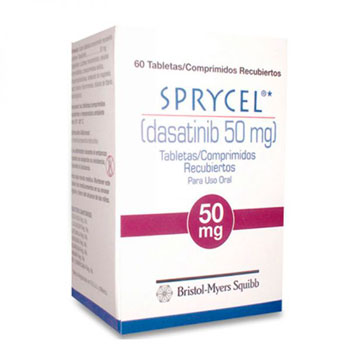
Dasatinib (Sprycel) — targeted therapy for Ph-positive leukemia
What dasatinib is in simple patient language
Sprycel — brand name. Dasatinib — the drug name in medical records. A leukemia tablet. A targeted drug. Not regular chemotherapy. Not an immune drug.
Why it comes up: some leukemias carry the Ph/BCR-ABL driver. That driver keeps blood cells getting the wrong growth message. Dasatinib is one way to press on that signal.
The pill is taken at home. That does not make the choice loose. Before Sprycel, the file has to answer plain things: blood counts, the BCR-ABL line over time, which TKI came before, breath trouble, bleeding, fluid near the lung, stomach-acid drugs, heart history, and how much the patient can carry now.
How dasatinib works
In CML and some ALL cases, BCR-ABL works like a stuck switch. The cell keeps receiving a growth order.
Sprycel is a TKI. It presses on the BCR-ABL switch. If that switch is really feeding the disease, the cells may get less push to keep dividing.
That does not make the answer automatic. The doctor still needs the disease phase, marrow history, mutation notes, blood values, previous drugs, and the lung or bleeding risks. Same target on paper. Different patient. Different move.
Which diseases dasatinib may be used for
Dasatinib is not a general leukemia tablet. It is discussed when the Ph/BCR-ABL story is part of the disease.
- CML with a confirmed BCR-ABL driver
- newly treated chronic-phase CML, when Sprycel is one of the options
- CML after another TKI stopped working well enough
- CML after another TKI became too hard to tolerate
- more active CML phases, if the whole plan supports it
- Ph-positive ALL, usually as part of a wider treatment plan
- second opinion when Sprycel was offered and the reason is not clear
One diagnosis line is not enough. Phase of disease, depth of response, mutation testing, platelets, breathing, swelling, old side effects, and drug conflicts can change the answer.
When dasatinib can be especially relevant
Sprycel usually enters the talk when the doctor wants a BCR-ABL drug and needs to compare the TKI options carefully.
- Ph-positive CML or Ph-positive ALL has been confirmed
- a first TKI is being chosen for CML
- an older drug did not bring the needed response
- another TKI caused side effects the patient could not live with
- the team needs to compare imatinib, nilotinib, bosutinib, ponatinib, or another route
- breathing history, fluid around the lungs, bleeding, or low blood counts make the choice delicate
The question is not whether Sprycel is strong. The question is what job it has now: first control, deeper response, replacement for a difficult drug, or part of a Ph-positive ALL plan.
What needs to be checked before treatment
A recent summary helps. It is not enough by itself. The doctor needs the disease picture and the patient picture on the same table.
- exact diagnosis: CML or Ph-positive ALL
- CML phase, and bone marrow results if they are needed
- BCR-ABL trend, not just one lonely number
- old TKI names, doses, dates, response, and reason for stopping
- mutation testing when resistance is a question
- CBC with neutrophils, platelets, and hemoglobin
- liver and kidney values, plus electrolytes if the doctor asks
- breathing symptoms, prior pleural fluid, swelling, heart history
- bleeding tendency, blood thinners, aspirin, or similar drugs
- full medicine list, including stomach-acid tablets and supplements
- pregnancy or pregnancy plans, if relevant
Sometimes the start waits. Not because the target is wrong. Because the platelets are too low, breathing is already not clear, fluid was seen near the lung, or another medicine makes the plan unsafe.
How treatment with dasatinib goes
Dasatinib is taken by mouth on the hematologist’s schedule. No dose games at home. No stopping for a few days and restarting by instinct.
This is often long treatment. The patient may feel fine while the blood already needs attention. The opposite can happen too: tiredness is present, but the leukemia numbers are moving the right way.
What usually gets watched:
- CBC and blood-cell trend
- BCR-ABL at the dates chosen by the doctor
- fever, infection signs, bruising, or bleeding
- breathing, cough, chest tightness, swelling, weight jump
- liver values and general strength
- new medicines, especially acid-reducing drugs or blood thinners
- planned visits to decide whether the same route still makes sense
A side effect does not always end Sprycel. A pause, dose change, symptom support, chest check, or another TKI may be the next step. The patient should not invent that step alone.
Possible side effects
Different patients run into different problems. One patient mainly has low platelets. Another has breath trouble. Another notices bruises, swelling, loose stool, or heavy tiredness.
Possible problems include:
- neutrophils, platelets, or hemoglobin going down
- tiredness, headache, low stamina
- loose stool, nausea, stomach cramps or discomfort
- rash, dry skin, muscle or joint aches
- nosebleeds, gum bleeding, new bruises, black stool, or blood where it should not be
- fluid retention, swollen legs, puffiness, or pleural fluid
- cough, heavier breathing, or a tight feeling in the chest
- heart rhythm or pressure concerns in people with risk factors
- rare lung-vessel problems that need a fast check
Small changes count with this drug. New breath trouble, bleeding, fever, or swelling should not be saved for a routine visit.
When the treating team needs to know fast
Call the clinic the same day if any of these start:
- fever, chills, sore throat, or another infection sign
- breathing becomes harder, cough gets worse, or the chest feels tight
- blood appears in stool, urine, vomit, or sputum
- black stool, many new bruises, or bleeding from gums or nose
- sudden strong weakness, fainting, or heavy dizziness
- legs or face swell, or weight jumps quickly over a short time
- strong headache, trouble speaking, sudden vision change, or weakness on one side
- a fast drop in general condition
Do not sit at home trying to prove Sprycel caused it. The doctor can make that call. The patient’s job is to report the change early.
Why dasatinib does not fit every patient
Sprycel can be a good drug in the right case. It is still not a universal CML or ALL tablet.
The doctor may move away from it if:
- the Ph/BCR-ABL target is not confirmed
- the mutation profile points to another TKI
- platelets, neutrophils, or hemoglobin are already too low
- the patient had serious pleural fluid or difficult lung symptoms
- bleeding risk is high or blood-thinning treatment is hard to avoid
- heart or vessel risks make another plan safer
- stomach-acid drugs or other medicines create a bad conflict
- general condition is too fragile for this step right now
Choosing something else does not mean Sprycel is a bad drug. It may simply be the wrong tool for this moment.
Can dasatinib be combined with other treatments
Sometimes dasatinib is the main TKI. Sometimes it sits inside a bigger plan. This matters most in Ph-positive ALL, where one tablet alone is usually not the whole story.
- with other leukemia drugs in a Ph-positive ALL plan
- after another TKI, when there is a clear reason to switch
- with support for infections, anemia, nausea, rash, or bleeding risk
- with bone marrow and BCR-ABL monitoring to judge response
- in a sequence with other BCR-ABL drugs if the goal changes
New medicines need to be checked first. Stomach-acid tablets, blood thinners, heart drugs, antibiotics, antifungal pills, sleep medicines, pain tablets, and supplements can all matter.
What no quick response can mean
With dasatinib, the answer is not read from one good day or one bad day. CML response is often a numbers story: blood counts, BCR-ABL, timing, and trend.
Sometimes the patient feels better before the deeper markers move. Sometimes the patient feels tired while the leukemia trend improves. Both situations need checking, not guessing.
If BCR-ABL falls too slowly, the doctor looks for a reason: missed doses, acid-reducing medicine, dose limits, side effects, mutation change, or disease phase. The next step should come from that review.
Hematology consultation in Israel about dasatinib
At Tel Aviv Medical Clinic, the discussion stays practical: does Sprycel make sense here, or is another BCR-ABL drug safer for this patient?
This helps when the patient was told to start Sprycel but nobody clearly explained why. It also helps after an older TKI failed, after hard side effects, or when breath trouble, bleeding, low platelets, acid pills, heart issues, or mixed advice make the plan unclear.
Bring the diagnosis proof, the Ph/BCR-ABL result, marrow papers if done, old BCR-ABL numbers, and the TKI list with dates. Add current CBC, chemistry, symptoms, and every regular medicine. If there was fluid near the lung, swelling, bleeding, or a serious infection, put that in the timeline too.
We do not choose the dose from abroad and do not replace the treating doctor. The point is narrower: sort the file, catch missing questions, and make the next visit less blind.
Frequently asked questions — answered by Dr. Stefanska
- Is Sprycel chemotherapy?
No. I would not put it in the chemotherapy box. Sprycel is a TKI tablet. It is aimed at the BCR-ABL signal in Ph-positive leukemia.
But “tablet” does not mean light treatment. Blood counts, bleeding, breathing, swelling, infections, and drug conflicts still need watching. A patient can take the pill at home, but the plan stays medical.
- Why do BCR-ABL and the disease phase matter?
Because that is where the choice begins. Without the BCR-ABL story, Sprycel has no clear job.
The phase matters too. Chronic-phase CML, advanced CML, and Ph-positive ALL are not handled as the same situation. Same signal, different plan. I would want the diagnosis, the phase, the trend, and what happened with older treatment before judging the next step.
- When might a doctor choose Sprycel instead of another TKI?
Often after looking at the old drug names, not just the diagnosis. Which TKI was used? Did it work? Why did it stop? Was it resistance, side effects, or something else?
Sprycel may fit one patient and be a poor fit for another. Breathing history, pleural fluid, platelets, bleeding risk, heart issues, and acid-reducing medicines can change the choice quickly.
- What should a patient do if breathing becomes worse?
Call the treating team. Do not wait to see if it passes.
With dasatinib, new breath trouble deserves attention. It may be infection. It may be fluid near the lung. It may be another problem. At home those look too similar. The doctor may need an exam, blood work, chest imaging, a pause, or a change in the plan.
- Can Sprycel be taken with stomach-acid medicines?
This needs checking before the patient takes them together. Some acid-reducing medicines can make dasatinib work differently.
I would not add a heartburn pill, supplement, or “safe pharmacy medicine” without asking. Bring the full list. Even the tablets that seem unrelated can matter here.
- If BCR-ABL goes down slowly, is the drug failing?
Not from one number alone. I would look at the whole line: starting level, timing of the test, missed doses, other medicines, side effects, and whether mutation testing is needed.
Sometimes the plan continues with closer checks. Sometimes the doctor changes dose or drug. The decision should not come from panic after one report.
- What should I send before a Sprycel consultation?
Send the papers that prove the diagnosis first: Ph or BCR-ABL result, marrow notes if they were done, recent CBC and chemistry, and the BCR-ABL numbers over time. Add the old TKI list with dates, not just names.
Then add the practical story: breathing trouble, swelling, bleeding, infections, bad reactions, pregnancy questions, and the daily medicine list. One page with dates is enough to start. A pile of papers with no order slows the consultation down.
Important information
This material is general medical information. It is not a prescription and not a personal treatment plan. Dasatinib can be discussed only after the diagnosis, Ph/BCR-ABL status, disease phase, blood tests, prior therapy, current medicines, and patient condition are reviewed.
Do not start, stop, restart, or change the dose without the treating physician.
Contacts
For a consultation about Dasatinib:
📞 +972-73-374-6844
📧 [email protected]
💬 WhatsApp: +972-52-337-3108
