



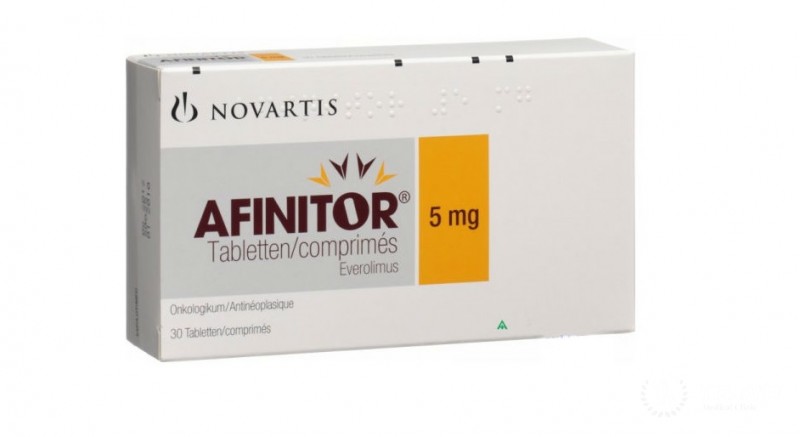
Everolimus (Afinitor) – targeted mTOR treatment review for selected tumors
What everolimus is in simple patient language
Afinitor is the brand name. Everolimus is the drug name in the file. A cancer tablet. An mTOR blocker. Not classic chemotherapy. Not checkpoint immunotherapy. Not a tablet to start just because another treatment has stopped working.
It is a tablet. That part sounds simple. The follow-up is the real work: mouth sores, sugar, blood counts, kidney and liver results, breathing, infections, and how wounds heal.
Everolimus can come up in different cancer stories. Hormone-related breast cancer. Some neuroendocrine tumors. Kidney cancer after earlier drugs. Some tumor problems linked to tuberous sclerosis. The name alone does not choose the plan.
The file has to answer a more useful question. What is the treatment trying to do now: add support to a hormone plan, slow a neuroendocrine tumor, take the next step in kidney cancer, or compare options before another line starts?
How everolimus works
mTOR is one of the cell’s grow-and-use-energy switches. In some tumors this route keeps running too hard.
Everolimus tries to quiet that route. If it quiets down, the tumor may slow. Sometimes the useful result is steadier disease, not a big change right away.
That is why the oncologist does not look only at the drug name. Tumor type, older treatment, scan behavior, infection risk, sugar levels, lung symptoms, and the patient’s strength at home all change the discussion.
Which diseases or situations everolimus may be used for
Everolimus is not a drug for every cancer diagnosis. It belongs only in selected plans where the mTOR route or a known treatment sequence makes sense.
- breast cancer where ER or PR still matter, usually when HER2 is not the target and endocrine treatment needs another partner
- some neuroendocrine tumors of the pancreas, gut, or lung, when the disease needs body-wide control
- kidney cancer after earlier systemic drugs, when the next line needs to be chosen carefully
- tumor-related problems in tuberous sclerosis, when this is the reason written in the plan
- a second opinion when Afinitor was offered and the family wants to understand why
The same drug can mean different things in different diseases. A breast cancer plan is not the same as a neuroendocrine tumor plan. Kidney cancer after several drugs is another story again.
When everolimus can be especially relevant
Everolimus is usually discussed when the doctor is not just looking for “one more drug.” There has to be a place for it in the sequence.
- a hormone-based breast cancer plan is no longer holding well enough
- a neuroendocrine tumor is growing slowly, but observation alone no longer feels safe
- kidney cancer has already been treated with other systemic medicines
- the plan includes endocrine therapy or another targeted drug, and the role of each part needs to be clear
- mouth sores, infection risk, sugar, lung symptoms, or weakness may make the choice less simple
A tablet can be useful and still be a bad fit for a frail week. Sometimes the first job is not the cancer drug. It is fixing an infection, mouth pain, sugar trouble, breathing, or a medicine clash.
What needs to be checked before treatment
Before Afinitor starts, the medical file has to be open. A short note with the diagnosis is not enough.
- the exact tumor type and pathology report
- ER, PR, and HER2 results when breast cancer is the reason
- recent scans and what changed compared with older scans
- all earlier treatments, with dates and the reason each one stopped
- blood count, liver values, kidney values, sugar, lipids, weight, and appetite
- mouth history: sores, pain, dental work, or trouble eating
- cough, shortness of breath, previous lung inflammation, or repeated infections
- the full medicine list, including antibiotics, antifungals, heart pills, diabetes drugs, pain pills, sleep pills, and supplements
- any surgery, radiation, dental procedure, or wound problem that is being planned or is still healing
One small detail can move the start date. Active infection. Bad mouth ulcers. Uncontrolled sugar. A cough that has not been explained. A wound that is not closing. These are not side notes.
How treatment with everolimus goes
Everolimus is taken by mouth on the schedule chosen by the oncologist. No dose changes by guess. No pause and restart from an old box. The treating team has to know what happened and why.
The first weeks are often very practical. Can the patient eat? Are there mouth sores? Is there fever? Is the sugar rising? Is a new cough starting? Are blood counts falling? Small changes can matter before they feel dramatic.
During treatment, the team usually follows:
- blood count
- sugar and sometimes cholesterol or other lipids
- liver and kidney values
- mouth pain, sores, burning, and eating
- fever, chills, or other infection signs
- cough, breathing, chest discomfort, or new tiredness with walking
- scan timing, symptoms, and the reason for continuing or changing the plan
A side effect does not always close the treatment. Sometimes the answer is mouth care, fluids, a short hold, dose change, infection treatment, or closer checks.
Possible side effects
With everolimus, the first trouble is often ordinary on the surface. A sore mouth. Less appetite. A dry cough. More thirst. A rash. These can still change the plan if they build up.
- mouth sores, burning, pain, or trouble eating
- tiredness, low appetite, weight loss
- rash, dry skin, itching
- nausea, loose stool, belly discomfort
- higher sugar or changes in blood fats
- lower blood counts
- infections that feel stronger than usual
- cough, shortness of breath, or lung irritation
- swelling, higher blood pressure, or kidney-value changes
- slow wound healing
The patient should not wait until eating or drinking becomes hard. Early help can keep a small problem from turning into a long treatment break.
When the treating team needs to know fast
Call or message the team the same day if any of this starts:
- fever, chills, sore throat, or a new infection sign
- mouth sores that make eating or drinking difficult
- a new cough, trouble getting air, pain in the chest, or breathing that feels worse
- strong thirst, very frequent urine, confusion, or heavy weakness
- repeated vomiting, heavy diarrhea, or not being able to drink
- bleeding, unusual bruising, or a fast drop in strength
- swelling of the face, spreading rash, or a quick allergic-type reaction
- a wound that opens, drains, becomes red, or does not heal after a procedure
Do not try to prove at home that Afinitor caused it. The safer move is to let the team check early.
Why everolimus is not right for everyone
Everolimus can fit the diagnosis on paper and still be wrong for the patient in front of the doctor. The burden matters.
- there is no clear place for the drug in the current plan
- the disease needs a faster or different systemic step
- an infection is active
- sugar is already poorly controlled
- mouth sores or eating problems are already serious
- lung, kidney, or liver problems make the start unsafe
- daily medicines do not mix well with the planned course
- surgery, dental work, or wound healing is the bigger issue right now
Not using Afinitor is not the same as giving up. It can simply mean another route fits the disease and the patient better this week.
Can everolimus be combined with other treatments
Yes, sometimes. But not as a random extra tablet. The partner treatment has to make sense for the cancer type and for the patient’s body.
- with endocrine therapy in selected hormone-related breast cancer plans
- with another targeted drug in some kidney cancer plans
- as one option among several for neuroendocrine tumors
- with mouth care, sugar control, skin care, nausea help, or infection treatment when needed
- around surgery, radiation, dental work, or local procedures only after the timing is discussed
More medicines can also mean more trouble. Mouth pain, sugar, infection, lungs, kidneys, and wound healing have to stay in the conversation.
What no quick response can mean
Everolimus is not always used for a fast visible shrinkage. In many cases, the hope is steadier disease. Slower growth. More time before another switch is needed.
This can feel strange to a patient. The tablet is being taken every day, but nothing obvious may be felt at home. The answer usually comes from scans, symptoms, blood work, side effects, and the pace of the disease before treatment.
No fast change is not always bad. But worse scans, new pain, worse breathing, weight loss, or heavy side effects should not wait for a distant appointment.
Oncology / hematology consultation in Israel about everolimus
At Tel Aviv Medical Clinic, Afinitor can be discussed as part of a second opinion when the patient wants to understand whether everolimus has a real place in the plan.
This can be useful in breast cancer, neuroendocrine tumors, kidney cancer, or another selected situation where the drug was offered and the reason is not clear to the family.
The consultation can help clarify:
- what diagnosis and treatment line are being discussed
- whether the older treatments and scans support this step
- what the drug is expected to do in this case
- how mouth sores, sugar, infection risk, lungs, kidneys, and wound healing may affect the plan
- which documents are still missing
- which questions should be taken back to the treating oncologist
We do not prescribe treatment remotely and we do not replace the treating doctor. The aim is to organize the case and make the next medical conversation clearer.
Frequently asked questions – answered by Dr. Stefanska
- Is Afinitor chemotherapy?
No. Afinitor is not classic chemotherapy. It is a targeted tablet linked to the mTOR pathway.
But I do not call it a light tablet. The patient still needs a plan for mouth sores, sugar, infections, breathing, blood work, liver and kidney checks. The home tablet still belongs to cancer care.
- Why can it be added to hormone treatment in breast cancer?
Sometimes the tumor is no longer held well by the endocrine drug alone. Then the oncologist may add a drug that works through another growth route inside the cell.
I would first look at ER, PR, HER2, older hormone drugs, scans, symptoms, and how strong the patient is. Without that story, the word Afinitor is not enough.
- Which side effects do I ask about first?
Mouth pain. Fever. Cough. Shortness of breath. Strong thirst. Weakness. Infections. These are the problems I want to hear about early.
A small sore in the mouth can become a reason the patient stops eating. A mild cough can be the start of a bigger lung issue. Silence is what makes these drugs harder to manage.
- Can a patient with diabetes use everolimus?
Sometimes, yes. But the sugar has to be part of the plan from the start. Everolimus can push sugar up.
For a consultation, I would want recent sugar results, the diabetes medicines, and a short note about thirst, urination, weight changes, and weakness. These details can change the first step.
- What should be sent for a second opinion about Afinitor?
Send the pathology report, receptor results or molecular tests, recent scans, older treatment names and dates, blood work, liver and kidney values, sugar results, and the home medicine list.
Add one page in plain order: when the cancer was found, what was used, what helped, what stopped helping, and which side effects were the hardest. That helps more than scattered pages.
- What if the mouth becomes sore during treatment?
Tell the team early. Do not wait until food or water becomes difficult.
The answer may be mouth care, pain control, checking for infection, a short hold, or a dose change. The exact step depends on how bad the sores are and whether the patient can drink and eat.
- What if there is no quick improvement?
Do not judge the drug after a few days. Everolimus is often used to slow the disease, not to create a dramatic feeling right away.
The review should be based on scans, symptoms, blood work, and side effects. If the disease grows or the patient feels worse, the team should talk sooner.
Important information
This page gives general medical information. It is not a treatment prescription. Everolimus can be discussed only after the doctor reviews the diagnosis, previous treatment, scans, blood work, sugar, liver and kidney values, lung symptoms, mouth problems, wound healing, medicines, and the patient’s general condition.
Do not start, stop, or change treatment without the treating doctor.
Contacts
For a consultation about Everolimus:
📞 +972-73-374-6844
💬 WhatsApp: +972-52-337-3108
