



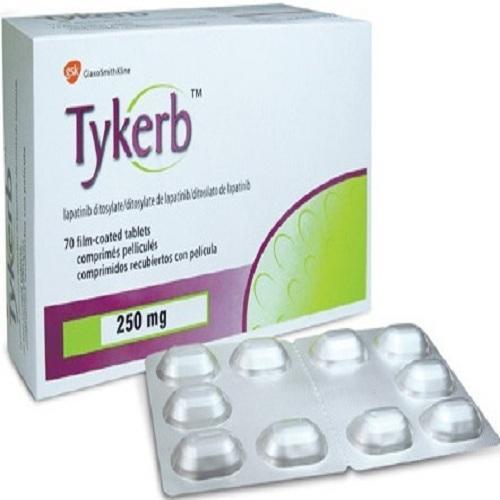
Lapatinib (Tykerb) – targeted treatment for HER2-driven breast cancer
What lapatinib is in simple patient language
Tykerb – brand name. Lapatinib – the drug name in medical records. A cancer tablet. A HER2-directed drug. Not routine chemo. Not immunotherapy. Not a tablet to start because the name sounds familiar.
Why it comes up: in some breast cancer cases, HER2 is not just a lab note. It is one of the handles the tumor uses. Tykerb only belongs in the talk when that handle is real. If the file does not show that, the drug has no clear job.
The paper has to tell the same story as the patient. Current HER2 proof, ER/PR, older anti-HER2 drugs, a possible capecitabine or endocrine partner, liver results, heart notes, gut history, imaging, and the daily pill box can change the answer. Same diagnosis line. Different next step.
How lapatinib works
Some tumor cells keep listening to HER2 and nearby growth signals. The message tells them to keep moving. Keep dividing. It is the same wrong order, repeated too many times.
On the doctor’s paper, lapatinib sits with tyrosine-kinase inhibitors. In plain words, it works inside the cell and tries to quiet part of the HER2/EGFR message. If the tumor is still using that route, the cancer may slow down. Spots may shrink. Sometimes the useful news is simply a steadier scan.
That does not make the decision automatic. The doctor still looks at the whole file: what was tried, how long it helped, what failed because of side effects, what the liver is doing, and whether the patient can safely stay on an oral plan.
Which diseases lapatinib may be used for
Lapatinib is mainly discussed in breast cancer where HER2 is a real treatment target. Not every breast tumor. Not every HER2 note on an old paper. The current treatment setting has to make sense.
- metastatic or locally advanced breast cancer with a clear HER2 driver;
- disease that has already seen other HER2-directed treatment;
- a plan with capecitabine, when that combination fits the patient;
- selected hormone-receptor positive disease, when the doctor is weighing a hormonal partner;
- second opinion when Tykerb was offered and the reason is not clear;
- comparison with newer HER2 options before another line begins.
One file may say HER2. Another file may say HER2 as well. The plans can still split. Prior trastuzumab, pertuzumab, T-DM1, antibody-drug conjugates, brain imaging, liver burden, bowel tolerance, and general strength all matter.
When lapatinib can be especially relevant
It usually enters the discussion after the first HER2 steps have already been used, or when the doctor is choosing a tablet-based part of the next plan.
- the disease is no longer controlled by an earlier HER2 plan;
- the oncologist is thinking about Tykerb with capecitabine;
- a hormonal-receptor question changes the choice of partner drug;
- the patient needs a careful comparison with newer HER2 drugs;
- there are worries about diarrhea, liver tests, heart function, or long-term daily tablets;
- the family wants to understand why this drug came up now and not earlier.
The main question is not whether Tykerb is old or new. The useful question is smaller and more practical: what job is it supposed to do now, and what will make the doctor stop or change the plan?
What needs to be checked before treatment
Before Tykerb, the doctor needs more than a short discharge letter. The choice sits on tumor biology, prior treatment, current scans, and the patient’s safety risks.
- biopsy report and HER2 testing method;
- ER and PR status, not just the HER2 line;
- fresh CT, PET-CT, MRI, or other scans used for this case;
- list of earlier HER2 drugs and why each one stopped;
- whether capecitabine, letrozole, or another partner is being discussed;
- CBC, liver tests, kidney values, and general chemistry;
- heart history and heart function checks when needed;
- diarrhea history, appetite, weight, nausea, and ability to drink;
- skin and mouth problems from older treatments;
- full medicine list, including temporary tablets, herbs, and supplements.
Sometimes the drug is not rejected. The start is simply delayed. The doctor may want liver tests repeated, diarrhea controlled, another scan reviewed, or the partner drug clarified first.
How treatment with lapatinib goes
Lapatinib is taken by mouth. The oncologist sets the dose, the partner drug, and the rhythm of visits. Do not copy another patient’s schedule. Do not restart old tablets from a drawer.
The quiet part of this treatment is the daily routine. The risky part is thinking the routine makes it harmless. Loose stool, nausea, appetite loss, rash, mouth soreness, tiredness, and liver-test changes can begin before the first scan gives an answer.
During treatment, the team usually follows:
- daily tolerance and missed-dose questions;
- diarrhea count, drinking, dizziness, and weight;
- liver values and blood work;
- heart checks when the history or the plan calls for them;
- rash, dry skin, mouth soreness, and hand-foot symptoms if capecitabine is used;
- scan timing and symptoms between scans;
- drug conflicts with the rest of the medicine list.
A side effect does not always end the plan. Sometimes the doctor pauses treatment, treats the symptom, changes the dose, or changes the partner drug. That decision should not be made at home.
Possible side effects
Lapatinib has its own weak spots. For one patient it is the gut. For another, liver tests. For someone else, tiredness, rash, or a heart question.
- loose stool, belly cramps, dehydration, or trouble drinking;
- nausea, vomiting, less appetite, weight loss;
- rash, dry skin, itching, mouth soreness;
- liver blood tests moving the wrong way;
- tired body, weak legs, head pressure, or feeling light;
- heart function changes in selected patients;
- lung symptoms such as new cough or harder breathing;
- extra effects from the drug used together with Tykerb.
Do not wait for a big scene. With Tykerb, a small problem on Tuesday can be a clinic problem by Friday.
When the treating team needs to know fast
Send a message or call that day if this begins:
- stool keeps coming loose, the mouth is dry, the head is spinning, or drinking is hard;
- repeated vomiting or strong belly pain;
- eyes look yellow, urine turns dark brown, or the right upper belly hurts;
- breathing is harder, the chest feels tight, cough comes with fever, or the chest hurts;
- the patient faints, the heart runs fast, strength drops hard, or the day changes suddenly;
- rash runs wider, skin is painful, blisters show up, or sores appear in the mouth;
- blood appears, stool is black, or bruises show up without a reason.
Do not sit at home trying to prove whether Tykerb caused it. The team should decide what needs checking.
Why lapatinib is not right for everyone
Lapatinib can be useful in the right HER2 story. It is still not a universal breast-cancer tablet. The doctor may choose another path if:
- the HER2 result is absent, unclear, or no longer trusted;
- a newer HER2 option fits the current line better;
- liver values are already unsafe for this plan;
- diarrhea or vomiting would be dangerous for this patient;
- heart function needs a separate answer first;
- the patient takes medicines that clash with the scheme;
- the cancer needs a faster or different approach;
- general strength is too low for a long oral regimen.
Not choosing Tykerb does not mean there are no options. It may mean the sequence has changed, the tumor biology points elsewhere, or the safer choice is another HER2-directed drug.
Can lapatinib be combined with other treatments
Yes, but not as a random add-on. Lapatinib usually appears inside a plan, not as a lonely pill chosen by name.
- with capecitabine in selected advanced HER2-driven disease;
- with endocrine therapy in selected hormone-receptor positive cases;
- after earlier HER2 drugs, when the sequence still makes sense;
- with support for diarrhea, nausea, skin, mouth, or dehydration;
- around radiation or local treatment when a separate spot needs attention;
- as part of a second-opinion discussion against newer HER2 options.
More drugs do not always mean a stronger plan. Sometimes the extra drug only adds toxicity. The doctor should explain the role of each part before treatment begins.
What no quick response can mean
The first days rarely answer the big question. A patient may already feel side effects while the scan is still too early to read. That can be frustrating.
A useful response may look like smaller spots. It may also look like no new growth for a while. In metastatic disease, steadier behavior can matter, but it has to be checked properly: scans, symptoms, labs, and tolerance together.
No quick improvement is not a reason to stop alone. It is also not a reason to wait forever. The doctor should define when the first review will happen and what would count as success, trouble, or a reason to change treatment.
Oncology consultation in Israel about lapatinib
At Tel Aviv Medical Clinic, a consultation can help sort out whether Tykerb still has a place in this patient’s HER2 treatment sequence. This is useful when the file has many earlier drugs and the next step is not obvious.
The consultation is not a remote prescription. It is a review of the documents, scans, HER2 data, prior response, side effects, and the reason Tykerb is being discussed now.
The consultation may help with:
- checking HER2, ER, and PR results;
- understanding why Tykerb was offered;
- comparing lapatinib with other HER2-directed options;
- looking at liver, gut, heart, and skin risks before treatment;
- preparing questions about capecitabine or endocrine therapy;
- building a short treatment timeline for the oncologist.
Frequently asked questions – answered by Dr. Stefanska
- Is lapatinib chemotherapy?
No. It is not the usual chemo model. Lapatinib is a targeted tablet that works around HER2 and a nearby receptor signal. That is why the HER2 result matters so much.
Still, I would not call it a light tablet. The patient takes it at home, but the treatment has real monitoring: liver tests, stool, nausea, skin, heart questions, scans, and the other drug in the plan.
- Why does the HER2 result need to be checked again?
Because Tykerb only makes sense if HER2 is truly part of the cancer story. A short line in an old discharge summary is not always enough. I want to see the actual report when possible.
Date matters. The biopsy site matters. The testing method matters. If the disease changed after several treatments, the old biology may not tell the whole story now.
- When is Tykerb discussed with capecitabine?
Usually later in the HER2 treatment route, when the disease needs another systemic step and the doctor thinks this pair fits the patient.
I would first ask what HER2 drugs were already used, how long they worked, and what toxicity was real trouble. Capecitabine adds its own burden. Gut, skin, hands, feet, blood work, and daily strength all count.
- What should I do if diarrhea starts?
Tell the team early. Do not wait three days to see whether it passes. With this drug, loose stool can empty the patient fast: weakness, dizziness, dry mouth, poor drinking.
The doctor may ask about number of stools, fever, belly pain, medicines taken at home, and whether capecitabine is part of the scheme. Sometimes support is enough. Sometimes the plan needs a pause.
- Why does the doctor ask about the heart?
Because HER2 drugs can sometimes make the heart part of the conversation. Many patients never have that issue. The doctor still checks for it.
Tell the doctor before treatment if breathing has been worse, legs or face have been swelling, fainting happened, the chest felt tight, or there is an old heart diagnosis. Better to know it at the start.
- Can lapatinib be used after other HER2 drugs?
Sometimes yes. But it is not just a swap: one HER2 drug out, Tykerb in. The sequence has to make sense.
I look at prior trastuzumab-based treatment, pertuzumab, antibody-drug conjugates, scans, brain imaging if relevant, side effects, and the patient’s current strength. Then the comparison becomes real.
- What should be sent before a second opinion about Tykerb?
Send the biopsy report, HER2 result, ER and PR status, latest scans, and the list of all previous cancer treatments with dates. Add blood work, liver values, heart checks if they were done, and the regular medicine list.
A short timeline helps a lot. Diagnosis date. First treatment. Best response. When the cancer moved again. What caused trouble. Why Tykerb is being discussed now.
Important information
This page is general medical information. It is not a treatment prescription. Lapatinib may be discussed only after the doctor reviews the diagnosis, HER2 status, previous therapy, scans, blood work, liver values, heart risks, side effects, and the patient’s general condition.
Do not start, stop, or change cancer treatment without the treating doctor.
Contacts
For a consultation about Lapatinib:
📞 +972-73-374-6844
💬 WhatsApp: +972-52-337-3108
