



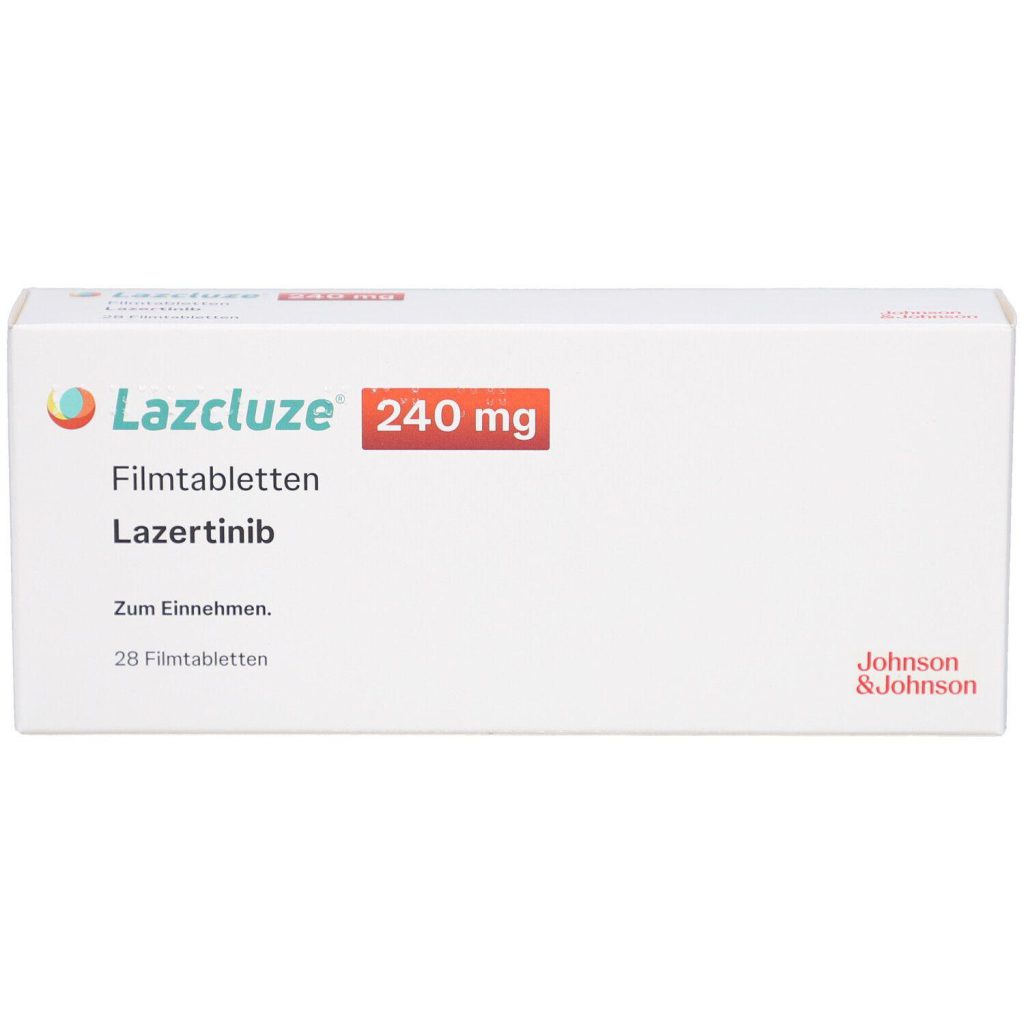
Lazertinib (Lazcluze) — EGFR lung-cancer therapy with amivantamab in the plan
What lazertinib is in simple patient language
Lazcluze — brand name. Lazertinib — the drug name in medical records. A lung cancer tablet. An EGFR drug. Not chemo. Not immunotherapy.
It is usually not a lonely tablet in the plan. The doctor often discusses it together with amivantamab. One part is taken at home. The other part is given in clinic. That already changes the safety discussion.
Why it comes up: the cancer has an EGFR change that helps the cells keep moving. The medicine tries to press on that signal. Before treatment, the doctor still has to look at scans, breathing, skin, bowel habits, heart rhythm, clot risk, prior drugs, and general strength. The mutation matters. The patient matters just as much.
How lazertinib works
Some lung tumors carry an EGFR change. The cell then hears a growth message too often. It keeps dividing when it should not.
Lazertinib is built for that EGFR route. It weakens the message. If the tumor is really using that route, the disease may slow down. Some spots can shrink. Sometimes the useful sign is quieter growth, not a dramatic scan report.
The full plan is wider than one tablet. With amivantamab in the picture, the team watches skin, gut, lungs, veins, heart rhythm, blood work, and infusion-related problems. A good target does not remove the need for careful follow-up.
Which diseases lazertinib may be used for
Lazertinib is not a general lung cancer drug. It belongs in the discussion only when the molecular report gives the right reason.
- a lung tumour from the non-small-cell group, when EGFR is the reason for the plan
- an EGFR exon 19 deletion, when the whole case fits that approach
- an EGFR L858R result in exon 21
- spread disease, where treatment has to work through the whole body
- a plan that includes amivantamab
- second opinion when Lazcluze was offered and the patient needs the logic explained
Same cancer name. Different route. Brain spots, lung symptoms, prior treatment, clot history, skin problems, and day-to-day strength can change the choice quickly.
When lazertinib can be especially relevant
It usually enters the room when the EGFR result is clear and local treatment is no longer enough.
- the tumor has a suitable EGFR finding
- the disease has spread or needs body-wide treatment
- the doctor is choosing a first systemic plan for metastatic disease
- amivantamab plus an EGFR tablet is being discussed
- there are questions about brain disease, breathing symptoms, or clot risk
- the family wants another oncologist to review the route before a long treatment starts
The question is not whether the drug is new. The question is what job it has now: hold the cancer, shrink active spots, avoid the wrong sequence, or give a stronger first plan without too much harm.
What needs to be checked before treatment
One diagnosis line is not enough. The doctor needs the lung cancer story and the patient story.
- biopsy report and tumor type
- full EGFR report, not only one copied line from a summary
- which EGFR change was found and when it was tested
- fresh CT, PET-CT, or other scans used for this case
- brain MRI if it was done, or if symptoms make it important
- earlier treatment, dates, response, and why it stopped
- CBC, liver values, kidney values
- ECG or heart history when needed
- cough, breathing changes, chest discomfort, fever, or weakness
- skin, nails, stool pattern, appetite, and weight
- past clots, leg swelling, blood thinners, and the full medication list
Sometimes treatment waits. Not because the EGFR result is useless. Because breathing has changed, the clot risk is high, the rhythm strip is not reassuring, or another medicine creates trouble.
How treatment with lazertinib goes
Lazertinib is taken by mouth on the oncologist’s schedule. No changing days at home. No stopping and restarting by guess.
If amivantamab is part of the plan, visits to the clinic are also part of the plan. The patient needs to know what is taken at home, what is given in the clinic, and which symptoms need a call between visits.
What usually gets watched:
- daily tolerance, tiredness, appetite, and weight
- rash, dry skin, itching, nail pain, cracks near the nails
- loose stool, nausea, drinking, dehydration signs
- cough, breathing, chest pressure, new fever
- blood tests, liver values, kidney values
- heart rhythm checks when the doctor asks for them
- leg swelling, calf pain, sudden breath changes, and other clot warnings
- planned scans for disease trend
A bad reaction does not always end the plan. A hold, skin care, diarrhea treatment, dose change, scan, blood test, or clot work-up may be enough. The doctor makes that call.
Possible side effects
The pattern is not the same for everyone. One person mainly gets rash. Another has diarrhea. Another feels heavy legs, weak appetite, or breathing changes that need checking.
What can appear:
- rash, dry or sore skin, itching
- nail-fold swelling, tender fingers, cracks around nails
- loose stool, nausea, low appetite
- tiredness, swelling, muscle or joint aches
- changes in liver blood tests
- cough or new breath trouble
- heart rhythm concerns in selected patients
- blood clots, especially when the combination plan increases that risk
- blood count or chemistry changes
Do not wait for a symptom to become dramatic. Early calls often keep a small problem from becoming the reason treatment has to stop.
When the treating team needs to know fast
Call the clinic the same day, or use urgent care if the symptom is strong, for:
- new breath trouble or breathing that is getting worse
- chest pressure, fainting, or a racing heart
- one leg swelling, calf pain, sudden short breath, or sudden weakness
- rash that spreads fast, blisters, painful skin, or sore mouth
- repeated loose stool or not being able to drink enough
- yellow eyes or skin, dark urine
- high fever, chills, or infection signs
- fast drop in general condition
Do not spend the weekend deciding whether it is the cancer, the drug, or a virus. On this treatment, the team needs to sort it out early.
Why lazertinib is not right for everyone
An EGFR result opens the discussion. It does not finish it. The plan has to fit the person in front of the doctor.
- the EGFR finding does not match the treatment question
- breathing is already unstable and needs explanation first
- the patient has a strong clot history or current clot concern
- heart rhythm or ECG findings need work-up
- skin, gut, liver, or kidney problems make the plan too heavy
- a previous EGFR drug failed in a way that changes the next step
- another route is safer or more logical now
Choosing something else does not mean Lazcluze is a bad drug. It may simply be the wrong move for this stage, this risk profile, or this sequence.
Can lazertinib be combined with other treatments
Yes, but combinations need a reason. More treatment is not always smarter treatment.
- amivantamab, when that combined plan is the chosen route
- skin and nail care, bowel support, nausea treatment, or hydration support
- clot prevention or clot treatment if the doctor decides it is needed
- radiation to a specific painful or risky spot, if it fits the wider plan
- comparison with another EGFR drug or a clinical trial
The important part is the map. What is tablet treatment doing? What is the infusion doing? What will be checked first? What will make the doctor pause or change the plan?
What no quick response can mean
A few days on tablets rarely tells the whole story. The first scan window, the symptom trend, and the side-effect pattern matter more than one early feeling.
Sometimes the useful result is a smaller tumor burden. Sometimes it is a slower disease pace. Sometimes the drug looks promising, but the body is paying too high a price.
The doctor reads the scan together with cough, breathing, pain, weight, labs, skin, stool, clots, and daily function. One number alone should not drive the whole decision.
Oncology consultation in Israel about lazertinib
At Tel Aviv Medical Clinic, the question is not just “Can the patient take Lazcluze?” The useful question is narrower: does this EGFR-driven lung-cancer story really fit a lazertinib-based plan now?
A consultation can help when the patient was offered Lazcluze, when amivantamab is being discussed, or when several EGFR options sound confusing.
The consultation can help to:
- read the EGFR report without guessing
- understand why Lazcluze was mentioned
- compare the combination plan with another EGFR route
- review brain imaging, lung symptoms, skin risks, heart history, and clot risk
- prepare questions for the treating oncologist
- organize a second opinion before the next treatment step
We do not prescribe cancer treatment remotely and do not replace the treating doctor. We help prepare the case, organize the documents, and make the next conversation with the oncologist clearer.
Frequently asked questions – answered by Dr. Stefanska
- Is lazertinib chemotherapy?
No. It is an EGFR-targeted tablet. Different idea. Different rhythm.
Still, I would not call it a simple tablet. The patient takes it at home, but the treatment is not “home-managed”. Skin, stool, lungs, ECG questions, blood work, and clot warnings stay on the table.
- Why is the EGFR test so important?
Because without the EGFR result we are guessing. “Lung cancer” is not enough. I need to see the actual finding: what was tested, from which sample, and when.
Old results can be useful. Sometimes they are not enough. If the disease changed after earlier treatment, the doctor may need a fresher molecular picture or at least a careful review of the old report.
- How is lazertinib different from osimertinib?
They are not the same decision. Both belong to the EGFR field, but the place of the drug in the plan can be different.
I would not compare them by name only. I want to see the EGFR type, brain MRI, prior therapy, current symptoms, and whether amivantamab is part of the proposal. Without that, the comparison is too thin.
- Why does the doctor talk about blood clots?
Because the combination plan can make clot risk a real part of the discussion. Many patients hear “tablet” and think only about rash or diarrhea. The doctor has to think wider.
Before starting, I ask about past clots, leg swelling, calf pain, sudden breath trouble, heart and vessel history, and blood thinners. Prevention is sometimes discussed. The patient should not decide that alone.
- Should the drug be stopped for rash or diarrhea?
Not automatically. But the team should know early.
A mild rash is one thing. Painful skin, cracks, blisters, sore mouth, or rash spreading over days is another. Same with stool: one loose episode is different from repeated diarrhea with thirst, weakness, or dizziness. The doctor decides whether support, a pause, or a dose change is needed.
- Which symptoms should not wait at home?
New breath trouble. Chest pressure. Fainting. A racing heart. One swollen or painful leg. Fast spreading rash. Repeated diarrhea. High fever. A sudden bad turn.
Maybe it is not the drug. Maybe it is. The patient does not need to solve that question alone. Call the team the same day when the symptom is new, strong, or growing.
- What should be sent for a consultation about Lazcluze?
Send the biopsy report, the EGFR report, the latest scans, and brain MRI if it was done. Add blood tests, liver and kidney values, ECG if available, and the current medicine list.
Also send a short timeline. Diagnosis date. EGFR result. What treatment was given. What worked. What stopped working. Which side effects were real trouble. That one page often saves a lot of confusion.
Important information
This page is general medical information. It is not a prescription and not a personal treatment plan. Lazertinib can be discussed only after the doctor reviews the diagnosis, EGFR report, scans, prior therapy, blood tests, lung symptoms, skin and bowel risks, heart history, clot risk, current medicines, and overall condition.
Do not start, stop, or change cancer treatment without the treating doctor.
Contacts
For a consultation about Lazertinib:
📞 +972-73-374-6844
💬 WhatsApp: +972-52-337-3108
