



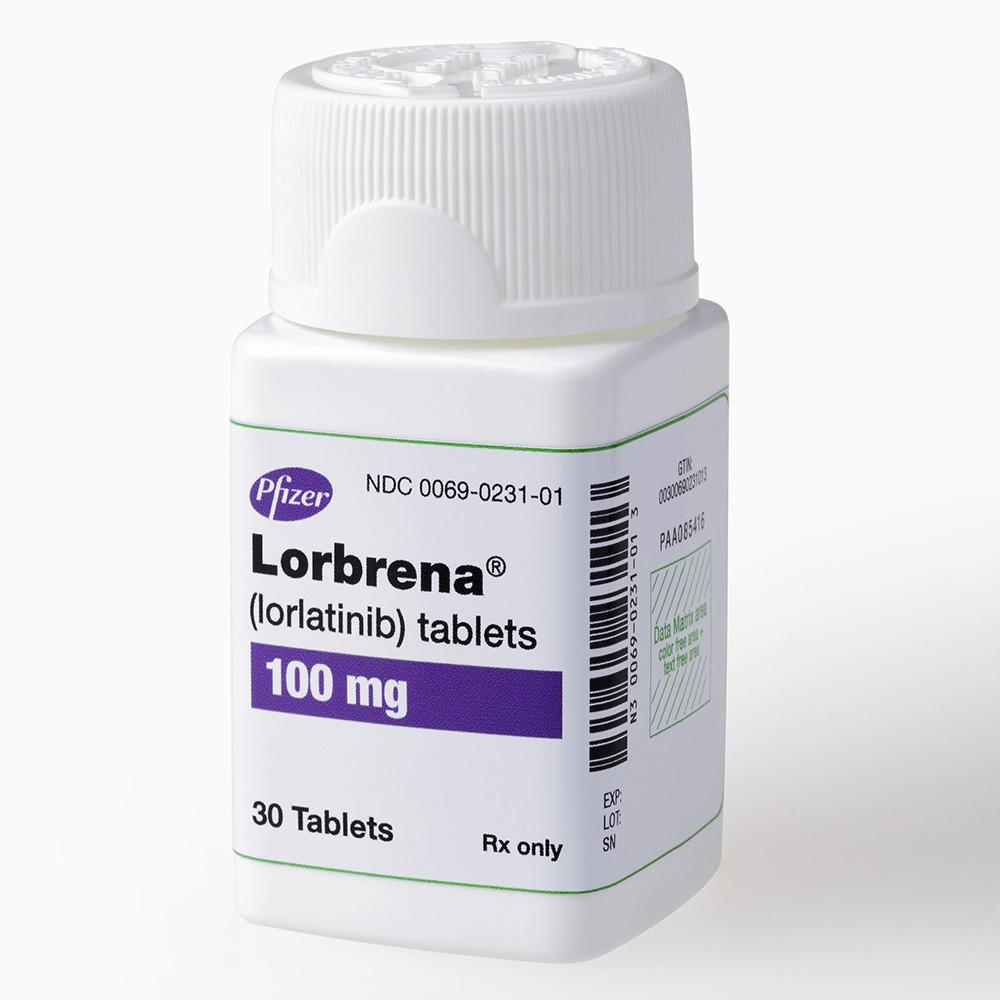
Lorlatinib (Lorbrena) — targeted therapy for ALK-positive lung cancer
What lorlatinib is in simple patient language
Lorbrena is the brand name. Lorlatinib is the drug name in medical records. A cancer tablet. An ALK drug. Not routine chemo. Not immunotherapy. Not a vitamin-like pill for home guessing.
Why it comes up: the lung tumor report names ALK as a real driver. The treatment question then changes. The plan is no longer built only around the word lung cancer. It is built around the ALK result, the scans, and what has already happened to the disease.
Lorlatinib is often discussed when brain control matters. Brain MRI. Prior radiation. Small spots in the head. Risk of new spots. These details can move the choice in another direction.
The pill is small. The decision is not. Before treatment, the doctor has to look at prior ALK drugs, current scans, cholesterol and triglycerides, heart rhythm, breathing, mood, sleep, memory, daily medicines, and the patient’s real strength.
How lorlatinib works
Some lung tumors keep listening to a changed ALK signal. That signal keeps telling the cell to stay alive and keep moving. Lorlatinib is made to press on that ALK route.
If the tumor still depends on that route, the cancer may slow down. Spots may shrink. Sometimes the first useful sign is not a dramatic feeling in the body, but a scan that looks quieter than before.
The brain question is part of the reason this drug is discussed. Lorlatinib can be considered when the oncologist is worried about disease in the brain or wants a drug that can be useful there. That does not make it automatic. It only makes the review more careful.
Same ALK word. Different patient. Different answer.
Which diseases lorlatinib may be used for
Lorlatinib is not a general lung cancer pill. It belongs only in selected ALK situations, and the report has to support the choice.
- lung cancer where the tumor has a confirmed ALK rearrangement or ALK fusion;
- advanced disease where treatment has to work through the whole body;
- a first ALK-drug discussion in selected patients, when the oncologist chooses that route;
- disease that moved after another ALK inhibitor;
- cases where brain MRI changes are part of the treatment decision;
- second opinion when Lorbrena was offered and the reason is not clear.
A positive ALK line in a report is not the whole plan. The scans, past drugs, side effects, brain history, and daily condition still matter.
When lorlatinib can be especially relevant
Lorlatinib usually enters the discussion when the ALK result is real and the oncologist needs a stronger ALK-directed plan, often with the brain risk in mind.
- the lung tumor shows a documented ALK rearrangement on the molecular report;
- brain lesions were found, treated, or are a serious concern;
- another ALK drug stopped holding the disease;
- the next treatment line has to be chosen after earlier targeted therapy;
- the family needs a second opinion before changing treatment;
- there are concerns about mood, memory, swelling, cholesterol, triglycerides, or heart rhythm.
The question is not whether the drug looks strong on paper. The question is whether this patient can use it safely, and what problem it is meant to solve now.
What needs to be checked before treatment
Before Lorbrena, a short note is not enough. The doctor needs the full case, because the same drug can be a good idea for one patient and a wrong burden for another.
- biopsy result and the exact lung cancer type;
- full ALK test result, including method and date if available;
- previous ALK drugs, dates, response, and reason for stopping;
- fresh CT or PET-CT, and brain MRI if it was done or needed;
- blood work, liver values, kidney values, cholesterol, and triglycerides;
- ECG or heart rhythm notes when there is a history of rhythm trouble;
- breathing symptoms: cough, harder breathing, chest pain, new fever;
- mood, sleep, memory, speech, concentration, and unusual behavior;
- swelling, weight change, appetite, walking balance, and everyday function;
- all medicines: heart pills, seizure drugs, antifungals, sleep drugs, pain tablets, herbs, and supplements.
Sometimes the treatment question has to wait. Lipids may be very high. Brain MRI may be missing. A new breathing complaint may need checking first. The drug can still be discussed, but the order changes.
How treatment with lorlatinib goes
Lorlatinib is taken by mouth. The oncologist sets the dose and the follow-up. No stopping, restarting, or changing the amount by guess.
The visits are not only about the next scan. The team asks about swelling, walking, sleep, temper, memory, word finding, appetite, breathing, chest symptoms, and small changes family members notice first.
During treatment, the team usually follows:
- blood work;
- cholesterol and triglycerides;
- liver and kidney values;
- ECG or heart checks when needed;
- swelling, weight, appetite, and energy;
- mood, memory, sleep, speech, and concentration;
- cough, breath, chest discomfort, or fever;
- planned CT, PET-CT, or brain MRI, depending on the case.
A side effect does not always mean the drug is finished. Sometimes the plan needs a pause, lipid treatment, dose change, or closer checks. The patient should not test that plan at home.
Possible side effects
Lorlatinib has a very particular burden. Some problems are felt by the patient. Others sit quietly in the blood test.
- high cholesterol or triglycerides;
- swelling, often legs, feet, or around the eyes;
- numbness, tingling, nerve pain, or weak hands and feet;
- sleepiness, slowed thinking, memory trouble, word-finding difficulty;
- mood changes, anxiety, irritability, or behavior that feels unlike the patient;
- weight gain or appetite changes;
- cough, harder breathing, or lung inflammation concern;
- heart rhythm changes in selected patients;
- liver-test changes;
- general weakness and heavy tiredness.
Do not hide the “small” changes. With lorlatinib, family may notice the mood or thinking shift before the patient does. That information matters.
When the treating team needs to know fast
Call or send a message the same day if any of these start:
- new breathlessness, cough with fever, chest tightness, or chest pain;
- fainting, strong dizziness, racing heart, or a very slow pulse;
- swelling that grows quickly or comes with harder breathing;
- confusion, unusual sleepiness, strange behavior, or a sharp mood change;
- new weakness or numbness in an arm or leg;
- severe anxiety, agitation, or aggression that is not typical for the patient;
- yellow eyes, very dark urine, or strong right-sided belly pain;
- a quick drop in general condition after starting or changing the dose.
Do not sit at home trying to prove whether Lorbrena caused it. The team should decide that.
Why lorlatinib is not right for everyone
Lorlatinib can be useful in the right ALK case. It is still not a universal lung cancer tablet.
- the ALK driver is not confirmed;
- another ALK drug or another sequence fits better now;
- heart rhythm risk is too high without more work-up;
- cholesterol or triglycerides are already out of control;
- there are serious mood, memory, or behavior symptoms before treatment;
- breathing symptoms need another answer first;
- the patient is too weak for a drug that may need long follow-up;
- medicine clashes make the plan unsafe.
Choosing a different route does not mean Lorbrena is a bad drug. It may mean the case is asking for another order, another ALK drug, local treatment, or a different safety plan.
Can lorlatinib be combined with other treatments
Lorlatinib is sometimes part of a wider route. That route may include prior radiation, brain treatment, surgery for a separate problem, lipid medicine, swelling support, or another oncology decision later. But it is not added to everything just to make the plan look stronger.
What matters is sequence. What was already used. What failed. What is still working. What has to be watched in the brain. What side effect would stop the plan if nobody sees it early.
New tablets, supplements, sleep medicines, antifungals, seizure drugs, or heart drugs should not be added quietly. A small outside prescription can change the safety discussion.
What no quick response can mean
Lorlatinib does not need to announce itself in the first few days. A patient may feel the same while the scan later looks calmer. Or the body may feel worse from swelling, mood changes, or tiredness before the cancer answer is clear.
The doctor reads the whole picture: CT, brain MRI, symptoms, blood work, lipids, breathing, walking, mood, and the pace of disease before treatment.
Sometimes “working” means shrinkage. Sometimes it means the disease stopped running. Sometimes the side effects cost too much and the plan has to change. One bad day is not the answer. One scan without context is not the answer either.
Oncology consultation in Israel about lorlatinib
At Tel Aviv Medical Clinic, the case can be reviewed to understand whether lorlatinib has a place in the current treatment plan. This is useful when Lorbrena was offered, when another ALK drug stopped working, or when brain MRI changes make the decision harder.
The consultation can help check what is missing before a decision, what questions to ask the treating oncologist, and what risks should be prepared for before the first dose.
Tel Aviv Medical Clinic helps organize the medical files and clarify the logic of the next step. We do not prescribe cancer treatment remotely and do not replace the treating doctor.
Frequently asked questions – answered by Dr. Stefanska
- Why is lorlatinib discussed only in ALK-positive lung cancer?
Because without a real ALK finding, the drug has no clear job. “Lung cancer” is not enough. I need to see the ALK report itself, not only a line in a summary.
Then I look at the rest. Where the disease is. Whether the brain is involved. Which ALK drugs were already used. What side effects were left behind. Only then does Lorbrena become a real option or not.
- How is lorlatinib different from other ALK drugs?
It is another ALK inhibitor, but not just a new label for the same thing. It has its own place and its own problems. The brain question is often the reason it is discussed.
Still, I would not choose it by one feature alone. I want the previous treatment dates, scans, brain MRI, lipid numbers, heart history, mood, memory, and daily condition. The drug may be strong, but the patient has to live with it every day.
- Why are cholesterol and triglycerides checked?
Because they can rise on lorlatinib, sometimes without any feeling at all. The patient may feel fine, and the blood test already says the plan needs attention.
That does not automatically stop the drug. Often we treat the lipids and keep watching. But I need the numbers early, not three months later when the problem is larger.
- Which mood or memory changes matter?
Sleepiness that is not usual. Slower thinking. Forgetting words. Irritability. Anxiety. Strange behavior. Confusion. A family member saying, “this is not how she usually is.” I take that seriously.
The patient may not notice it first. So I ask relatives to speak up. This is not gossip and not panic. It can be part of the drug burden, and we need to know.
- Can lorlatinib be used if there were brain metastases?
Sometimes that is exactly why it comes into the conversation. But I still need the brain MRI, dates of radiation if it was done, symptoms, and what the last scan showed.
The phrase “brain metastases” is not enough. Old treated spots, new growing spots, and a clean MRI after earlier disease are different stories.
- Should the patient stop Lorbrena for swelling or weakness?
Not by herself. Swelling and weakness are common enough that we plan for them, but the answer depends on how fast they started and what else is happening.
Tell the team where the swelling is, whether breathing changed, whether there is chest pain or dizziness, and what the weight did over a few days. Those details decide whether this is a message, an urgent check, a pause, or support treatment.
- What should be sent for a second opinion about Lorbrena?
Send the biopsy, the ALK report, the latest CT or PET-CT, and brain MRI if it was done. Add the list of past ALK drugs with dates, why each stopped, and what side effects were real trouble.
Also send fresh blood work, liver and kidney values, cholesterol, triglycerides, ECG if there is a heart issue, and the daily medicine list. A short timeline helps more than a pile of files without order.
Important information
This page is general medical information. It is not a treatment prescription. Lorlatinib can be discussed only after review of the diagnosis, ALK result, scans, prior treatment, blood work, brain MRI when relevant, lipids, heart rhythm, medicines, and the patient’s condition.
Do not start, stop, or change cancer treatment without the treating doctor.
Contacts
For a consultation about Lorlatinib:
📞 +972-73-374-6844
💬 WhatsApp: +972-52-337-3108
