



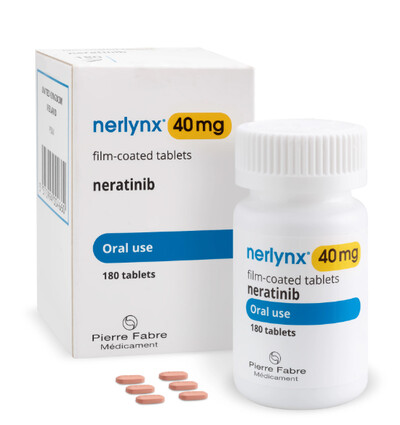
Neratinib (Nerlynx) – targeted drug in HER2-related breast cancer care
What neratinib is in simple patient language
Nerlynx is the brand name. Neratinib is the drug name in medical records. A cancer tablet. A HER-family blocker. Not an infusion drug. Not an antibody. Not a pill to start without an oncologist.
Why it comes up: the breast tumor has a HER2 story, and the doctor is asking whether another oral step is worth the burden. Sometimes this is after trastuzumab-based treatment. Sometimes later, when older HER2 plans no longer hold the disease well.
The pill looks simple. The bowel problem is not. Before day one, the patient needs a clear bowel plan: first loose stool, what to take, what to drink, who to call. Not after the third bad day.
HER2 is only part of the decision. ER and PR results, previous HER2 drugs, liver tests, stomach medicines, weight, appetite, and the patient’s real strength at home can all change the answer.
How neratinib works
Some breast cancer cells keep listening to HER2 and nearby growth signals. Those signals tell the cell to keep going. Keep dividing. Keep using the same route even after earlier treatment.
Neratinib works inside the cell. It tries to quiet part of that HER2-family message. If the tumor still uses that route, Nerlynx can have a role. If the tumor has already moved away from it, the name of the drug is not enough.
This is why the oncologist looks at the whole case, not only at one old HER2 line in a report. The stage, hormone receptors, earlier drugs, scan behavior, liver values, gut tolerance, and daily routine all matter.
Which diseases neratinib may be used for
Neratinib belongs in a breast cancer discussion where HER2 is truly part of the case. Not every breast cancer. Not every HER2 note. The timing has to fit.
- after trastuzumab-based treatment, when one more HER2-directed step is being discussed
- HER2-related breast cancer with hormone receptors, if relapse risk is part of the question
- metastatic HER2-related disease after earlier HER2 medicines
- a later-line setting where capecitabine is being considered with Nerlynx
- second opinion when Nerlynx was offered and the reason is not clear
Same HER2 word. Different patient. A plan after surgery is not the same as a plan for metastatic disease. Prior drugs, bowel history, liver tests, scan pace, and basic strength can send the choice another way.
When neratinib can be especially relevant
The drug usually enters the conversation after the first HER2 steps are already behind the patient. The question is not “can we add more treatment?” The question is whether this extra step is likely to help enough to justify the gut risk.
- the patient finished trastuzumab-based treatment and relapse risk still worries the doctor
- the tumor has HER2 and hormone receptor information that changes the discussion
- the disease is metastatic and older HER2 drugs have already been used
- capecitabine is being discussed as the partner drug
- the family wants a second opinion before starting a long oral course
If the possible gain is small and the bowel risk is high, the answer may be no. That is still a medical decision, not a failure of the drug.
What needs to be checked before treatment
A Nerlynx decision needs the real treatment story. A short discharge note is usually not enough.
- biopsy report and HER2 result
- ER and PR status
- dates of surgery, radiation, chemotherapy, and HER2 treatment
- names and dates of earlier HER2 medicines: trastuzumab, pertuzumab, T-DM1, trastuzumab deruxtecan, or others
- recent scans if the disease is not early-stage
- liver values and basic blood work
- stomach and bowel history, especially loose stool before treatment
- the full home medicine list: stomach pills, heart pills, antibiotics, antifungals, pain pills, supplements, pharmacy drugs
- weight, appetite, drinking, and whether daily tablets are realistic at home
Sometimes the drug question has to wait. Not because HER2 disappeared. Because diarrhea is already active, the liver values are not ready, or another medicine may clash with Nerlynx.
How treatment with neratinib goes
Neratinib is a home tablet, but the schedule is not a home decision. The oncologist decides how to start it and what bowel support goes with it. No skipped, doubled, or restarted tablets by guess.
The first weeks are mostly about bowels, drinking, strength, and liver tests. The cancer decision is serious, but the practical problem can be very ordinary: too many stools, not enough fluid, dizziness, weakness, or missed tablets.
During treatment, the team usually follows:
- number of loose stools in a day
- belly pain, cramps, nausea, vomiting, appetite
- fluid intake, dry mouth, dizziness, urine amount
- liver tests and blood work
- rash, mouth soreness, weight loss, fatigue
- other medicines started during the course
- scan timing if the drug is used for metastatic disease
A bad week does not automatically close the treatment. But it should not be hidden. Sometimes support medicine is changed. Sometimes the dose waits. Sometimes another route is safer.
Possible side effects
The main trouble with neratinib is often the gut. Not always, but often enough that it must be planned before treatment begins.
- loose stool, sometimes many times a day
- belly cramps, nausea, vomiting, low appetite
- dry mouth, thirst, dizziness, weakness from fluid loss
- weight loss or poor eating
- liver-test changes
- rash, dry skin, mouth soreness
- tiredness and low energy
New symptoms should be reported early. With this drug, waiting several days can turn a manageable bowel problem into dehydration and a long treatment pause.
When the treating team needs to know fast
Call or message the team the same day if any of this starts:
- loose stool again and again, especially with weakness or thirst
- not being able to drink normally
- dizziness, faint feeling, very little urine, or dry mouth
- repeated vomiting or strong belly pain
- yellow eyes, tea-colored urine, or pain high on the right side of the belly
- fever, chills, or infection signs
- rash that spreads fast, mouth sores, or painful skin
Do not try to prove at home whether Nerlynx caused it. The treating team should make that call.
Why neratinib is not right for everyone
Neratinib can be useful in the right HER2 case. It is still not an automatic next step after every HER2 plan.
- HER2 result is missing, old, or unclear
- the expected benefit is small
- bowel problems are already a major issue
- liver tests are not safe enough for the drug
- the patient cannot drink well or keep regular tablets
- another HER2 drug or another sequence makes more sense
- daily medicines create a safety problem
Not choosing Nerlynx does not mean the drug is bad. It may simply be the wrong moment, wrong burden, or wrong treatment line for that patient.
Can neratinib be combined with other treatments
Sometimes Nerlynx is not alone. In metastatic disease, capecitabine may be part of the discussion. In other cases the question is extended oral therapy after earlier HER2 treatment. The setting changes the logic.
- after trastuzumab-based treatment, if the doctor sees a reason for an extra HER2 step
- with capecitabine in selected later-line metastatic cases
- near endocrine therapy when hormone receptors are part of the plan
- with bowel support, nausea medicine, skin care, and careful liver checks
More treatment is not automatically better. The oncologist has to decide what the extra drug is meant to achieve and what it may cost the patient.
What no quick response can mean
When Nerlynx is used after main treatment, the patient may not feel an “effect” at all. The goal may be risk reduction, not relief of a symptom.
When the disease is metastatic, the answer usually comes from scans, symptoms, liver tests, bowel tolerance, and whether the patient can stay on treatment safely. One day of bad stool does not answer the cancer question. But ignoring bad stool can ruin the treatment question.
The doctor should say in advance when the first review will happen and what would make the team stop, pause, or change course.
Oncology consultation in Israel about neratinib
At Tel Aviv Medical Clinic, Nerlynx can be discussed as part of a second opinion for HER2-related breast cancer. This can be useful when the patient has already received a recommendation but does not understand why this drug is needed now.
The consultation can help clarify:
- whether the HER2 result is enough for this decision
- whether the setting is after main treatment or metastatic disease
- whether capecitabine is part of the plan
- how serious the diarrhea risk is for this patient
- what documents are missing before a clear answer
- which questions should be taken back to the treating oncologist
We do not prescribe treatment remotely and we do not replace the treating doctor. The purpose is to organize the case and make the next medical conversation clearer.
Frequently asked questions – answered by Dr. Stefanska
- Is Nerlynx chemotherapy?
No. Nerlynx is not classic chemotherapy. It is an oral targeted drug connected to HER-family signaling.
But I would not call it a light tablet. The bowel side can be difficult, and the patient needs a clear plan before the first dose. Otherwise a small problem can become dehydration very quickly.
- Why is diarrhea discussed so much?
Because with neratinib it can start early. Sometimes the first days already show how hard the course may be.
I want the patient to know the clinic rules before treatment starts: what medicine is allowed, what to drink, and when to call. Waiting until the next visit is not a good idea if stools are frequent or the patient feels weak.
- Who might need neratinib after the main HER2 treatment?
This is a selected discussion. It can come up after trastuzumab-based treatment, especially when the doctor still worries about relapse risk.
HER2 alone does not settle it for me. I need the stage. ER and PR. What treatment was already used. What side effects stayed. And whether this patient can live with a long oral course without getting into trouble.
- Does Nerlynx ever come up in metastatic breast cancer?
Yes, sometimes. Then the old path matters more than the drug name. Which HER2 drugs? Was capecitabine already tried? What do the newest scans show? Is the disease moving fast or slowly?
Without that history, the answer is too thin.
- Which medicines should be shown before starting?
Show the whole bag, not only the cancer drugs: stomach tablets, infection drugs, heart pills, pain tablets, supplements, and pharmacy medicines.
Stomach medicine is easy to forget. Here it matters. I want the list in front of me before I say the plan is safe.
- Should treatment stop at the first strong diarrhea?
Not by guess. Strong diarrhea means contact the team quickly. The next move may be fluids, stool medicine, labs, a short hold, or a dose change.
The dangerous part is silence. If the patient is weak, thirsty, dizzy, or not drinking, this is not a routine question for the next visit.
- What should be sent for a second opinion about Nerlynx?
For the second opinion, send the biopsy. HER2. ER and PR. Operation date if there was one. Treatment dates. Names of the HER2 drugs. Latest scans, liver tests, blood work, and the medicines taken at home.
Add a one-page story: when it started, what was given, what helped, what stopped helping, and which side effects were the hardest.
Important information
This page is general medical information. It is not a treatment prescription. Neratinib should be discussed only after the doctor reviews the diagnosis, HER2 data, previous treatment, liver tests, bowel history, medicines, and the patient’s general condition.
Do not start, stop, or change treatment without the treating doctor.
Contacts
For a consultation about Neratinib:
📞 +972-73-374-6844
💬 WhatsApp: +972-52-337-3108
