



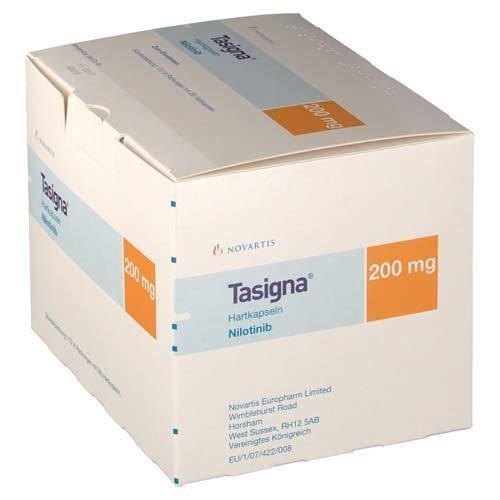
Nilotinib (Tasigna) – targeted treatment review for chronic myeloid leukemia
What nilotinib is in simple patient language
Patients may see Tasigna on the box. In the file, the same medicine is written as nilotinib. It is a cancer tablet. It works as targeted treatment. It is not a chemo drip. It is not an immune drug.
This name usually appears when the leukemia file has a clear BCR-ABL finding. The tablet is chosen to press on that signal. Without that finding, the brand name does not say enough.
Before I look at the box, I want the story. CML phase. Recent BCR-ABL results. Earlier tablets. Missed doses. ECG. Liver tests. Sugar and cholesterol. Heart history. Daily medicines.
The tablet may seem easy from the outside. The routine is not. Meals, other tablets, pulse, fainting, stomach pain, and lab changes have to be discussed before the first dose.
How nilotinib works
In this leukemia, BCR-ABL can act like a stuck order inside the cell. The cell keeps getting the signal to stay active, even when it should calm down.
Nilotinib tries to block that message. When the signal is lower, the leukemia may calm down and the blood picture can improve.
That is the useful part. The risk part is also real. Tasigna can affect rhythm, liver numbers, sugar, cholesterol, pancreas enzymes, and blood counts. So the doctor does not read one lab line alone.
The question is plain: is this the right BCR-ABL blocker for this person now, and can the patient take it in the right way every day?
Which diseases or situations nilotinib may be used for
Nilotinib is not a leukemia tablet for every blood diagnosis. It belongs only where the CML story and the BCR-ABL result fit the plan.
- CML while the disease is still in its steadier phase, if a BCR-ABL tablet is being selected
- CML with a Philadelphia chromosome or BCR-ABL result in the file
- a switch after imatinib, when the earlier drug did not hold well enough or was hard to tolerate
- selected more active phases of CML, when the hematologist still needs a BCR-ABL drug
- a second opinion when Tasigna was offered and the reason is not clear
- review of side effects, slow molecular response, missed doses, or drug interactions
The same diagnosis can lead to different tablets. One patient needs Tasigna. Another may do better with another TKI because of heart rhythm, vessels, liver values, or the old treatment story.
When nilotinib can be especially relevant
Tasigna may enter the discussion when the doctor wants tighter BCR-ABL control, or when an older CML drug did not do the job well enough.
- BCR-ABL is confirmed and the treatment goal is a deep, steady response
- the first TKI caused trouble or did not lower the numbers as expected
- the doctor is comparing nilotinib with imatinib, dasatinib, bosutinib, or another option
- the BCR-ABL result is moving too slowly and the reason needs review
- long-term daily tablets have to fit real life, not only the prescription page
- heart, vessel, sugar, liver, or medicine-mix risks need a careful look before starting
The useful question is not whether Tasigna is strong. The useful question is what it has to do now: start control, deepen response, replace a hard drug, or keep a stable response without adding new risk.
What needs to be checked before treatment
A short note with “CML” is not enough. The hematologist needs the disease story and the patient story together.
- date of diagnosis and CML phase
- BCR-ABL result, with dates and trend over time
- all older CML tablets: names, doses, dates, response, and why each one stopped
- CBC with white cells, hemoglobin, platelets, and neutrophils
- liver values, bilirubin, kidney values, sugar, cholesterol, and triglycerides
- ECG result and any history of rhythm trouble, fainting, chest pressure, or fast heartbeat
- past stroke, heart attack, clots, poor blood flow in the legs, diabetes, smoking, or strong vessel risk
- daily medicines, including heart pills, pressure pills, antibiotics, antifungals, sleep tablets, anxiety tablets, and supplements
- pregnancy plans, breastfeeding, or fertility questions, when relevant
The way Tasigna is taken matters. The timing with food has to be clear before the first day. A good plan written on paper prevents many mistakes at home.
How treatment with nilotinib goes
Nilotinib is taken by the schedule from the hematologist. No dose changes at home. No extra capsule after a missed dose. No restart from an old box after a break.
CML treatment is often long. The first months are about two things at once: is the leukemia signal falling, and is the body handling the tablet safely?
During treatment, the usual checks are practical:
- CBC and blood count trend
- BCR-ABL results at the planned times
- liver values and bilirubin
- ECG or rhythm review if the story calls for it
- sugar, cholesterol, triglycerides, and pancreas enzymes when the doctor follows them
- pulse, fainting, chest pressure, hard breathing, leg pain, or new weakness
- skin rash, itching, belly pain, appetite, and daily strength
- new medicines added by another doctor
A difficult week does not always mean the drug is over. The answer may be a short hold, a lab repeat, a dose change, a check of another medicine, or a different CML tablet. The doctor has to make that call.
Possible side effects
Nilotinib can work well for some patients, but the body can still pay for it. One person mainly notices skin or stomach trouble. Another has changes in ECG, sugar, liver tests, or blood counts.
Possible problems include:
- rash, itching, dry skin, headache, or tiredness
- nausea, belly pain, constipation, loose stool, or poor appetite
- liver numbers or bilirubin going up
- sugar, cholesterol, or triglycerides rising
- pancreas irritation, often seen first on labs or with strong belly pain
- low blood cells, bruising, bleeding, or infection signs
- fast heartbeat, skipped beats, fainting, or ECG change
- chest pressure, leg pain, cold foot, sudden weakness, or other vessel warning signs
The patient does not need to panic over every small symptom. Silence is the riskier part. A new rhythm problem, strong belly pain, or a lab change is easier to sort out early.
When the treating team needs to know fast
Call or message the treating team the same day if any of this starts:
- fainting, strong dizziness, fast pulse, or irregular heartbeat
- chest pressure, hard breathing, sudden weakness, or trouble speaking
- strong belly pain, repeated vomiting, or pain that does not settle
- yellow eyes, dark urine, or a sharp change in liver tests
- black stool, blood in urine, unusual bleeding, or new wide bruises
- high temperature, shaking cold, or a clear infection sign
- swelling of the face, hard rash, or breathing trouble after a dose
- any quick decline that feels different from the patient’s usual baseline
Do not try to prove at home that Tasigna caused it. The team needs the facts early and then decides what is linked to the drug.
Why nilotinib is not right for everyone
Nilotinib can be a strong CML option. It is still not the right tablet for every patient with BCR-ABL-positive disease.
The doctor may choose another route if:
- BCR-ABL is not confirmed, or the diagnosis does not fit this plan
- heart rhythm risk is too high at the start
- vessel risk is strong and another TKI looks safer
- liver, pancreas, sugar, or lipid problems are already difficult
- the daily medicine list has unsafe matches with nilotinib
- the patient cannot follow the food timing or lab schedule
- pregnancy or breastfeeding changes the whole discussion
- another TKI fits the goal better right now
Choosing another drug does not mean Tasigna is a bad drug. It may simply be the wrong fit for this heart, these labs, this medicine list, or this stage of CML.
Can nilotinib be combined with other treatments
Nilotinib is usually discussed as the CML tablet itself, not as something to add casually to other cancer drugs. The sequence matters more than the number of medicines.
It may be discussed:
- after imatinib or another TKI, if response or tolerance was not good enough
- when mutation testing or the BCR-ABL trend changes the next step
- with supportive care for nausea, rash, pressure, sugar, or other problems
- with careful review of heart, infection, antifungal, sleep, anxiety, and pressure medicines
- in comparison with another TKI if the current route is not working well
- around fertility, pregnancy, or long response questions, only with the treating hematologist
Do not add “safe” home tablets without asking. With Tasigna, even a common medicine can matter if it changes rhythm risk or drug levels.
What no quick response can mean
With CML, the patient may feel better before the molecular result is where the doctor wants it. The opposite can also happen: the patient feels fine, but the BCR-ABL trend is not good enough.
The doctor reads dates, not one lonely number. Blood count, BCR-ABL, missed doses, food timing, side effects, new medicines, and the CML phase all matter.
A slow answer does not always mean failure. It does mean the story has to be checked. Sometimes the plan stays. Sometimes the dose, medicine timing, or whole TKI choice changes.
Hematology consultation in Israel about nilotinib
At Tel Aviv Medical Clinic, a patient with CML can review whether nilotinib has a place in the current plan. This can help when Tasigna was offered, when the BCR-ABL trend is unclear, or when another TKI is being compared.
A consultation may help to:
- read the BCR-ABL results in order, not as scattered pages
- understand why Tasigna is being discussed now
- compare nilotinib with other CML tablets
- look at ECG, heart, vessel, liver, sugar, and medicine-mix risks
- prepare questions for the treating hematologist
- discuss options that may be relevant in Israel
We do not prescribe remotely and do not replace the treating physician. We help the patient and family understand the medical logic and prepare for the next step.
Frequently asked questions — answered by Dr. Stefanska
- Is Tasigna chemotherapy?
No. I would not call Tasigna classic chemotherapy. It is a targeted CML tablet. It works around the BCR-ABL signal, if that signal is really the driver in the file.
But it is not a light pill. I want to see the ECG, liver values, sugar, cholesterol, blood count, and the home medicine list before I feel calm about the start. The tablet is small. The plan is not.
- Why is BCR-ABL checked again and again?
Because CML is not followed only by how the patient feels. BCR-ABL tells us whether the leukemia signal is falling in the right direction.
I need the dates next to the numbers. One result floating alone can mislead. I want to know the starting level, the trend, missed doses, side effects, and whether another medicine may have disturbed the plan.
- What is special about how Tasigna is taken?
The timing matters. This is not a capsule to take whenever breakfast happens. The food rules and dose times must be written clearly.
I ask patients to keep the schedule simple and repeat it back. If a dose is missed, do not “fix it” alone. Call or follow the written plan from the treating team.
- Why ask so much about ECG and heart history?
Because this drug can sit close to rhythm questions in some patients. A normal start is safer than finding the problem after fainting or a fast heartbeat.
I also want the full medicine list. Heart tablets, antifungals, antibiotics, sleep tablets, anxiety tablets, and even some nausea medicines can change the risk conversation.
- What if BCR-ABL goes down too slowly?
I do not decide from one number. I first check the timing, the dose, missed tablets, food timing, side effects, and any new medicines.
If the trend is still not good, the doctor may ask for mutation testing or discuss another TKI. Slow does not always mean failed. But it should never be ignored.
- Can nilotinib ever be stopped?
Sometimes patients ask this after a long deep response. It is not a decision based on feeling well.
The doctor needs a very stable molecular response and a plan for frequent BCR-ABL checks. If the number rises, treatment may need to restart fast. No patient should stop Tasigna alone.
- What should be sent for a second opinion about Tasigna?
Send the diagnosis date, CML phase, BCR-ABL results with dates, mutation tests if done, and all older CML tablets with doses and reasons for stopping.
Add ECG, blood count, liver values, sugar, cholesterol, pancreas labs if checked, pressure history, heart or vessel history, and the full medicine list. A one-page timeline helps more than a pile of mixed pages.
Important information
This page gives general medical information only. It is not a treatment recommendation. Nilotinib is discussed only after review of the diagnosis, CML phase, BCR-ABL results, prior treatment, ECG, blood tests, medicine list, heart and vessel risks, and general condition.
Do not start, stop, or change treatment without speaking with the treating physician.
Contacts
For a consultation about nilotinib:
📞 +972-73-374-6844
💬 WhatsApp: +972-52-337-3108
