



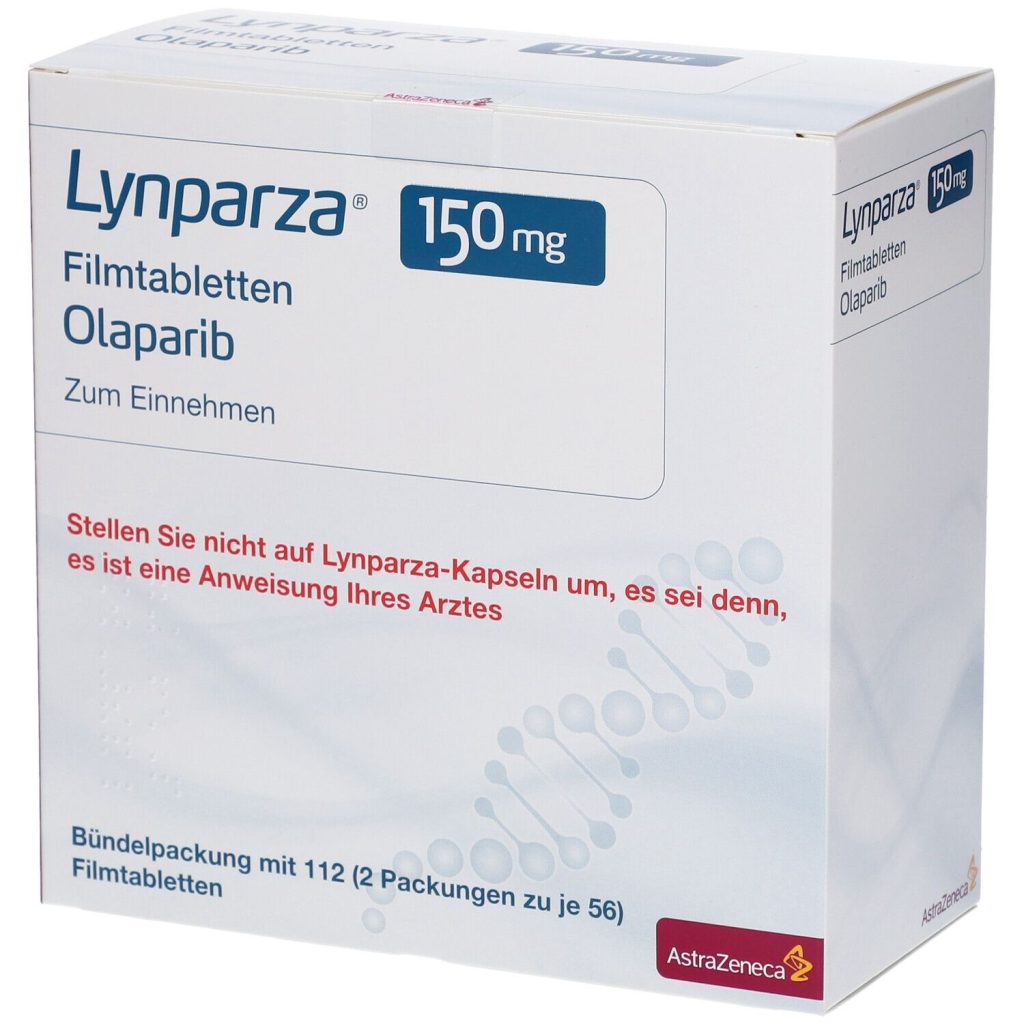
Olaparib (Lynparza) — PARP treatment for selected DNA-repair tumors
What olaparib is in simple patient language
Lynparza is the brand name. Olaparib is the drug name in the chart. A cancer tablet. A PARP drug. Not classic chemotherapy. Not immunotherapy.
This name usually comes up when the tumor file shows a weak repair system. Often the talk is about BRCA1, BRCA2, HRD, or another repair-gene result. Without that story, the tablet may have no clear job.
The first useful question is not “is this a known drug?” The better question is plain: why now? After platinum drugs? After surgery? To hold a response? To replace a plan that stopped helping? Blood counts, kidney values, nausea, fatigue, and the strength of the patient at home all belong in the same discussion.
How olaparib works
Cells make small DNA mistakes all the time. Healthy cells have several ways to repair them. Some cancer cells have already lost part of that repair ability.
Olaparib blocks another repair route. If the tumor cell is already weak in this area, the extra pressure can make it harder for that cell to keep dividing.
That is the simple idea. Real treatment is less simple. The doctor still reads the tumor type, the gene report, the old treatment story, blood tests, kidney function, symptoms, and the goal of this stage.
Which diseases olaparib may be used for
Olaparib is not a tablet for every cancer diagnosis. It belongs only where the biology of the tumor makes sense for PARP treatment.
- cancer of the ovary area, the tube area, or the peritoneal lining when the repair story fits
- breast cancer when a BRCA result is part of the reason and HER2 is not the main route
- pancreatic cancer in selected cases after a platinum plan gave real control
- prostate cancer when a repair-gene finding changes the next step
- a second opinion when Lynparza was offered and the reason is not clear
- a review of whether another treatment, a trial, or a watchful step fits better
The same gene result can mean different things in different cancers. It also matters what happened before: surgery, platinum drugs, hormone treatment, older tablets, side effects, and how fast the disease is moving now.
When olaparib can be especially relevant
Olaparib usually enters the talk when the doctor sees a repair weakness and wants to use it without guessing.
- BRCA1 or BRCA2 was found in a way the doctor trusts
- HRD or a similar repair pattern is part of the tumor report
- platinum treatment helped, and the question is how to hold the result
- the disease needs another systemic route after earlier treatment
- the patient needs a second opinion before long daily tablets begin
The point is not the name Lynparza. The point is whether this tablet has a real task now, and whether the patient can carry that task safely.
What needs to be checked before treatment
A short note with “BRCA” is not enough. The doctor needs the full story, not one word from one report.
- the exact cancer type and pathology report
- BRCA1, BRCA2, HRD, or wider gene testing, with the date and sample source
- whether the test was done on blood, tumor tissue, or both
- recent scans and the pace of disease before treatment
- all earlier treatment lines: names, dates, response, and why each one stopped
- blood count with hemoglobin, neutrophils, and platelets
- kidney values, liver values, and current chemistry tests
- nausea, vomiting, appetite, weight, tiredness, breath changes, or infection signs
- the full medicine list, including home drugs and supplements
- pregnancy plans or pregnancy risk, when relevant
Sometimes the next step is not the tablet. It may be a fresh gene review, better anemia support, kidney-dose discussion, or a different plan altogether.
How treatment with olaparib goes
Olaparib is taken by mouth on the schedule set by the oncologist. No dose changes by guess. No planned breaks at home. No restart after a pause without asking.
The tablets can feel quiet from the outside. The follow-up is not quiet. The doctor watches whether the cancer is controlled and whether the body is paying too much for that control.
During treatment, the usual checks are practical:
- how the patient feels on daily tablets
- blood count changes, especially hemoglobin and platelets
- nausea, eating, drinking, weight, and bowel changes
- kidney values and liver numbers
- new cough, new breath trouble, or unusual weakness
- planned scans or tests that show the disease trend
A hard week does not always close the door on treatment. The answer may be a pause, anemia support, nausea control, a dose change, or a new route. The treating doctor has to make that call.
Possible side effects
Olaparib can help some patients, but the body can still pay part of the price. One patient mainly feels tired. Another cannot eat well. Another has blood numbers that quietly slip.
Possible problems include:
- tiredness, low stamina, or heavy weakness
- nausea, poor appetite, vomiting, or weight loss
- hemoglobin going down, with dizziness or breath trouble
- neutrophils or platelets going lower than expected
- mouth soreness, belly discomfort, loose stool, or constipation
- kidney numbers or liver tests moving out of range
- bruising, bleeding, or repeated infections
- rare blood-making problems that need a separate review
The patient does not need to panic over every small symptom. Silence is the risky part. A small problem is often easier to fix early.
When the treating team needs to know fast
Call or message the treating team the same day if something clearly changes from the usual pattern.
- a temperature, shaking cold, or a new infection concern
- strong weakness, fainting, or a sudden drop in daily strength
- breathing that becomes hard, chest pain, or a new cough that worries the patient
- bleeding, black or red stool, blood in urine, or bruises without a clear reason
- repeated vomiting, not drinking enough, or strong diarrhea
- yellow skin or eyes, dark urine, or pain high on the right side of the belly
- any fast decline that does not fit the patient’s normal week
Do not try to prove at home that Lynparza caused it. The team needs to sort that out before the problem grows.
Why olaparib is not right for everyone
Olaparib can be a good tool in the right setting. It is still not a tablet for every patient with a BRCA word somewhere in the file.
- there is no trusted repair-gene reason for PARP treatment
- the blood count is already too weak for a safe start
- kidney function makes the dose or the plan unsafe
- the disease is moving too fast for this route
- old side effects left the patient too fragile
- another treatment, a trial, or symptom care fits the goal better now
Choosing something else does not mean Lynparza is a bad drug. It may simply be the wrong tool for this cancer story, this body, or this moment.
Can olaparib be combined with other treatments
Sometimes yes, but not just to add more names. Each part of the plan needs a job.
- after platinum drugs, when the aim is to hold a response
- after surgery or local treatment, if that fits the wider cancer plan
- with hormone treatment or another medicine only when the schedule makes sense
- with nausea, anemia, or appetite support when the body needs help
- in comparison with chemotherapy, another targeted drug, or a clinical trial
More treatment is not automatically better treatment. The question is whether the next step protects the patient while still giving the cancer less room to move.
What no quick response can mean
A fast visible answer is not guaranteed. The patient may take tablets every day while the first scan still cannot tell the full story.
Sometimes tumors shrink. Sometimes the useful result is quieter disease. In maintenance treatment, the goal may be to keep the earlier response from slipping away.
The doctor reads scans, blood counts, symptoms, side effects, kidney function, and the old speed of the disease together. One week or one lab line is not enough.
Oncology consultation in Israel about olaparib
At Tel Aviv Medical Clinic, a patient can discuss whether olaparib has a real place in the current plan. This can help when Lynparza was offered, but the reason, timing, or risks are still unclear.
A consultation may help to:
- read the BRCA, HRD, or wider gene report
- understand why Lynparza is being discussed now
- look at the old platinum response and what happened after it
- review blood, kidney, liver, nausea, fatigue, and infection risks
- compare PARP treatment with another route or a clinical trial
- prepare questions for the treating oncologist
- discuss which options may be relevant in Israel
We do not prescribe remotely and do not replace the treating physician. We help the patient and family understand the medical logic and prepare for the next step.
Frequently asked questions — answered by Dr. Stefanska
- So, is Lynparza chemotherapy?
No. I would not call Lynparza classic chemotherapy. It works through the DNA-repair weakness of some tumors.
But I also would not call it a light tablet. I want to see blood counts, kidney values, nausea, appetite, infection signs, and how the patient is coping at home. The form is simple. The treatment is not.
- Why do BRCA and HRD results matter so much?
Because they tell us whether this drug has a real reason to be in the plan. The cancer name alone does not answer that.
I want the actual report. Which gene? Which sample? Blood or tumor? When was it done? Did the disease change after that? A short line in a discharge letter is not enough for this decision.
- Can olaparib be used after platinum chemotherapy?
Sometimes yes. But I need to know what “after platinum” really means. Did the cancer shrink? Did it stay quiet? For how long? What side effects were left behind?
If platinum helped and the body recovered enough, Lynparza may have a clear job. If the disease moved quickly through treatment, the discussion is different.
- What if the blood count gets worse?
Do not decide from one lab sheet at home. Send the numbers and the dates.
I look at hemoglobin, neutrophils, platelets, symptoms, fever, bleeding, and weakness together. Sometimes we repeat blood work. Sometimes the tablets wait. Sometimes the dose changes. The answer comes from the whole picture.
- What if nausea or heavy tiredness starts?
Tell the team early. A few bad days can turn into poor drinking, weight loss, and a much harder week.
The answer may be nausea medicine, food changes, fluids, blood tests, a pause, or a different dose. I do not want the patient waiting until they can barely function.
- Does every patient with a BRCA result need Lynparza?
No. A BRCA result opens a door. It does not choose the whole plan.
I still need the cancer type, stage, old treatments, kidney function, blood count, scans, and the goal now. For one patient this tablet is sensible. For another, a different route is safer or stronger.
- What should be sent before a consultation about Lynparza?
Send the biopsy report, gene testing, recent scans, blood count, kidney and liver values, and the full treatment timeline.
Add one plain page: when the cancer was found, what helped, what failed, which side effects were hardest, and why Lynparza is being discussed now. That page often helps more than scattered files.
Important information
This page gives general medical information only. It is not a treatment recommendation. Olaparib is discussed only after review of the diagnosis, gene results, scans, prior treatment, blood tests, kidney and liver values, side effect risks, and general condition.
Do not start, stop, or change treatment without speaking with the treating physician.
Contacts
For a consultation about olaparib:
📞 +972-73-374-6844
💬 WhatsApp: +972-52-337-3108
