



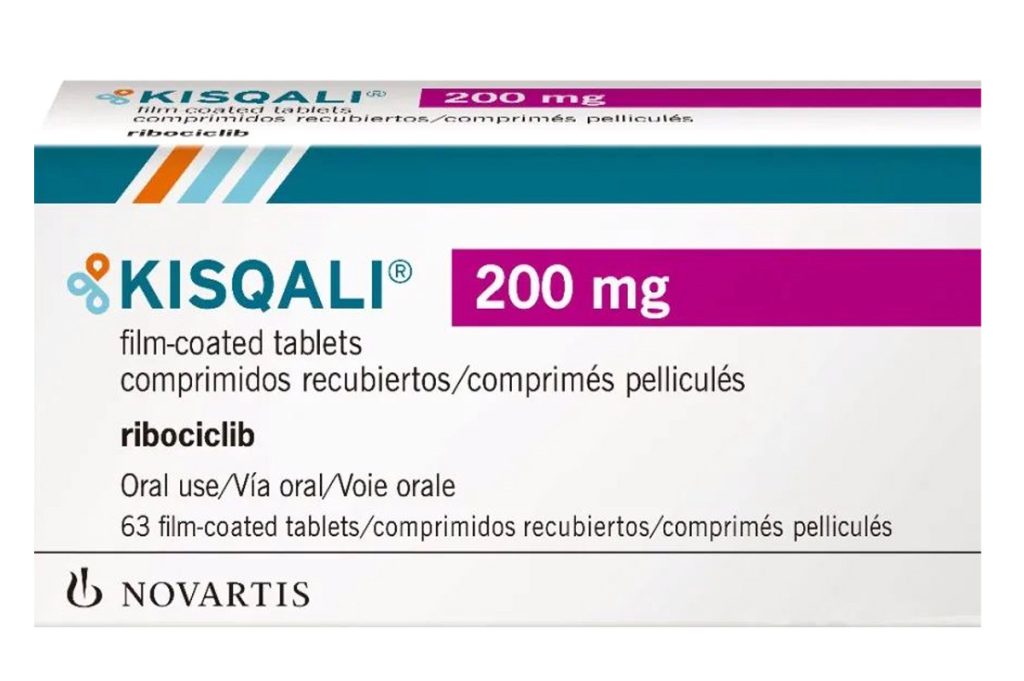
Ribociclib (Kisqali) – targeted treatment for hormone-sensitive breast cancer
What ribociclib is in simple patient language
You may see Kisqali on the box. In the chart, the medicine is ribociclib. A cancer tablet. A CDK4/6 blocker. Not chemotherapy by drip. Not immunotherapy.
It is mostly discussed for breast cancer that still listens to hormone signals and does not use HER2 as the main target. In real treatment, the tablet is usually paired with hormone treatment, not taken as a lonely idea.
The simple aim is to slow cell division. The file still has to be read properly: ER and PR status, HER2 result, stage, old treatment, blood count, liver tests, ECG, daily medicines, and how the woman is coping at home.
How ribociclib works
Cancer cells need internal permission to keep dividing. Two proteins, CDK4 and CDK6, are part of that permission step.
Ribociclib turns down that step. With the signal quieter, some cancer cells move through division more slowly. In some women, scans improve. In others, the useful result is steadier disease for a while.
The same mechanism explains the follow-up. Blood counts can fall. Liver values can change. Heart rhythm has to be known before the first pack starts. A person can feel fine and still need a pause on paper.
Which diseases or situations ribociclib may be used for
Ribociclib belongs in a breast cancer discussion only when the biology fits. The cancer has to be hormone driven, while HER2 is not the main route of treatment.
- advanced or metastatic breast cancer with ER or PR signals
- a plan where endocrine treatment is being strengthened with a CDK4/6 medicine
- some higher-risk early breast cancer plans after surgery
- a second opinion when Kisqali was offered and the reason is not clear
- a comparison with another CDK4/6 blocker or with a different treatment route
The same diagnosis can lead to different plans. Menopause status, lymph nodes, spread of disease, old drugs, liver values, ECG, and blood count can all change the answer.
When ribociclib can be especially relevant
Kisqali usually enters the talk when hormone treatment alone looks too weak for the job.
- the tumor has ER or PR activity
- HER2 is not the main treatment target
- the disease has spread and long control is the goal
- after surgery, the relapse risk is high enough to discuss a longer plan
- the family wants to understand why a CDK4/6 drug was added
- blood count, liver values, ECG, or daily medicines need careful sorting before the first cycle
The drug name is only one part of the plan. The useful part is seeing what the medicine is meant to do now: hold the disease, reduce activity, lower relapse risk, or buy time with tolerable treatment.
What needs to be checked before treatment
Before ribociclib starts, the oncologist needs a current file, not only an old discharge note.
- biopsy report and breast cancer subtype
- ER, PR, and HER2 results
- stage, scans, surgery notes, and any radiation or chemotherapy history
- past endocrine treatment and how long it helped
- menopause status and the hormone drug planned with Kisqali
- blood count, especially white cells
- liver tests and bilirubin
- ECG before the start, plus heart rhythm history
- potassium, magnesium, and other values if the doctor asks for them
- the full medicine list, including antibiotics, heart tablets, mood or sleep tablets, and supplements
Sometimes the delay is not about the cancer. A low white count, a worrying ECG, liver irritation, or a risky medicine combination may need fixing first.
How treatment with ribociclib goes
Ribociclib is taken by mouth in cycles. There are days with tablets and days without them. The hormone treatment continues according to the plan.
No skipped dose by guess. No double dose after a missed tablet. No restart from an old pack after a break without the treating doctor.
During the first cycles, the clinic usually follows:
- blood count and white cells
- liver values and bilirubin
- ECG when it is planned or when symptoms appear
- fever, sore throat, cough, or other infection signs
- nausea, loose stool, appetite, tiredness, and skin changes
- new medicines started by another doctor
- scans and symptoms when it is time to judge the cancer response
A difficult week does not always close the door on treatment. The answer may be a short hold, a new dose, a repeat blood test, or a change in support medicines.
Possible side effects
Ribociclib can be useful, but the body can pay for it in very ordinary ways at first. Tiredness. Nausea. A low white count. A liver test that moves.
- low white blood cells and higher infection risk
- tiredness, weakness, dizziness, or less stamina
- nausea, loose stool, stomach discomfort, or poor appetite
- changes in liver blood tests
- headache or light dizziness
- hair thinning
- dry skin or rash
- ECG changes in some patients
- new breathing trouble or a fast decline, rarely
The patient does not need to fear every symptom. The danger is silence. A falling white count or liver change is easier to handle early.
When the treating team needs to know fast
Call or message the team the same day if any of this starts:
- fever, chills, sore throat, cough, or burning when passing urine
- fainting, strong dizziness, or a racing or uneven heartbeat
- yellow skin, yellow eyes, dark urine, or pain high on the right side of the belly
- repeated vomiting, heavy diarrhea, or not being able to drink
- new shortness of breath or breathing that gets worse quickly
- rash that spreads fast or becomes painful
- sudden severe weakness or a change that feels clearly wrong
Do not spend the weekend trying to decide whether Kisqali caused it. The clinic needs the facts while the problem is still small.
Why ribociclib is not right for everyone
Kisqali is not a general breast cancer pill. It needs the right tumor biology and a body that can handle the follow-up.
- the tumor is not hormone driven
- HER2 is the main treatment route
- white blood cells are already too low
- liver values are too high before the start
- ECG or heart rhythm history raises concern
- daily medicines do not mix safely with ribociclib
- another treatment route fits the current goal better
Choosing another CDK4/6 drug, or another plan, does not mean Kisqali is bad. It may simply not be the safest match for this woman right now.
Can ribociclib be combined with other treatments
Yes. In most plans ribociclib is not alone. It is paired with endocrine treatment. That is the core idea.
- with an aromatase inhibitor in selected plans
- with fulvestrant in some advanced disease situations
- with ovarian suppression when this is part of the hormonal plan
- with bone-strengthening treatment when there is a separate reason
- after surgery or radiation when the plan is about lowering relapse risk
- with nausea, skin, or stomach support if needed
The medicine list matters. Heart rhythm drugs, infection drugs, some mood or sleep medicines, and supplements can change the safety of the plan.
What no quick response can mean
Ribociclib does not always give a quick, visible change. In metastatic disease, the first useful sign may be calmer scans, not a dramatic shrinkage. In early disease after surgery, there may be no symptom to watch at all because the aim is future risk.
The oncology team reads several things together: scans, pain, weight, energy, blood count, liver tests, ECG when needed, and side effects. One good day or one hard week does not tell the whole story.
If the cancer grows, or the body cannot carry the treatment, the plan changes. If the disease is stable and the side effects are manageable, staying the course can make sense.
Oncology / hematology consultation in Israel about ribociclib
At Tel Aviv Medical Clinic, a consultation can help sort out whether ribociclib has a real place in the current breast cancer plan.
This can be useful when Kisqali was offered but the reason is unclear, when there is a choice between CDK4/6 medicines, or when ECG, blood count, liver tests, or other medicines make the decision less simple.
- review ER, PR, and HER2 results
- understand why Kisqali was added to endocrine treatment
- compare ribociclib with another CDK4/6 option
- look at blood count, liver values, ECG, and daily medicines
- prepare questions for the treating oncologist
- discuss consultation or treatment in Israel
We do not prescribe treatment remotely and do not replace the treating doctor. The goal is to help the patient and family understand the medical logic and prepare for the next visit.
Frequently asked questions – answered by Dr. Stefanska
- Is ribociclib chemotherapy?
No. It is not classic chemotherapy. It is a CDK4/6 blocker used in a specific breast cancer setting.
Still, I do not call it a light tablet. Blood counts, liver tests, ECG, fever, and new medicines all matter. Home tablets still need oncology follow-up.
- Why is Kisqali given with hormone treatment?
Because the cancer is using hormone signals. The hormone drug works on that side of the story. Ribociclib adds a brake on cell division.
I want the patient to know the pair, not only one name. Which hormone medicine? Why this one? How long is the plan? What will we check first? These are the useful questions.
- What has to be sent for a second opinion about ribociclib?
Send the biopsy report, ER, PR, HER2 results, stage, recent scans if there are any, surgery and treatment dates, blood count, liver tests, ECG, and the current medicine list.
A short timeline helps a lot: diagnosis date, surgery or radiation, old drugs, what helped, what stopped helping, and why Kisqali is being discussed now.
- What if white blood cells go down?
Do not change the tablets alone. Call the treating team and show the blood test.
A low white count is common with this type of drug. Sometimes the answer is a short hold, a repeat test, or a lower dose. Fever on top of low counts is different. That needs fast contact.
- Why is ECG checked with this medicine?
Because ribociclib can affect heart rhythm in some people. Most patients will not feel anything unusual, so the ECG gives information before there is a problem.
Bring the full medicine list. Some tablets for infection, mood, sleep, nausea, or the heart can make rhythm issues more likely. The list is not a formality.
- Can ribociclib be taken for a long time?
Sometimes yes. The length depends on the reason for treatment, the cancer setting, scans, blood tests, liver values, ECG, and how the patient feels.
Do not judge only by energy level. A patient may feel fine while blood counts or liver tests ask for a change. The opposite also happens: symptoms are annoying, but the plan can continue with support.
- Which symptoms should not wait?
Fever, chills, sore throat, burning urine, fainting, strong dizziness, racing heartbeat, yellow eyes, dark urine, repeated vomiting, heavy diarrhea, or new breathing trouble.
Call the team. Even if Kisqali is not the cause, these signs need sorting out before the situation becomes harder to fix.
Important information
This page is for general medical understanding. It is not a prescription or a personal treatment plan. Ribociclib can be discussed only after review of the diagnosis, ER/PR and HER2 results, blood tests, ECG, previous treatment, current medicines, and the patient’s overall condition.
Do not start, stop, or change cancer treatment without the treating doctor.
Contacts
For a consultation about ribociclib:
📞 +972-73-374-6844
💬 WhatsApp: +972-52-337-3108
