



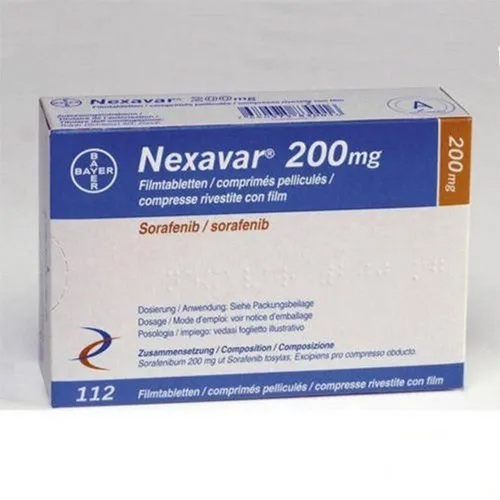
Sorafenib (Nexavar) – targeted treatment review for liver, kidney, and thyroid tumors
What sorafenib is in simple patient language
Patients may see Nexavar on the box. In the chart, the same drug is written as sorafenib. A cancer tablet. Not classic chemotherapy. Not immunotherapy. Not a tablet to start just because another line has stopped helping.
Doctors may discuss it when the file is about a liver tumor, a kidney tumor, or a thyroid tumor that now needs drug treatment. The name of the cancer is only the first page. I need the tumor type, old treatments, scan pace, pressure, liver tests, skin problems, and how the person is coping day to day.
This drug works around growth and blood-vessel signals. That sounds simple on paper. In real life, the first weeks are practical: blood pressure, sore hands or feet, loose stool, appetite, liver values, bleeding risk, wounds, and daily strength at home.
So the discussion is not only about the name Nexavar. It is about the job it has to do now: slow a liver tumor, move after older kidney cancer treatment, control thyroid cancer that has kept growing, or compare this route with another systemic option.
How sorafenib works
A tumor needs signals to grow. It also needs small vessels around it, so it can keep getting blood supply. Sorafenib tries to make some of those signals quieter.
It does not work like a quick burn. It works more like pressure on several switches at the same time. Some switches are inside the tumor cell. Others are around the blood-vessel support that helps the tumor keep going.
That is why the result may look modest at first. Scans may show slower growth, not a dramatic shrinkage. For some people that still matters. For others, the drug is too hard to keep going because of pressure, skin, bowel, liver, or bleeding problems.
The oncologist has to read the drug against the whole case. A liver tumor with weak liver function is not the same as kidney cancer after older treatment. Thyroid cancer after radioiodine is another story again.
Which diseases or situations sorafenib may be used for
Sorafenib belongs only in selected cancer plans. It is not a general tablet for any cancer diagnosis.
- liver cancer when surgery is not a safe way to remove the tumor and body-wide treatment is being discussed
- kidney cancer that has spread, when a targeted tablet is one of the possible next steps
- differentiated thyroid cancer that keeps growing after the earlier thyroid-focused treatment no longer controls it
- a second opinion when Nexavar was offered and the reason is not clear to the patient or family
- a comparison between tablets, immunotherapy, local procedures, or a clinical trial
The same drug name can sit in very different stories. Liver function, blood pressure, wounds, bleeding history, previous drugs, and the pace of the tumor can change the answer.
When sorafenib can be especially relevant
The drug is usually discussed when local treatment is no longer enough, or when the next step has to act through the whole body.
- a liver tumor has moved beyond a simple local option
- kidney cancer needs another systemic step
- thyroid cancer keeps growing after the older thyroid route has already been used
- a tablet option is being compared with other systemic treatments
- the patient needs a plan that includes pressure control, skin care, and careful blood tests from the start
The useful question is plain: what is Nexavar meant to change right now? Slow the tumor? Hold the situation? Buy time? Or replace a plan that no longer fits?
What needs to be checked before treatment
A short note with the cancer name is not enough. Before Nexavar starts, the oncologist needs the real file in order, not scattered pieces.
- the exact diagnosis and pathology report
- recent scans and where the active disease is now
- previous treatment: names, dates, response, and why it stopped
- blood pressure records and pressure medicines
- blood count, liver values, kidney values, and sometimes urine protein
- skin condition on the palms and soles
- bleeding history, ulcers, wounds, recent surgery, or dental procedures
- the full medicine list, including pain pills, stomach pills, supplements, and pharmacy drugs
Sometimes the next step is not the drug. It is lowering blood pressure first, waiting for a wound to heal, checking liver function again, or choosing a safer route.
How treatment with sorafenib goes
Sorafenib is taken by mouth on the schedule set by the oncology team. No dose changes by guess. No short breaks without telling the team. No restart from an old box after a long pause.
The first weeks are often about ordinary things that are not small: pressure readings, hand and foot pain, loose stool, eating, weight, tiredness, and blood tests. The scan result matters too, but the body has to get through the treatment safely.
During treatment, the team usually follows:
- blood pressure at home and in clinic
- pain, redness, cracks, or burning on hands and feet
- loose stool, nausea, appetite, weight, and fluid intake
- blood count, liver and kidney values
- bleeding, bruising, black stool, or slow wound healing
- fatigue, dizziness, chest symptoms, or breathing changes
- scan timing and the tumor picture over time
A rough week does not automatically close the door on treatment. The answer may be skin care, pressure medicine, a hold, a lower dose, or a different plan. The doctor should make that call.
Possible side effects
With Nexavar, many problems are easy to dismiss at first. A sore foot. A few loose stools. A higher pressure reading. These can become the reason treatment has to stop if nobody reacts early.
- blood pressure that climbs higher than usual
- sore hands or feet, burning skin, red patches, or split skin
- loose stools, a queasy stomach, eating less, or weight dropping
- a wiped-out feeling, weak legs, light-headedness, or running out of energy fast
- dry skin, rash, itching, or skin color changes
- changes in liver or kidney blood tests
- bruising, bleeding, or slower wound healing
- new chest pressure, harder breathing, or a sudden bad turn
Small symptoms are worth a call early. Once pain, diarrhea, or weakness has been ignored for days, the course is harder to rescue.
When the treating team needs to know fast
Call or message the team the same day if any of this starts:
- very high blood pressure or a new strong headache
- new blurry sight, mixed-up thinking, one-sided weakness, or speech that suddenly feels wrong
- pressure in the chest, breathing that feels tight, fainting, or a sudden collapse in strength
- red or dark blood from the bowel, urine, vomit, or bleeding that does not fit the usual picture
- black bowel movement, vomiting again and again, or dry mouth with little drinking
- heavy diarrhea or signs of dehydration
- painful cracks on the feet or hands that make walking or using the hands hard
- fever or a fast drop in general condition
Do not try to prove at home that Nexavar caused it. The team needs to see the symptom early and decide what to check.
Why sorafenib is not right for everyone
Sorafenib can be useful in the right place. It is still not the right tablet for every patient with liver, kidney, or thyroid cancer.
- the disease now needs a different type of treatment
- blood pressure is already unsafe
- there is active bleeding or a high bleeding risk
- liver or kidney function is too fragile
- a wound has not healed or surgery was recent
- the hands and feet are already badly damaged from earlier treatment
- the patient is too weak for a long oral course
Not choosing Nexavar does not mean there is no plan. It may mean another option fits the tumor, the timing, and the patient better.
Can sorafenib be combined with other treatments
Sorafenib can sit inside a wider cancer plan, but it is not something to add just to make treatment look stronger.
- after local liver treatment, if body-wide control is now needed
- after surgery or radiation, when the next step has to be planned
- with supportive care for pressure, skin pain, stool, appetite, or pain
- when comparing it with immunotherapy, another targeted tablet, or a trial
- in thyroid cancer, after the old radioiodine path has already been reviewed
The medicine list matters. Stomach tablets, pain pills, pressure drugs, blood thinners, herbs, and supplements can change the safety of the plan.
What no quick response can mean
A patient may take the tablets and feel no clear change in the first weeks. That does not answer the cancer question by itself.
Sometimes the best early sign is that the tumor stops racing. It may not shrink much on the first scan. If the disease had been moving fast, a quieter scan can still matter.
The doctor looks at scans, symptoms, blood tests, pressure, side symptoms, and the speed of the disease before treatment. If the drug is hurting more than helping, the plan has to be changed. If the body is handling it and the cancer is steadier, the same route may continue.
Oncology consultation in Israel about sorafenib
At Tel Aviv Medical Clinic, Nexavar can be discussed as part of a second opinion for liver cancer, kidney cancer, or thyroid cancer when sorafenib has been offered or is being compared with another option.
The consultation can help put the file in order: what tumor this is, what has already been done, why Sorafenib is being considered now, and what risks need attention before treatment starts.
The consultation can be useful when the patient or family needs to:
- understand why Nexavar was offered
- review liver, kidney, pressure, skin, bleeding, and wound-healing risks
- compare sorafenib with another systemic option
- prepare questions for the treating oncologist
- understand what documents are missing before a serious decision
We do not prescribe treatment remotely and we do not replace the treating doctor. The aim is to make the next medical discussion clearer.
Frequently asked questions – answered by Dr. Stefanska
- Is Nexavar chemotherapy?
No. Nexavar is not classic chemotherapy. It is a targeted tablet used only in selected cancer situations.
But I do not call it a light pill. Pressure can rise. Hands and feet can hurt. The bowel, liver, kidneys, wounds, and bleeding risk all need attention from the start.
- Why is blood pressure checked so much?
Because Nexavar can push pressure up. Sometimes the patient feels nothing at first, and the numbers are already too high.
I want home readings, not only one number from the clinic. I also want to know which pressure pills the patient already takes and who will adjust them if the pressure changes.
- What should I do if my hands or feet become painful?
Tell the team early. Burning, redness, cracks, or pain while walking can become a real treatment problem.
Do not wait until shoes are impossible or the skin is open. Early skin care, a pause, dose change, or local treatment can sometimes keep the course from falling apart.
- What documents should be sent for a second opinion?
Send the pathology report, recent scans, treatment dates, and the reason each treatment stopped. For liver cancer, send the liver function data. For kidney cancer, send the old systemic therapy list. For thyroid cancer, send the radioiodine history if there is one.
Also send blood tests, pressure notes, the daily medicine list, and current symptoms. A short timeline helps more than ten pages with no order.
- Does no fast shrinkage mean the drug failed?
Not always. Sometimes the useful result is that the tumor grows more slowly or stays quiet for a time.
Still, this has to be shown by scans and the patient’s condition, not by guessing. If symptoms grow or tests become unsafe, the plan should be reviewed sooner.
- Can I take a short break from Nexavar if I feel unwell?
Call first, unless your treating team already gave exact written rules for that situation. A short hold can be part of the plan, but the doctor needs to know when the problem began, what changed, and which tablets were missed.
If the drug is stopped and then started again at home, the picture gets muddy. Was it the drug, an infection, dehydration, cancer growth, or something else?
- Which symptoms should be reported the same day?
Very high blood pressure, chest pressure, difficult breathing, black stool, bleeding, repeated vomiting, strong diarrhea, fever, confusion, or deep cracks on the feet. These are same-day calls.
The team needs to sort it out, even if Nexavar is not the reason. Waiting can turn a manageable problem into a hospital problem.
Important information
This page gives general medical information. It is not a treatment prescription. Sorafenib should be discussed only after the doctor reviews the diagnosis, scans, previous treatment, blood tests, liver and kidney function, blood pressure, bleeding risk, wounds, other illnesses, and the medicines the patient already takes.
Do not start, stop, or change treatment without the treating doctor.
Contacts
For a consultation about Sorafenib:
📞 +972-73-374-6844
💬 WhatsApp: +972-52-337-3108
