



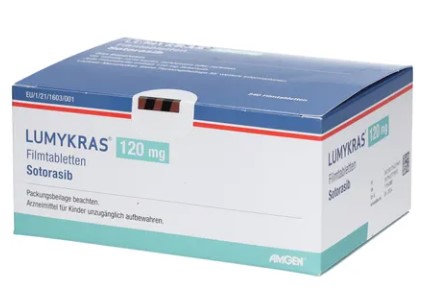
Sotorasib (Lumakras) – targeted treatment review for tumors with KRAS G12C
What Sotorasib is in simple patient language
Lumakras is the brand name. Sotorasib is the drug name. A cancer tablet. A KRAS G12C blocker. Not classic chemotherapy. Not an immune drip. Not a capsule to start only because one old report says “KRAS”.
The useful detail is the exact KRAS change. G12C is the part that matters here. If the file only says KRAS, the answer is not ready yet. The oncologist needs the real test result and the disease story around it.
For many patients this drug comes up after older treatment has already been used. So the file has to show more than the mutation: what cancer this is, what was tried, how long it helped, what the newest scans show, and how the liver, lungs, bowel, and general strength look now.
How Sotorasib works
KRAS is one of the inner messages a cell can use for growth. With the G12C change, that message can stay too open. The cell keeps getting a push to move and divide.
Sotorasib tries to hold that G12C part in a quieter position. If the tumor still depends on that route, the disease may slow down. In some people, spots on scans shrink. In others, the useful result is a pause in fast growth.
This is still not a promise. A tablet can fit the mutation and still fail the patient. Past treatment, liver tests, lung symptoms, bowel problems, and daily strength can all change the plan.
Which diseases or situations Sotorasib may be used for
Sotorasib belongs in a KRAS G12C discussion. Not every KRAS finding. Not every lung or bowel cancer. The exact test result has to fit the treatment question.
- a lung cancer case where the tumor report names KRAS G12C
- spread or recurrent disease where a body-wide treatment is needed
- a later treatment step after another plan has stopped helping
- a bowel cancer case with KRAS G12C, if the whole paired plan makes sense
- a second opinion when Lumakras was offered and the reason is not clear
- a comparison with chemotherapy, immunotherapy, another tablet, or a study option
The same mutation can sit inside different cancer stories. A lung tumor after immunotherapy is not the same as a bowel tumor after several drug lines. The next step has to fit that story.
When Sotorasib can be especially relevant
The drug usually enters the talk when the cancer has KRAS G12C and the next step is being chosen with care. The aim may be control, not a quick dramatic change.
- KRAS G12C is confirmed by a clear molecular report
- the disease is spread out or active again
- older treatment helped for a time and then stopped holding the disease
- the patient needs a tablet option compared with another infusion plan
- the liver, bowel, lung symptoms, and medicine list need review before a new start
- the family wants another oncologist to check the logic before treatment begins
The name Lumakras does not answer the whole case. A useful review asks what problem the team is trying to solve now: growth on scans, symptoms, time before another option, or a safer route after a hard course.
What needs to be checked before treatment
A short note with “KRAS” is not enough. The doctor needs the exact report and the treatment path up to this point.
- tumor type and pathology report
- the molecular test showing KRAS G12C
- where the test material came from and when it was taken
- recent CT, PET-CT, MRI, or other scans used in this case
- all previous treatments, dates, response, and reason for stopping
- blood count and basic chemistry
- liver values, including bilirubin and enzymes
- cough, breathlessness, chest pain, fever, or other lung complaints
- bowel pattern, appetite, weight, nausea, and fluid intake
- the full medicine list, including stomach tablets, antibiotics, pain pills, supplements, and daily pharmacy drugs
Stomach medicines matter here. So do liver values and lung symptoms. These are not small side notes before a new cancer tablet.
How treatment with Sotorasib goes
Sotorasib is taken by mouth on a schedule set by the oncology team. No dose changes by guess. No skipped week because the patient feels tired. No restart from an old box without a fresh plan.
During the first weeks, the team watches how the body reacts. The main checks are ordinary but important: stools, nausea, appetite, weakness, liver tests, breathing, and any new medicine started by another doctor.
During treatment, the team usually follows:
- blood tests and chemistry
- liver enzymes and bilirubin
- diarrhea, belly pain, nausea, vomiting, and appetite
- cough, breathlessness, chest discomfort, or fever
- fatigue, muscle pain, joint pain, and weight change
- new medicines, especially stomach drugs
- scan timing and the cancer response
A difficult week does not always close the door on treatment. But it should be visible to the team. Sometimes the next step is a pause, fluids, stool medicine, liver recheck, or a dose change.
Possible side effects
Sotorasib can be quiet for one patient and hard for another. The usual trouble spots are the bowel, liver, tiredness, and sometimes the lungs.
- loose stool or belly pain
- nausea, vomiting, less appetite
- tiredness and body weakness
- changes in liver blood tests
- cough, breathlessness, or new chest symptoms
- fever or infection signs
- muscle or joint pain
- swelling or a general drop in strength
- changes in blood work or chemistry tests
Do not wait until a small problem becomes a bad week. Early contact often keeps the plan easier to manage.
When the treating team needs to know fast
Call or message the team the same day if any of these appear:
- new breathlessness or breathing that is getting worse
- cough with fever, chest pain, or a fast drop in strength
- strong diarrhea or diarrhea that keeps coming back
- repeated vomiting or not being able to drink
- yellow eyes, dark urine, or pain high on the right side of the belly
- fainting, severe weakness, or sudden confusion
- fever, chills, or infection signs
- strong belly pain
- any symptom that grows quickly and feels unlike the patient’s usual state
Do not try to prove at home that Lumakras caused it. The team can sort that out. The patient needs help before a small warning becomes a large problem.
Why Sotorasib is not right for everyone
Sotorasib can be useful in the right KRAS G12C case. It is not a general answer for every tumor with a KRAS word in the file.
- KRAS G12C is not confirmed
- another driver or treatment route matters more now
- liver tests are already unsafe for a new start
- lung symptoms are active or not explained
- the disease is moving in a way that needs a different plan
- daily medicines create a safety problem
- the patient is too weak for this step right now
Not choosing Lumakras does not mean the drug is bad. It may simply be the wrong moment, wrong cancer setting, or wrong risk for that patient.
Can Sotorasib be combined with other treatments
Sometimes sotorasib is part of a longer route. But it is not added just to make the plan look stronger.
- after earlier body-wide treatment
- as one step in a KRAS G12C treatment sequence
- with another drug only when the chosen plan calls for it
- after local treatment of a single spot, if that was needed
- with support for diarrhea, nausea, pain, or weakness
- while comparing the case with a study or another treatment line
The order matters. What came before, why it stopped, and what the next scan should answer are more useful than a long list of drug names.
What no quick response can mean
The patient may take tablets for several weeks before anyone can say whether the cancer is responding. Feeling the same after a few days does not answer the cancer question.
Sometimes scans show smaller spots. Sometimes the better news is quieter disease: not growing as fast, not causing new symptoms, not forcing an urgent change.
The oncologist looks at scans, symptoms, liver tests, bowel tolerance, breathing, and the disease pace before treatment. One number or one bad day is not enough to judge the whole plan.
Oncology consultation in Israel about Sotorasib
At Tel Aviv Medical Clinic, sotorasib can be discussed as part of a second opinion for a tumor with KRAS G12C. This can help when Lumakras has been offered, but the family does not understand why this tablet is the next step.
The consultation can help clarify:
- whether the KRAS report is enough for this decision
- what treatment has already been used and why it stopped
- whether the liver, lungs, bowel, and medicine list allow a safe start
- how Lumakras compares with another drug plan or a study
- which questions should go back to the treating oncologist
- which documents are still missing before a clear answer
We do not prescribe treatment remotely and we do not replace the treating doctor. The aim is to organize the case and make the next medical talk clearer.
Frequently asked questions – answered by Dr. Stefanska
- Is Lumakras chemotherapy?
No. Lumakras is not classic chemotherapy. It is a targeted tablet for tumors with the KRAS G12C change.
Still, I would not call it a light capsule. The patient needs blood tests, liver checks, a bowel plan, and a review of lung symptoms. A tablet at home can still be real cancer treatment.
- Why is the KRAS G12C test so important?
Because the drug is not chosen for the word KRAS alone. It is chosen for the G12C change. I want to see the actual report, not a short line copied into a letter.
I also want to know when the biopsy was taken and what treatment happened after it. Sometimes the old result is enough. Sometimes the file needs a fresh look.
- When does this drug usually enter the plan?
Often after another treatment step has already been used. The doctor is then asking whether a KRAS G12C tablet is a reasonable next move.
For me, the old story matters: what was given, how long it helped, what failed, what the newest scans show, and how strong the patient is now.
- Why are liver tests watched so closely?
Because the liver can react before the patient feels anything unusual. A person may feel almost normal while the blood work is already moving the wrong way.
If the numbers rise, the team may repeat tests, pause the drug, lower the dose, or look for another cause. The unsafe part is ignoring the change.
- What if diarrhea or strong nausea starts?
Call the team early. Do not wait through several bad days at home.
Loose stool and vomiting can quickly lead to weakness and not enough fluid. The answer may be stool medicine, fluids, food changes, blood tests, a short hold, or a dose change. The team should decide.
- Can Sotorasib be taken with stomach medicines?
This has to be checked. Some stomach medicines can change how the body receives sotorasib. Many patients forget to mention them because they do not think of them as cancer-related.
Bring the whole list: stomach pills, antibiotics, heart pills, pressure tablets, pain medicine, vitamins, herbs, and pharmacy drugs. Small daily tablets can matter here.
- What should be sent for a second opinion about Lumakras?
Send the biopsy report, the KRAS G12C test, recent scans, liver blood work, and the list of older treatments with dates.
Add a short timeline: when the cancer was found, what was tried, what helped, what stopped helping, and which side effects were the hardest. That helps more than scattered pages.
Important information
This page gives general medical information. It is not a treatment prescription. Sotorasib should be discussed only after the doctor reviews the diagnosis, KRAS G12C report, scans, previous treatment, liver tests, lung symptoms, medicines, and the patient’s general condition.
Do not start, stop, or change treatment without the treating doctor.
Contacts
For a consultation about Sotorasib:
📞 +972-73-374-6844
💬 WhatsApp: +972-52-337-3108
