



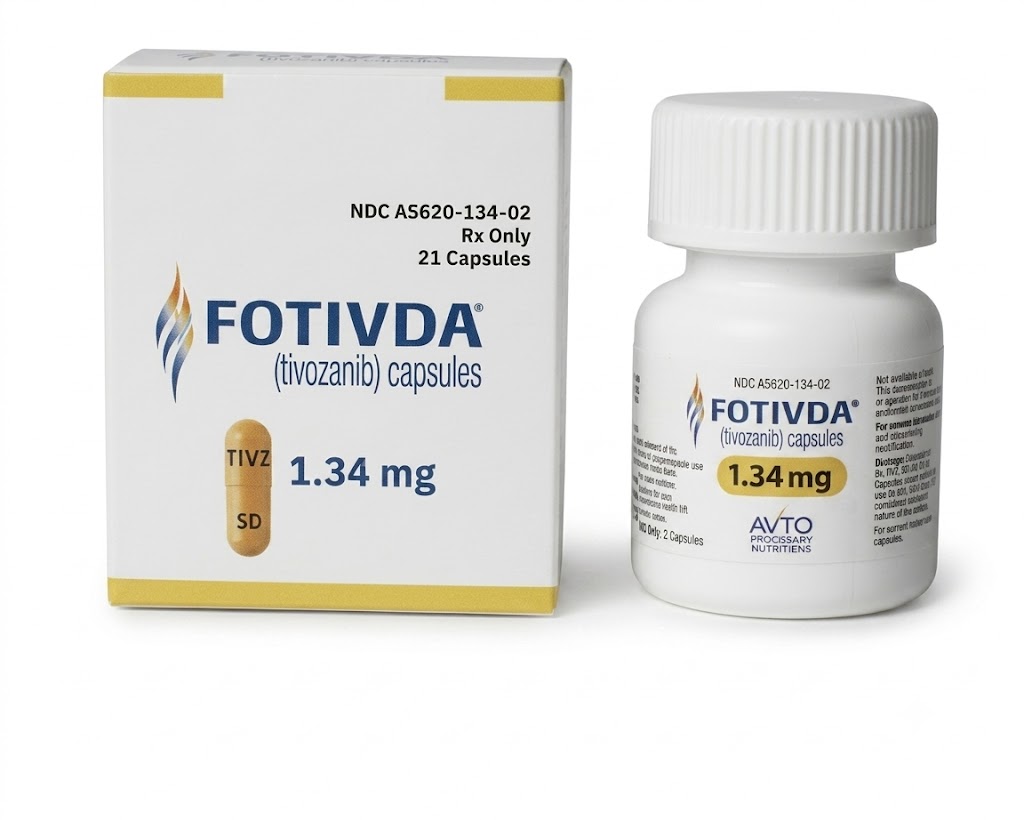
Tivozanib (Fotivda) – targeted treatment review in advanced kidney cancer
What tivozanib is in simple patient language
Fotivda is the brand name. Tivozanib is the drug name in the file. A cancer tablet. A VEGFR blocker. Not chemotherapy by drip. Not immunotherapy. Not a tablet to take just because kidney cancer is written in the diagnosis.
This drug usually comes up when kidney cancer has already spread or returned after earlier treatment. The question is practical: what has been tried, what stopped helping, and how much treatment load the patient can carry now.
The tablet is taken at home. The care is still real cancer care. Blood pressure, urine, kidney and liver values, bleeding risk, appetite, skin, wounds, and strength at home all belong in the plan.
The main idea is vessel control. Kidney tumors often use small blood vessels to keep growing. Tivozanib tries to make that support weaker. For some people, that may slow the disease. For others, another route fits better.
How tivozanib works
Tumors need blood supply. They send signals that help new small vessels grow around them. One of the signal groups is linked with VEGF receptors.
Tivozanib blocks these receptor signals. In plain words, it tries to make the tumor’s blood-vessel support less useful. This is not a quick burn-down treatment. The aim is control over time.
That is why the oncologist reads the whole history, not just the drug name. Earlier immunotherapy, older targeted tablets, blood pressure trouble, kidney function, bleeding risk, and healing after procedures can all change the plan.
The same mechanism also explains the care around the drug. Pressure may rise. Urine can show protein. Wounds may heal more slowly. A small bleed can matter more than it would on an ordinary day.
Which diseases or situations tivozanib may be used for
Tivozanib belongs mainly in a kidney cancer discussion. Not every kidney tumor. Not every stage. The place of Fotivda depends on the treatment road the patient has already walked.
- kidney cancer that has spread and is still active after earlier systemic treatment
- a next-line choice after immunotherapy, another targeted drug, or both
- a second opinion when Fotivda was offered and the reason is not clear
- a case where the team is comparing VEGF-directed tablets by risk and tolerance
- a situation where blood pressure, kidney function, bleeding risk, or wound healing may decide the safer route
Two patients can have the same cancer name and still need different plans. One may have recovered well from older treatment. Another may have unstable pressure, a recent operation, or weak kidney values. That changes the answer.
When tivozanib can be especially relevant
Fotivda is usually not the first conversation after diagnosis. It often appears later, when the earlier lines have already done their job or stopped working.
- the disease has grown after previous systemic therapy
- the patient needs another anti-cancer step, but a very heavy plan may be hard to carry
- older VEGF or other targeted drugs were used and the next tablet has to be chosen carefully
- the family wants to compare Fotivda with other next-line choices
- blood pressure, kidney values, bleeding risk, skin, voice changes, or weakness need to be discussed before the start
The useful question is not whether the drug is strong. The useful question is where it fits now: after which treatments, for which goal, and at what cost for this patient.
What needs to be checked before treatment
A short note with the words “kidney cancer” is not enough. The file has to show the real path of the disease and the patient’s current condition.
- kidney cancer type and the pathology report
- all previous systemic treatments: names, dates, benefit, and reason for stopping
- recent scans that show what changed and how fast
- blood pressure records and the pressure medicines used at home
- blood work with kidney and liver values
- urine testing, especially if protein or kidney changes were seen before
- history of bleeding, clots, heart trouble, stroke, chest pain, or shortness of air
- recent surgery, dental procedures, open wounds, or slow healing
- the full medicine list, including supplements and non-prescription pills
Sometimes the first step is not the cancer tablet. It may be fixing blood pressure, checking urine again, waiting for a wound to close, or sorting out a bleed risk before Fotivda starts.
How treatment with tivozanib goes
Tivozanib is taken by mouth on a schedule set by the oncologist. There are treatment days and a break period. The patient should not rebuild that schedule alone.
The first weeks show a lot. Pressure may change. Appetite may drop. Skin may become sore. The voice can change. Some people feel more tired than expected. These details tell the team whether the body is carrying the treatment safely.
During treatment, the team usually follows:
- blood pressure at home and at visits
- blood counts and chemistry tests
- kidney values and urine protein
- appetite, weight, nausea, loose stool, and fluid intake
- skin, palms, soles, mouth soreness, and wound healing
- voice change, cough, chest discomfort, breathing, and new swelling
- planned scans to see how the cancer is behaving
A difficult week does not always close the door on Fotivda. The answer may be a pause, pressure treatment, dose change, fluids, or another check. The treating team has to make that call.
Possible side effects
Side effects with tivozanib often sit in ordinary places: pressure, energy, stomach, skin, urine, and wounds. Ordinary does not mean harmless in a cancer patient.
- higher blood pressure
- tiredness, weak appetite, lower stamina
- nausea, loose stool, belly discomfort
- voice hoarseness or a different voice sound
- sore skin, especially on palms or soles
- protein in urine or kidney value changes
- bruising, bleeding, or clot-related concerns
- chest discomfort, racing heartbeat, or trouble breathing
- slower wound healing
Not every patient gets these problems. Still, silence can turn a small issue into a treatment break. Pressure numbers, bleeding, weakness, or poor drinking should be reported early.
When the treating team needs to know fast
Call or message the treating team quickly if any of these appear:
- a sudden high pressure reading, or pressure that stays high despite usual pills
- new severe headache, blurred vision, or flashing lights
- chest tightness, sudden breathing trouble, or strong heartbeat symptoms
- blood in stool, urine, sputum, black stool, or bleeding that is hard to stop
- repeated vomiting, severe loose stool, or signs of drying out
- strong belly pain
- an open wound that turns red, drains fluid, or does not close
- a sharp drop in strength or a fast change in general condition
Do not try to prove at home that Fotivda caused it. The safer move is to let the oncology team sort it out early.
Why tivozanib is not right for everyone
Fotivda can be a good drug in the right place. It is still not a universal kidney cancer tablet.
- the disease is at a point where another method is more urgent
- blood pressure is already difficult to control
- there is active bleeding or a high bleeding risk
- the patient had recent surgery or has an open wound
- kidney or liver values make the start unsafe right now
- other illnesses make the expected burden too high
- a similar drug caused severe trouble before
Choosing another route does not mean Fotivda is a bad drug. It may simply be the wrong moment, wrong risk, or wrong place in the sequence for this patient.
Can tivozanib be combined with other treatments
Tivozanib is part of a longer cancer story. Surgery, radiation, immunotherapy, and other targeted drugs may already be behind the patient.
- after previous systemic treatments, when the disease becomes active again
- after local treatment of a painful or risky spot, if that was needed
- with pressure medicines, nausea support, skin care, pain control, or diarrhea support
- as one option to compare with other next-line drugs
- when a clinical trial is also part of the discussion
Adding more cancer drugs just to make the plan look stronger is not the point. Each step needs a job. Each added drug also adds risk.
What no quick response can mean
With tivozanib, the first days may not say much. The patient may be taking the tablet, but the scans are still in the future. Feeling the same for a short time does not answer the cancer question.
Sometimes the good result is not dramatic shrinkage. It may be a slower pace. Less new growth. A steadier scan. In advanced kidney cancer, that can still matter.
The oncologist looks at scans, symptoms, pressure, urine, blood work, weight, appetite, and tolerance. If pressure or weakness becomes a problem, the plan may change for safety even when the drug is doing something useful.
Oncology consultation in Israel about tivozanib
At Tel Aviv Medical Clinic, Fotivda can be discussed as part of a second opinion for advanced kidney cancer. This is useful when the patient has already received a recommendation but needs to understand why this tablet is being offered now.
The consultation can help clarify:
- which treatments have already been used and why they stopped
- why tivozanib is on the table now
- which scans and lab results are still missing
- how pressure, kidneys, urine protein, bleeding risk, wounds, and stamina affect the choice
- which questions should be taken back to the treating oncologist
- whether Fotivda should be compared with another next-line option
We do not prescribe treatment remotely and we do not replace the treating doctor. The goal is to organize the case, make the medical logic clearer, and help the patient prepare for the next conversation.
Frequently asked questions – answered by Dr. Stefanska
- Is Fotivda chemotherapy?
No. Fotivda is not classic chemotherapy. It is a targeted tablet that works around blood-vessel signals used by kidney tumors.
But I do not call it a light tablet. Blood pressure, urine, kidney values, skin, bleeding risk, and strength still need attention. A patient taking the tablet at home is still on cancer treatment.
- Why is it often discussed after other treatments?
Advanced kidney cancer is usually treated in steps. Before I talk about Fotivda, I want to know which steps already happened and why they stopped.
A drug can look reasonable on paper and still be the wrong next step. The old response, side effects, current pressure, kidney function, and pace of the disease all matter.
- What should be sent for a second opinion?
Send the pathology report, treatment list with dates, recent scans, blood tests, kidney tests, urine results, and the pressure medicines used at home.
Add a short story too: when the cancer was found, when it spread, what helped, what failed, what had to stop because of side effects, and what symptoms are bothering the patient now.
- What do I watch most closely during treatment?
Blood pressure comes first. Write down the numbers. Do not rely only on how the patient feels.
I also ask about urine protein, kidney values, appetite, weight, skin on the hands and feet, bleeding, chest symptoms, and wound healing. These details can change the plan early.
- Can the tablet be paused because of side effects?
Sometimes yes. But not by guessing at home. A pause, a dose change, or pressure treatment has to be tied to the actual problem.
The team needs to know how long the patient took Fotivda, what changed, what the pressure was, and what the lab tests show. That is how the next step is chosen safely.
- Why do surgery and wounds matter before Fotivda?
Drugs that affect vessel signals can slow healing. A fresh operation, a dental procedure, or an open wound is not a small note.
Sometimes treatment waits until the body has closed the wound better. That is not wasted time. It can prevent a bigger problem once the tablet starts.
- What if blood pressure rises on Fotivda?
Write the numbers down and call the treating team. Do not just double old pressure pills without advice.
If high pressure comes with a bad headache, vision change, chest symptoms, breathing trouble, or sudden weakness, the patient needs urgent medical advice. Waiting at home is not safe.
Important information
This page gives general medical information. It is not a treatment prescription. Tivozanib has to be discussed after the diagnosis, earlier treatment, scans, blood work, pressure, kidney function, urine results, bleeding risk, wound healing, medicines, and the patient’s general condition are reviewed.
Do not start, stop, or change treatment without the treating doctor.
Contacts
For a consultation about Tivozanib:
📞 +972-73-374-6844
💬 WhatsApp: +972-52-337-3108
