



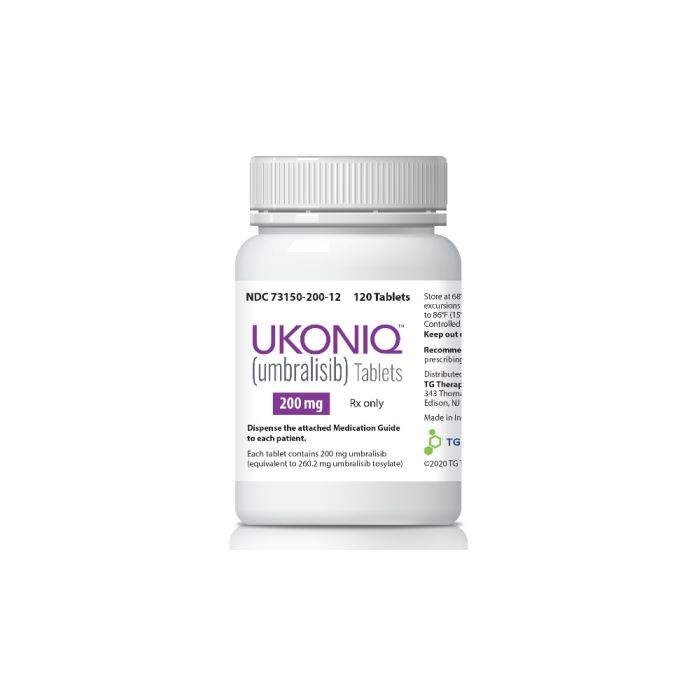
Umbralisib (Ukoniq) – PI3K treatment review in lymphoma
What umbralisib is in simple patient language
Ukoniq is the brand name. Umbralisib is the drug name. A lymphoma tablet. A PI3K-directed drug. Not classic chemotherapy. Not a tablet to restart from an old paper without a hematologist.
This drug needs a slow review now. Its safety history is not simple. If Ukoniq is written in an old discharge letter, I would not ask first, “how do we get it?” I would ask, “why was it offered then, and does that idea still fit this patient now?”
It was discussed in narrow lymphoma situations, often after other treatment. By that point, many people are already worn out. They may have had infections. Blood counts may be low. The gut and lungs may not leave much room for problems.
For the family, the drug name is not the main thing. I first want the timeline: the lymphoma type, the treatments used, what helped, what caused trouble, and which route looks safest now.
How umbralisib works
Some lymphoma cells keep using inner signals that tell them to stay alive. One of these signals runs through PI3K-delta. When this route acts like a stuck switch, some abnormal lymphocytes get a push to stay alive.
Umbralisib blocks part of this PI3K route. It also touches another route called CK1-epsilon. In plain language, the drug tries to lower messages that help some lymphoma cells keep going.
That same mechanism is also the reason for caution. PI3K is not only a cancer route. The immune system uses related pathways too. So the doctor is not only watching lymph nodes. The doctor is watching infections, bowel symptoms, liver tests, lungs, skin, and blood counts.
Which diseases or situations umbralisib may be used for
Umbralisib is not a general lymphoma drug to use by name alone. Its old place was limited. Now the question is even more careful, because safety changed the way doctors look at it.
- marginal zone lymphoma after earlier treatment, if the disease again needs a plan
- follicular lymphoma after more than one previous treatment route
- a patient who already took Ukoniq and now needs the next step explained
- an old medical letter where Ukoniq appears, but the family is not sure whether it still makes sense
- a second opinion before changing therapy, when PI3K treatment is being compared with other routes
The diagnosis name is not enough. Age, infections, blood counts, bowel history, lung symptoms, older side effects, and today’s options can all change the answer.
When umbralisib can be especially relevant
Today, Umbralisib is often a review topic, not a simple first choice. The useful question is why it came up in the file and what was expected from it.
- Ukoniq was offered earlier and the patient wants to know why
- the drug was already used, and now the result and side effects need review
- lymphoma returned after several lines of care
- the family is choosing between PI3K treatment, antibodies, other targeted drugs, cell therapy, or a study option
- there were infections, bad diarrhea, pneumonia, rash, or low neutrophils in the past
- the scan is not the only issue; the patient also has to be safe enough for the treatment
With this drug, “can it work?” is only one part. The other part is just as practical: can this person get through it without paying too high a price?
What needs to be checked before treatment
For a Ukoniq review, one short note with the lymphoma name will not do. The doctor needs the medical path, not only the last page.
- the exact lymphoma subtype, with biopsy, immunohistochemistry, or flow cytometry if available
- all previous treatment lines: drug names, dates, response, side effects, and why each course stopped
- recent blood count with neutrophils, lymphocytes, hemoglobin, and platelets
- liver and kidney blood tests
- recent or repeated infections, hospital stays, pneumonia, fever, or antibiotics
- bowel history: loose stool, belly pain, bowel inflammation, or blood in the stool
- cough, shortness of breath, or new chest scan findings
- rash, mouth sores, painful skin, or immune-type reactions in the past
- the full medicine list, including antifungals, antibiotics, heart tablets, blood pressure tablets, sleep pills, anxiety pills, and supplements
- the goal now: symptom relief, disease control, time before another method, or a full change in strategy
Sometimes the next step is not the drug. It may be treating an infection, repeating the scan, improving blood counts, or choosing a safer route.
How treatment with umbralisib goes
If the patient is already on Ukoniq, or took it before, the review has to be practical. How did the patient feel? What happened to the blood? Was there diarrhea? Any fever? Any lung or skin problem? What did the scan show?
No one should restart old Ukoniq tablets after a break by guessing. No dose changes by memory. No “I still have a box at home” plan. This drug needs a doctor who knows the full story.
During treatment, the team usually follows:
- blood counts: neutrophils, hemoglobin, and platelets
- liver tests and general chemistry
- fever, cough, shortness of breath, or other infection signs
- stool, belly pain, appetite, weight, and fluid loss
- rash, itching, mouth pain, or sore skin
- new medicines started during treatment
- lymph nodes, spleen, symptoms, and control scans
A problem does not always mean the drug is finished. Sometimes there is a pause. Sometimes tests are needed. Sometimes an infection has to be treated first. Sometimes another plan is safer.
Possible side effects
The side effects with Umbralisib can look ordinary at first. A loose stool. A cough. A low fever. A rash. In a lymphoma patient after previous treatment, these can become serious faster than expected.
- diarrhea, belly pain, nausea, poor appetite
- infections, including chest infections
- low neutrophils, anemia, or low platelets
- higher liver values
- cough, shortness of breath, or lung inflammation
- rash, itching, red skin, mouth soreness
- weakness, weight loss, dehydration
- infection that becomes harder to control because the immune system is weak
The patient does not need to decide at home whether the drug is guilty. The safer step is to report the change early.
When the treating team needs to know fast
Call or message the treating team the same day if any of this starts:
- fever, chills, sore throat, cough, or infection signs
- loose stool many times a day, belly pain, blood in stool, dry mouth, or little urine
- shortness of breath, chest pain, or a feeling of not getting enough air
- a strong rash, blisters, painful skin, or mouth sores
- yellow eyes, dark urine, strong nausea, or pain high on the right side of the belly
- new bruises, bleeding, black stool
- sudden weakness, confusion, fainting, or fast decline
Do not wait for the next visit with these. Even if Ukoniq is not the cause, the team has to know early.
Why umbralisib is not right for everyone
A drug can fit the disease on paper and still not fit the person in front of the doctor. With PI3K treatment, that gap can matter a lot.
- active infection now, or repeated serious infections before
- diarrhea, belly pain, or possible bowel inflammation before starting
- liver tests already too high
- neutrophils or platelets too low
- unexplained cough, shortness of breath, or lung findings
- past severe skin or immune reactions
- home medicines that do not mix safely with this route
- another drug or method matches the goal better
Not using Ukoniq does not mean there are no choices. It may mean that another targeted drug, an antibody plan, a bispecific antibody, cell therapy, a study option, or a support step makes more sense.
Can umbralisib be combined with other treatments
Umbralisib is not a drug to add just to make a plan look stronger. In a patient already treated for lymphoma, extra treatment can also mean extra infection risk, bowel trouble, liver strain, and low blood counts.
- support for infection, anemia, nausea, dehydration, or pain can be given when needed
- infection prevention may be discussed for some patients
- after older lines of therapy, the order of treatments matters more than adding everything together
- the PI3K route may be compared with other targeted drugs, antibodies, or cell methods
- if the usual options are limited, a clinical study may be part of the discussion
The question is not how many treatments can be named. The question is which route gives control with a risk the patient can really carry.
What no quick response can mean
Lymphoma does not always answer in a clear way right away. Sometimes symptoms improve before the scan looks impressive. Sometimes blood values change, but lymph nodes move slowly. Sometimes the disease is quieter, not gone.
There is also the opposite problem. The lymphoma may look better, but the patient is losing weight, getting infections, or having diarrhea. Then the drug result is not the only issue.
The doctor should look at time on treatment, symptoms, blood counts, bowel symptoms, liver tests, lungs, infection history, and scan behavior. One day or one lab line should not decide the whole story.
Oncology / hematology consultation in Israel about umbralisib
At Tel Aviv Medical Clinic, Umbralisib can be discussed as part of a hematology second opinion for lymphoma. This is useful when Ukoniq is written in older papers, was already used, or was offered as a possible next step.
The consultation can help clarify:
- what lymphoma subtype is documented
- why Ukoniq appeared in the plan
- what happened with earlier treatments
- how serious the infection, bowel, liver, lung, skin, and blood risks are
- which tests or records are missing
- how Umbralisib compares with other realistic routes
- which questions should go back to the treating hematologist
We do not prescribe treatment remotely and we do not replace the treating doctor. The aim is to organize the case and make the next medical conversation clearer.
Frequently asked questions – answered by Dr. Stefanska
- Is Ukoniq chemotherapy?
No. Ukoniq is not classic chemotherapy. It is a targeted tablet linked to PI3K signaling.
But I would not call it an easy tablet. The immune side can be serious. Blood, infections, bowels, liver, lungs, and skin all have to be watched.
- Why is there so much caution around this drug?
Because its safety story changed how doctors look at it. I do not treat an old Ukoniq note as a ready plan.
I first want to know the lymphoma type, what was used before, what went wrong, and what safer options exist now.
- If Ukoniq is written in the discharge letter, does that mean it should be started?
No. A name in a letter is not the same as a current prescription.
It may be an old idea, a past option, or a note from a different time in treatment. I would review fresh blood work, scans, infection history, bowel history, and the medicine list before saying anything useful.
- Which symptoms should not be tolerated at home?
Call the team for a temperature, shaking chills, a new cough, trouble breathing, repeated loose stool, blood in the stool, strong belly pain, a fast-spreading rash, yellow eyes, strange bruises, or sudden weakness.
Do not wait for the next visit with these. Call the treating team.
- What should be sent for a second opinion about umbralisib?
Send the biopsy report, lymphoma subtype, flow cytometry or other lab proof, recent blood work, liver tests, scans, and the list of all previous treatments.
Add one simple page: what was given, when it helped, when it stopped, and which side effects were hardest. That helps more than a pile of mixed papers.
- What if diarrhea starts during treatment?
Call the treating team the same day if stools are frequent, painful, bloody, or come with fever, dry mouth, dizziness, or little urine.
Do not push through it. With PI3K treatment, diarrhea may need tests, fluids, a pause, or a different plan.
- Can umbralisib be replaced by another drug?
Sometimes yes. Lymphoma now has several possible routes. The right one depends on the subtype, earlier drugs, blood counts, infections, pace of disease, and the patient’s strength.
I would not compare drugs only by the word “targeted.” I would compare what this patient needs now.
Important information
This page is general medical information. It is not a treatment prescription. Umbralisib should be discussed only after the doctor reviews the lymphoma subtype, previous treatment, blood counts, infections, liver tests, bowel history, lung symptoms, skin reactions, and home medicines.
Do not start, stop, or change treatment without the treating doctor.
Contacts
For a consultation about Umbralisib:
📞 +972-73-374-6844
💬 WhatsApp: +972-52-337-3108
