


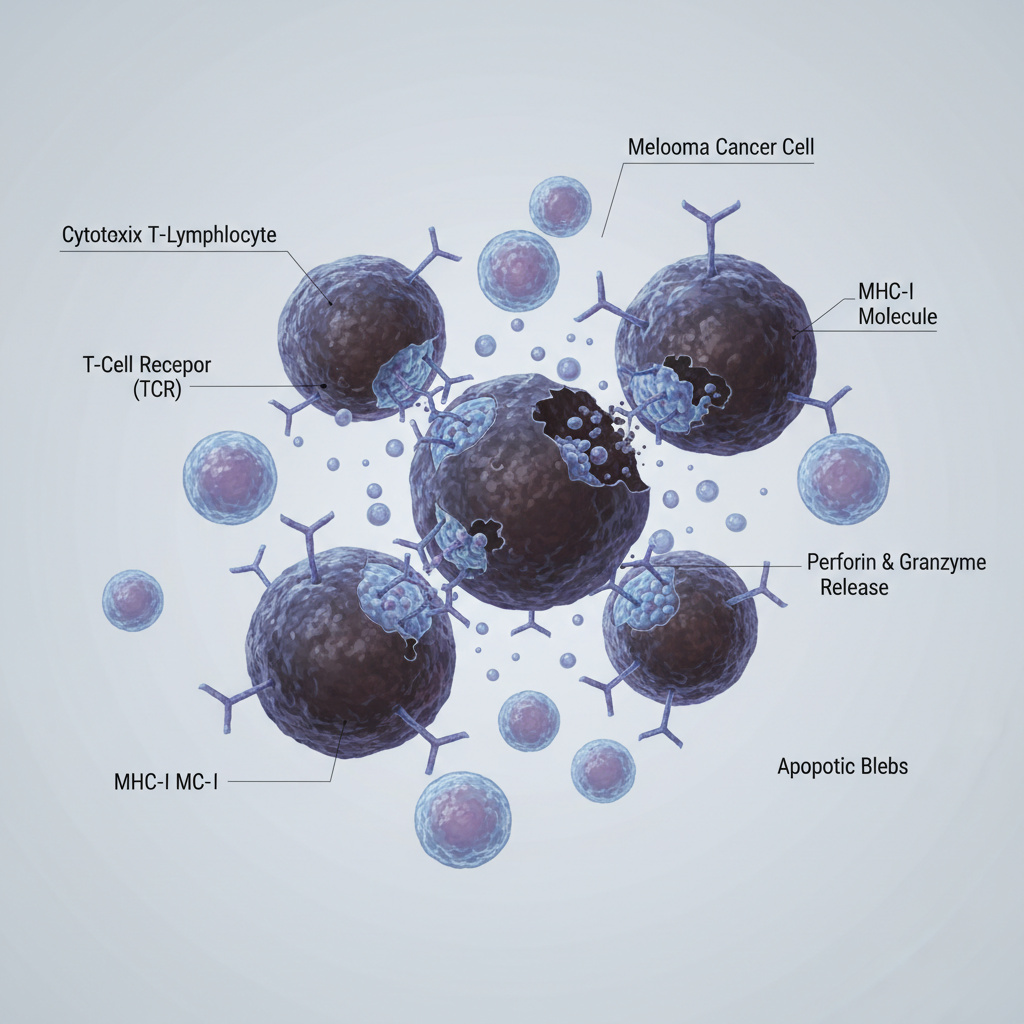
Innovative Therapy for Melanoma
an approach to managing severe spasticity within functional neurosurgery
What is an intrathecal baclofen pump and why it is considered
An intrathecal baclofen pump (ITB) is a functional neurosurgical approach used to manage severe muscle spasticity associated with disorders of the central nervous system.
The method is based on delivering baclofen directly into the intrathecal space of the spinal cord through an implanted system.
This allows targeted action on the mechanisms of spasticity while reducing systemic drug exposure.
It is important to clarify from the outset: an intrathecal baclofen pump does not treat the underlying neurological condition. It is used to control one of its key manifestations — pathological muscle tone.
Clinical situations in which ITB may be discussed
An intrathecal baclofen pump may be considered in neurological conditions accompanied by severe, poorly controlled spasticity, including:
- cerebral palsy (spastic forms)
- consequences of spinal cord injury
- multiple sclerosis and other demyelinating disorders
- severe forms of dystonia
- sequelae of infectious involvement of the central nervous system
- post-stroke spasticity or other brain and spinal cord injuries — in selected cases
In some situations, ITB may also be discussed in complex forms of neuropathic pain, although such cases require particularly careful evaluation.
Why spasticity should not be approached superficially
Spasticity is not simply “tight muscles.” It reflects impaired regulation of motor signals within the central nervous system.
When spasticity is pronounced, patients and families often face:
- significant limitations in mobility
- chronic discomfort or pain
- difficulties with daily care
- reduced effectiveness of rehabilitation
The goal of considering ITB is to create more controllable conditions, in which movement, care, and rehabilitation become more achievable.
How the decision about an intrathecal baclofen pump is made
An intrathecal baclofen pump is not a standard solution and is not suitable for every patient.
Evaluation is comprehensive and typically includes:
- neurological assessment
- review of previously attempted treatments
- functional status of the patient
- rehabilitation potential
- realistic goals defined by the patient or family
At this stage, many patients — both locally and from abroad — seek a second professional opinion to understand whether ITB is a reasonable option or whether alternative approaches should be considered.
How the system works
The intrathecal baclofen pump system consists of:
- a reservoir containing the medication
- a catheter delivering baclofen into the intrathecal space
Once implanted, the system provides continuous, precisely controlled delivery of baclofen directly to spinal cord structures.
Dosing can be adjusted programmatically without removing the device.
This mode of administration allows:
- lower overall drug doses
- fewer systemic side effects
- flexible adaptation of therapy to the clinical situation
The procedure and ongoing follow-up
Implantation of an intrathecal baclofen pump is a neurosurgical procedure and requires ongoing follow-up.
After implantation, the system requires:
- regular dose adjustments
- monitoring of device function
- scheduled refilling of the medication
For this reason, already at the consultation stage it is important to assess not only medical indications, but also the feasibility of long-term follow-up and care.
Rehabilitation as an essential component
An intrathecal baclofen pump does not work in isolation. Without rehabilitation, its clinical value remains limited.
After implantation, a structured rehabilitation program is required, focusing on:
- learning new movement strategies
- strengthening muscles
- prevention of secondary complications
The combination of spasticity control and rehabilitation largely determines the final functional outcome.
Alternative approaches that may also be discussed
If ITB is not appropriate in a specific clinical situation, other options may be considered, including:
- selective dorsal rhizotomy (SDR)
- neuromodulation techniques
- individually tailored conservative strategies
The purpose of consultation is not to promote a specific method, but to determine which path makes clinical sense.
Who may benefit from a consultation
Consultation regarding an intrathecal baclofen pump is often relevant for patients and families who:
- are dealing with severe spasticity that responds poorly to medication
- have received differing or conflicting recommendations
- want to understand which options realistically exist in their situation
- are planning next steps and need a structured clinical evaluation
For patients living outside the country, consultation often begins with a review of medical records and prior treatments, helping to assess the appropriateness of further steps.
Contact form

Professor Ido Strauss
Neurosurgery
Experienced Neurosurgeon ,Director of Functional Neurosurgery and Stereotactic Radiosurgery

Keinan Ori
Neurosurgery
Head of the service of surgical treatment of diseases and injuries of the spine of the hospital

Prof. Yonatan Roth
Neurosurgery
Head of the Neurosurgery Department at Ichilov Medical Center (Tel Aviv) , Chief of Pediatric Neurosurgery at Dana-Dwek Children’s Hospital

Rachel Grossman
Neurosurgery
Brain Tumor Removal Specialist, Deputy Head of the Department of Neurosurgery

Professor Shlomo Konstantini
Neurosurgery
Head of the Department of Pediatric Neurosurgery at the Pediatric Center

Zvi Ram
Neurosurgery
Neurosurgery
Next step
When spasticity significantly affects movement and daily function, it is important to start not with a decision of “yes or no,” but with understanding the clinical picture.
A neurological consultation helps:
- clarify the underlying mechanisms of spasticity
- evaluate what has already been tried
- determine whether discussing an intrathecal baclofen pump or alternative approaches is appropriate
In many cases, this step alone brings clarity to the decision-making process.
Consultations and contact
📞 Phone: +972-73-374-6844
📧 Email: [email protected]
💬 WhatsApp: +972-52-337-3108


Contact form


