


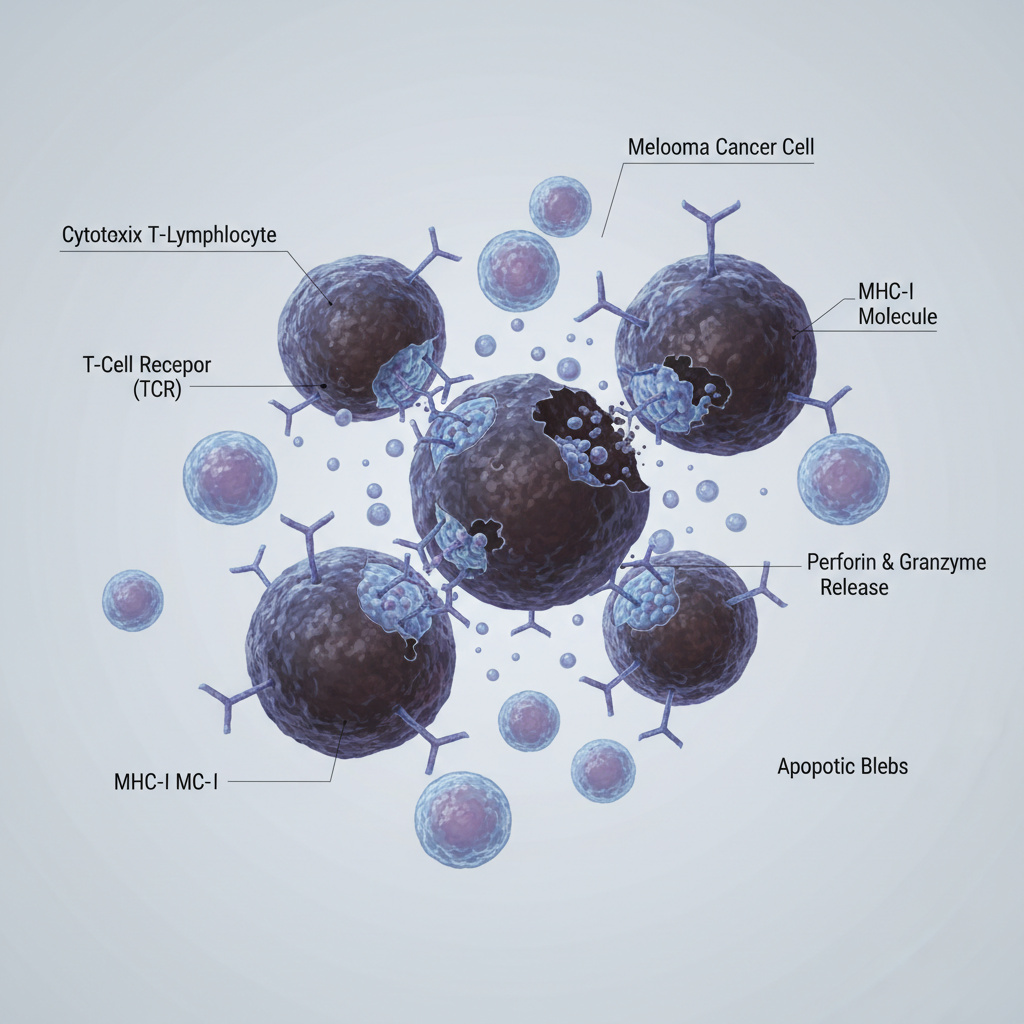
Innovative Therapy for Melanoma
Pituitary Adenoma — Symptoms, Diagnosis, and Treatment in Israel
What Is a Pituitary Adenoma?
When someone first hears this diagnosis — “pituitary adenoma” — the first reaction is usually fear.
People ask, “Is it cancer?”
No, it isn’t. A pituitary adenoma is benign, which means it doesn’t spread, but it can still cause a lot of trouble if ignored.
The pituitary gland is tiny — about the size of a pea — sitting right in the center of the head, under the brain.
It may be small, but it controls nearly everything: growth, metabolism, reproduction, the thyroid, even how our body reacts to stress.
When a tumor appears there, the entire hormonal system can start to go off balance.
Some adenomas make too many hormones — prolactin, growth hormone, ACTH.
Others are what we call “silent”. They don’t release hormones, but as they grow, they start pressing on things around them, especially the optic nerves.
That’s when people begin to notice problems with vision or constant headaches.
Even a “quiet” tumor can be dangerous. It can squeeze the healthy part of the pituitary so that the gland stops doing its normal work.
When it reaches the optic chiasm — the spot where the visual nerves cross — people often say, “It feels like I’m looking through fog,” or that their side vision is gone.
These tumors usually grow very slowly.
Sometimes they sit there for years without clear symptoms — until one day a person does an MRI for another reason, and there it is.
What Are the Warning Signs of a Pituitary Adenoma?
Symptoms depend on the tumor’s size and whether it affects hormone levels.
Hormonal Symptoms
- Unexplained weight gain or loss
- Irregular or missing menstrual periods, infertility in women
- Low libido or erectile dysfunction in men
- Excessive sweating, fatigue, or facial puffiness
- Enlargement of hands, feet, or facial features (with excess growth hormone)
Neurological and Visual Symptoms
- Persistent headaches that don’t respond to painkillers
- Vision changes, double vision, “tunnel vision”
- Drowsiness, lack of energy, or apathy
- In children — abnormal growth patterns or delayed puberty
Many patients first visit an eye doctor, neurologist, or general physician.
But once all symptoms are reviewed together, the source often turns out to be the pituitary gland.
How Is Pituitary Adenoma Diagnosed in Israel?
In Israel, diagnosis usually takes just a few days.
It’s a detailed process that helps doctors select the safest and most effective treatment.
- MRI of the brain is the gold standard. It shows the tumor’s size, location, and proximity to the optic nerves and surrounding brain tissue.
- Hormonal Blood Tests
Laboratory tests measure prolactin, growth hormone, ACTH, cortisol, and other hormones.
They reveal whether the tumor is hormonally active and which systems are affected.
- Vision Tests and Additional Studies
Patients undergo visual field tests, and sometimes consultation with an ophthalmologist or neuro-endocrinologist.
If needed, PET-CT, CT of the sella turcica, or genetic testing may be performed — especially when a hereditary syndrome is suspected.
At Tel Aviv Medical Clinic (TAMC), patients can complete all diagnostic stages in one place — quickly, accurately, and under one coordinated medical team.
How Is Pituitary Adenoma Treated in Israel?
Treating a pituitary adenoma isn’t about following one rule for everyone.
It depends on what the tumor is doing — whether it produces hormones, how large it is, and how it affects vision and daily life.
Here’s how we usually approach it in Israel.
When Medication Works Best
In some cases — like prolactinomas — medication alone can do wonders.
Drugs known as dopamine agonists help bring hormone levels back to normal and often make the tumor shrink on its own.
It’s not a quick fix; it takes patience, regular tests, and follow-ups.
But for many patients, it means no surgery at all — just consistent monitoring and the right dose adjustments.
I’ve seen people come in worried about “having a brain tumor,” and months later the scan shows the mass barely visible.
That’s the power of targeted hormone therapy when used correctly.
Endoscopic Transnasal Surgery — Through the Nose
If the tumor is large or starts pressing on the optic nerves, surgery becomes the best option.
Israeli neurosurgeons often use an endoscopic transnasal approach — meaning they go through the nasal passage, not through the skull.
It sounds intimidating, but the procedure is gentle: no large incisions, minimal pain, and recovery is usually quick.
Most people spend just a few days in the hospital and go home without visible scars.
The main goal is to remove the tumor while keeping the healthy part of the pituitary safe — that’s where the precision of this method really matters.
Radiotherapy and Radiosurgery
If surgery isn’t possible, or if a few tumor cells remain, doctors use targeted radiation — Gamma Knife or CyberKnife.
These aren’t “knives” in the literal sense — there are no cuts.
Instead, focused radiation beams destroy abnormal cells with millimeter accuracy.
It’s a quiet, painless session, and patients can usually return home the same day.
The idea is simple: treat what’s dangerous, protect what’s healthy.
Ongoing Observation and “Watchful Waiting”
Not every adenoma needs immediate treatment.
Small, non-secreting tumors that don’t cause symptoms are often just monitored.
It’s what we call watchful waiting — MRI once or twice a year, blood hormone tests, and a visit to the endocrinologist.
For some people, the tumor doesn’t grow at all for years.
And sometimes, doing less — but doing it carefully — is exactly the right strategy.
Contact form

Professor Ido Strauss
Neurosurgery
Experienced Neurosurgeon ,Director of Functional Neurosurgery and Stereotactic Radiosurgery

Keinan Ori
Neurosurgery
Head of the service of surgical treatment of diseases and injuries of the spine of the hospital

Prof. Yonatan Roth
Neurosurgery
Head of the Neurosurgery Department at Ichilov Medical Center (Tel Aviv) , Chief of Pediatric Neurosurgery at Dana-Dwek Children’s Hospital

Rachel Grossman
Neurosurgery
Brain Tumor Removal Specialist, Deputy Head of the Department of Neurosurgery

Professor Shlomo Konstantini
Neurosurgery
Head of the Department of Pediatric Neurosurgery at the Pediatric Center

Zvi Ram
Neurosurgery
Neurosurgery
Why Patients Choose TAMC for Pituitary Adenoma Treatment
Team-Based Approach
At Tel Aviv Medical Clinic, treatment isn’t handled by one doctor alone.
Endocrinologists, neurosurgeons, and radiologists work together, sharing every piece of information.
This team approach helps avoid mistakes and ensures that the plan fits the person — not the diagnosis on paper.
Advanced Technology
We rely on high-precision tools — 3-Tesla MRI, modern neuronavigation systems, and ultra-fine endoscopic cameras.
That’s what allows surgeons to remove the tumor without damaging the healthy part of the gland.
Every millimeter matters in the pituitary, and Israeli medicine is built around that accuracy.
Personalized Follow-Up
Treatment doesn’t end after surgery or medication.
Each patient stays under supervision — hormone levels checked, vision tested, and any new symptoms discussed directly with the doctor, even online if needed.
The goal isn’t only to treat the tumor, but to bring balance back to life — energy, mood, and confidence included.
What Happens After Pituitary Surgery — Recovery and Prognosis
Recovery after surgery is usually quick.
Headaches subside, vision often improves, and most patients return home within several days.
Some may need temporary or long-term hormone therapy, depending on how much of the gland was affected.
In Israel, post-surgical care includes hormonal monitoring, MRI follow-up, and personalized rehabilitation under an endocrinologist’s supervision.
To schedule a private consultation with Dr. Elena Itzhakov or another specialist:
📞 Call us: +972-73-374-6844
📧 Email: [email protected]
💬 WhatsApp: +972-52-337-3108
Frequently Asked Questions — Answers by Dr. Elena Itzhakov, Endocrinologist
What exactly is a pituitary adenoma?
Well, it’s basically a small lump that grows inside the pituitary — that tiny gland right under the brain.
It sounds dramatic, but most of the time it’s benign, not cancer.
The funny thing is, that tiny thing runs the show for almost every hormone we have.
I sometimes tell patients, “It’s small, but it bosses the body around.”
When it starts growing, it can throw things off — hormones, vision, mood, energy — everything gets a bit confused.
How would someone even know they have one?
That’s the tricky part — the signs can be all over the place.
One person might have headaches every morning, another suddenly realizes their side vision’s gone fuzzy.
Women sometimes stop having periods or notice discharge from the breasts,
men tell me they’ve lost energy or interest, and honestly — sometimes it looks like stress or just tiredness at first.
It can take a while, a few doctors even, before someone connects the dots and checks the pituitary.
Can it be treated without surgery?
Sometimes, yes — and it surprises almost everyone when I say that.
If it’s what we call a prolactinoma, medication alone can shrink it beautifully.
Other types we keep under control with pills and regular scans.
Surgery only comes in if it’s pressing on the optic nerves or just ignores the medication.
Every case is its own story; I don’t believe in a single “standard protocol.”
What happens during endoscopic transnasal surgery?
It sounds complicated, but it’s actually less scary than it seems.
The surgeon goes through the nose using a thin camera — no opening of the skull.
Most patients wake up with minimal pain and can walk the next day.
The goal is to remove the tumor while keeping the healthy pituitary tissue safe,
and that precision is what makes modern neurosurgery so effective today.
What side effects should I expect after treatment?
It depends on the treatment type.
After surgery, you may feel tired or have temporary nasal stuffiness.
With radiation, there might be fatigue or mild hormonal imbalance — things we monitor closely.
What matters most is long-term hormone stability and vision recovery, and that’s something we follow very carefully.
Will my hormones return to normal?
In many cases, yes — especially if the tumor is removed completely or controlled with medication.
Sometimes the gland takes time to recover, so we support it with hormone replacement for a while.
The key is follow-up and regular blood tests. It’s not a “one-and-done” condition; it’s something we manage together.
Is pituitary adenoma cancer?
No, and that’s important to know.
It’s benign — meaning it doesn’t spread.
But it can act “like a troublemaker” because of where it sits and what it affects.
Early diagnosis makes a huge difference, so if you suspect something — headaches, vision issues, hormonal changes — don’t ignore it.
What makes treatment at TAMC different?
The main thing is coordination.
You’re not bouncing between clinics — endocrinologists, neurosurgeons, and radiologists sit together and decide the plan.
We focus on fast diagnostics, minimal waiting, and full follow-up — from the first blood test to long-term recovery.
Patients feel cared for, not just treated. That’s the real difference.


Contact form


