


 Contact Us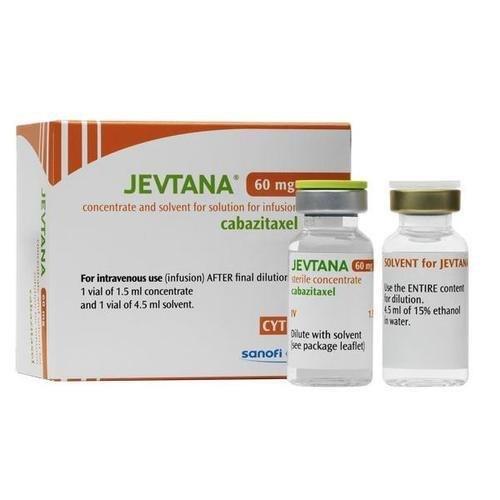
Cabazitaxel (Jevtana) — chemotherapy for prostate cancer after docetaxel
What Cabazitaxel is in simple patient language
Cabazitaxel — brand name Jevtana. A taxane, but not the same story as docetaxel or paclitaxel. This one has a specific moment: prostate cancer that went through docetaxel and kept going anyway.
Why does it get considered? Resistance. Tumor cells that learned to eject docetaxel find cabazitaxel harder to deal with. The molecular structure does not fit the same export pumps as well. It stays inside the cell longer. This is not a stronger version of the previous drug — it is a different angle on a problem that the previous drug stopped solving.
It is not a light treatment. The bone marrow takes a significant hit. Fever plus very low white cells — what doctors call febrile neutropenia — is the risk that gets the most attention, and for good reason. Before the first infusion, blood counts, physical condition and the full treatment history all need to be on the table.
How Cabazitaxel works
To divide, a cell has to physically pull itself apart. There is an internal scaffold that makes that possible. Cabazitaxel jams that scaffold. The cell stalls mid-division and cannot recover.
What makes it relevant after docetaxel is how cancer cells adapt. Over time, many prostate tumors develop mechanisms to pump taxanes out before they can do damage. Cabazitaxel was engineered to be a poor fit for those pumps — it gets pushed out less efficiently, stays inside the cell longer, does more damage before the cell can neutralise it.
That does not mean it works for every patient whose cancer moved through docetaxel. Tumor biology varies. But it is why cabazitaxel gets considered rather than repeating something that already stopped working.
Which conditions may be treated with Cabazitaxel
Cabazitaxel occupies a narrow space in oncology. Not a drug that gets used across tumor types.
- metastatic prostate cancer that kept progressing through docetaxel
- castration-resistant disease where hormone therapy has run its course
- patients where the oncologist is comparing what remains available after docetaxel
Prostate cancer is where its evidence sits. The clinical trials that established it focused on men whose disease moved through first-line chemotherapy. That is the context it was built for.
When Cabazitaxel can be especially relevant
A few situations put it on the table.
- prostate cancer moved through docetaxel and the patient can still handle chemotherapy
- enzalutamide, abiraterone or radium-223 have already been used or are not an option
- the oncologist is comparing available lines and cabazitaxel is one of them
- second opinion on what comes next after docetaxel failure
Timing matters here more than with many drugs. Cabazitaxel competes with other agents that occupy the same treatment window. Whether it is the right choice at this particular moment depends on sequence — what came before, what is still available, and how the patient is holding up.
What should be checked before treatment
The team needs more than a diagnosis and a prior treatment list.
- confirmation that disease progressed on or after docetaxel
- current PSA, bone scan and CT findings
- full blood count — neutrophils carry the most weight here
- liver function
- kidney function
- general physical condition and performance status
- all previous treatments with approximate dates and responses
- current medications, particularly anything processed through liver enzymes
- history of severe allergic reactions to any taxane
Neutrophil count at baseline shapes the entire plan. A patient who starts with already-compromised white cells faces a much steeper risk of serious infection. Growth factor support from cycle one — rather than waiting to see — is often the safer call.
How treatment with Cabazitaxel is usually given
Cabazitaxel goes in intravenously, usually every three weeks. Before each infusion, antihistamines, steroids and an H2 blocker go in first — not optional, not skippable.
Growth factor injections to support white cell recovery often run alongside it. Whether to use them from cycle one is decided before treatment starts, not after the first problem appears.
During treatment the team monitors:
- full blood count before every cycle — non-negotiable
- neutrophil count and how well it recovers between cycles
- temperature and any signs of infection
- diarrhea — can be significant and needs prompt management, not waiting
- nerve symptoms in hands and feet
- kidney and liver function
- any reaction signs during the infusion
- PSA and imaging on schedule
A cycle delayed because neutrophils are too low is not a failure. It is the right call. Asking why the delay happened is always a reasonable question.
Possible side effects
Cabazitaxel carries real toxicity. The blood count effects dominate the picture.
- neutropenia — white cell counts drop, sometimes significantly
- febrile neutropenia — fever with very low white cells, needs urgent same-day assessment
- fatigue, sometimes pronounced
- diarrhea — can become severe and lead to dehydration quickly
- nausea
- neuropathy — tingling and numbness in hands and feet
- hair loss
- anemia
- hypersensitivity during infusion
- kidney stress when diarrhea leads to dehydration
Febrile neutropenia cannot wait. Before cycle one every patient needs a number to call, knows what to say, and knows where to go if nobody picks up.
When to contact a doctor urgently
Some things need a call the same day, not the next appointment.
- fever — 38 degrees or above, call immediately
- sudden chills or feeling dramatically worse than an hour ago
- diarrhea more than four times in one day, or diarrhea with weakness or dizziness
- barely any urine, dry mouth, confusion — signs the body is dehydrating
- unusual bruising or bleeding
- chest tightness or breathing difficulty
- rash or throat swelling during or after infusion
- neuropathy that jumped noticeably worse since the last cycle
- any rapid unexplained change in general condition
The gap between feeling roughly okay and a serious infection can close quickly when neutrophils are low. The team needs to be reachable and the patient needs to know how.
Why Cabazitaxel is not right for every patient
Post-docetaxel prostate cancer does not automatically mean cabazitaxel is next.
- neutrophil count too low before treatment even with growth factor support
- poor general condition where intensive chemotherapy would cause more harm than benefit
- severe liver impairment
- previous severe reaction to a taxane
- another post-docetaxel agent fits the treatment sequence better
Cabazitaxel versus enzalutamide, abiraterone or radium-223 after docetaxel is not a simple ranking. What has already been given, how fast disease is moving, what the patient can tolerate — all of it feeds into the decision. No single right answer applies to everyone.
Can Cabazitaxel be combined with other treatments
Cabazitaxel in prostate cancer is used as a single agent. What runs alongside it:
- prednisone or prednisolone — part of the standard regimen, helps manage some effects
- growth factor support — to limit how deeply and how long neutrophils fall
- supportive medications for diarrhea, nausea and other symptoms as needed
Adding other chemotherapy agents or experimental combinations outside clinical trials is not standard. More treatment is not automatically better, and with cabazitaxel’s toxicity profile, the bar for adding anything extra is high.
What no quick response can mean
PSA shifts and imaging changes take cycles to assess. One data point after the first infusion is rarely enough to draw conclusions either way.
If disease is clearly moving through treatment, or side effects are crossing into unsafe, the plan needs to be reviewed. A second opinion is worth seeking when the options after docetaxel have not been fully laid out or when the reasoning behind cabazitaxel over other agents is not clear.
Oncology consultation in Israel
Tel Aviv Medical Clinic offers consultations and second opinions for patients with prostate cancer facing the post-docetaxel decision or already on cabazitaxel.
The consultation can cover:
- review of PSA history, imaging and pathology
- full treatment sequence and response to each line
- comparison of available post-docetaxel options
- blood count and performance status assessment
- second opinion on the proposed plan
- questions to bring back to the treating oncologist
We do not replace the treating doctor. We help the patient and family understand what the options actually are and arrive at the next conversation knowing what to ask.
Frequently asked questions — answered by Dr. Stefanska and Dr. Meerovich
- Why cabazitaxel after docetaxel — why not just use a different chemotherapy?
Because the cancer that moved through docetaxel has already adapted to that mechanism. Switching to a random alternative often does not solve the problem. Cabazitaxel was built specifically for tumors that have developed the pumps used to eject docetaxel. It evades those pumps more effectively. That is not a guarantee it will work — tumor biology varies — but it is why it gets considered rather than simply trying something that has no particular advantage over what already failed.
- How serious is the infection risk?
Serious enough that we plan for it before cycle one, not after. Cabazitaxel can drop white cell counts significantly. If fever develops in that window, it needs assessment the same day — not monitoring at home overnight. I want every patient to have a number to call and to know exactly what to say when they use it. Growth factor support often starts from the first cycle rather than waiting to see what happens.
- What is febrile neutropenia and why does it keep coming up?
Fever plus very low white cells at the same time. White cells are the body’s infection defence. When they drop and fever appears, there is no normal buffer between the patient and whatever triggered it. Infections that a healthy immune system would handle easily can become dangerous fast. That is why it has its own emergency protocol and why I do not treat it as something to observe from home.
- What documents should I bring for a second opinion?
PSA over time, recent bone scan and CT, pathology from diagnosis, the full treatment list with dates — hormone therapies, docetaxel, everything else — and recent bloods. If there were significant side effects from previous treatment, write those down with rough timing. A clear picture of the treatment sequence so far is what makes the second opinion worth having.
- If cabazitaxel stops working, what comes next?
That depends on the full history — what has already been given, in what order, and how the patient is doing now. Options after cabazitaxel in prostate cancer are limited and very individual. This is a conversation that needs the oncologist who knows the complete sequence. If that conversation has not happened yet, asking for it directly is reasonable.
Important information
This page gives general medical information. It is not a personal treatment plan. Cabazitaxel should be discussed only after full review of treatment history, blood counts, performance status, liver function and overall condition.
Do not start, stop or change chemotherapy without your treating oncologist.
For consultation about Cabazitaxel treatment:
📞 +972-73-374-6844
📧 [email protected]
💬 WhatsApp: +972-52-337-3108