


 Contact Us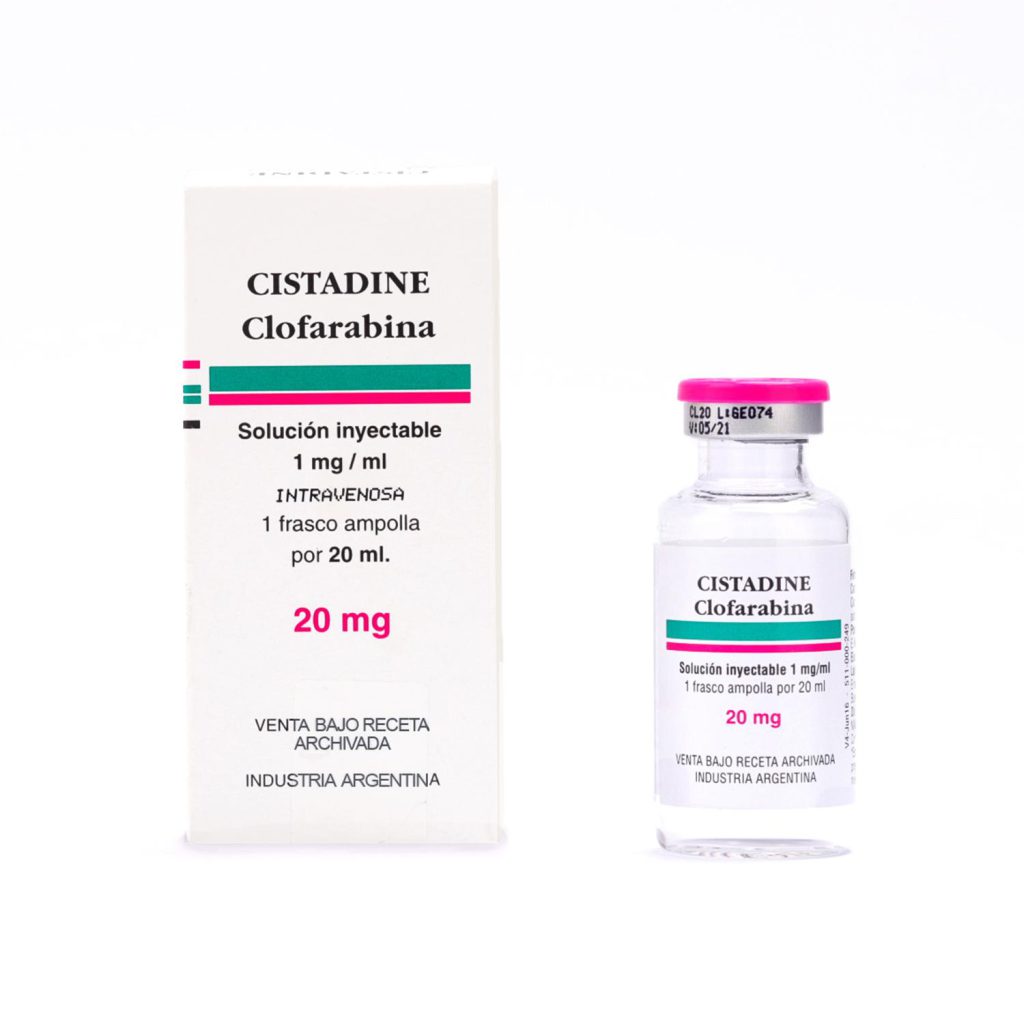
Clofarabine (Evoltra) — chemotherapy from the nucleoside analogue group
What Clofarabine is in simple patient language
Evoltra is what the box says. The generic name is clofarabine. It works by slipping into dividing cells disguised as a nucleoside — one of the raw materials cells use when copying DNA. Once inside, it jams the process.
Families tend to be caught off guard by two things. An inflammatory reaction on infusion day — blood pressure dropping, temperature climbing, breathing getting harder — triggered by the rapid death of leukaemia cells. And the liver. Clofarabine hits the liver hard enough that enzyme levels are checked every single day during the five-day course. Most patients do not get both. Knowing what to watch for beforehand makes both easier to handle.
Liver and kidney status, treatment history, how the disease responded last time — all of that goes into whether clofarabine is appropriate right now. It is not a drug given at diagnosis. It comes in when the earlier lines have not held.
How Clofarabine works
Clofarabine rides into cells on the same transport proteins that carry natural nucleosides. Once it is in, enzymes convert it into its working form. That form does two things at once: it wedges itself into the DNA strand mid-copy so the strand cannot grow further, and it shuts down production of the raw material needed to keep copying going at all.
Replication stops. The cell cannot divide. It dies.
Clofarabine also triggers cell death through the mitochondria, independently of the DNA damage. Cells that have become resistant to drugs working only through DNA remain vulnerable to this second pathway. That is part of why it can be active after other nucleoside analogues have stopped working.
Which conditions may be treated with Clofarabine
Clofarabine is a haematology drug used primarily in children and younger adults. Solid tumours are not its setting.
- acute lymphoblastic leukaemia in children and adolescents — the main approved use; given after at least two prior regimens have not held
- acute myeloid leukaemia — relapsed or refractory disease in younger patients, often in combination
- myelodysplastic syndromes — in selected cases where other options have not been adequate
- transplant bridging — to achieve remission before allogeneic transplant when standard salvage has not worked
Clofarabine is not a first-line drug. It appears when earlier treatment has failed. The clinical question at that point is whether remission is still achievable and whether the patient can carry the treatment.
When Clofarabine can be especially relevant
Certain clinical situations bring it into focus.
- paediatric ALL that has relapsed at least twice or not responded to prior salvage
- AML in a younger patient that has relapsed after induction and one salvage course
- situations where transplant is the goal and a remission-inducing course is needed first
- second opinion requests on whether clofarabine fits the disease course at this specific point
The decision to use clofarabine is rarely simple. By the time it is being considered, the disease has already proved difficult to control. What clofarabine can realistically achieve — and whether transplant remains the plan if it works — needs to be part of the conversation before the first infusion.
What should be checked before treatment
The team needs a proper picture before the first cycle — not just the protocol name.
- disease subtype and current bone marrow status — blast count and cytogenetics at the point of relapse
- full treatment history — what was given, response achieved, and how toxicity was tolerated
- liver function — baseline bilirubin and transaminases determine whether starting is safe
- kidney function — clearance is renal; impaired function raises toxicity risk
- cardiac function — haemodynamic changes during infusion are a known risk
- full blood count and bone marrow assessment
- active infections — need to be controlled before starting
- performance status and general condition
- fertility plans — particularly relevant given the predominantly young patient population
Liver function is more than a routine check. Clofarabine causes enzyme rises in a high proportion of patients. Severe liver toxicity has been reported when warning signs were missed. The baseline determines whether starting is safe, and values are checked daily during treatment.
How treatment with Clofarabine is usually given
Clofarabine goes in intravenously over two hours, once daily for five days in a row. The block repeats every two to six weeks depending on response and tolerance. IV fluid support runs throughout to protect the kidneys.
In paediatric ALL it runs alone or combined with cyclophosphamide and etoposide. In AML it often runs alongside cytarabine. The specific protocol depends on the disease, prior treatment, and whether transplant conditioning follows.
During treatment the team monitors:
- liver enzymes daily — a significant rise triggers a dose hold
- kidney function and urine output daily throughout the five-day course
- blood pressure and fluid balance — haemodynamic instability can develop during infusion
- full blood count — counts fall hard and the nadir is deep
- signs of systemic inflammatory response during and after infusion
- bone marrow assessment after recovery to determine whether response was achieved
Dose holds happen regularly. Liver numbers rising, kidney function shifting, blood pressure dropping — any of these pause the infusion or delay the next cycle. That is the monitoring system working.
Possible side effects
The liver and the blood counts are where most of the clinical attention goes.
- liver enzyme rises — common; can be severe and require dose interruption
- neutropenia — profound and prolonged; infection is the main danger
- thrombocytopenia — platelet transfusions are routine
- anaemia — red cell transfusions are part of standard care
- nausea and vomiting — significant; antiemetics are given throughout
- diarrhoea — common during the five-day course
- mucositis — mouth and gut lining affected
- fatigue
- skin rash on hands and feet in some patients
- fever — as part of inflammatory response and as a sign of infection
Rare but serious:
- systemic inflammatory response — hypotension, rapid breathing, chest tightness; managed with steroids and fluids
- severe liver toxicity including a condition involving liver injury with fluid accumulation
- kidney injury — particularly when fluid support is insufficient
- capillary leak — fluid moves into tissues; blood pressure falls
The inflammatory response needs the fastest action. Dropping blood pressure and breathing difficulty during a clofarabine infusion mean stopping immediately. This is why the drug is always given where resuscitation support is immediately available.
When to contact a doctor urgently
Some things during clofarabine treatment should not wait.
- fever above 38 degrees — same-day contact; neutropenic fever is a medical emergency
- sudden drop in blood pressure or feeling faint during or after infusion
- difficulty breathing or chest tightness
- jaundice, dark urine or significant abdominal swelling
- unusual bruising or bleeding
- rapid drop in urine output
- any sudden or unexplained change in general condition
A temperature above 38 degrees in a patient with near-zero neutrophil counts means calling the haematology team immediately — not waiting to see how it develops.
Why Clofarabine is not right for every patient
Even when the diagnosis and treatment history fit, clofarabine does not suit every patient at every point.
- significant liver impairment at baseline — the drug is hepatotoxic and starting with already-elevated values is high risk
- severe kidney impairment — toxicity rises sharply when clearance is compromised
- active serious infection not yet under control
- very poor performance status where a five-day induction is not survivable
- situations where transplant is not the plan if clofarabine achieves a response — the risk-benefit calculation changes
- cases where a different salvage approach offers a better balance for this patient at this stage
Whether transplant remains realistic if clofarabine works is not separate from the treatment decision — it is part of it. That conversation belongs before starting, not after the marrow result comes back.
Can Clofarabine be combined with other treatments
In most protocols it runs alongside other drugs.
- cyclophosphamide and etoposide — the three-drug combination used in paediatric ALL salvage
- cytarabine — paired with clofarabine in AML and some ALL protocols
- corticosteroids — given preventively to reduce the severity of the inflammatory response
- G-CSF — sometimes given after the five-day course to speed neutrophil recovery
Cytarabine adds gut toxicity and deepens marrow suppression. Cyclophosphamide adds bladder and marrow effects. The combination is what the patient actually goes through, not clofarabine alone.
What no quick response can mean
Response is assessed by bone marrow biopsy after count recovery, typically three to four weeks after the last infusion. A blood count during the nadir tells nothing about whether leukaemia cells are clearing.
If the marrow shows persistent disease after a full course, the options narrow. Clofarabine is a late-line tool. What comes next if it does not work is a conversation that should happen before it starts, not only after the result.
Oncology consultation in Israel
Tel Aviv Medical Clinic offers paediatric and adult haematology consultations and second opinions for patients being considered for clofarabine or already receiving it. Worth seeking when the choice of salvage regimen has not been explained, when prior salvage did not achieve the expected response and the path forward is unclear, or when the family wants an independent view on the proposed plan.
The consultation can cover:
- pathology and cytogenetics at the current relapse
- full treatment history and response at each point
- liver and kidney function in relation to eligibility
- comparison of clofarabine against other available salvage options
- second opinion on the current protocol
- transplant planning — whether and when it remains realistic
- questions to bring back to the treating haematologist
We do not replace the treating doctor. We help the patient and family arrive at the next conversation knowing what to ask.
Frequently asked questions — answered by Dr. Stefanska and Dr. Meerovich
- Why is clofarabine used after other treatments have failed rather than earlier?
Liver, kidneys, haemodynamic instability — the toxicity load is heavier than most first-line drugs carry. A newly diagnosed patient has a good chance of remission with a regimen the body handles more easily. Once those regimens stop working or the disease comes back, the picture changes. A drug that hits multiple targets at once becomes worth the harder side effect profile.
- What is the inflammatory response and how is it managed?
When clofarabine kills leukaemia cells fast, the contents of those dying cells spill out and set off a broad reaction — blood pressure drops, temperature spikes, breathing gets harder. It can start during the infusion or in the hours after. Steroids and IV fluids bring it under control in most patients. The drug is given in a fully supervised inpatient setting because the reaction needs to be caught and acted on fast — it does not resolve on its own.
- Why is liver function checked every day?
Clofarabine produces enzyme rises in a significant proportion of patients. Most are manageable with dose adjustment. But severe liver toxicity can develop quickly if the early warning signs are missed. Daily checks during the five-day course allow the team to act on a rising trend before it becomes dangerous. It is not routine caution — the drug requires it.
- Is clofarabine used in adults as well as children?
The approved indication is paediatric ALL — children and adolescents up to 21. In adults it is used in relapsed or refractory AML and ALL, usually within clinical trials or specialist centres. The benefit-risk balance in older adults is assessed case by case. Liver and kidney function, prior treatment and overall fitness carry more weight than age alone.
- What documents should I bring for a second opinion?
Bone marrow biopsy and aspirate reports from the current relapse with cytogenetics. Reports from all prior marrow assessments. A complete treatment list — every regimen, drugs, doses, dates, how many cycles, and what the marrow showed afterwards. Recent bloods with liver and kidney function. A record of significant complications from prior treatment. The proposed clofarabine protocol. For families, a clear account of what the treating team has said about the goal of treatment and what the plan is if it works.
Important information
This page gives general medical information. It is not a personal treatment plan. Clofarabine should be discussed only after review of the diagnosis, disease history, prior treatment, liver and kidney function, and the patient’s overall condition.
Do not start, stop or change chemotherapy without your treating oncologist.
For consultation about Clofarabine treatment:
📞 +972-73-374-6844
💬 WhatsApp: +972-52-337-3108