


 Contact Us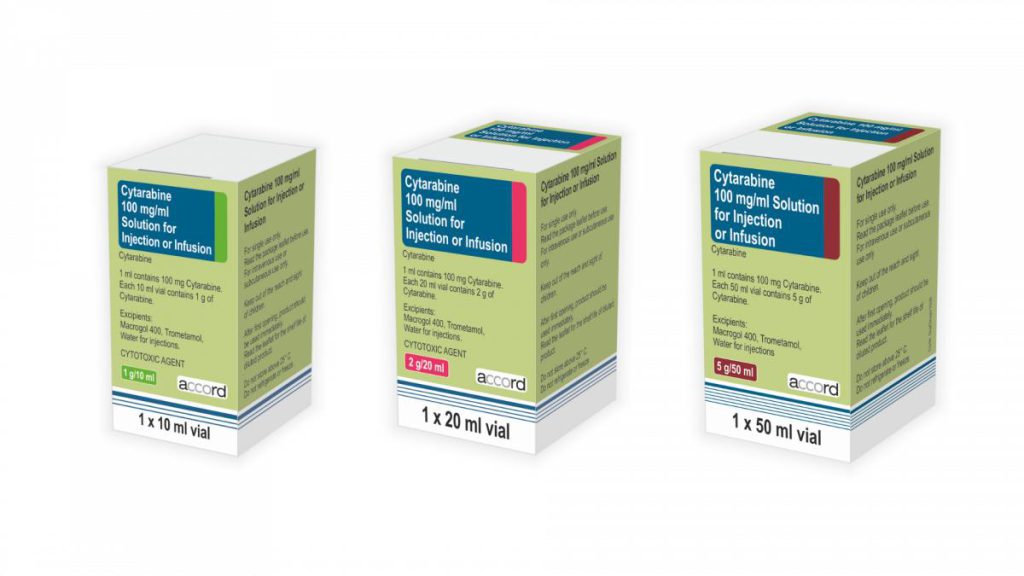
Cytarabine (Ara-C) — chemotherapy from the nucleoside analogue group
What Cytarabine is in simple patient language
Ara-C is what most haematology teams call it. The full name is cytarabine. It is built to look like a normal piece of DNA — close enough that dividing cells take it up without resistance, at which point the copying process collapses.
Two things tend to catch people off guard. One is the setting — this is not an outpatient drip. Induction means a hospital stay of several weeks. The other is something called cytarabine syndrome — fever, aching bones, sometimes a rash — that shows up within the first day or two and has nothing to do with infection. Not everyone gets it, but enough patients do that it belongs in the conversation before day one.
Whether cytarabine is the right drug, and at what dose, depends on more than the name of the diagnosis. Subtype, cytogenetics, how old the patient is, how the kidneys and liver are working, what has already been tried — all of that goes into the decision.
How Cytarabine works
Ara-C does not attack cells from the outside. It gets carried in by the same transport systems the cell uses for its own nucleosides. Once inside, it is converted by cellular enzymes into a form that slots into the growing DNA strand during replication. When it does, the strand cannot be extended further.
The cell cannot finish copying. It cannot divide. It dies.
Normal cells that divide quickly — in the marrow, the gut wall, the mouth — are caught by the same mechanism. That accounts for most of the side effects. The drug is working as designed; it simply has no way to distinguish leukaemia cells from other rapidly dividing tissue.
Which conditions may be treated with Cytarabine
Cytarabine is a haematology drug. It is not used for solid tumors.
- acute myeloid leukaemia — the drug that sits at the centre of induction and consolidation in AML
- acute lymphoblastic leukaemia — part of multi-drug induction and central nervous system prophylaxis
- chronic myeloid leukaemia that has transformed into blast crisis
- certain aggressive non-Hodgkin lymphomas — in salvage regimens before autologous transplant
- cancer that has spread to the cerebrospinal fluid — given directly into the spinal canal
- myelodysplastic syndromes at low dose in carefully selected patients
The diagnosis opens the conversation. Subtype, cytogenetic risk, what has already been given and how it was tolerated, and what the treatment is actually designed to accomplish — those are what shape the real decision.
When Cytarabine can be especially relevant
Some situations put it squarely on the table.
- AML at first diagnosis — seven days of cytarabine alongside three days of an anthracycline is the standard starting point
- AML in remission — high-dose cytarabine consolidation to reduce the chance of the disease coming back
- AML or ALL that has relapsed or failed to respond to initial treatment
- aggressive lymphoma where a cytarabine-based salvage regimen is being planned ahead of transplant
- disease involving the cerebrospinal fluid, where the drug is given directly rather than intravenously
- any situation where a second opinion on the proposed protocol is being sought before committing
Standard-dose and high-dose cytarabine are not the same experience. The drug is the same; everything else — intensity, length of stay, side effect pattern, monitoring — is different. That distinction matters and should be part of the conversation upfront.
What should be checked before treatment
The team needs a full picture before the first cycle — not just the protocol name.
- disease subtype, cytogenetics and molecular markers — these determine dose and what follows induction
- previous chemotherapy and how it was tolerated
- full blood count and bone marrow assessment
- liver function tests
- kidney function — impaired clearance raises the risk of cerebellar toxicity at high doses
- neurological baseline — existing problems are relevant before high-dose treatment
- an eye check where high-dose cytarabine is planned
- current medications
- performance status
- fertility and contraception where applicable
The neurological baseline is not a formality at high dose. Cytarabine can damage the cerebellum — causing unsteadiness, slurred speech, loss of fine coordination — and the risk is meaningfully higher in patients over 60 and those whose kidneys are not working at full capacity.
How treatment with Cytarabine is usually given
Cytarabine goes in by whichever route fits the clinical situation. Continuous intravenous infusion for systemic leukaemia. Direct injection into the spinal canal for CNS disease. Subcutaneous injection at low doses for myelodysplasia.
In AML induction the standard is seven days of continuous IV infusion paired with three days of an anthracycline. Consolidation uses higher doses — typically given over three hours on alternating days for a total of six infusions. Salvage regimens differ considerably by protocol.
What gets watched during treatment:
- blood counts before every dose and often daily during induction — they fall hard and stay low
- kidney and liver function checked regularly throughout
- a neurological review before each high-dose infusion — any cerebellar sign stops the drug that day
- eyes checked throughout high-dose treatment; steroid drops are standard prevention
- temperature and infection signs daily — the neutropenic window is long and infection is the main danger
- bone marrow reassessed after induction to determine whether remission was achieved
Dose changes and delays happen. They are not a sign of failure. Organ function, neurological findings, infection — any of these can alter the plan. Asking why something changed is always a reasonable question.
Possible side effects
The marrow goes down hard with cytarabine induction. That is the point — and it is also the source of most complications.
- neutropenia — counts drop to near zero and stay there for weeks; infection in this window is life-threatening
- thrombocytopenia — platelets fall; transfusions are given routinely
- anaemia — red cell transfusions are part of standard induction care
- cytarabine syndrome — bone pain, fever, rash, sore eyes in the first day or two; treated with steroids
- nausea and vomiting — significant; antiemetics are given from the start
- mucositis — mouth sores are common, worse with higher doses
- hair loss — expected during induction
- diarrhoea
- raised liver enzymes — typically temporary
At high dose specifically:
- cerebellar toxicity — unsteadiness, slurred speech, jerky eye movements; if any of these appear the drug stops and does not restart
- eye inflammation — conjunctivitis and sensitivity to light; steroid eye drops are given preventively throughout
- skin peeling on the palms and soles
- non-cardiac fluid in the lungs — rare but serious
Cerebellar toxicity is the one that needs the most active watching during high-dose treatment. It can arrive partway through a cycle without warning. Telling the team about any wobbliness, change in speech or difficulty with buttons or writing immediately — not at the next scheduled check — is what allows them to stop in time.
When to contact a doctor urgently
Some things during cytarabine treatment cannot wait for the next appointment.
- temperature above 38 degrees — call the haematology team the same day; this is a potential emergency
- any unsteadiness, slurred words or coordination problems during high-dose cycles
- eye pain, redness or inability to tolerate light
- bleeding that will not stop, or blood appearing in urine or stools
- sudden chest tightness or breathlessness
- vomiting severe enough to prevent keeping anything down
- a sudden change in alertness or general condition that does not fit the usual pattern
Fever in a patient whose neutrophil count is near zero can become sepsis within hours. Waiting until morning is not an option. 38 degrees means calling now.
Why Cytarabine is not right for every patient
Even when the diagnosis clearly points toward cytarabine, it does not fit every patient at every point.
- performance status too poor to survive intensive induction safely
- liver function impaired enough to affect how the drug is cleared
- pre-existing cerebellar or neurological damage — high-dose protocols are particularly risky in this group
- age and other health conditions that tip the balance toward a gentler approach
- a documented serious previous reaction to cytarabine
- disease subtypes where venetoclax combinations or hypomethylating agents are a better fit
For older patients with AML in particular, azacitidine or venetoclax-based regimens are sometimes the more appropriate starting point. If intensive treatment has been recommended, asking directly why that over a lower-intensity option is a fair question.
Can Cytarabine be combined with other treatments
Yes — almost always. Single-agent cytarabine in curative treatment is the exception.
- daunorubicin or idarubicin — the anthracycline partner in standard AML induction
- fludarabine — used in FLAG and FLAG-Ida salvage regimens
- etoposide — in high-intensity salvage combinations
- rituximab — added in lymphoma salvage protocols such as R-DHAP
- midostaurin or gemtuzumab ozogamicin — layered onto cytarabine-based induction in AML with specific mutations
The partner drug changes what the full treatment experience involves. Anthracyclines bring heart monitoring. Fludarabine adds a different layer of immunosuppression. The combination is what the patient actually goes through — not cytarabine in isolation.
What no quick response can mean
One cycle tells you very little. In AML, the marrow is biopsied around day 14 to 21 — at the count nadir — and again once counts recover. Both timepoints together give the picture.
If the marrow shows persistent disease, the plan changes. Cytarabine is one part of a treatment strategy. Second induction, a different salvage protocol, transplant planning — when any of those conversations become necessary, they should happen with the treating haematologist promptly, not deferred.
Oncology consultation in Israel
Tel Aviv Medical Clinic sees patients at any point in cytarabine-based treatment — before starting, mid-induction, after a response assessment that raised questions, or when something has not gone to plan. A second opinion is worth seeking when the reasoning behind the protocol was not explained clearly, when a complication has arisen that the treating centre has not addressed, or when the patient wants an independent view on whether this approach fits their specific subtype.
What a consultation covers:
- full review of pathology, cytogenetics and molecular data
- treatment history and response at each point
- current side effects and what can realistically be changed
- comparison of intensive versus lower-intensity approaches for this patient
- independent view on the current protocol
- preparation for the next conversation with the treating haematologist
We do not replace the treating doctor. We help the patient arrive at the next conversation knowing what to ask.
Frequently asked questions — answered by Dr. Stefanska and Dr. Meerovich
- What is cytarabine syndrome and should it be worried about?
It is a reaction that tends to appear 6 to 12 hours after a dose in the first few days of treatment — bone and muscle aching, fever, sometimes a rash or sore red eyes. It is not infection and it is not an allergic reaction. Steroids clear it up quickly when given promptly. The patients who find it most distressing are those who were not told it could happen. Once it is expected and understood, it becomes something to manage rather than something to fear.
- What is the difference between standard-dose and high-dose cytarabine?
Standard dose is 100 to 200 mg per square metre per day, given as a continuous infusion over seven days. High dose is 1 to 3 g per square metre per infusion, administered over three hours on alternating days. High dose is used in consolidation and some salvage regimens, not in initial induction. The side effect profile changes substantially at higher doses — cerebellar and ocular toxicity do not occur at standard doses and are specific to the high-dose setting.
- How real is the cerebellar toxicity risk at high dose?
Real enough that a neurological check is done before every high-dose infusion. Unsteadiness, changes in speech, difficulty with fine movements — any of these appearing mid-cycle means the infusion stops. Whether the damage reverses depends on how quickly it is caught. The risk is highest in patients over 60 and those with reduced kidney function. Those groups are watched more carefully, and doses are sometimes adjusted accordingly.
- Why does the low blood count phase last so long?
That is what cytarabine induction is designed to do — clear the marrow thoroughly, leukaemia and normal cells together. Counts hit their lowest around day 14 and the marrow takes several weeks to rebuild from there. Infection during that period is the primary clinical concern. Antifungal and antibiotic prophylaxis is standard. Any fever while counts are at the floor is treated as a potential emergency until the cause is found.
- What is worth bringing to a second opinion?
Bone marrow biopsy and aspirate reports with full cytogenetic and molecular data. Blood results from diagnosis forward. The protocol name and a list of everything given so far with dates. Recent bloods. A specific account of side effects — not general descriptions but which cycle, how severe, what it stopped the patient from doing. For anyone who has already been through induction, the day-14 marrow result and the count recovery result. That is the material a meaningful second opinion requires.
Important information
This page gives general medical information. It is not a personal treatment plan. Cytarabine should be discussed only after review of the diagnosis, disease subtype, cytogenetics, prior treatment and the patient’s overall condition.
Do not start, stop or change chemotherapy without your treating oncologist.
For consultation about Cytarabine treatment:
📞 +972-73-374-6844
💬 WhatsApp: +972-52-337-3108