


 Contact Us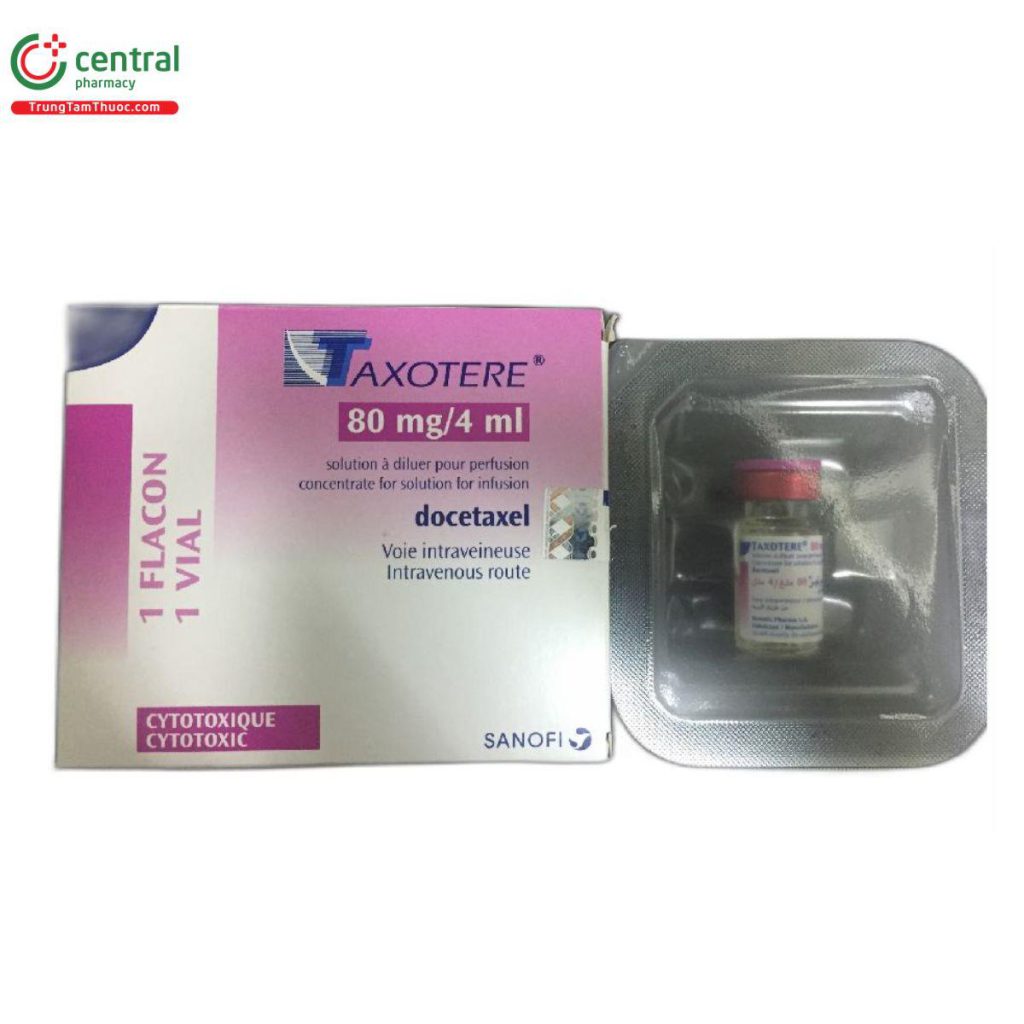
Docetaxel (Taxotere) — taxane chemotherapy in breast, lung and prostate cancer
What Docetaxel is in simple patient language
Docetaxel goes by the brand name Taxotere. It belongs to the taxane class — same family as paclitaxel, different compound. Not interchangeable. Different schedule, different toxicity pattern, different role in specific protocols. The two names get confused often. They should not be.
It turns up in breast cancer, lung cancer, prostate cancer, gastric cancer and certain cancers of the upper airway and throat. Almost always in combination. The regimen name carries as much information as the drug name — TAC, DCF and TPF all contain docetaxel but they are different treatments.
Two things stand out with docetaxel specifically. Fluid retention — swelling in the legs, sometimes the face — that builds over cycles. And nail changes. Both are manageable, but both need to be known about before the first infusion, not discovered partway through.
How Docetaxel works
Cells divide by pulling themselves physically apart. That process depends on an internal scaffold built from proteins. Docetaxel freezes that scaffold. Division stalls. The cell cannot finish what it started and eventually breaks down.
Paclitaxel works through the same general mechanism but the two drugs are not equivalent in practice. Different binding properties, different metabolism, different side effect profile. Swapping one for the other is not a simple clinical substitution.
Prior exposure to one taxane does not guarantee a response to the other. Resistance can cross between them. The oncologist needs the full treatment history before deciding whether any taxane still has a role.
Which conditions may be treated with Docetaxel
Docetaxel appears across several cancer types.
- carcinoma of the breast — adjuvant, neoadjuvant and metastatic settings
- carcinoma of the lung — selected regimens across histological subtypes
- carcinoma of the prostate — particularly in castration-resistant disease
- carcinoma of the stomach and gastroesophageal junction in combination regimens
- cancers of the upper airway and throat where induction and concurrent protocols include docetaxel
- other solid tumors where docetaxel-containing regimens have clinical support
The diagnosis is a starting point. What actually drives the decision is stage, molecular profile where relevant, previous treatment, current physical condition and what the oncologist is trying to achieve right now.
When Docetaxel can be especially relevant
There are situations where docetaxel specifically comes into focus.
- breast cancer where the regimen calls for a taxane and docetaxel fits the combination
- prostate cancer that has stopped responding to hormone therapy and needs systemic chemotherapy
- gastric cancer where DCF or a modified version is on the table
- throat and upper airway cancer where TPF induction is part of the plan
- lung cancer where the regimen and performance status support this drug
- second-line treatment after platinum-based therapy in certain tumor types
When docetaxel is proposed instead of paclitaxel, there is usually a reason. The oncologist should be able to explain it clearly.
What should be checked before treatment
Before the first infusion the team needs a complete picture — not just the diagnosis.
- tumor type, stage and treatment goal
- previous chemotherapy, particularly any prior taxane exposure
- liver function — docetaxel is processed through the liver and dose adjustments may be needed
- full blood count, especially neutrophils
- baseline nerve function
- any existing fluid retention or heart problems
- history of allergic reactions
- current medications
- general physical condition and performance status
- fertility plans when relevant
Liver function carries particular weight here. If liver enzymes or bilirubin are elevated, the dose may need adjusting or the drug may not be safe to use at all. This is not a detail that can be deferred to after the first cycle.
How treatment with Docetaxel is usually given
Docetaxel is given intravenously, usually every three weeks. Some protocols use weekly dosing at lower doses. Premedication — typically oral steroids starting the day before — is given before every cycle specifically to reduce fluid retention and hypersensitivity risk. Missing premedication is not an option.
During treatment the team monitors:
- full blood count before each cycle — neutrophils in particular, as drops can be significant
- liver function
- fluid retention — leg swelling, weight gain, breathing changes
- nerve symptoms in hands and feet
- nail condition — changes can progress and become painful
- any signs of hypersensitivity during the infusion
- nausea, appetite and recovery between cycles
- imaging at planned intervals to assess tumor response
Dose delays and reductions happen. They are clinical decisions, not signs the treatment has stopped working. Asking why a change was made is always the right response.
Possible side effects
Docetaxel’s side effect profile differs from paclitaxel in a few specific ways worth knowing about.
- fluid retention — legs, ankles, sometimes the face; builds over cycles, managed partly by premedication
- neutropenia — white cell counts drop, raising infection risk
- fatigue, sometimes significant
- nail changes — darkening, lifting, occasionally painful; can affect daily function
- hair loss — common and usually significant
- peripheral neuropathy — tingling and numbness in hands and feet, less prominent than with paclitaxel but present
- nausea, usually manageable
- mouth soreness
- hypersensitivity reactions during infusion — premedication reduces but does not eliminate the risk
Fluid retention and nail changes are the two effects most specific to docetaxel. Neither is dangerous in itself, but both can become functionally limiting if they go untracked. Reporting weight gain between cycles and any nail lifting early gives the team room to act.
When to contact a doctor urgently
Some things during treatment should not wait for the next planned appointment.
- fever or chills — 38 degrees or above needs a same-day call
- sudden or rapid swelling of the legs, face or difficulty breathing
- chest tightness, flushing or throat tightness during the infusion
- unusual bruising or bleeding
- numbness or tingling that has jumped noticeably worse since the last cycle
- nail pain that is preventing normal activity
- repeated vomiting preventing eating or drinking
- any sudden unexplained change in general condition
Neutropenia after docetaxel can be deep and fast. Fever in that window is not a symptom to monitor at home. It needs a call and usually an urgent blood test.
Why Docetaxel is not right for every patient
Even when the diagnosis fits, docetaxel does not suit every patient at every point.
- significant liver impairment affecting safe drug clearance
- very low neutrophil count before treatment
- significant pre-existing peripheral neuropathy
- severe existing fluid retention or cardiac problems
- previous serious hypersensitivity to docetaxel or polysorbate 80
- poor general condition where the regimen would be unsafe
Sometimes paclitaxel or nab-paclitaxel is a better fit. Sometimes the answer is a different drug class altogether. The comparison between taxanes should be explained, not assumed.
Can Docetaxel be combined with other treatments
Yes — it almost always is. Common combinations:
- cyclophosphamide and doxorubicin in breast cancer adjuvant regimens
- carboplatin or cisplatin in lung cancer
- trastuzumab and pertuzumab in HER2-positive breast cancer
- prednisone in prostate cancer
- cisplatin and fluorouracil in gastric cancer and upper airway cancer protocols
Each combination changes the overall experience. Docetaxel with prednisone for prostate cancer looks very different from docetaxel with carboplatin for lung cancer. The drug is the same. The patient’s journey through treatment is not.
What no quick response can mean
Response is assessed after several cycles — not after the first infusion. Imaging, markers, symptoms and tolerability together give the picture. One scan result rarely settles the question.
If disease is clearly progressing, neuropathy or fluid retention are becoming unsafe, or the original goal no longer fits — the plan needs reviewing. A second opinion can be useful when the direction is unclear or when the reasoning behind the choice of docetaxel over other options has not been properly explained.
Oncology consultation in Israel
Tel Aviv Medical Clinic offers oncology consultations and second opinions for patients on a docetaxel-based regimen or considering one. Useful when the choice between docetaxel and paclitaxel has not been explained, when fluid retention or neuropathy is becoming a problem, when a reaction has occurred, or when the family wants to understand what the treatment is working toward.
The consultation can cover:
- pathology and imaging review
- previous treatment history and response
- liver function and its impact on dosing
- comparison of docetaxel with paclitaxel and other taxane options
- second opinion on the current regimen
- questions to bring back to the treating oncologist
We do not replace the treating doctor. We help the patient arrive at the next conversation knowing what to ask.
Frequently asked questions — answered by Dr. Stefanska and Dr. Meerovich
- Is docetaxel stronger than paclitaxel?
Not a useful comparison. Both are taxanes with the same basic mechanism, but they are different drugs with different dosing, different schedules and different side effect patterns. Docetaxel tends to cause more fluid retention and nail effects. Paclitaxel tends to produce more cumulative neuropathy. Which one belongs in a given plan depends on the cancer type, the regimen and the patient — not on which drug is considered more powerful in the abstract.
- Why do I need to take steroids before each infusion?
Two reasons. First, steroids lower the chance of a hypersensitivity reaction during the drip. Second, they help control fluid retention over the course of treatment. Skipping premedication before docetaxel is not a minor thing — it makes both of those risks meaningfully higher. If a patient has missed doses in the past and had problems, that is worth raising before the next cycle rather than after.
- How bad does the fluid retention get?
It tends to creep up rather than appear all at once. A bit of ankle swelling in the early cycles can become considerably more by cycle four or five. Premedication helps keep it manageable. Tracking weight between cycles is one of the simplest ways to catch it before it gets out of hand. When swelling starts affecting breathing or movement — that shifts the conversation about dose and whether to add support. I would rather hear about it early than once it has already reached that point.
- What should I watch for with my nails?
Darkening is common and largely cosmetic. The problem is when the nail starts to lift from the bed — that can become painful and create an entry point for infection. Protective nail polish, keeping nails short, avoiding pressure — these are practical measures that help. If a nail is already partially lifted or painful, tell the team. It does not necessarily stop treatment but it does need to be managed actively.
- What documents should I bring for a second opinion?
Pathology report, recent scans, surgery notes if there was an operation, the full treatment history with dates, the current regimen, and recent bloods with liver function. If fluid retention, neuropathy or nail problems have developed, write out a brief timeline — when each started, which cycles made things worse. That kind of specific account does more work than a general description.
Important information
This page gives general medical information. It is not a personal treatment plan. Docetaxel should be discussed only after review of the diagnosis, stage, liver function, previous treatment, nerve function and the patient’s overall condition.
Do not start, stop or change chemotherapy without your treating oncologist.
For consultation about Docetaxel treatment:
📞 +972-73-374-6844
📧 [email protected]
💬 WhatsApp: +972-52-337-3108