


 Contact Us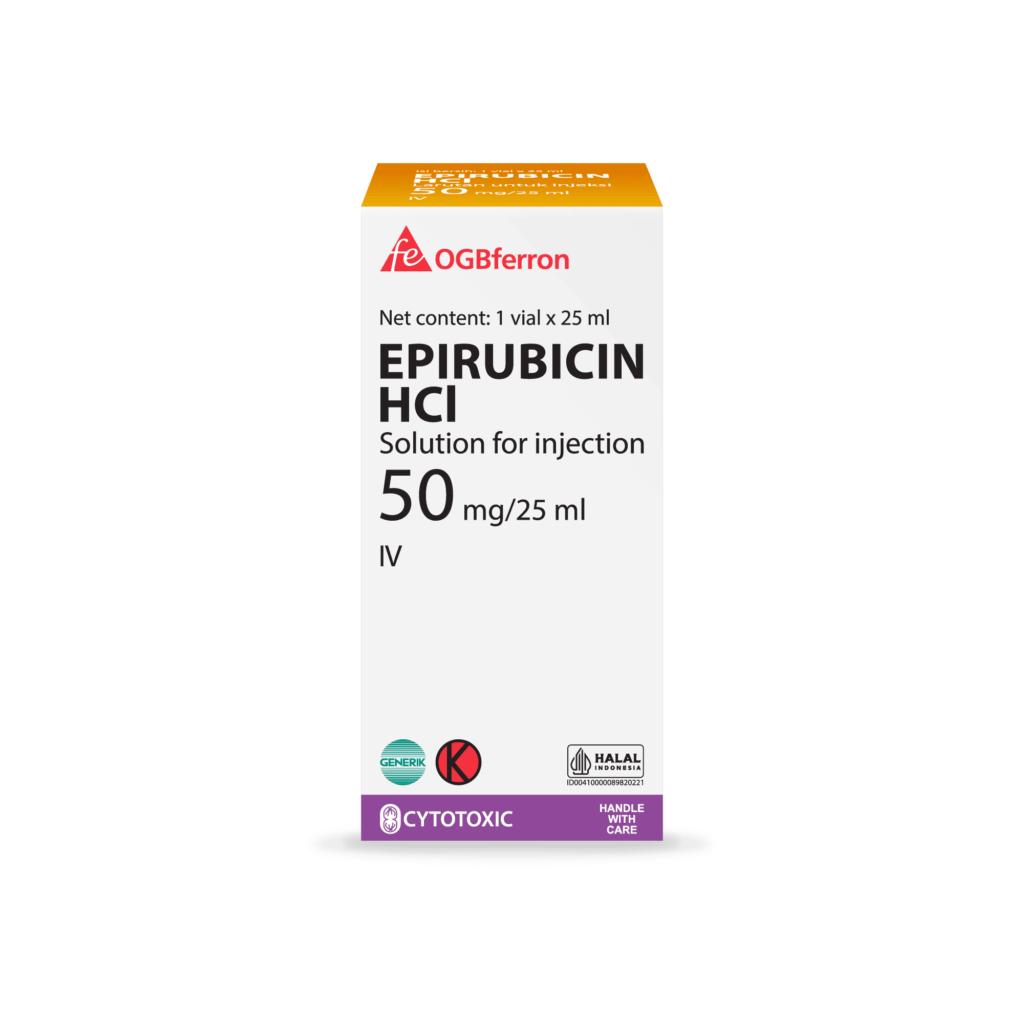
Epirubicin — chemotherapy from the anthracycline group
What Epirubicin is in simple patient language
Brand names vary by country — Ellence, Pharmorubicin, others. Generic name: epirubicin. The drug class is anthracyclines. It shares that class with doxorubicin but carries a small structural difference that changes how the body handles it. The drip runs red. That is the molecule itself. Urine may turn pink for a day or two after each dose — normal, not blood.
Two things tend to come as a surprise. Hair — fast loss, more extensive than people picture, covering scalp and body. And the heart. Each dose adds permanently to a running cardiac total that never resets. There is a cap on how much anthracycline the heart can safely absorb across an entire life. Epirubicin counts toward that cap alongside doxorubicin and idarubicin from any prior treatment. A course given years ago for a different cancer is still part of the calculation today.
Cardiac history, total prior anthracycline received, liver function, cancer type and stage — these determine whether epirubicin fits the current plan.
How Epirubicin works
Epirubicin forces its way into the DNA helix and jams it. It also disables an enzyme that manages the coiling and uncoiling of DNA strands. Without it working, strand breaks back up faster than the cell can clear them.
The cell stalls. It cannot copy or repair. It shuts down.
This is not selective. Any fast-dividing tissue — marrow, gut lining, hair follicles — takes the same hit. Most predictable side effects trace back there. Cardiac toxicity comes from a different route: each dose generates reactive molecules inside heart muscle that cause oxidative damage. That damage is permanent and builds with every cycle.
Which conditions may be treated with Epirubicin
Epirubicin is used mainly in breast and gastric cancers, and has a distinct role in bladder disease through direct instillation.
- breast cancer — adjuvant and advanced disease; FEC, EC and related regimens
- gastric and gastroesophageal junction cancer — in ECF, ECX and similar regimens
- bladder cancer — given directly into the bladder after resection of non-muscle-invasive tumours; also used systemically in selected regimens
- soft tissue sarcomas — in some combination protocols
- ovarian cancer — in selected situations
Diagnosis is the starting point. Stage, the combination proposed, cardiac history and prior anthracycline exposure feed into whether epirubicin is the right drug at this moment.
When Epirubicin can be especially relevant
Some situations put it directly in the discussion.
- early breast cancer where FEC or EC adjuvant treatment is being weighed
- advanced breast cancer where anthracycline-based treatment is being planned
- gastric cancer where epirubicin is part of the proposed combination
- non-muscle-invasive bladder cancer where instillation directly into the bladder after resection is being proposed
- second opinion on whether the proposed regimen fits this patient’s cardiac and anthracycline history
Epirubicin took over from doxorubicin in several breast cancer regimens because the heart and stomach tend to tolerate it better at comparable doses. That is a real benefit. It does not mean cardiac monitoring matters less — the lifetime anthracycline total still applies.
What should be checked before treatment
A proper baseline is needed before the first dose.
- cardiac scan before any anthracycline starts — the reference point for all future monitoring
- total anthracycline history — every prior doxorubicin, epirubicin or idarubicin course adds to the running total
- liver function — the drug clears through the liver; impairment changes what dose is tolerable
- full blood count
- kidney function
- full treatment history
- current medications
- performance status
- fertility — epirubicin affects gonadal function; this conversation belongs before the first infusion
The baseline cardiac scan is not a formality. It is the only reference point against which cardiac changes during and after treatment can be measured. Starting without it means there is nothing to compare to.
How treatment with Epirubicin is usually given
IV infusion over fifteen to twenty minutes in most protocols. A secure vein or central line is essential. Epirubicin outside the vein causes tissue damage. Any burning or swelling at the infusion site while the drug is running means stopping and calling the team at once.
In FEC for breast cancer it repeats every three weeks for three to six cycles. In EC every three weeks for four to eight cycles. In gastric regimens like ECF it runs on day one of each three-week block. Intravesical instillation goes directly into the bladder through a catheter — a completely different experience from IV treatment.
During treatment the team monitors:
- full blood count before every cycle
- liver function regularly — dose adjustment needed if bilirubin rises
- cardiac function by repeat scan at defined cumulative dose thresholds
- infusion site throughout each administration
- running cumulative anthracycline total
- tumour response at planned imaging intervals
The cumulative ceiling for epirubicin alone sits around 900 mg per square metre. Prior anthracycline exposure shrinks that remaining margin. The calculation has to happen at the planning stage.
Possible side effects
Hair and marrow are what patients feel first. The cardiac concern shapes the entire plan even when it stays in the background.
- alopecia — starts two to three weeks after the first dose; scalp and body hair both affected; returns after treatment finishes
- neutropenia — lowest point around day ten to fourteen; infection risk peaks then
- nausea — generally milder than with doxorubicin; antiemetics are given routinely
- mucositis — mouth sores, more common at higher doses
- fatigue
- cardiac toxicity — arrhythmia or falling ejection fraction during treatment; cardiomyopathy can appear years later; total anthracycline received is the main driver
- red or pink urine for a day or two after each dose
- amenorrhoea in premenopausal women — sometimes permanent
Rare but serious:
- extravasation — drug escaping the vein destroys surrounding tissue; a specific antidote must be given within hours
- secondary leukaemia — rare late effect of anthracycline exposure
- acute arrhythmia during infusion
Epirubicin is generally easier on the heart than doxorubicin at equivalent doses. That does not remove the need for cardiac monitoring — the cumulative risk still applies, and prior anthracycline history makes it more pressing, not less.
When to contact a doctor urgently
Some things should not wait for the next appointment.
- fever above 38 degrees — same-day call; neutropenic fever is a medical emergency
- burning or swelling at the infusion site while the drug is running — stop immediately and call
- chest pain, palpitations or sudden breathlessness
- unusual bruising or bleeding
- mouth sores preventing eating or drinking
- any sudden or unexplained change in general condition
If epirubicin escapes the vein the treatment window is hours. Burning at the site means stopping the infusion and calling for help immediately.
Why Epirubicin is not right for every patient
The diagnosis fitting does not settle the question.
- cumulative anthracycline dose at or near the lifetime limit
- significantly reduced cardiac ejection fraction at baseline
- severe liver impairment — clearance is hepatic; impaired function raises toxicity
- recent serious cardiac event
- prior anthracycline exposure leaving insufficient safe margin for the proposed regimen
- situations where a different regimen reaches the same goal with less cardiac load
Prior doxorubicin or idarubicin eats into the safe margin available for epirubicin. That calculation has to be done before the regimen is written, not after several cycles have already run. This information does not always travel between institutions or across years.
Can Epirubicin be combined with other treatments
Epirubicin almost never runs alone. Combination is the norm.
- cyclophosphamide and fluorouracil — FEC in breast cancer
- cyclophosphamide — EC in breast cancer
- cisplatin and fluorouracil — ECF in gastric cancer
- cisplatin and capecitabine — ECX in gastric cancer
- taxanes — sequential in breast cancer protocols
Each partner adds its own toxicity. Cisplatin brings kidney and nausea concerns. Cyclophosphamide deepens marrow suppression. The combination is what the patient actually goes through.
What no quick response can mean
Response is assessed at planned imaging points, typically after two to four cycles. In neoadjuvant breast cancer, pathological response is evaluated at surgery. One early scan does not settle the picture.
Progression on treatment, cardiac function falling below a safe threshold, or reaching the cumulative dose ceiling — any of these changes the plan. Epirubicin is one part of a strategy. When that strategy needs updating the conversation belongs with the treating oncologist.
Oncology consultation in Israel
Tel Aviv Medical Clinic offers oncology consultations and second opinions for patients on an epirubicin-containing regimen or considering one. Worth seeking when cardiac history or prior anthracycline exposure was not factored into the proposed plan, when the regimen choice was not explained, when a complication has arisen, or when alternatives need to be understood.
The consultation can cover:
- pathology and imaging review
- prior treatment history including total anthracycline dose calculation
- cardiac risk assessment for the proposed regimen
- comparison of epirubicin-containing and alternative regimens
- second opinion on the current protocol
- questions to bring back to the treating oncologist
We do not replace the treating doctor. We help the patient arrive at the next conversation knowing what to ask.
Frequently asked questions — answered by Dr. Stefanska and Dr. Meerovich
- What is the difference between epirubicin and doxorubicin?
Same class, different molecule. One hydroxyl group sits in a different position on the epirubicin structure. That shifts how the body metabolises and eliminates it. At the doses used in standard protocols, epirubicin tends to be gentler on the heart and causes less nausea. That is why it replaced doxorubicin in several breast cancer regimens. Both still add to the lifetime anthracycline total and both still require cardiac monitoring. They serve different protocols and are not freely substituted.
- Why does prior doxorubicin matter when planning epirubicin?
Every anthracycline deposits cardiac injury that accumulates regardless of which drug it came from. The lifetime limit covers the total from all of them combined, not each one separately. Prior doxorubicin shrinks the remaining safe margin for epirubicin. If the prescribing oncologist does not have that prior history, the new regimen may push the combined total beyond what the heart can safely handle without anyone realising it.
- What is intravesical epirubicin and how does it differ from IV?
Intravesical means the drug goes into the bladder through a catheter rather than a vein. It is used after surgical removal of early-stage bladder tumours to cut down on recurrence. The drug stays local. It does not reach the bloodstream. Hair loss, cardiac toxicity and marrow suppression do not apply. Side effects are local — bladder irritation, urinary frequency, occasionally cystitis. Completely different from IV treatment.
- What is the cumulative dose limit for epirubicin?
Without prior anthracycline exposure, the accepted ceiling sits around 900 mg per square metre. Prior doxorubicin or other anthracyclines reduce what remains available, because some of the cardiac reserve is already gone. Individual factors — pre-existing heart disease, chest radiotherapy, certain other drugs — can lower the personal threshold further. Calculating this belongs at the planning stage.
- What documents should I bring for a second opinion?
Pathology report. Imaging with written radiology reports. Every treatment course ever received — drugs, doses, cycle count, dates — with close attention to any prior anthracycline regimens. Cardiac scan results from before and during treatment. Recent bloods with liver function. Any cardiac symptoms that emerged during or after prior chemotherapy. The prior anthracycline record matters as much as the current treatment notes.
Important information
This page gives general medical information. It is not a personal treatment plan. Epirubicin should be discussed only after review of the diagnosis, stage, cardiac function, total anthracycline history, liver function and the patient’s overall condition.
Do not start, stop or change chemotherapy without your treating oncologist.
For consultation about Epirubicin treatment:
📞 +972-73-374-6844
💬 WhatsApp: +972-52-337-3108