


 Contact Us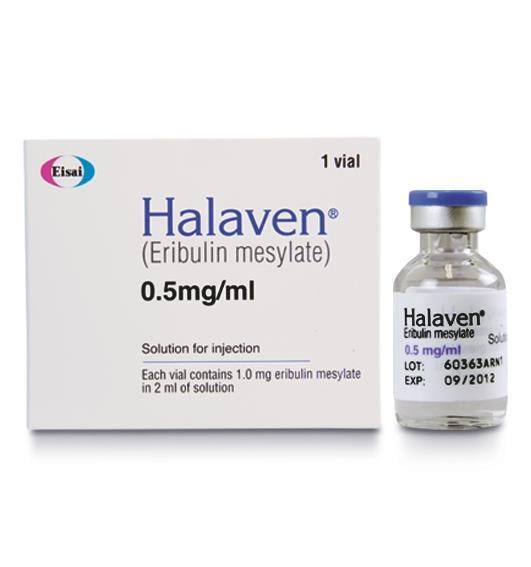
Eribulin (Halaven) — chemotherapy for breast cancer and liposarcoma
What Eribulin is in simple patient language
Eribulin is a cancer drug used when the disease needs systemic treatment. Its job is to interfere with how tumour cells divide and slow the progression of the disease.
Halaven is one of the brand names. What matters more to the patient is not the name itself but why the doctor is proposing it — after which prior treatments and with what goal.
Eribulin does not get prescribed just because something needs to change. The oncologist looks at the full picture first: diagnosis, tumour subtype, what was given before, fresh test results and how previous courses were tolerated.
How Eribulin works
A cancer cell does not just grow. To divide, it has to build an internal structure that pulls the cell apart at the right moment. Eribulin disrupts that process.
As a result, some cells lose the ability to complete division properly. For the patient this does not always look like a rapid shrinkage on the first scan. Sometimes the goal of treatment is to stop the previous rate of growth and keep the disease under control.
That is why the doctor evaluates more than one number. Scans, blood tests, symptoms, the patient’s strength, neurological signs and what treatment options remain further along — all of it matters.
Which conditions may be treated with Eribulin
Eribulin is most often discussed in advanced disease, after other systemic treatments have already been given.
- breast cancer — when the disease has spread beyond the original site or has become active again
- liposarcoma — in selected situations after prior treatment
- cases where the doctor is comparing several chemotherapy options
- situations where the next step needs to be chosen after previous regimens
This list does not mean automatic prescribing. Two patients with the same diagnosis can follow completely different treatment logic: for one the prior drugs matter most, for another the speed of progression, for a third tolerability and blood counts.
When Eribulin can be especially relevant
Eribulin usually enters the discussion when earlier standard options no longer provide adequate control or do not suit the patient.
- disease continues to progress after previous regimens
- a next systemic option is needed in advanced disease
- in breast cancer — after the key foundational drugs have already been used
- in liposarcoma — when treatment after prior therapy needs to be assessed
- when the doctor is looking for a regimen with clear monitoring requirements and acceptable burden
What matters here is not how many prior courses were given but whether eribulin has a real role right now.
What should be checked before treatment
Before starting, the oncologist needs more than just the drug name in the recommendation. A full picture is required. Without it, the right drug can easily be chosen at the wrong time.
- confirmed diagnosis and biopsy data
- tumour subtype and key markers where relevant
- stage and current CT, MRI or PET-CT
- which regimens were given before and how long they worked
- full blood count
- liver function tests
- any numbness, pain, weakness or other signs of neuropathy
- other health conditions and regular medications
- general condition and weight loss if present
Sometimes a decision changes after one missing test result or a review of the prior treatment history. That is frustrating, but better to clarify before the course starts than to correct a mistake after.
How treatment with Eribulin is usually given
Eribulin is given intravenously. Treatment runs in cycles. The exact schedule is set by the oncologist based on the diagnosis, dose, blood results and tolerability.
During treatment the doctor monitors more than scans. The gaps between infusions, blood count recovery and any new symptoms all matter.
- full blood count before infusions
- liver function monitoring
- temperature and signs of infection
- sensation in the fingers and toes
- fatigue, appetite and weight
- planned assessments to evaluate response
If blood counts drop or neuropathy worsens, the doctor may delay an infusion, adjust the dose or order additional monitoring. That does not necessarily mean treatment is being stopped.
Possible side effects
Eribulin has its own tolerability profile. Some patients go through the course relatively smoothly. Others develop fatigue, blood count changes or unpleasant sensations in the fingers early on.
Possible reactions:
- fatigue and weakness
- low neutrophil count
- anaemia or low platelets
- nausea and loss of appetite
- constipation or stomach discomfort
- hair loss
- sensory changes in the hands and feet — tingling, numbness or aching
- fever
- changes in liver test results
Side effects are not always easy to assess on your own. Knowing in advance which symptoms need same-day reporting and which can wait until the next visit makes a real difference.
When to contact a doctor urgently
Some things should not wait for a scheduled appointment. Call the team if any of these appear during treatment:
- fever 38°C or above — same-day call
- chills or signs of infection
- sudden weakness that is getting worse quickly
- breathlessness, chest pain or racing heartbeat
- bleeding or bruising without obvious cause
- vomiting that keeps coming back or severe loose stools
- significant numbness, unsteady walking or weakness in the legs
- confusion or loss of consciousness
- any condition that is noticeably worse than usual after a cycle
During chemotherapy it is dangerous to guess whether something will pass on its own. Sometimes a simple check is all that is needed. Sometimes urgent correction of treatment is required.
Why Eribulin is not right for every patient
Eribulin can be an important option but it does not suit every patient with a similar diagnosis. Sometimes the doctor chooses a different regimen not because eribulin is weaker but because in that specific situation the risks outweigh the benefits.
The decision is shaped by:
- tumour type and behaviour
- prior treatment
- recent test results
- neutrophil count, haemoglobin and platelets
- liver function
- severity of neuropathy
- general condition and other health problems
Sometimes blood counts need to recover first, tumour data needs to be clarified, or a different treatment option needs to be considered. This is normal clinical selection, not a refusal to help.
Can Eribulin be combined with other treatments
Eribulin can be part of an overall plan. It is not added to treatment just to strengthen the effect without a clear reason.
The doctor may discuss:
- switching to eribulin after the previous line
- local treatment of specific lesions where that affects symptoms
- supportive therapy to help with tolerability
- monitoring after response assessment
- other systemic options if they are a better fit for the tumour profile
Combinations and sequencing depend on the diagnosis. For one patient eribulin is the logical next step. For another it is a backup option pending further assessment.
What no quick response can mean
Response to eribulin does not always look like rapid tumour shrinkage. Sometimes the result is stabilisation: the lesions do not disappear but the disease stops growing at its previous rate.
That is psychologically hard for a patient who wants to see obvious improvement. But in advanced disease the doctor often evaluates more than just lesion size. Symptoms, blood results, scans and tolerability all feed into the picture.
One follow-up scan matters but it rarely tells the whole story. The decision to continue or change treatment is made on the overall picture.
Oncology consultation in Israel
At Tel Aviv Medical Clinic you can discuss whether eribulin has a place in a specific clinical situation and whether it should be considered as the next step in treatment.
A consultation may be useful when you need to:
- get a second opinion in breast cancer or liposarcoma
- understand why eribulin specifically has been proposed
- compare it with other chemotherapy options
- review prior regimens and the reasons for changing them
- assess the risks of neuropathy and low blood counts
- prepare questions for the treating oncologist
- discuss treatment in Israel or verify a plan proposed in another country
We do not replace the treating doctor and do not prescribe treatment remotely. Our goal is to help the patient and family understand the medical logic behind the decision and prepare for the next conversation with the oncologist.
Frequently asked questions — answered by Dr. Stefanska and Dr. Meerovich
- When is eribulin usually first discussed?
Most often not at the very start of treatment but after prior regimens have been given. I would not count only the number of lines though. What matters is understanding exactly what the patient has already received, whether there was a response and why treatment stopped working. Sometimes eribulin looks like the logical next step. Sometimes the scans, biopsy or general condition need to be reviewed first.
- When is eribulin discussed in advanced breast cancer?
It may be appropriate but not automatically. In that diagnosis I first look at the tumour subtype, HER2 status, hormone receptors, prior regimens and how quickly the situation is changing. Even similar-sounding discharge summaries can hide completely different disease histories. The decision on eribulin cannot be made on one line of diagnosis alone.
- How does eribulin differ from other chemotherapy drugs?
It acts on cell division differently from some standard regimens. But for the patient what matters more is not memorising the mechanism but understanding where the drug fits in the overall treatment sequence. The question is not whether it is stronger or weaker. The question is whether using it makes sense specifically after the regimens that have already been given.
- Do molecular tests need to be done before eribulin?
Eribulin is not usually selected on the basis of one specific molecular marker. But that does not mean assessments can be skipped. Fresh scans, biopsy data, tumour subtype information, blood results and the list of prior regimens are all needed. Without that base it is easy to choose treatment at the wrong moment.
- What should be done if finger numbness appears?
Tell the doctor. Do not wait until it becomes hard to walk, write or pick up small objects. Neuropathy can build gradually. Patients sometimes get used to the symptoms and mention them too late. The doctor needs to hear about it early in order to adjust monitoring or dose in time.
- How soon is the result assessed?
Usually after several infusions and a follow-up assessment. But the timing depends on the diagnosis, the pace of the disease and the patient’s starting condition. I do not draw conclusions from one number in a report. What matters is what is happening with symptoms, blood results, general condition and the lesions on imaging.
- Can you tell in advance whether treatment will be hard to tolerate?
Not completely. But the risks can be assessed: blood counts, liver tests, neuropathy, weakness, age, history of infections and how prior chemotherapy was tolerated. If risks are present that does not always mean a ban. Sometimes treatment is possible but with closer monitoring and clear instructions on when to contact the doctor urgently.
Important information
The information on this page is general medical information and does not constitute a prescription. Eribulin can only be considered after assessment of the diagnosis, stage of disease, prior therapy, test results and the patient’s general condition.
Do not start, stop or change treatment without consulting your treating doctor.
For consultation on eribulin treatment:
📞 +972-73-374-6844
💬 WhatsApp: +972-52-337-3108