


 Contact Us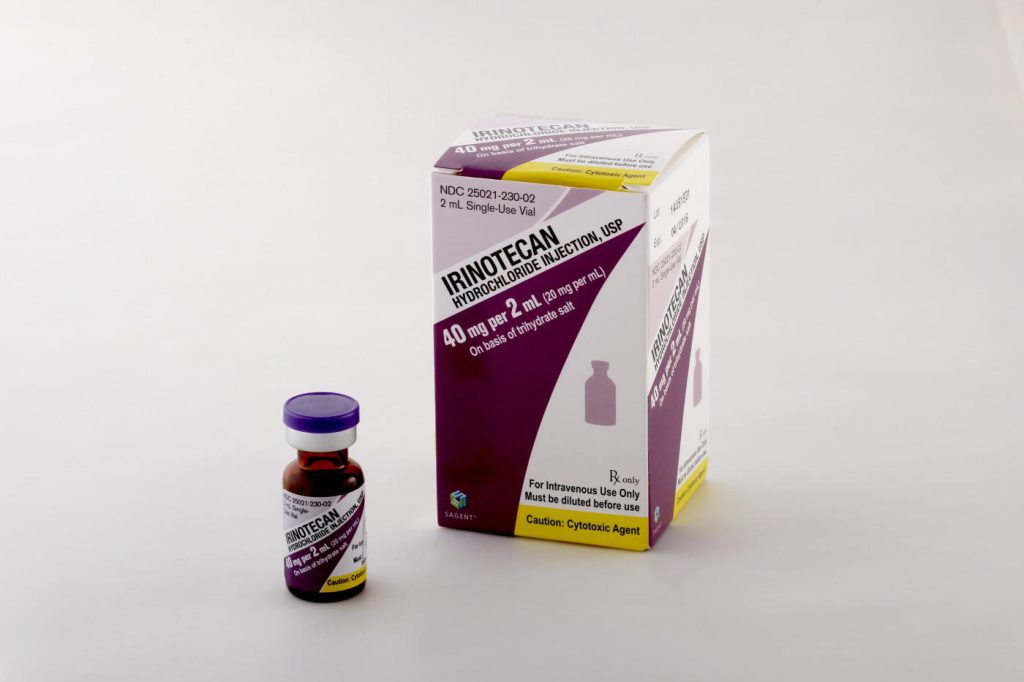
Irinotecan — chemotherapy for colorectal cancer and other tumors
What irinotecan is in simple patient language
Most families hear about irinotecan in the context of bowel cancer. Less often for other solid tumors. Almost always it comes up as one piece of a multi-drug plan, not as a standalone prescription.
No immune system involvement, no receptor targeting. The drug reaches cells that are actively dividing and makes it very difficult for them to finish that process.
Three things matter most during any course with this drug: what the gut is doing, what the blood count shows, and how the liver is holding up. I watch all three from cycle one.
How irinotecan works
Cell division needs enzymes to keep the DNA strands organized during copying. Irinotecan gets in the way of that. The copy cannot finish. Damage builds up and the cell stops.
For a tumor, when this happens across enough cells over several cycles, growth can slow or stall.
Mechanism is just the starting point. I also need to know the full protocol, what treatment has already run, whether there is a bowel history that raises the diarrhea risk, current neutrophil levels, and the bilirubin result.
Which conditions may be treated with irinotecan
Irinotecan shows up in oncology when a systemic drug is needed, mostly in solid tumors:
- cancer of the colon or rectum
- metastatic colorectal disease
- selected regimens for other gastrointestinal tumors
- certain lung cancer situations
- combination plans being evaluated by the oncologist
The diagnosis is the starting point, not the conclusion. The same drug at one treatment stage can make perfect sense and at another be the wrong choice entirely.
When irinotecan can be especially relevant
Usually comes into the picture when the doctor needs a systemic option with a clear protocol fit:
- a FOLFIRI regimen is being discussed
- the disease has spread beyond the original site
- a prior regimen stopped producing results
- chemotherapy is being compared to other systemic approaches
- the plan needs to be matched to the patient’s current tolerance and labs
The question I ask is not whether irinotecan can be prescribed. It is whether it fits the plan that makes sense for this person right now.
What should be checked before treatment
A discharge note with a diagnosis does not tell me what I need to know. Safety depends on the details.
- precise diagnosis and stage
- recent CT, MRI, or PET-CT
- every prior treatment line and how it was tolerated
- complete blood count
- liver values, bilirubin especially
- kidney function and overall physical state
- any history of diarrhea or inflammatory bowel disease
- full medication list
- UGT1A1 status where the doctor judges it relevant
High bilirubin, low neutrophils, or a prior course with severe diarrhea — any one of those can change the dose, push the date back, or point toward a different drug.
How treatment with irinotecan is usually given
Infused into a vein. Often alongside 5-fluorouracil, leucovorin, or other protocol drugs. The specific days, cycle length, and drug sequence depend on the diagnosis, the line of treatment, and what else is in the combination.
Before each infusion I check blood results and ask how the days after the last cycle went. That conversation is not routine — the answers sometimes change the plan.
During treatment I follow stool frequency, temperature, dehydration, blood counts, liver markers, abdominal pain, and general condition. One thing I always tell patients before the first cycle: with irinotecan, diarrhea often hits two or three days after the infusion, not on the day. Knowing that in advance means acting faster when it starts.
What reactions can occur during treatment
The gut and the bone marrow carry most of the burden. A few things are worth knowing before the first infusion rather than after.
- diarrhea during or in the days following the drip
- nausea, vomiting, appetite loss
- fatigue
- neutrophil drop and raised infection risk
- fever
- abdominal cramps or pain
- sweating, excessive saliva, or gut spasm during infusion
- hair loss
- liver marker elevation
The most common mistake is waiting out diarrhea hoping it passes. I explain before cycle one: here is what to take at the first loose stool, and here is when to call us, not at the next scheduled visit.
When to call the medical team the same day
Do not hold these for a scheduled appointment:
- worsening or repeated diarrhea
- not able to drink because of nausea or vomiting
- fever, chills, or signs of infection
- sharp weakness, dizziness, or dehydration signs
- blood in stool or severe abdominal pain
- shortness of breath, chest pain, or allergic reaction
- confusion or fast overall deterioration
A delay with irinotecan can mean dehydration, a serious infection, or a hospital stay. Early contact is always the right move.
Why irinotecan does not suit every patient
Not a universal next step after any prior chemotherapy. Sometimes the clinical picture makes it the wrong call right now:
- blood counts already too suppressed
- severe diarrhea history or high dehydration risk
- significant liver impairment
- poor overall condition
- active infection
- prior courses that were badly tolerated
- drug interactions
Sometimes the answer is not dropping the drug but adjusting the dose, adding support measures, or changing the order. The oncologist makes that decision from the full picture.
Can irinotecan be combined with other treatments
Yes. In colorectal cancer especially, combining irinotecan with other chemotherapy drugs or targeted agents is established practice.
But each element needs a reason. Better disease control, a match to mutation data, a replacement for a prior protocol that stopped working, or keeping the treatment bearable. Adding drugs without that reasoning just adds toxicity.
Before starting: every medication needs to be disclosed. Antibiotics, anticonvulsants, heart medication, supplements, anything taken regularly. Some combinations shift how irinotecan behaves in the body.
What it means when results are not immediate
Assessment after irinotecan happens across several cycles and a planned scan, not a single infusion.
Tumor shrinkage is one result. Stabilization — disease not growing — is another, and it counts. Sometimes the picture after a few cycles shows the plan needs to change.
One good day or one bad day tells you nothing reliable. Imaging, blood trends, symptoms together, and how the body is carrying the treatment — that is the actual picture.
Oncology consultation in Israel
Tel Aviv Medical Clinic offers consultations where irinotecan is part of the clinical question. Whether a protocol has been proposed or a second opinion is needed before starting.
A consultation may help when:
- diagnosis, stage, and prior lines need to be reviewed by a specialist
- the reasoning behind irinotecan or FOLFIRI is not fully clear
- diarrhea, neutropenia, and liver risk need to be assessed in advance
- the proposed plan needs to be compared with other options
- a second opinion is needed
- questions need to be prepared for the treating oncologist
We do not prescribe remotely. We help patients and families understand the medical reasoning and walk into the next conversation prepared.
Frequently asked questions — answered by Dr. Stefanska and Dr. Meerovich
- Is irinotecan always given after 5-FU?
Not at all. In colorectal cancer irinotecan appears across different lines and different combinations. I look at the whole treatment history: which protocols ran, how long each worked, what side effects caused real problems. The decision is never about one prior drug. The full sequence is what shapes what makes sense next.
- Why is diarrhea on irinotecan treated so seriously?
Because when it is bad or goes on long enough, the patient loses fluid and electrolytes fast. That stops being discomfort and starts being a medical problem. Before the first cycle I give every patient a clear plan: what to take at the first loose stool, and at which point to call us rather than manage at home.
- Is UGT1A1 testing necessary?
In some situations it helps. If the patient had unusually severe reactions to prior treatment, has elevated bilirubin, or the doctor needs to understand tolerability before committing to a dose, it can add useful information. But it does not replace the standard assessment. Blood, liver, overall condition, and what the patient reports all still matter.
- Can a course continue when fever appears?
Call the same day. A fever when white cell counts are already down can point to an infection moving fast. Do not manage it at home and do not wait for the next appointment. A blood draw usually comes first to understand what is happening and what the response should be.
- What separates irinotecan from oxaliplatin?
Two separate drugs with separate mechanisms and separate risk patterns. Oxaliplatin puts neuropathy at the top of the watch list. Irinotecan puts the gut and neutrophils there. One is not stronger than the other in any meaningful sense. Which one belongs in the plan comes from treatment history, tumor mutation data, how fast the disease is moving, and what the patient can actually carry through.
- Can irinotecan work alongside targeted therapy?
In selected colorectal cancer situations, yes. But targeted therapy combinations need real tumor data: mutation status, primary tumor location, prior response, current patient condition. Adding a targeted agent also raises monitoring demands. That decision needs all results on the table.
- What to bring to a consultation?
Treatment summaries from prior lines, pathology and molecular test reports, recent scans, blood and liver results. Then separately, a written note of anything that went wrong during past courses: bad diarrhea, hospital stays, infections, periods of very low counts, liver spikes. Those details look routine but they can completely change what gets recommended.
Important information
This page contains general medical information only. It is not a treatment recommendation. Irinotecan may be considered only after reviewing the diagnosis, disease stage, prior therapy, investigation results, and the patient’s overall condition.
Do not start, stop, or change any treatment without speaking to your treating physician first.
For a consultation about irinotecan:
📞 +972-73-374-6844
💬 WhatsApp: +972-52-337-3108