


 Contact Us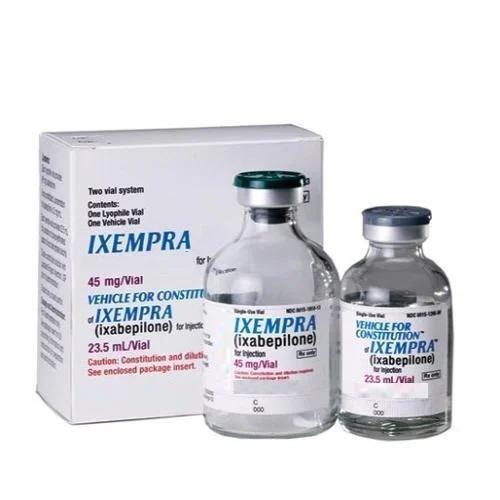
Ixabepilone (Ixempra) — chemotherapy for breast cancer after earlier treatment
What ixabepilone is in simple words
Ixabepilone is a cancer medicine. It is chemotherapy. It affects tiny parts inside the cell that are needed when the cell is dividing.
This medicine may be discussed in breast cancer when earlier treatment is no longer holding the disease well enough.
Ixempra is the brand name. The name matters less than the reason it is being mentioned now. The doctor needs to know what was tried before, what the plan is meant to do, and where the weak points are.
It is not prescribed just because the chart says breast cancer. Earlier treatment, scan results, speed of growth, blood tests, and the patient’s strength all matter.
How ixabepilone works
When a tumor cell is preparing to split, it uses tiny inner parts to pull itself apart. Ixabepilone gets in the way of that process.
In some ways this is similar to taxane treatment. Still, it is not just another taxane. It may be discussed later, after taxanes have already been tried and are no longer giving enough control.
One infusion does not show the answer. Later the doctor compares scans, symptoms, blood results, side effects, and the reason for continuing.
When ixabepilone may be considered
Ixabepilone is usually discussed when breast cancer has moved beyond the first area and other systemic treatment has already been tried.
- breast cancer that has spread beyond the original area;
- disease growth after anthracycline and taxane treatment;
- situations where more anthracycline treatment is not a good idea;
- treatment after capecitabine or together with capecitabine, if this plan fits the patient;
- the need to choose another line of treatment after several attempts to control the disease.
The list is only a guide. Patients with similar records may still be offered different plans.
When ixabepilone may be especially relevant
Usually this medicine comes into the discussion when earlier plans are no longer working as needed and the oncologist is looking for the next systemic option.
- the disease keeps growing after earlier chemotherapy;
- taxanes stopped helping enough or were poorly tolerated;
- capecitabine is being considered as part of a combination;
- several options for the next treatment line need to be compared;
- the risk of neuropathy and low blood counts needs to be checked in advance.
The main question is not whether the drug can be given in general. The question is whether it has a place in the current treatment plan.
What should be checked before treatment
Before starting ixabepilone, the oncologist needs more than the name of the diagnosis. The details show whether this treatment is suitable right now.
- biopsy result and tumor subtype;
- stage of the disease and recent scans;
- which treatment plans were used before;
- how long the response to earlier treatment lasted;
- complete blood count;
- liver and kidney results;
- new burning, reduced feeling, or pain in the fingers or toes;
- other illnesses and medicines taken regularly;
- how capecitabine was tolerated, if a combination is being discussed.
Sometimes an old side effect becomes the detail that changes the choice. For example, severe neuropathy after earlier treatment may strongly affect the next plan.
How treatment with ixabepilone is given
Ixabepilone is given into a vein. The treating oncologist decides the schedule and the length of the infusion, taking into account the diagnosis, the plan, and the patient’s condition.
Treatment usually goes in cycles. Between infusions, the doctor checks whether the body has recovered and whether there are signs of complications.
- blood tests before treatment cycles;
- liver test monitoring;
- temperature and signs of infection;
- sensation in the hands and feet;
- nausea, weakness, bowel function, and appetite;
- planned CT, MRI, or other tests to see the response.
If blood results drop or symptoms become stronger, this does not always mean the treatment must stop. Sometimes a pause, a dose change, or closer watching is enough.
Possible side effects
Ixabepilone may cause different unwanted reactions. Some look familiar to people who have already had chemotherapy. Some symptoms need special attention.
- tiredness and weakness;
- lower neutrophils and a higher risk of infection;
- anemia or lower platelets;
- nausea, vomiting, or poor appetite;
- diarrhea or constipation;
- soreness or inflammation in the mouth;
- hair loss;
- numbness, tingling, or pain in the fingers;
- muscle and joint pain;
- reactions during the infusion.
New symptoms should be mentioned early. It gives the team more room to adjust the plan before the problem becomes serious.
When to contact a doctor urgently
Call the doctor promptly if any of these happen during treatment:
- fever of 38°C or more;
- chills, marked weakness, or any sign of infection;
- trouble breathing, swelling of the face, rash, or shortness of breath during or after the infusion;
- bleeding or bruises without a clear reason;
- vomiting again and again, or strong diarrhea;
- numbness or leg weakness that suddenly becomes worse;
- chest pain, fainting, or a very fast or forceful heartbeat;
- a fast worsening of general condition.
A symptom may have another cause. During chemotherapy it is still better to call early than to wait and guess.
Why ixabepilone is not right for every patient
Ixabepilone can help in selected situations, but it is not safe or useful for everyone. Sometimes the possible harm is greater than the expected help.
The decision may depend on:
- blood counts before the course;
- how severe neuropathy already is;
- liver function;
- previous treatment lines;
- how taxanes, anthracyclines, and capecitabine were tolerated;
- the patient’s general condition;
- infections or serious other health problems.
Sometimes the doctor chooses another medicine not because ixabepilone is weak, but because in this exact situation it may be too risky or no longer the most logical step.
Can ixabepilone be combined with other treatments
Yes. Ixabepilone may be discussed on its own or in a combination. But the combination must have a clear medical reason.
The doctor may consider:
- a combination with capecitabine;
- a switch to ixabepilone after previous treatment lines;
- supportive treatment to control symptoms;
- local treatment of separate areas, if this is appropriate;
- other systemic options for comparison.
A combination is not always better than treatment with one drug. Sometimes it gives a better chance of control. Sometimes it adds too much toxicity. This is discussed before the course starts.
What “no quick response” can mean
With ixabepilone, the result is not always seen quickly. Sometimes the first weeks feel like waiting: treatment has started, but there is no clear answer yet.
When the disease is widespread, a useful result may be not only tumor shrinkage, but also slower growth. For a patient this may sound modest. For an oncologist, stabilization can still matter.
Usually the doctor does not make a decision from one scan without context. The whole picture is reviewed: changes on scans, symptoms, blood tests, and how well the treatment is tolerated.
Oncology consultation about ixabepilone in Israel
At Tel Aviv Medical Clinic, patients can discuss whether ixabepilone makes sense in their specific clinical situation.
A consultation may be useful if the patient needs to:
- get a second opinion on breast cancer treatment;
- review treatment lines already used;
- understand why Ixempra is being offered or why another option is being considered;
- assess risks of neuropathy, low neutrophils, and infusion reactions;
- compare single-drug treatment with a combination including capecitabine;
- prepare questions for the treating oncologist;
- discuss treatment in Israel or check the proposed plan.
We do not replace the treating doctor and we do not prescribe treatment by message. Our role is to help the patient and family understand the logic of the decision and prepare for the next step.
Frequently asked questions — answered by Dr. Stefanska and Dr. Meerovich
- When do doctors usually start discussing ixabepilone?
Most often, not at the very beginning of treatment. This option usually comes up after other plans have already been used and the disease has become active again.
I would first check the earlier medicines, the response to them, how long the response lasted, and what problems were left after treatment. Without that, the decision is weak.
- Can ixabepilone be used after taxanes?
Sometimes yes. But this does not make it the right choice for every patient.
The reason the taxane was stopped matters. Was the cancer growing? Was there severe nerve damage? Was there an allergic reaction? The answer changes the next step.
- Why is neuropathy important with ixabepilone?
Nerve problems may start quietly: tingling, numb fingers, or an odd feeling in the hands. If it is ignored, it can get worse.
Patients should not wait with this. Trouble with buttons, holding small things, or walking steadily should be reported soon.
- Is ixabepilone always given together with capecitabine?
No. Sometimes it is considered in a combination. Sometimes it is used separately. It depends on earlier treatment, the patient’s condition, and how much treatment the body can tolerate.
A combination may be stronger in effect, but it usually brings more side effects. So the question is not only effectiveness, but also safety.
- Which tests are especially important before treatment?
I would look closely at the complete blood count, liver tests, information about earlier neuropathy, and recent scans.
It is also important to know which medicines the patient has already received. Without this information, it is hard to understand why ixabepilone should be the next step.
- When does it become clear whether treatment is helping?
Usually not after the first infusion. A few weeks, follow-up tests, and assessment of the general condition are needed.
Sometimes the tumor becomes smaller. Sometimes the main good news is that it has stopped growing quickly. I do not look at one sign only. I look at the whole course of changes.
- What should be done if rash, shortness of breath, or swelling appears after infusion?
Contact the doctor right away. These symptoms should not be explained away as tiredness or anxiety.
Infusion reactions can be different. Sometimes they pass quickly, but sometimes urgent help is needed. It is better to report them without waiting.
Important information
This page gives general medical information and is not a treatment prescription. Ixabepilone may be considered only after review of the diagnosis, previous treatment, test results, blood tests, and the patient’s general condition.
Do not start, stop, or change treatment without speaking with the treating doctor.
For consultation about ixabepilone:
📞 +972-73-374-6844
💬 WhatsApp: +972-52-337-3108