


 Contact Us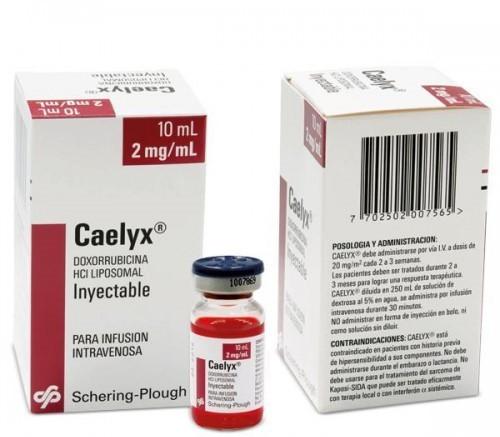
Liposomal Doxorubicin (Caelyx / Doxil) — anthracycline chemotherapy in liposomal form
What Caelyx / Doxil is in simple patient language
Caelyx and Doxil are two names for one drug. Both contain doxorubicin wrapped in fat particles.
It is still chemotherapy. The fat coating changes where the drug goes in the body, how long it stays and which side effects appear first.
A doctor may choose this version when an anthracycline is needed but the standard form raises too many concerns about the heart or tolerability.
Even so, Caelyx / Doxil is not an easy option. It needs monitoring. It does not suit every patient.
How Liposomal Doxorubicin works
Doxorubicin breaks into the cell and stops it from using its DNA. No copying, no repair, no growth. The fat coating around it does not change that.
The liposome is about delivery. The drug is packed into fat particles, stays in the blood longer and gradually releases where vessel walls are more permeable — which is often the case around tumours.
A different delivery route means a different side effect pattern. Heart and blood are still checked. The things that need particular attention here are skin on the palms and soles, mucous membranes and any reaction during the infusion. All of these should be reported at once — not held until the next appointment.
Which conditions may be treated with Caelyx / Doxil
Liposomal doxorubicin comes up when an anthracycline fits the situation but the standard form is not the best option for that patient.
In oncology it may be considered in:
- ovarian cancer — especially when disease has returned after platinum therapy
- metastatic breast cancer in selected clinical situations
- Kaposi sarcoma related to immune deficiency
- multiple myeloma in combinations with other drugs
- other tumours where the doctor sees a reason for anthracycline treatment
The diagnosis list alone does not mean automatic prescribing. One patient may have had several prior lines, another may be choosing the next step after a first relapse, a third may have cardiac risks or poor tolerance of past drugs. These are all different situations.
When Liposomal Doxorubicin can be especially relevant
Caelyx / Doxil is usually discussed not because it is newer but because it has a specific role in the treatment plan.
That situation may arise:
- when disease has returned after prior chemotherapy
- when a systemic treatment option is needed in advanced disease
- when the doctor wants an anthracycline but standard doxorubicin raises more concern
- when there is risk of accumulated toxicity from prior treatment
- when a regimen with a more manageable tolerability profile is needed
- when a combination is being discussed, for example in multiple myeloma
The key question here is not whether it is stronger than standard doxorubicin. The right question is: why this form of the drug for this patient right now.
What should be checked before treatment
Before liposomal doxorubicin the doctor needs more than a diagnosis letter. The full picture matters.
Usually assessed before treatment:
- tumour type and biopsy results
- disease stage and recent imaging
- prior treatment regimens and how long they worked
- tolerability of previous chemotherapy
- full blood count
- liver and kidney function
- cardiac assessment, especially if anthracyclines were given before
- any oedema, breathlessness, chest pain or rhythm problems
- skin condition, mucous membranes and infection risk
- all regular medications
What the patient has already received sometimes shapes the decision more than the diagnosis itself. Prior doxorubicin or similar drugs mean the doctor pays extra attention to total anthracycline load and heart function.
How treatment with Caelyx / Doxil is usually given
The drug goes in intravenously. Schedule depends on the diagnosis, the regimen, the patient’s condition and whether it runs alone or with other drugs.
In practice treatment is not just the infusion day. Between cycles the doctor watches how the body is recovering.
Usually monitored:
- blood counts
- liver tests
- how the patient feels after the infusion
- skin on the palms and soles
- mouth lining
- infection signs
- cardiac symptoms
- disease response on CT, MRI or other imaging
Sometimes treatment runs smoothly. Sometimes the doctor reduces the dose, delays the next cycle or pauses because of skin reactions, mouth sores, dropping blood counts or marked fatigue. That is not always a sign of stopping. More often it is a way to keep treatment going more safely.
Possible side effects
Liposomal doxorubicin has its own side effect character. It may be tolerated differently from standard doxorubicin, but monitoring still needs to be careful.
Possible reactions:
- redness, soreness or peeling on the palms and soles
- mouth inflammation
- fatigue
- nausea or reduced appetite
- drop in white cells, platelets or haemoglobin
- fever with low white cell count
- skin rash
- reactions during the infusion
- less commonly — signs of cardiac effects
Palmar-plantar reaction needs its own mention. It starts small — redness, mild soreness. Left alone it gets worse: cracked skin, burning, trouble walking or holding things. Catching it early makes it far easier to deal with.
When to contact a doctor urgently
Some things should not wait for a scheduled appointment:
- temperature above 38°C, chills or infection signs
- breathlessness, chest pain or irregular heartbeat
- sudden weakness that is getting worse fast
- bleeding or unusual bruising
- severe mouth sores making eating or drinking difficult
- painful redness of the palms or soles
- marked rash or swelling
- unusual reaction during or after the infusion
- repeated vomiting, dehydration or sharp worsening of general condition
Not every symptom signals a serious complication. But during chemotherapy it is better to ask early than to miss the moment when a problem can still be corrected easily.
Why Caelyx / Doxil is not right for every patient
The liposomal form does not remove the limits of doxorubicin. It changes how the drug distributes and how it is tolerated, but it does not make treatment universal.
The decision depends on:
- tumour type
- treatment goal
- prior lines of therapy
- cardiac condition
- blood count results
- liver function
- prior skin reactions
- general condition
- whether better-fitting options exist
Sometimes liposomal doxorubicin looks like the right next step. Sometimes the doctor chooses platinum, a taxane, a targeted drug, hormone therapy, immunotherapy or a clinical trial. “Fits the diagnosis” and “best choice right now” are not the same thing.
Can Caelyx / Doxil be combined with other treatments
Yes, in some situations liposomal doxorubicin is used in combinations. But adding another drug always needs a clear reason.
The doctor may discuss combining it with:
- platinum drugs
- bortezomib in multiple myeloma
- other systemic therapy options
- supportive treatment if needed for safety during the course
Combination is not a way to make everything stronger at once. It is a balance between the chance of disease control and the risk of toxicity. Before starting it is important to understand what the doctor is trying to achieve with that particular regimen.
What no quick response can mean
With liposomal doxorubicin the effect is not always visible fast. The first weeks can feel like waiting: treatment is ongoing, blood counts are being checked, but there is no clear answer from imaging yet.
The doctor usually evaluates more than one number. Symptoms, disease pace, blood results, tolerability and scheduled CT or MRI at the right time all matter.
Sometimes a good result is not dramatic tumour shrinkage but stable disease and a calmer course. For the patient that can sound modest, but in oncology stabilisation sometimes has real value.
Oncology consultation in Israel
At Tel Aviv Medical Clinic you can discuss whether liposomal doxorubicin fits a specific clinical situation.
A consultation may be useful when you need to:
- understand why the doctor is proposing Caelyx / Doxil
- compare liposomal doxorubicin with standard doxorubicin or another regimen
- review treatment after relapse of ovarian cancer or another tumour
- assess cardiac risks before anthracycline therapy
- get a second opinion on the proposed plan
- find out which tests and assessments to prepare
- discuss treatment in Israel or check a plan proposed in another country
We do not replace the treating doctor and do not prescribe treatment remotely. Our goal is to help the patient and family understand the medical reasoning and prepare for the next conversation with the oncologist.
Frequently asked questions — answered by Dr. Stefanska and Dr. Meerovich
- How does Caelyx / Doxil differ from standard doxorubicin?
The main difference is in how the drug is delivered. In Caelyx / Doxil the doxorubicin sits inside a liposome. That changes how it distributes in the body and can shift which side effects are most prominent. But I would not tell a patient this is simply safer doxorubicin. Cardiac risks are still discussed, blood is still monitored and skin reactions and mucositis can be very unpleasant. It is a different version of the drug, not treatment without risks.
- When is this drug most often discussed in ovarian cancer?
Most often when disease has come back after prior therapy, especially if platinum drugs have already been used. But I look at more than just the fact of relapse. I check when the disease returned, how the patient tolerated prior treatment, whether repeat platinum is an option, what the current symptoms are and what recent imaging shows. Those details determine whether liposomal doxorubicin is the logical next step.
- Is it true that liposomal doxorubicin affects the heart less?
In some situations it is chosen as a more cautious option compared to standard doxorubicin. But that does not mean the heart can be skipped. If the patient has already had anthracyclines, breathlessness, heart failure, rhythm problems or other cardiac issues, I still want a cardiac assessment and a clear picture of cumulative load. It is dangerous to feel reassured just because the word liposomal is in the name.
- What to do if pain and redness appear on the palms or soles?
Tell the doctor straight away. Do not wait until the skin starts cracking or it becomes painful to walk. Hand-foot syndrome is easier to manage early. Sometimes skin care and load adjustment are enough, sometimes the dose or schedule needs to change. But the doctor needs to make that call, because what looks like a simple complaint can be significant toxicity.
- Does hair loss happen the same way as with standard chemotherapy?
Hair loss is possible but it looks different for different patients. For some it is moderate, for others more noticeable, and for some the main issues are not hair but skin, mucous membranes and fatigue. I always suggest discussing not one side effect but the full profile. The patient needs to know which symptoms require a quick call to the doctor.
- Can treatment continue if the tumour does not shrink right away?
Sometimes yes. The first check does not always show sharp reduction. Disease stopping its growth is already an important result in some situations. But the decision cannot be made on one feeling or one line in a report. The doctor looks at imaging trends, symptoms, blood results and treatment tolerability. If there is no benefit or toxicity is too high, the plan is reviewed.
- What documents should I prepare for a consultation?
Discharge letters and biopsy results. A list of every regimen given, with dates. Recent CT or MRI. Blood count results. Cardiac assessment if available. All regular medications. One thing that often gets missed: whether the patient has previously had standard doxorubicin, epirubicin or any other anthracycline. That history changes the conversation about Caelyx / Doxil significantly.
Important information
The information on this page is general medical information and does not constitute a prescription. Caelyx / Doxil can only be considered after assessment of the diagnosis, disease stage, prior treatment, blood tests, cardiac condition and the patient’s overall condition.
Do not start, stop or change treatment without consulting your treating doctor.
For consultation on Caelyx / Doxil treatment:
📞 +972-73-374-6844
💬 WhatsApp: +972-52-337-3108