


 Contact Us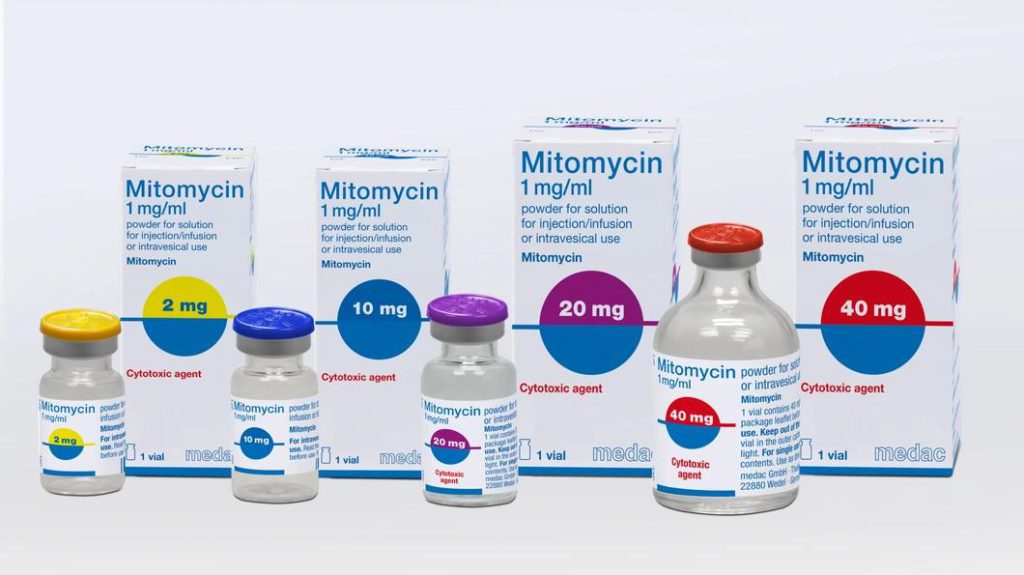
Mitomycin — chemotherapy for anal cancer, bladder tumors, and selected solid cancers
What mitomycin is in simple patient language
Mitomycin is a drug used in oncology when a specific clinical situation calls for it. Doctors do not reach for it as a default chemo option. There are specific clinical situations where it makes sense — and plenty where it does not.
Patients hear about it in different contexts. It can go in by vein for certain cancers that have spread. It runs alongside radiation in anal cancer treatment. Or a urologist places it directly inside the bladder after removing a tumor. None of these uses are the same. The drug, the goal, the risks — all different.
Knowing the name of the drug answers very little. The real questions are why this drug for this person right now, how it will be delivered, what the doctor expects it to achieve, and what monitoring the patient needs throughout.
How mitomycin works
Mitomycin disrupts something essential inside cancer cells — the mechanism they use to reproduce. Once that is blocked, the cell stops dividing.
The drug reaches deep. That depth is part of what makes it useful — and part of what makes careful follow-up non-negotiable. Blood cell counts do not always drop on the day of treatment. The fall can come a week or two later.
A patient who feels fine after a dose is not necessarily in the clear. The numbers in a lab result can tell a completely different story. Neutrophils and platelets may keep dropping for days after the patient already feels like the worst has passed. Skipping blood tests after mitomycin is not a safe option.
Which diseases mitomycin may be used for
Mitomycin does not fit every cancer treatment plan. It gets discussed when there is a defined role for it.
- anal canal cancer — typically combined with radiation as part of the primary treatment
- bladder tumors that have not grown into the muscle — placed directly into the bladder in selected cases after the operation
- advanced gastric or pancreatic cancer — in certain multi-drug regimens
- selected tumors of the lung, breast, or head and neck — when the oncologist has a specific reason
- cases where mitomycin earns its place in the plan, not just fills a gap
The same diagnosis does not lead to the same treatment for every patient. One person may receive mitomycin. Another with an identical diagnosis may not, because the rest of the clinical picture points somewhere else.
When mitomycin can be especially relevant
Mitomycin tends to come up when the doctor needs to solve a particular problem, not simply add more chemotherapy to a plan.
- chemoradiation for anal cancer needs a drug that works alongside the radiation
- after removing a surface bladder tumor, local drug therapy is considered to lower the chance it grows back
- previous treatment lines stopped working or the side effects became unmanageable
- the regimen calls for a combination and mitomycin has a specific role in it
- the potential gain has to be honestly compared against the load on blood counts, kidneys, and lungs
There are cases where the diagnosis looks like a match but the patient’s current state does not. Labs are poor, earlier treatments have left damage, or the overall condition cannot carry the risk. Adjusting the plan in those situations is not giving up — it is sound medical thinking.
What needs to be checked before treatment
A single old record is not enough to start mitomycin. The doctor needs a current, complete picture. This matters more when the patient has already been through chemotherapy or radiation.
- confirmed diagnosis with a pathology report
- current disease stage and recent imaging
- the goal of treatment at this point — chemoradiation, intravesical therapy, systemic disease control, or another aim
- complete blood count with neutrophils, platelets, and hemoglobin
- kidney and liver panels
- any recent fever, infections, or unusual tiredness
- respiratory symptoms or known lung conditions
- history of prior chemotherapy and how the patient tolerated it
- all medications the patient currently takes
- for bladder use — post-surgical bladder condition, no active complications
When baseline counts are already low, kidneys are struggling, or an infection is active — treatment gets pushed back. Adding more stress to an already strained system rarely ends well. A short delay for a better starting position is worth it.
How treatment with mitomycin goes
The way mitomycin is given depends on what it is treating. IV infusion is one route. The other is having a urologist deliver it directly into the bladder — immediately after surgery or on a separate schedule.
Each IV visit starts with labs and a short check-in about what happened since the last dose. With intravesical treatment the priorities shift — bladder symptoms, lining condition, no signs of irritation, correct delivery technique.
Throughout the treatment period the team tracks:
- complete blood count
- neutrophil and platelet levels, hemoglobin
- kidney function markers including creatinine
- liver enzyme results
- body temperature and any infection signals
- chest symptoms — cough, breathing difficulty, pain or pressure
- signs of bleeding, bruising, or unexplained weakness
- for bladder treatment — burning sensation, urgency, pain, or blood in the urine
The most important period is often not the day of treatment but the days that follow. Patients need a clear picture of when to get their labs done and which symptoms mean calling the doctor rather than waiting for the next appointment.
Possible side effects
How mitomycin is tolerated varies from person to person. One patient’s main challenge is a falling blood count. Another struggles with bladder symptoms after intravesical treatment. A third deals mostly with tiredness and poor appetite.
Reactions that can occur:
- drop in white blood cells, neutrophils, platelets, or red blood cells
- increased vulnerability to infections and bleeding
- tiredness that limits daily activity
- nausea and loss of appetite
- painful sores or inflammation in the mouth
- skin rash, itching, or color changes
- darkening of the skin in certain areas
- worsening kidney function markers
- lung symptoms — cough, breathing difficulty, or chest discomfort
- with bladder instillation — burning, frequent urge to urinate, pain, or blood in the urine
The team also watches for less common but serious problems: severe marrow suppression, lung injury from the drug itself, kidney damage, and atypical blood changes. These are not frequent. Post-treatment check-ins exist specifically to catch them early.
When to contact a doctor urgently
Do not hold until the next scheduled visit if any of the following appear:
- fever at 38°C or above, or shaking chills
- cough that was not there before, breathing that feels harder, or chest pain
- visible blood in urine or stool, or bleeding that is hard to explain
- bruises showing up in places that were not bumped or injured
- extreme fatigue that came on fast, dizziness, or passing out
- vomiting that keeps returning or inability to take in fluids
- strong burning or pain when urinating after bladder instillation
- a clear reduction in the amount of urine produced
- extensive rash, swelling of the face, or breathing problems
- rapid decline in overall condition over a short period
With mitomycin, acting early matters. Certain reactions develop gradually and are easy to underestimate based on how the patient feels alone. When symptoms become obviously serious, the opportunity for a straightforward correction may already be gone.
Why mitomycin is not right for everyone
Mitomycin is a targeted tool, not a general-purpose drug. Choosing it requires a real clinical justification. In some patients the potential benefit is clear. In others, the risk profile makes a different approach the better answer.
Factors that shape the decision:
- blood count levels at baseline
- kidney function results
- respiratory health and lung function
- presence of active infection or ongoing fever
- cumulative toxicity from prior chemotherapy
- the patient’s general condition and physical reserves
- treatment goal and what other options are available
- for bladder treatment — post-surgical state of the bladder
When the doctor skips mitomycin or postpones a dose, that is not a withdrawal from treatment. Often it reflects a judgment that another moment or another regimen is the safer and more effective choice for that patient right now.
Can mitomycin be combined with other treatments
Yes. Mitomycin often comes up specifically as part of a combination. But adding drugs to a plan should serve a clear purpose, not just make the regimen look more intensive.
- alongside 5-fluorouracil or capecitabine in selected chemoradiation protocols
- with radiation therapy in anal cancer management
- with other chemotherapy agents in certain solid tumor situations
- with regular urological monitoring after bladder instillation
- with supportive medications for nausea, infection prevention, pain, or urinary symptoms
More complex regimens require closer monitoring. One drug’s side effects can amplify what another drug is already doing to the body. The doctor needs an honest assessment of the patient’s reserves before building that kind of plan.
What no quick response to treatment can mean
Results after mitomycin do not always appear on a clear timeline. In chemoradiation, tissue goes through inflammation and a recovery phase before imaging can show what the treatment actually accomplished.
After bladder instillation, the goal is often something the patient cannot feel directly. Reducing the likelihood of the tumor returning after surgery is not visible from day to day. It shows up on a cystoscopy done weeks or months later.
In advanced disease the doctor reads multiple signals together — what imaging shows, how symptoms are changing, what labs reveal, how the patient is tolerating treatment, and how fast the disease was moving before. Holding the disease steady is sometimes a legitimate and meaningful outcome. When the response is weak and the toxicity is high, the plan may need to change.
Oncology consultation in Israel
At Tel Aviv Medical Clinic, patients can speak with an oncologist about whether mitomycin fits their specific situation. A consultation is worth considering when the drug is being proposed as part of a combination, in a chemoradiation plan, after bladder surgery, or following prior treatment lines that did not hold.
During the consultation it is possible to go through:
- the diagnosis, current stage, and what treatment is trying to achieve
- the reason mitomycin was selected over other options
- which delivery route is planned and why
- what labs and results are needed before starting
- which specific risks apply to this patient given their history
- how the team will measure whether treatment is working
- at what point the approach should be reconsidered
- what to gather and prepare for a second opinion
We do not write prescriptions remotely and we are not a replacement for the treating oncologist. What we offer is the time to help a patient and their family understand what is being proposed and why — so the next conversation with their doctor can move forward with clarity.
Frequently asked questions — answered by Dr. Stefanska and Dr. Meerovich
- Is mitomycin a standard chemotherapy drug?
It falls into the chemotherapy category, yes. But standard is the wrong word for it. The indications are specific, the blood effects are delayed, and the kidney and lung risks are real. The name of the diagnosis does not settle whether this drug belongs in the plan. What matters is where it fits — by vein, in a chemoradiation protocol, or directly into the bladder.
- Why does blood monitoring matter so much after this drug?
The counts do not always fall right away. A patient can feel relatively okay while neutrophils and platelets are still on their way down. Tracking the blood count after mitomycin is one of the main ways I catch infection risk or a bleeding risk before it becomes an emergency. When the numbers drop too far, the next dose gets pushed back or the patient receives support. That is how the treatment stays manageable.
- What is the difference between getting mitomycin by vein versus into the bladder?
Completely different approaches with different goals. Intravenous delivery works through the bloodstream and affects the whole body. Bladder instillation is local — the drug is placed directly inside the bladder, usually after a surgical procedure, to act on the lining there. The side effects are also different. With the bladder route we focus on urinary symptoms: burning, urgency, pain, blood in the urine.
- Should a fever after treatment be taken seriously?
Absolutely. Fever during chemotherapy is not something to treat like an ordinary illness at home. At 38°C, I tell patients to contact their doctor the same day. When neutrophils are low, an infection can escalate faster than expected. Taking a fever reducer and waiting is not the right move. The first question is what the blood count looks like right now.
- Why does the doctor keep asking about cough and breathing?
Because respiratory symptoms during mitomycin treatment carry clinical weight. A cough that appears or gets worse can be tied to infection, anemia, disease progression, or in rarer cases a drug reaction in the lungs. The symptom alone does not tell you which one. That is exactly why patients should report these things early, especially if they are worsening or appeared shortly after a treatment cycle.
- Can a different drug be used instead of mitomycin?
Sometimes. But whether a switch is possible depends entirely on the diagnosis and what treatment is supposed to accomplish. Anal cancer, bladder therapy, and advanced solid tumors each have their own logic. Before agreeing to any change, I ask three things: why was mitomycin picked in the first place, what other drugs actually exist for this situation, and what shifts — in terms of how well it works and what it does to the body — if we switch. A drug that looks similar on paper can behave very differently in practice.
- What should I bring to a mitomycin consultation?
Pathology report, recent scans — CT, MRI, PET-CT, cystoscopy if that is part of the picture — blood counts from the last few weeks, creatinine, liver enzymes, and a written list of every treatment received so far. Add a short note on anything significant that happened along the way: infections, bleeding, breathing trouble, extreme fatigue, kidney issues. Those are not minor details. They can change the whole direction of the conversation.
Important information
The content on this page is general medical information only. It does not constitute a recommendation to begin or change any treatment. Mitomycin is considered only after a full clinical review covering the diagnosis, disease stage, imaging, blood counts, kidney function, lung status, treatment history, and overall patient condition.
Do not start, stop, or adjust any treatment without first speaking with your treating physician.
To arrange a consultation about mitomycin:
📞 +972-73-374-6844
💬 WhatsApp: +972-52-337-3108