


 Contact Us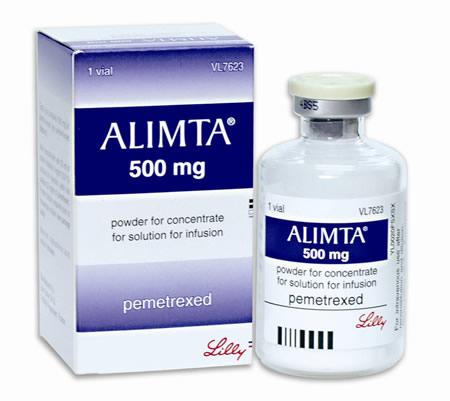
Pemetrexed (Alimta) — chemotherapy from the antimetabolite group
What Pemetrexed is in simple patient language
Pemetrexed goes by the brand name Alimta. It belongs to the antimetabolite class — drugs that cut off the folate pathway cells depend on to produce the building blocks of DNA. No building blocks, no replication.
Two things tend to come as a surprise. First, the premedication. Before every pemetrexed infusion, patients take folic acid daily for a week, get a vitamin B12 injection, and take a steroid the day before and after. This is not optional and not a formality — skipping it leads to significantly worse toxicity. Second, how well it tends to be tolerated when the premedication is done correctly. Patients who arrive prepared have a different experience from those who were not told what to do in advance.
Whether pemetrexed belongs in the plan depends on more than the diagnosis. Histology matters here more than with many other drugs — it works in certain lung cancer subtypes and not others. Kidney function, vitamin status, and what has already been tried all go into the decision.
How Pemetrexed works
Pemetrexed goes after folate metabolism at several points at once. Most antimetabolites block one enzyme. Pemetrexed hits three separate enzymes in the same pathway — the one that makes thymidine for DNA, the one that recycles folate, and the one involved in purine synthesis. Take out all three and the cell cannot produce enough nucleotides to copy its DNA from any direction.
Dividing cells run out of material and stall. They cannot finish replication. They die.
Hitting multiple enzymes is why pemetrexed tends to work better against certain tumour types than drugs that block only one target. The same mechanism that hits tumour cells also affects fast-dividing healthy tissue in the marrow, gut and mouth. The vitamin premedication reduces that damage in normal cells without protecting the tumour.
Which conditions may be treated with Pemetrexed
Pemetrexed has a narrower range of approved uses than most chemotherapy drugs. The histological subtype of the cancer determines whether it is appropriate.
- adenocarcinoma and large cell lung cancer — in combination with a platinum drug at first line, and as maintenance when disease has not progressed after induction
- pleural mesothelioma — in combination with cisplatin; evidence of survival benefit in this disease makes it the standard first approach
- advanced non-squamous lung cancer alongside pembrolizumab and platinum — a triple combination used in eligible patients with metastatic disease
- selected other thoracic malignancies in specific protocols
Squamous cell lung cancer is not an appropriate setting for pemetrexed. Tumour histology has to be confirmed before the drug is prescribed. Getting the pathology right here is not administrative caution — it changes which drug is used.
When Pemetrexed can be especially relevant
Certain clinical situations put it on the table.
- adenocarcinoma of the lung at diagnosis — pemetrexed with a platinum drug is a standard starting combination
- pleural mesothelioma in patients who can tolerate cisplatin-based treatment
- lung cancer after platinum-based induction — pemetrexed continued alone to delay progression
- advanced non-squamous lung cancer where immunotherapy is being added to chemotherapy
- second opinion requests on whether the histology has been correctly classified and whether pemetrexed is therefore the right drug
Maintenance pemetrexed and induction pemetrexed are different treatment phases with different goals. Induction aims to shrink the tumour. Maintenance aims to hold ground after response. Same drug, different context, different conversation about what success looks like.
What should be checked before treatment
The team needs a proper picture before the first infusion — not just the protocol name.
- histology confirmed — the non-squamous subtype must be established before pemetrexed is appropriate
- kidney function — pemetrexed clears renally; dose is adjusted or the drug avoided when GFR is below a threshold
- folic acid supplementation — daily tablets must start at least five days before the first infusion
- vitamin B12 — injection required in the week before the first infusion and every nine weeks thereafter
- full blood count
- liver function
- current medications — anti-inflammatory painkillers affect pemetrexed clearance and timing matters
- general physical condition and performance status
- fertility plans when relevant
The vitamin supplementation is not a minor detail. Pemetrexed toxicity — particularly to the marrow and gut — is substantially worse without adequate folate and B12 on board. Patients who start treatment without completing the loading period have a measurably harder time. This is checked before the first cycle and at regular intervals throughout.
How treatment with Pemetrexed is usually given
Pemetrexed goes in intravenously over ten minutes. The infusion itself is short. The preparation around it takes more time.
The standard schedule is once every three weeks. In mesothelioma it runs with cisplatin. In lung cancer it runs with cisplatin or carboplatin during induction, then alone as maintenance if disease has not progressed. In the triple combination with pembrolizumab it runs every three weeks alongside the immunotherapy and the platinum drug.
During treatment the team monitors:
- full blood count before every cycle — neutrophil and platelet counts determine whether to proceed
- kidney function — GFR tracked throughout because clearance drives dosing
- liver function at regular intervals
- vitamin B12 levels and supplementation schedule
- skin — rash is common; the steroid premedication reduces severity
- imaging at planned intervals to assess tumour response
- how the patient is managing between cycles — fatigue, appetite, function
Delays and dose reductions happen. Blood counts, kidney function, rash severity — any of these can shift the timing or the amount. Asking why something changed is always a reasonable question.
Possible side effects
Fatigue tends to be what patients bring up most often — and with pemetrexed, it accumulates across cycles rather than hitting once and passing.
- fatigue — builds over the course of treatment; often the most limiting factor by the later cycles
- nausea — present but generally manageable with antiemetics
- marrow suppression — neutrophils and platelets fall; the lowest point is typically around day 8 to 10
- skin rash — common; the steroid taken the day before and after infusion reduces it significantly
- mouth sores — less severe than with methotrexate but present in some patients
- diarrhoea in some patients
- raised liver enzymes — usually temporary
- hair thinning — mild compared with many other chemotherapy drugs
Rare but serious:
- severe neutropenia leading to infection — why blood counts are checked before every cycle
- kidney injury — particularly if anti-inflammatory painkillers are taken around the time of infusion
- lung inflammation — rare; new breathlessness during treatment is investigated promptly
The rash is the side effect most directly managed by what the patient does at home. The steroid taken the day before and the day after the infusion substantially reduces how bad it gets. Patients who miss those doses consistently end up with worse skin reactions. Worth flagging this early rather than waiting for a reaction to develop.
When to contact a doctor urgently
Some things during pemetrexed treatment should not wait for the next scheduled visit.
- fever or chills — same-day call regardless of how the patient otherwise feels
- rash that spreads rapidly or blisters
- new breathlessness or dry cough that was not there before
- unusual bruising or bleeding
- severe diarrhoea or vomiting that prevents keeping fluids down
- any sudden or unexplained change in general condition
Fever while neutrophil counts are low is a potential emergency, not a reason to monitor at home overnight. A temperature above 38 degrees during pemetrexed treatment means calling the oncology team the same day.
Why Pemetrexed is not right for every patient
Even when the diagnosis fits, pemetrexed does not suit every patient at every point.
- squamous cell lung cancer — pemetrexed is not effective in this subtype and is not a standard choice
- kidney function below the threshold for safe dosing
- inability to follow the vitamin supplementation protocol — toxicity without it is substantially worse
- regular anti-inflammatory painkiller use that cannot be interrupted around infusion days
- poor performance status where the regimen is not safe to deliver
- situations where a different drug or combination fits the disease profile better
The interaction with anti-inflammatory painkillers is worth a specific conversation. Ibuprofen and similar drugs taken around the time of a pemetrexed infusion affect how quickly the drug clears. For patients with normal kidney function the risk is lower. For patients with reduced kidney function it is a genuine concern. The treating team needs to know what the patient takes for pain at home.
Can Pemetrexed be combined with other treatments
Yes — it is rarely given alone in first-line treatment.
- cisplatin — standard partner in mesothelioma and a common pairing in lung cancer induction
- carboplatin — used when kidney function or tolerability makes cisplatin less suitable
- pembrolizumab — the triple combination with a platinum drug is a standard option in eligible patients with advanced non-squamous lung cancer
- bevacizumab — added in some protocols
What pemetrexed is combined with changes the full treatment picture. Cisplatin adds kidney monitoring and nausea. Pembrolizumab adds immune-related toxicity to watch for. The combination is what the patient actually goes through, not pemetrexed in isolation.
What no quick response can mean
Response is not assessed after one cycle. Imaging typically happens after two to three cycles. A single scan at one timepoint rarely tells the full story.
If the cancer is progressing despite treatment, side effects have become unmanageable, or the regimen is no longer doing what it was designed to do — the plan needs reviewing. Pemetrexed is one part of a strategy. When that strategy needs updating, the conversation belongs with the treating oncologist, and it should happen when the evidence calls for it.
Oncology consultation in Israel
Tel Aviv Medical Clinic sees patients on pemetrexed-based regimens and those weighing whether to start one. A second opinion is worth seeking when the histology result has not been fully explained, when the choice between cisplatin and carboplatin was not discussed, when side effects are not being managed adequately, or when the patient wants to understand what alternatives exist including immunotherapy combinations.
The consultation can cover:
- pathology and imaging review
- previous treatment history and response
- assessment of current side effects and what can be adjusted
- comparison of pemetrexed-containing regimens and alternatives
- second opinion on the current plan
- questions to bring back to the treating oncologist
We do not replace the treating doctor. We help the patient arrive at the next conversation knowing what to ask.
Frequently asked questions — answered by Dr. Stefanska and Dr. Meerovich
- Why do patients need to take vitamins before pemetrexed?
Pemetrexed cuts off the folate pathway at several points at once. That is what makes it effective against tumour cells. The same blockade hits healthy tissue — bone marrow, gut lining, mouth. Folic acid and vitamin B12 taken before treatment partially replenish what pemetrexed depletes in normal cells without doing the same for the tumour. The difference in toxicity between patients who complete the vitamin loading and those who do not is measurable. It is not a precaution that can be shortened or skipped.
- Why does histology matter so much with pemetrexed?
Pemetrexed is active in adenocarcinoma and large cell lung cancer. It is substantially less active in squamous cell lung cancer. The reason relates to how much of its target enzyme squamous tumours express — higher expression in squamous histology paradoxically reduces sensitivity to the drug. Giving pemetrexed to the wrong subtype exposes the patient to side effects without the expected benefit. Confirming the histological subtype before prescribing determines whether the drug is appropriate, not just preferred.
- Can anti-inflammatory painkillers be taken during treatment?
It depends on kidney function. In patients with normal kidney function, short-acting drugs like ibuprofen taken briefly around infusion time carry a lower risk. In patients with reduced kidney function, the same drugs slow pemetrexed clearance enough to raise toxicity to a meaningful degree. The treating team needs to know what the patient is using for pain. If anti-inflammatory drugs are needed regularly, that conversation should happen before the first infusion, not after a problem develops.
- What is the difference between induction and maintenance pemetrexed?
Induction is the phase where pemetrexed runs with a platinum partner, typically for four to six cycles, with the goal of shrinking the tumour or stopping its growth. Maintenance is what comes after — pemetrexed given alone every three weeks to patients whose disease has not progressed. The goal shifts from achieving response to holding it. The side effect profile is generally milder in maintenance because the platinum partner is gone. Whether to continue into maintenance is a separate conversation from whether to start induction.
- What documents should I bring for a second opinion?
Pathology report with histological subtype clearly documented. Recent scans with written radiology reports. A record of what has been given and when, including the platinum partner and any immunotherapy. Recent blood results including kidney and liver function. Documentation of the vitamin supplementation — when folic acid was started, when B12 was given. A specific account of side effects: which ones, which cycles, how severe, what they are stopping the patient from doing. That level of detail allows a substantive review rather than a general conversation.
Important information
This page gives general medical information. It is not a personal treatment plan. Pemetrexed should be discussed only after review of the diagnosis, histological subtype, kidney function, vitamin status and the patient’s overall condition.
Do not start, stop or change chemotherapy without your treating oncologist.
For consultation about Pemetrexed treatment:
📞 +972-73-374-6844
💬 WhatsApp: +972-52-337-3108