


 Contact Us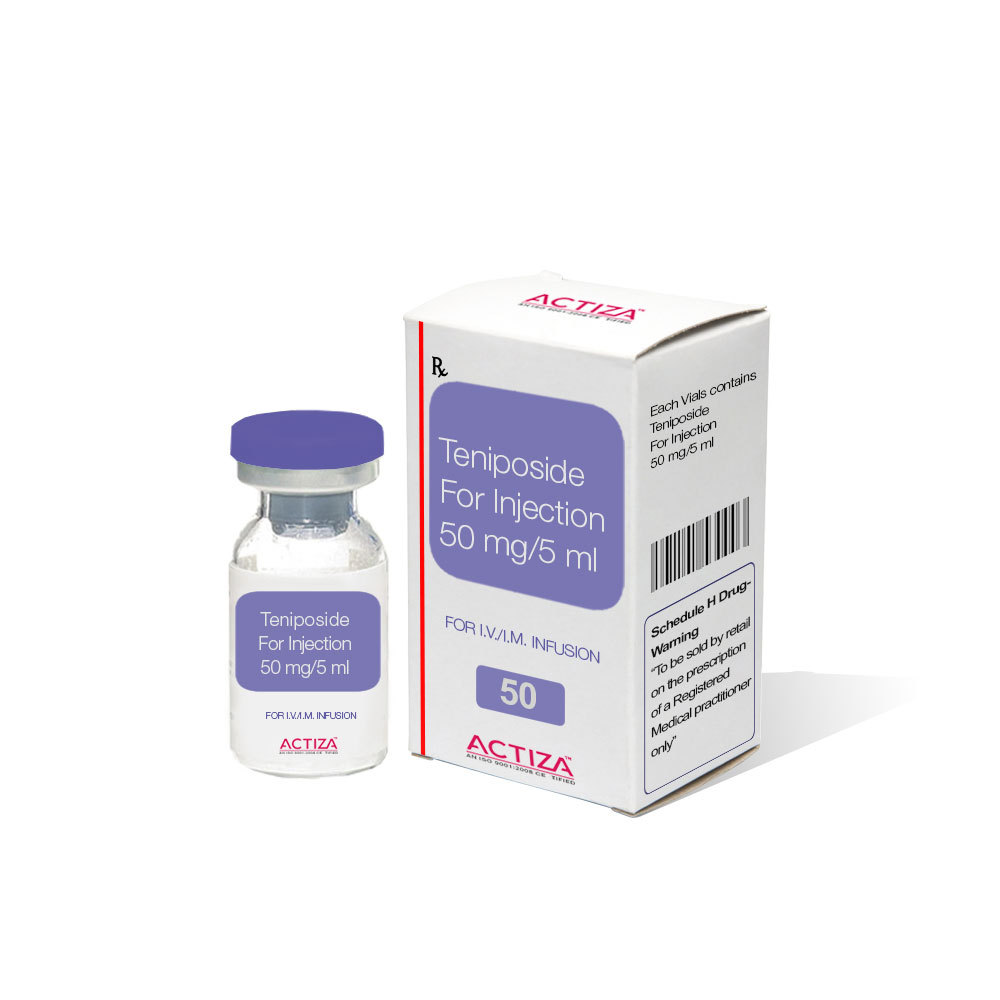
Teniposide — chemotherapy for acute leukemia and hematologic cancers
What teniposide is in simple patient language
This drug is chemotherapy. No immune pathway, no receptor target. It reaches cells that are actively multiplying and stops them.
It almost never appears alone. In most situations it is one component of a combination protocol. And it is not selected by diagnosis name — the doctor looks at disease type, what has been tried before, bone marrow status, blood counts, and what the treatment needs to accomplish right now.
How teniposide works
Inside every dividing cell there is an enzyme called topoisomerase II. It helps manage the DNA during replication. Teniposide shuts it down. The cell cannot finish what it started, damage accumulates, and it dies.
Fast-dividing healthy cells take the hit too.
Fast-dividing healthy cells are caught in this too. Blood counts, mucosa, infection risk, and overall condition — the doctor tracks all of it throughout treatment.
Which conditions may be treated with teniposide
In hematologic oncology this drug shows up in leukemia protocols or when a prior regimen failed to hold the disease:
- ALL \u2014 acute lymphoblastic leukemia
- leukemia that returned or did not respond to prior treatment
- selected pediatric hematologic protocols
- certain combination chemotherapy regimens
- situations where the oncologist is comparing options within a treatment line
The diagnosis alone does not decide the plan. What matters is which protocol is being considered and why this drug fits it rather than another option.
When teniposide can be especially relevant
Usually comes up when a standard path needs refinement or the disease calls for more active control:
- the disease returned after prior treatment
- the response to a previous regimen was insufficient
- the drug is part of a specific hematologic protocol
- a combination is needed rather than a single agent
- the oncologist is weighing expected benefit against bone marrow risk
The point is not to add chemotherapy. It is to understand what role teniposide plays in the overall strategy.
What should be checked before treatment
A diagnosis in a discharge note is not enough. Before teniposide, the doctor needs a picture of how ready the body is for this kind of load.
- exact diagnosis and disease variant
- bone marrow and blood data
- prior treatment lines
- white cells, neutrophils, hemoglobin, and platelets
- liver and kidney function
- active infections
- prior allergic reactions to medications
- overall condition and tolerance of previous therapy
- all current medications
Blood results and infection risk sometimes lead the doctor to delay the start, reduce the intensity, or choose a different regimen. That is not a formality — it is how complications get prevented.
How treatment with teniposide is usually given
Intravenous infusion, under medical supervision, usually as part of a protocol that includes other drugs.
The specific schedule depends on the diagnosis, patient age, treatment line, and protocol. Dates cannot be shifted independently, doses cannot be self-adjusted, and missed infusions cannot be caught up without medical guidance.
During treatment the team monitors:
- complete blood count
- signs of infection
- platelet levels and bleeding risk
- liver markers
- nausea, appetite, and fluid intake
- mucosal condition
- reactions during infusion
- disease response through blood tests and scheduled assessments
Sometimes the course runs on schedule. Sometimes a pause, a support adjustment, or a plan revision is needed. During chemotherapy that is normal management, not a sign the treatment has failed.
What reactions can occur during treatment
The bone marrow is where the main risk sits with teniposide. A drop in blood cell production after infusion shapes how carefully the patient is followed.
- neutrophil drop and raised infection risk
- platelet drop and bleeding risk
- anemia, weakness, fatigue
- nausea or vomiting
- reduced appetite
- mouth mucosa inflammation
- diarrhea or abdominal discomfort
- temporary hair loss
- liver marker changes
- allergic or infusion reaction
Not every reaction appears in every patient. But with teniposide, waiting until symptoms become severe is the wrong approach. Fever, bleeding, and sudden infusion reactions especially need prompt attention.
When to call the medical team the same day
Do not wait for the next appointment if any of these appear:
- fever, chills, or signs of infection
- bleeding, unexplained bruising, blood in urine or stool
- severe weakness, dizziness, or fainting
- shortness of breath, chest tightness, facial or lip swelling
- rash, itching, or sudden flushing during infusion
- uncontrolled vomiting
- significant diarrhea
- painful mouth sores
- any rapid drop in overall condition
During chemotherapy a fever is not necessarily a cold. With low neutrophils it can be a sign of a fast-moving infection. Reporting early is what keeps that situation manageable.
Why teniposide does not suit every patient
Teniposide can be an important drug in specific protocols, but it does not fit every patient with leukemia or lymphoma.
- bone marrow status
- neutrophil and platelet levels
- active infection
- prior treatment and how it was tolerated
- liver and kidney function
- prior allergic reactions
- patient age and overall condition
- treatment goal at this stage
Sometimes the doctor chooses a different drug not because teniposide is inferior but because in this particular situation the risk is too high relative to the expected benefit.
Can teniposide be combined with other treatments
Yes. Teniposide is almost always considered as part of a combination. In hematologic oncology, one drug rarely covers the full task.
Every combination has a rationale: the diagnosis, the treatment line, patient age, blood status, what came before. There are no arbitrary additions.
Before starting, I explain to the patient which risks to expect and which lab results to watch first. That conversation is not a formality — it is part of how treatment is managed.
What it means when results are not immediate
In leukemias and blood cancers, response is not always visible in how the patient feels in the first few days. Sometimes the patient feels about the same while the labs are already shifting. Sometimes symptoms clear slowly because the bone marrow needs time to recover.
The doctor reads more than one data point. Blood results, bone marrow status, infection trends, protocol tolerance, and whether the plan can continue as written all feed into the picture.
The question of whether treatment is working usually gets answered after scheduled blood work and assessments, not after a single infusion.
Oncology consultation in Israel
Tel Aviv Medical Clinic offers hematology consultations where teniposide is part of the clinical question.
A consultation may help when:
- a second opinion on the treatment protocol is needed
- the diagnosis and bone marrow results need specialist review
- the reason teniposide was proposed needs to be explained
- teniposide needs to be compared with other options within the protocol
- blood count and complication risks need to be assessed in advance
- questions need to be prepared before treatment starts
- further treatment in Israel is being considered
We do not prescribe remotely and do not replace the treating physician. We help patients and families understand the medical reasoning and prepare for the next conversation with the hematologist.
Frequently asked questions — answered by Dr. Stefanska and Dr. Meerovich
- Is teniposide the same as etoposide?
No. They come from the same drug class and act on cells through a similar mechanism, but they are different drugs. One does not automatically substitute for the other. When a doctor chooses teniposide, there is a specific reason: the protocol, dosing experience, prior treatment history, and patient status. I look at all of that before commenting on whether the choice makes sense.
- Which lab results might lead to delaying treatment?
Very low neutrophils or platelets, fever pointing to active infection, marked weakness, or liver problems are what most often push the date back. A delay is not a cancellation. Sometimes a few days of recovery, antibiotics, or a blood component transfusion is enough before the team reassesses and decides whether to proceed.
- Why does fever matter so much with teniposide?
Chemotherapy can temporarily lower immune defenses. During that period, fever can be the first visible sign of an infection that is already moving. I tell patients not to sit on it overnight and not to manage it at home unless the team has already given written instructions for that situation. With neutrophils down, speed of response matters.
- Can teniposide be given as an outpatient?
Sometimes yes, in a day unit. But supervised infusion is not the same as home treatment. If a reaction develops, blood results shift, or complications appear, the team has to be able to act. Where the drip happens does not change what needs to be in place around it.
- Will hair fall out?
Hair loss is possible. For some patients it is pronounced, for others more moderate. I discuss this before treatment starts because for most people it is not a minor side effect emotionally, even if medically it is not the most serious one. What I also say: after treatment ends, hair growth usually returns over time.
- What matters more — the drug or the full protocol?
In hematologic oncology, almost always the full protocol. A single drug cannot be assessed in isolation from the other components, doses, schedule, and treatment goal. Patients often focus on one name they heard. In practice the doctor is reading the whole picture: disease, blood counts, bone marrow, prior treatment, and risks. The name of one drug is just one piece of that.
- When does a second opinion make sense?
When the disease has returned, the proposed protocol seems very intensive, several treatment options are on the table, or the family does not understand why this specific approach was chosen. A useful second opinion does not just repeat the drug name. It explains the logic: what is being treated now, what the protocol is expected to achieve, and which risks need to be actively managed.
Important information
This page contains general medical information only. It is not a treatment recommendation. Teniposide may be considered only after reviewing the diagnosis, disease stage, investigation results, blood counts, and the patient’s overall condition.
Do not start, stop, or change any treatment without speaking to your treating physician first.
For a consultation about teniposide:
📞 +972-73-374-6844
💬 WhatsApp: +972-52-337-3108