


 Contact Us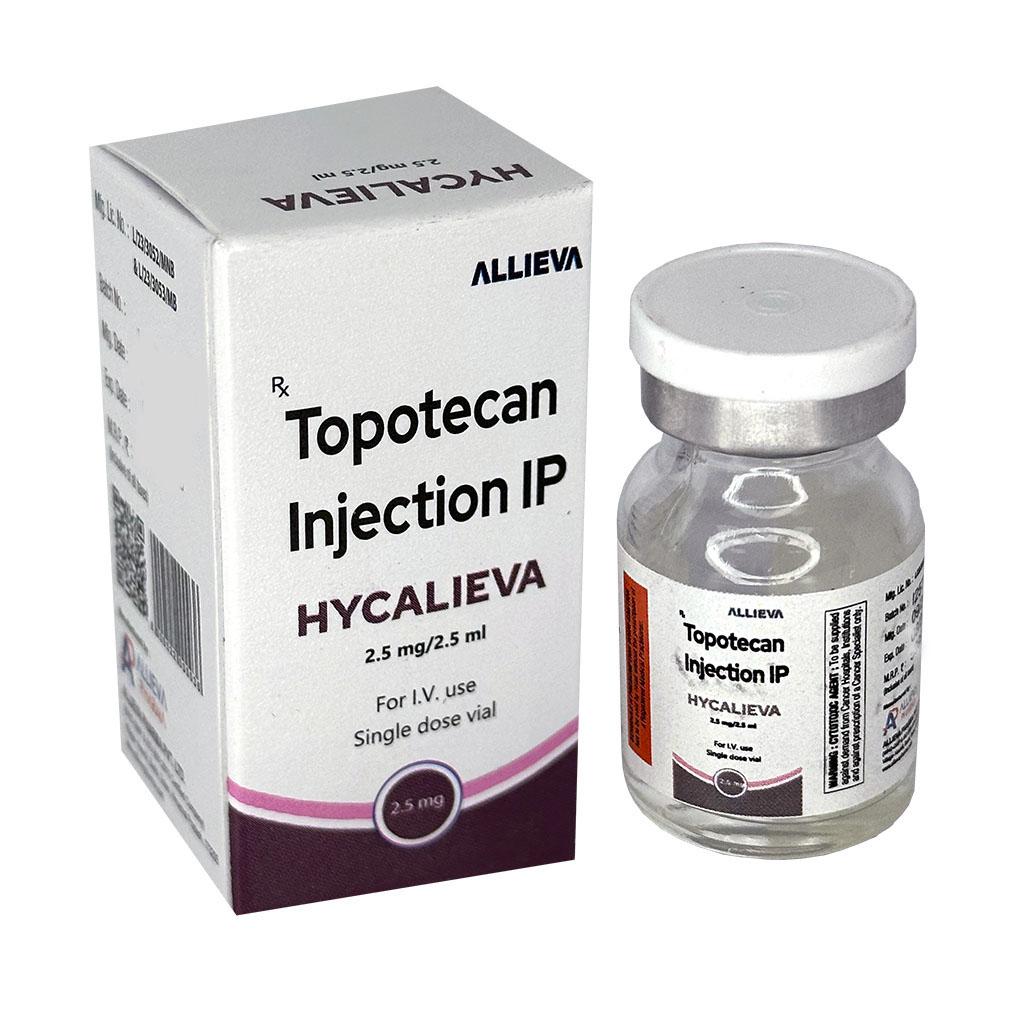
Topotecan — chemotherapy for ovarian cancer, lung cancer, and other tumors
What topotecan is in simple patient language
Topotecan is a topoisomerase I inhibitor. Behind that name is a simple idea: the drug blocks an enzyme tumor cells need to copy their DNA. Block it, and division fails.
Not a universal drug. I look at the full context — where the disease is, what treatment has already run, what the blood count shows, and whether the patient can safely go through this kind of course. A diagnosis in a discharge note is a starting point, not an answer.
How topotecan works
During division, a cell has to physically manage its DNA strands \u2014 open them, copy them, close them back. Topoisomerase I runs that closing step. Topotecan jams it. The process stalls, the cell accumulates damage it cannot fix, and division stops.
Tumor cells take a hit from this. But bone marrow and mucosa divide fast too, so they react as well. Blood results are reviewed on a regular schedule, not just before the first infusion.
Which conditions may be treated with topotecan
Topotecan comes up when the disease already needs systemic treatment and other options have been tried:
- ovarian cancer after prior therapy
- lung cancer of the small cell type in selected situations after prior treatment
- cervical cancer within a combined approach
- relapsed disease where the prior regimen is no longer holding
- cases where the oncologist is comparing several chemotherapy options
The diagnosis list is not a prescription. Topotecan fits some clinical situations and not others. Stage, prior treatment, blood counts, and the current goal all feed into whether it makes sense now.
When topotecan can be especially relevant
Usually comes into the picture when the next systemic step is needed after prior treatment:
- disease returned after responding to an earlier regimen
- the tumor kept growing after a standard first option was used
- the patient needs a drug with a clear rationale for this specific diagnosis
- the oncologist is weighing expected benefit against the risk of blood count drops
- the treatment plan needs a real revision, not just continuation of the same approach
The drug name is not what matters. The reason it is being considered right now is.
What should be checked before treatment
A diagnosis note is not enough. Before topotecan, the doctor needs to know how safe it is to start and whether benefit is realistic.
- histological diagnosis and disease stage
- prior treatment lines and how long each worked
- recent CT, MRI, or PET-CT
- complete blood count
- neutrophils, platelets, and hemoglobin specifically
- kidney function
- liver function
- overall patient condition
- active infections or fever
- all current medications
Blood counts take priority. Bone marrow depleted by prior treatment may not have the reserve to carry another heavy course. Sometimes waiting for counts to recover, cutting the planned dose, or choosing a different drug is the safer path.
How treatment with topotecan is usually given
Intravenous is the standard route. An oral form exists in some centres but is not a simple alternative the patient can request. The absorption, dosing logic, and monitoring are different. Form is the oncologist’s decision.
Typically given over several consecutive days, then a break. Not for scheduling convenience — bone marrow and mucosa need that gap to recover before the next cycle.
During treatment the doctor tracks:
- complete blood count
- neutrophils and platelets
- signs of infection
- kidney function
- fatigue level
- nausea, diarrhea, and mucosal condition
- new symptoms between cycles
- response assessment through scheduled imaging
When blood counts drop more than expected, the course may be delayed, the dose reduced, or supportive therapy added. A schedule adjustment is safety management, not a sign the drug failed.
What reactions can occur during treatment
The bone marrow is where I focus most with topotecan. Neutrophils fall first. Then platelets and hemoglobin follow. Low neutrophils raise infection risk. Low platelets raise bleeding risk. Low hemoglobin brings fatigue and breathlessness even at rest.
- marked fatigue
- neutrophil drop
- anemia
- low platelet count
- raised infection risk
- fever when white cells are suppressed
- nausea or vomiting
- diarrhea
- reduced appetite
- mucosal inflammation
- hair loss
- breathlessness or weakness from anemia
The most dangerous scenario is a patient sitting on a fever at home. With low neutrophils, an infection can move fast. The doctor explains before cycle one which symptoms mean calling right away.
When to call the medical team the same day
Do not wait for the next appointment if any of these appear:
- temperature of 38 degrees or above
- chills or a feeling like an infection is starting
- rapid worsening weakness
- nosebleed, bleeding gums, or blood in urine
- unusual bruising
- breathlessness at rest or with minimal effort
- frequent diarrhea
- severe abdominal pain
- unable to drink because of nausea or vomiting
- painful mouth sores
- confusion or a sharp drop in overall condition
Not every symptom traces back to topotecan. But during chemotherapy, staying silent is more dangerous than calling once too many times.
Why topotecan does not suit every patient
Topotecan can be a useful drug, but it has real limits. The main question is whether the body can carry this treatment and whether the clinical situation actually justifies it.
- blood count status before treatment
- kidney function
- prior treatment and how it was tolerated
- how fast the disease is progressing
- active infection
- patient age and overall condition
- treatment goal: disease control, symptom relief, or a step toward further therapy
Sometimes topotecan makes sense. Sometimes the complication risk is too high. Sometimes a different drug, supportive care, or a clinical trial is a better fit.
Can topotecan be combined with other treatments
Yes, in some protocols it runs alongside other drugs. But a combination is not about adding more for extra effect.
The doctor may discuss:
- pairing with platinum agents for selected diagnoses
- use within an approved combination protocol
- sequencing after prior chemotherapy
- supportive drugs for managing side effects
- switching the regimen if tolerance becomes a problem
Combined treatment almost always means closer monitoring. The oncologist weighs not just potential efficacy but how much the body can realistically carry.
What it means when results are not immediate
After the first cycle of topotecan, a clear answer is rarely visible. Several cycles and a follow-up scan are needed before real conclusions can be drawn.
For the patient this stretch can feel uncertain: treatment is running but nothing looks resolved yet. The doctor reads imaging, symptoms, blood trends, and overall tolerance together. Stabilization — disease not growing further — can itself be a meaningful result. If progression continues or tolerance becomes too hard, the plan gets revised.
Oncology consultation in Israel
Tel Aviv Medical Clinic offers consultations where topotecan is part of the clinical question.
A consultation may help when:
- it is not clear whether topotecan fits the diagnosis and prior treatment history
- the reasoning behind this choice needs to be explained
- blood count and infection risks need to be assessed in advance
- the proposed plan needs to be compared with other options
- a second opinion is needed
- questions need to be prepared for the treating oncologist
- treatment in Israel or a review of an existing plan is being considered
We do not prescribe remotely and do not replace the treating physician. We help patients and families understand the medical reasoning and go into the next conversation prepared.
Frequently asked questions — answered by Dr. Stefanska and Dr. Meerovich
- Is topotecan only used for ovarian cancer?
No. Ovarian cancer is a common context but far from the only one. Lung tumors of the small cell type and cervical cancer also bring this drug into the discussion. I do not start from diagnosis lists. What matters is the full treatment history: what was tried, whether it worked, and what is driving the question about this drug right now.
- How is topotecan different from standard chemotherapy?
It is chemotherapy. What sets it apart is the specific enzyme it targets during cell division. Side effects can look similar to other chemo drugs \u2014 fatigue, nausea, blood count drops. But the mechanism shapes when topotecan actually belongs in a treatment plan and when another drug would make more sense.
- Why does the blood count matter so much before starting?
Topotecan can push blood cell production down significantly. When neutrophils or platelets are already low going in, serious complications become more likely. Patients often want to start fast, and I understand that. But entering a course with poor counts can lead to infection, bleeding, or a hospital stay instead of disease control. The blood result genuinely decides the timing.
- How long before you know if topotecan is working?
Not after the first infusion. It takes several cycles and a planned scan to get a real picture. I watch more than imaging: are symptoms improving, is there any rapid deterioration, how is the patient tolerating the treatment, what are the blood trends. Sometimes stabilization is a result worth noting. Sometimes the progression data says the approach needs to change.
- What to do if fever appears during treatment?
Call straight away. Fever when neutrophils are already down is not something to watch at home. The team needs to know what is happening and decide whether blood tests, a clinical review, or antibiotics are needed. Paracetamol and a wait-and-see approach is not the right call here. With low white cells, infections can move fast.
- Can intravenous topotecan be replaced with tablets?
Not a decision the patient makes alone. Same active substance does not mean the same drug in practice. The oral and IV forms differ in how they are absorbed, how the dose is structured, and what gets monitored during treatment. If a switch to oral is possible, the oncologist discusses it. Sometimes it is a useful option. Sometimes it does not fit the situation at all.
- Why might topotecan be ruled out even when it fits the diagnosis?
A matching diagnosis is one factor, not the whole answer. Severely low counts, an active infection, kidney problems, or a patient who is already very weak \u2014 any of these can tip the risk too high. A drug that looks right on paper may not suit the person in front of me. In that case my job is not to prescribe something just to prescribe something. It is to find an approach that has a real chance of helping without causing harm that outweighs any benefit.
Important information
This page contains general medical information only. It is not a treatment recommendation. Topotecan may be considered only after reviewing the diagnosis, disease stage, prior therapy, blood counts, kidney function, and the patient’s overall condition.
Do not start, stop, or change any treatment without speaking to your treating physician first.
For a consultation about topotecan:
📞 +972-73-374-6844
💬 WhatsApp: +972-52-337-3108