


 Contact Us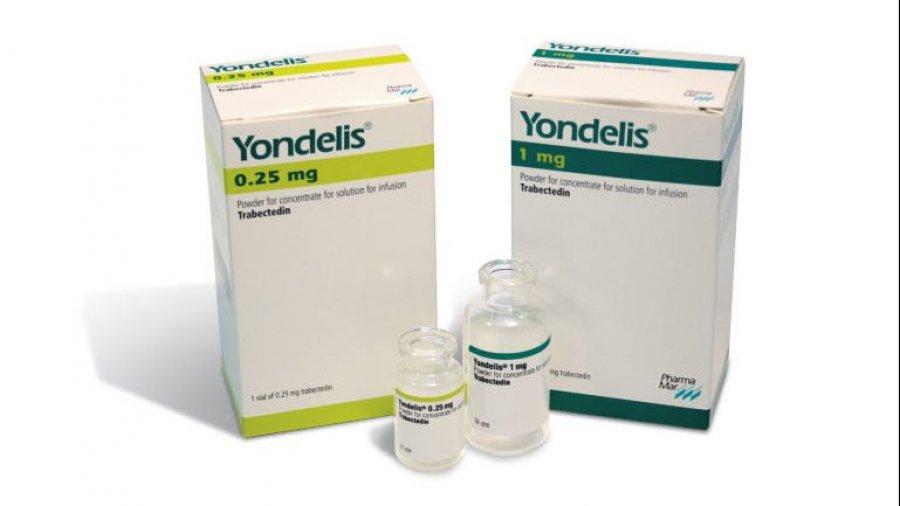
Trabectedin (Yondelis) — chemotherapy for soft tissue sarcoma
What Yondelis is in simple words
Yondelis is the brand name for trabectedin. It is chemotherapy. The way it is given is a little different from what many patients imagine: the infusion is long, not a short one-hour drip.
Doctors do not choose it “just in case”. It is usually discussed when sarcoma already needs treatment for the whole body, and earlier treatment has not given the needed result.
The type of sarcoma, past treatment, liver tests, blood results and general condition all matter before this drug appears in the plan. The name of the diagnosis alone is not enough here.
How Yondelis works
Trabectedin gets inside the cell and interferes with the way the cell works with DNA: how it reads it, repairs it and copies it. For some sarcomas this is a serious problem. The cell may lose the ability to divide normally and keep the tumor growing.
But the effect is not the same in every patient. Sarcoma biology can be different, and the response to the drug depends on it directly.
In practice, I do not look only at the mechanism. I also look at how fast the disease is moving, how much tumor there is, how it answered previous chemotherapy and, most importantly, whether the patient can safely go through this course.
When Yondelis may be considered
Trabectedin is most often discussed in soft tissue sarcomas, especially when the disease has spread or has come back after earlier treatment.
- liposarcoma;
- leiomyosarcoma;
- some types of soft tissue sarcoma after previous chemotherapy;
- recurrent or metastatic disease, when treatment for the whole body is needed;
- ovarian cancer in some schemes and countries — usually not as a universal option, but according to a specific protocol.
This list does not mean that the drug is prescribed automatically. Two patients with a similar diagnosis may have different plans because of histology, previous treatment, liver condition and the main goal of treatment.
When Yondelis may be especially relevant
Usually trabectedin comes into the discussion when the next systemic step has to be chosen, and a simple local solution is no longer enough.
- the disease is growing after anthracycline treatment;
- the tumor cannot be fully removed by surgery;
- there are metastases or several tumor areas;
- several options after previous lines of treatment need to be compared;
- the patient wants a second opinion on the next treatment step.
The main question in this section is simple: does the drug have a clear task right now? If it does not, the doctor will look for another path.
What should be checked before treatment
Before deciding on trabectedin, the oncologist needs a fresh medical picture, not general words. Sometimes one missing test can change the whole discussion.
- the exact histological diagnosis;
- biopsy results and, if needed, review of the tissue sample;
- recent CT, MRI or PET-CT scans;
- which treatments have already been used and how the tumor reacted;
- complete blood count;
- liver and kidney tests;
- CPK, if the doctor is checking the risk of muscle problems;
- heart history and regular medicines;
- general condition, weight, nutrition and how strong the weakness is.
The liver is checked especially carefully. For trabectedin this is not a formality. If liver tests are not good, the risk of side effects can rise noticeably.
How treatment with Yondelis is given
Trabectedin is given through a vein. It is not a medicine that a patient takes at home without supervision. The schedule, infusion time and breaks between courses depend on the diagnosis, protocol and tolerability.
Before the infusion, the doctor may prescribe preparation to lower nausea and reduce part of the unwanted reactions. During the course, it is important to watch not only how the patient feels, but also the test results.
- complete blood count;
- liver enzymes and bilirubin;
- kidney function and electrolytes;
- temperature and signs of infection;
- muscle pain or strong weakness;
- the place where the medicine is infused;
- control scans to see the disease dynamics.
Sometimes the course goes smoothly. Sometimes the doctor delays the infusion, lowers the dose or makes a pause. This does not always mean that the treatment has failed. Often it is just part of safe control.
Possible side effects
Trabectedin has its own pattern of side effects. It does not always feel like other chemotherapy drugs, so the patient should know in advance which symptoms should not be ignored.
- tiredness and strong weakness;
- nausea, vomiting, reduced appetite;
- lower neutrophils, anemia or lower platelets;
- higher liver tests;
- fever or infection-related problems;
- muscle pain, soreness or dark urine;
- swelling, shortness of breath or unpleasant feelings in the chest;
- tissue irritation if there is a problem with drug administration.
Not every reaction means that treatment has to stop. Still, with this medicine it is better to tell the doctor early, instead of waiting until the symptom becomes severe.
When to contact a doctor urgently
During treatment, the doctor should be contacted quickly if any of these appear:
- fever, chills or signs of infection;
- sudden weakness that is getting worse;
- yellow skin or yellow eyes;
- dark urine or strong muscle pain;
- shortness of breath, chest pain or serious swelling;
- bleeding or unusual bruises;
- severe nausea, vomiting or inability to drink;
- pain, burning or swelling at the infusion site.
Some of these symptoms may be linked to treatment. Some may be caused by the disease itself or by infection. The doctor should sort this out. Waiting until morning at home can sometimes be unsafe.
Why Yondelis is not right for everyone
Trabectedin is not a universal answer for every sarcoma. Even when the diagnosis fits, there may be reasons to choose another option.
- serious liver problems;
- low blood counts before the course starts;
- fast worsening of general condition;
- high risk of severe infections;
- serious heart problems;
- drug interactions;
- a situation where another urgent approach is needed.
Sometimes the best step is not to start a new drug immediately, but to review the diagnosis, update the scans and compare several options calmly.
Can Yondelis be combined with other treatments
In some clinical situations, trabectedin can be part of a wider strategy. But it is not added to treatment just to make the plan look stronger.
- after previous chemotherapy;
- as part of step-by-step systemic treatment;
- after surgery or radiation therapy if the disease becomes active again;
- together with other medicines only in a specific scheme;
- as an option that is compared with a clinical trial or another treatment line.
A combined or sequential approach needs careful planning. The number of methods is not the main thing. Their order and purpose matter more.
What “no quick response” can mean
With sarcomas, the result does not always look like a fast shrinkage of the tumor. Sometimes the valuable result is that the disease has stopped growing or has slowed down.
This can be hard for the patient to accept: treatment is going on, but the scans do not show a sharp improvement. That is why the doctor looks at more than one thing: symptoms, size of the lesions, speed of change, blood tests and tolerability.
One control scan is important. But it does not always give the final answer without comparison with earlier results.
Oncology consultation about Yondelis in Israel
At Tel Aviv Medical Clinic, patients can discuss whether trabectedin has a place in their own clinical situation. This type of consultation may be useful when soft tissue sarcoma, relapse, metastases or the choice of the next treatment line is being discussed.
During the consultation, it is possible to go through:
- the exact type of sarcoma and biopsy results;
- previous treatment schemes;
- recent scans and disease dynamics;
- liver, blood and general-condition risks;
- whether Yondelis or another scheme makes sense;
- whether a clinical trial should be searched for;
- which questions to ask the treating oncologist before making a decision.
We do not prescribe treatment remotely and we do not replace the treating doctor. Our task is to help the patient and family understand the medical logic of the plan and prepare for the next step.
Frequently asked questions — answered by Dr. Stefanska and Dr. Meerovich
- Is Yondelis used only for sarcoma?
Most often, the discussion about trabectedin is really connected with soft tissue sarcoma. This is especially true for liposarcoma and leiomyosarcoma after previous treatment.
But I would not advise making a decision only from the tumor name. The biopsy, treatment history and fresh scans need to be seen. Sometimes the drug looks reasonable. Sometimes another path makes more sense at the same stage.
- How is Yondelis different from usual chemotherapy?
It is chemotherapy, but it is not the most typical one in how it is used. Trabectedin is used in selected situations, where the sarcoma type, previous lines and tolerability are important.
For the patient, the main difference is not a beautiful mechanism. It is the practical side: how the medicine is given, which tests need to be followed and which risks the doctor should discuss before treatment starts.
- Can Yondelis be used after doxorubicin?
Yes, this drug is often discussed after anthracycline treatment. But “after doxorubicin” is not a ready decision by itself.
It is important to know whether the previous scheme helped, how long the response lasted, what complications there were and what is happening with the tumor now. Sometimes it is a good next step. Sometimes it is not.
- Why are liver tests so important before treatment?
Because with trabectedin the liver is one of the main things to watch. If the results are already changed, the risk of complications may be higher.
I would not start this medicine without a clear picture of bilirubin, liver enzymes and the patient’s general condition. This is not paperwork. It is part of safety.
- How soon can it be clear whether treatment helps?
Usually not after the first infusion. Control examinations are needed, and the new scans have to be compared with the old ones.
Sometimes a good result is not shrinkage of all lesions, but stopping growth. In sarcoma, that can matter, especially if the disease was moving quickly before.
- Which symptoms should not be tolerated at home?
Fever, strong weakness, yellow skin or eyes, severe muscle pain, dark urine, shortness of breath, chest pain, bleeding and a sharp worsening of general condition.
These symptoms should not be watched for several days at home. During treatment, it is better to contact the doctor quickly and decide whether blood tests or an examination are needed.
- When is a second opinion worth getting?
A second opinion is especially useful if the disease has returned, if several options were offered, or if the patient does not understand why Yondelis was chosen.
A good consultation does not always change the whole plan. Sometimes it simply removes uncertainty: what has already been checked, what is missing and which step looks most logical.
Important information
The information on this page is general medical information. It is not a prescription or a personal treatment plan. The decision to use Yondelis is made by the oncologist after checking the diagnosis, disease stage, test results, previous treatment and the patient’s general condition.
Do not start, stop or change treatment without speaking with your treating doctor.
For a consultation about Yondelis:
☎ +972-73-374-6844
✉ [email protected]
WhatsApp: +972-52-337-3108