


 Contact Us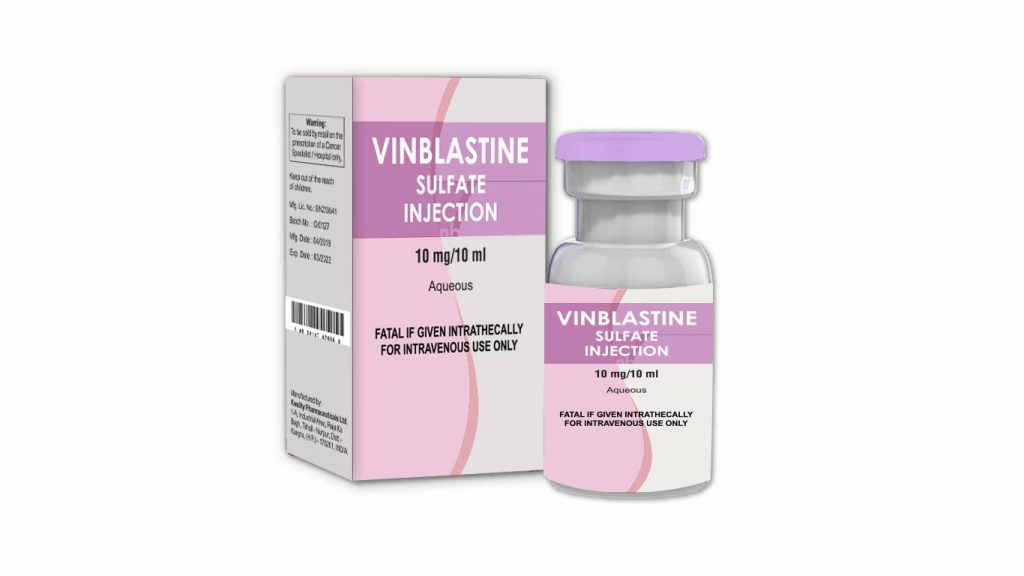
Vinblastine — chemotherapy for lymphoma and selected solid tumors
What vinblastine is in simple patient language
Vinblastine is a vinca alkaloid. In oncology it rarely stands alone — it sits inside a protocol where several drugs each cover a different angle.
Its job is to stop tumor cells from completing division. When that process breaks down, disease growth can slow and the full combination gets more room to work.
Picking the drug is not about the name of the disease. Tumor type, stage, current blood results, prior treatment history, tolerability, and what this phase of treatment needs to accomplish all feed into it.
How vinblastine works
Dividing cells need internal structures to line up and move precisely. Vinblastine breaks that sequence. The cell prepares to split but cannot finish the process.
For a tumor, this can mean losing momentum or becoming more exposed to what the rest of the protocol is doing.
The doctor is not only thinking about tumor effect. Vinblastine can affect bone marrow, mucosa, gut, and nervous system. Monitoring during treatment is safety management, not a formality.
Which conditions may be treated with vinblastine
Vinblastine comes up in oncology when it is part of a known combination protocol:
- Hodgkin lymphoma
- selected non-Hodgkin lymphomas
- testicular germ cell tumors
- certain breast tumors in specific regimens
- selected skin and rare tumor processes
- situations where systemic treatment is needed as part of a broader plan
The diagnosis list is not automatic permission to prescribe. Stage, age, current blood counts, and prior treatment history all shape what actually gets used.
When vinblastine can be especially relevant
Usually when it fills a defined role inside a planned strategy, not just as a name on a list:
- the drug is already part of the chosen combination protocol
- systemic treatment is needed beyond local methods alone
- the disease requires control through multiple drugs
- the plan is being revised after insufficient response
- tolerability needs to be factored carefully into the regimen choice
The question is not whether vinblastine can be used in general. It is whether it has a clear role in this plan right now.
What should be checked before treatment
The diagnosis alone is not enough. The full clinical picture determines dose, schedule, and safety.
- exact diagnosis and histological tumor type
- disease stage and extent
- recent imaging and biopsy results
- full blood count
- liver and kidney function
- any active infection or fever
- neurological symptoms before treatment starts
- prior treatment lines and how they were tolerated
- all current medications
Low blood counts or signs of infection can lead the doctor to delay the infusion. That is not a precaution for its own sake — it directly lowers the risk of complications.
How treatment with vinblastine is usually given
Given intravenously. The technique of administration matters here. The drug must go into the vein. If burning, pain, swelling, or any unusual sensation appears at the infusion site, say so immediately — not after the infusion ends.
A course is usually built around more than just vinblastine. Other drugs, anti-nausea support, blood tests, and clinical review may all fall in the same treatment period. The full schedule is worth clarifying upfront, not guessing from one appointment.
During treatment the team watches temperature, mucosa, bowel function, numbness or weakness, and how the full combination is sitting with the patient.
If a cycle gets delayed or support adjusted, that is not always a sign of a problem with the drug. Sometimes it is simply how risk gets managed while the body recovers.
What reactions can occur during treatment
Vinblastine affects patients differently. Some struggle most with fatigue and blood count changes. Others notice gut or mucosal reactions first.
- drop in white cells and raised infection risk
- weakness and fatigue
- nausea or reduced appetite
- constipation, abdominal discomfort or pain
- mouth mucosa irritation
- hair loss
- numbness or tingling in fingers
- pain, redness, or swelling at the infusion site
- fever or chills
Sitting on new symptoms is the wrong move. Many reactions can be managed well if the doctor finds out early rather than after a clear deterioration.
When to reach the medical team without waiting
Call the same day if any of these appear:
- fever, chills, or signs of infection
- rapid weakness or a sudden drop in how the patient feels
- pain, burning, swelling, or redness around the infusion site
- bleeding or bruising without obvious cause
- severe constipation or abdominal pain
- vomiting that makes drinking impossible
- worsening numbness or weakness in hands or legs
- shortness of breath, chest pain, or an unusual rash
Not every symptom will trace back to vinblastine. But during chemotherapy, temperature and changes around the infusion site especially need prompt attention.
Why vinblastine does not suit every patient
Appearing in well-known protocols does not make vinblastine universally safe. The doctor still assesses the balance of benefit and risk for each individual.
- very low blood counts
- active infection
- poor general condition
- significant complications from prior chemotherapy
- serious liver impairment
- high risk of local complications at the infusion site
- drug interactions
Sometimes vinblastine stays in the plan. Sometimes the dose is reduced or the timing shifted. Sometimes a different option fits better. That depends on the full clinical picture, not on how strong the drug is.
Can vinblastine be combined with other treatments
Yes. In most situations it is used within a combination. Alongside it may be other chemotherapy drugs, immune agents, steroids, or supportive treatment — depending on the diagnosis and protocol.
But a combination is not about adding more for extra safety. Each component has a task: one targets the tumor, another reduces complication risk, another helps the patient get through the course without dangerous pauses.
Before starting, share the full medication list with the doctor — prescriptions, vitamins, supplements, anything taken regularly. Some combinations change how vinblastine behaves and raise toxicity even when the drug itself was correctly chosen.
What it means when results are not immediate
With vinblastine-based protocols, results are not always visible after the first infusion. The doctor assesses across a course or several courses, not a single day.
Sometimes the result is tumor reduction. Sometimes stabilization. Sometimes the meaningful outcome is improved blood counts or being able to move to the next treatment phase.
Patients often want fast answers. Oncology reads the picture more broadly: symptoms, labs, imaging, tolerability, and disease pace all go in together.
Oncology consultation in Israel
Tel Aviv Medical Clinic offers consultations where vinblastine is part of the clinical question — including protocol review, blood count risk assessment, and second opinions.
A consultation may help when:
- the diagnosis and proposed regimen need to be reviewed
- the reason vinblastine is in the plan is not clear
- blood count risks and prior course tolerance need specialist input
- a second opinion is needed
- several treatment options need to be compared
- questions need to be prepared for the treating oncologist
We do not prescribe remotely and do not replace the treating physician. We help patients and families understand the medical reasoning and be ready for the next conversation.
Frequently asked questions — answered by Dr. Stefanska and Dr. Meerovich
- Is vinblastine the same as vincristine?
Not at all. The names sound similar and both belong to the same drug class, but they behave differently in practice \u2014 different doses, different protocols, different side effect patterns. One cannot stand in for the other. When vinblastine is in the protocol, that is a specific conversation about that drug and its role. Vincristine belongs to a completely separate discussion.
- Why does the blood count matter so much before each infusion?
Vinblastine hits white cells noticeably, particularly neutrophils. When those are already low before the dose goes in, infection risk after the course climbs significantly. I cannot make a safe decision about proceeding without a current blood picture. Sometimes everything is fine and the course runs on schedule. Other times a short pause or added support is needed. That is not a setback — it is how the risk gets managed, and the blood count is the key tool for doing that.
- Can the infusion go ahead when there is a fever?
First the fever needs to be understood. Is it infection? Low neutrophils? Something else? Without that answer, the decision about proceeding cannot be made safely. I tell patients not to work this out alone — fever during chemotherapy means calling the doctor the same day, even if the general condition seems manageable. A state that feels tolerable with low neutrophils can shift quickly.
- What is the tolerability profile of vinblastine?
It has its own pattern. The main areas of attention are blood counts, mucosa, gut, and the infusion site. Constipation is a frequent complaint and not a minor one — if bowel motility is seriously affected, that needs to be addressed. Neurological symptoms can also appear, though with vinblastine they tend to be less prominent than with vincristine. At each visit I am as interested in what the patient experiences between courses as I am in the lab numbers.
- Why is vinblastine almost always given in combinations?
Because in most of the diseases where it is used — lymphomas, testicular tumors, selected solid tumors — a single drug does not produce the needed result. A combination lets the treatment approach the disease through several mechanisms at once. But a good protocol is not a collection of drugs with strong reputations. It is a sequence where I understand in advance what cumulative load the patient can carry and where every component has a specific role.
- What to do if the arm hurts or swells after the infusion?
Right away \u2014 do not wait for the drip to finish. When vinblastine leaks outside the vein it damages the surrounding tissue. This is called extravasation. Burning, pain, heat, or swelling at the site means stopping and telling the nurse immediately. Acting fast limits the damage. There is no version of this where sitting with it a while and seeing what happens is the right call.
- What documents to prepare for a consultation?
Diagnosis summary, pathology report, recent blood results, CT or MRI scans, and a written list of all prior treatment. Then separately: a record of what happened during previous courses \u2014 infections, low counts, nausea, constipation, numbness, vein problems. These look like minor details but they can shift the recommendation on a protocol or a dose. The more specific the documents, the less the consultation works in the dark.
Important information
This page contains general medical information only. It is not a treatment recommendation. Vinblastine may be considered only after reviewing the diagnosis, disease stage, investigation results, prior therapy, and the patient’s overall condition.
Do not start, stop, or change any treatment without speaking to your treating physician first.
For a consultation about vinblastine:
📞 +972-73-374-6844
💬 WhatsApp: +972-52-337-3108