


 Contact Us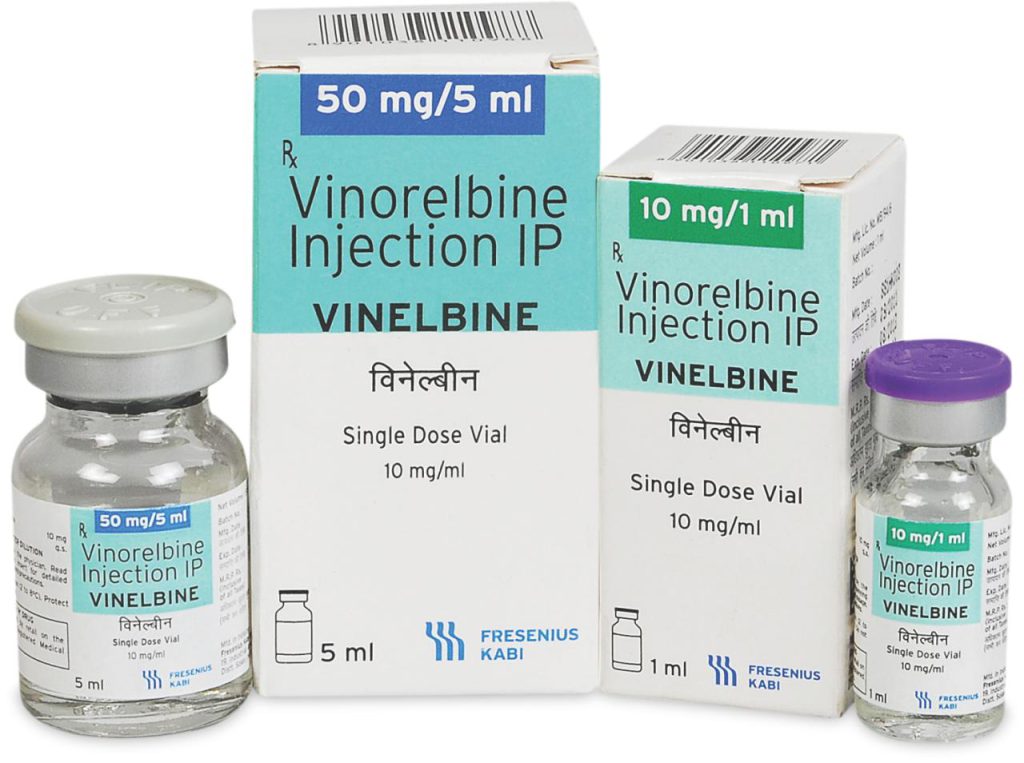
Vinorelbine — chemotherapy for lung cancer, breast cancer, and other solid tumors
What vinorelbine is in simple patient language
This drug belongs to the vinca alkaloid group. Chemotherapy \u2014 with a specific mechanism and a specific risk pattern that sets it apart from other drugs in oncology.
It does not erase a tumor in one session. The drug disrupts division. Without dividing, a cancer cell cannot sustain growth.
In practice it shows up mostly in solid tumors when a systemic drug is needed, either alone or as part of a protocol. A matching diagnosis does not make it the automatic answer for that patient.
How vinorelbine works
To split, a cell assembles an internal structure that separates its genetic material into two equal parts. Vinorelbine disrupts that assembly. Without completing it, the cell cannot divide.
Oncology does not stop at mechanism. Cancer type, spread, prior treatment, bone marrow function, and which complications are most dangerous for this patient \u2014 all of it shapes the decision.
The drug name is not the starting point. The full clinical picture is.
Which conditions may be treated with vinorelbine
Vinorelbine can appear in treatment plans for several oncology situations, mainly solid tumors where systemic treatment is needed:
- lung cancer, including the non-small cell subtype
- advanced or recurrent breast cancer in selected situations
- selected regimens after prior treatment lines
- situations where the oncologist is comparing several chemotherapy options
- combinations with other drugs when that approach fits the patient
The list is not a prescription. Two patients with the same diagnosis may have different treatment goals, different lab results, and a different safety margin.
When vinorelbine can be especially relevant
Usually comes into the discussion when a drug for systemic disease control is needed and the choice depends on prior treatment and current patient status:
- the disease has become widespread
- the prior regimen stopped holding the tumor
- a less aggressive option compared to some other protocols is being considered
- the oncologist is choosing between drugs with different side effect profiles
- a combination is planned where vinorelbine has a clear defined role
The question is not whether it can be prescribed. It is why it makes sense right now and which risks need to be managed from the start.
What should be checked before treatment
Before starting vinorelbine, the doctor needs more than a diagnosis printout. The data that shows how safe it is to begin — and whether this drug is the right pick — matters most.
- histological tumor type
- disease stage and extent of spread
- recent CT, MRI, or PET-CT
- results of prior treatment and how long the response lasted
- full blood count, especially neutrophils and platelets
- blood chemistry
- liver function
- neuropathy symptoms, numbness, or weakness before treatment starts
- overall patient condition
- other medical conditions and current medications
Sometimes a blood count or liver function result changes the decision. The drug may look right by diagnosis but require a delay, a dose adjustment, or a different choice entirely.
How treatment with vinorelbine is usually given
Most often given intravenously. In some clinical settings an oral form is discussed, but that is not a simple swap of one version for another. The form, schedule, and dose are set by the doctor.
During treatment the team monitors:
- full blood count
- liver markers
- how the patient feels after each infusion
- temperature and signs of infection
- numbness, weakness, or nerve-related pain
- condition of the vein after infusion
- follow-up imaging to assess response
Some courses go smoothly. Others need a pause, a delayed infusion, or a dose adjustment because of low counts, infection, marked weakness, or other symptoms. That is normal management during chemotherapy, not a sign the plan has failed.
What reactions can occur during treatment
The bone marrow is where the main attention sits with vinorelbine, specifically neutrophil levels and infection risk.
- drop in neutrophils and higher infection risk
- anemia or fatigue
- low platelet counts
- nausea
- constipation
- tiredness
- hair thinning or loss
- nerve-related symptoms in fingers or toes \u2014 tingling, burning, or pain
- reaction at the infusion site
- elevated liver markers
Nerve-related symptoms get discussed separately, especially when the patient already experienced something similar on a prior drug. One infusion-specific risk: if the drug escapes the vein, it damages the tissue around it. Burning, pain, or swelling at the site during infusion means alerting the nurse right away, not after the drip finishes.
When to reach the medical team without waiting
Do not wait for a scheduled appointment if any of these appear:
- temperature of 38 degrees or above
- chills or signs of infection
- sudden marked weakness
- shortness of breath or chest pain
- bleeding or bruising without cause
- severe or prolonged constipation
- significant numbness, gait changes, or hand or leg weakness
- pain, burning, redness, or swelling at the infusion site
- vomiting that makes drinking impossible
- a rapid drop in overall condition
Not every symptom signals a serious complication. But during chemotherapy, timing matters. Infection with low neutrophils or a vein reaction both need fast assessment.
Why vinorelbine does not suit every patient
Vinorelbine can be useful, but it is not universal. Sometimes the doctor steps away from it not because the drug is weak but because the risk outweighs the expected benefit in that specific situation.
- tumor type
- prior treatment history
- neutrophil and platelet levels
- liver function
- existing neuropathy before treatment starts
- overall patient condition
- active infections
- treatment goal: disease control, symptom relief, or part of a combination
Sometimes another drug fits better. Sometimes vinorelbine is an option, but only after lab correction or a more cautious monitoring plan is in place.
Can vinorelbine be combined with other treatments
Yes. Vinorelbine can be used in combinations. But the combination needs a clear rationale, not just more drugs added for extra coverage.
The doctor may discuss pairing it with:
- platinum-based agents
- other systemic agents depending on the protocol
- regimens used in lung cancer protocols
- certain breast cancer settings after prior lines
- plans reviewed after assessing tolerance of prior treatment
A combination can strengthen anti-tumor effect. It also tends to raise risks: blood count drops, fatigue, infections, nausea, neuropathy. The decision is always about the tumor and the patient’s reserve together, not just the cancer alone.
What it means when results are not immediate
Patients often expect a clear answer after the first few infusions. Assessment usually takes more time than that.
Early weeks may only show changes in blood results or how the patient feels. Sometimes the tumor does not shrink right away but stops growing. Sometimes imaging after several cycles shows the plan needs to change.
The doctor reads more than one data point: scans, symptoms, blood trends, disease pace, and treatment tolerance. If the regimen is too hard on the patient, even a working plan may need revision.
Oncology consultation in Israel
Tel Aviv Medical Clinic offers consultations where vinorelbine is part of the clinical question, including how it compares to other options and what risks need to be assessed upfront.
A consultation may help when:
- it is not clear whether vinorelbine fits the diagnosis and stage
- it needs to be compared against other chemotherapy options
- the reasoning behind choosing this drug is not explained
- neutropenia, neuropathy, and infusion reaction risks need specialist review
- a second opinion is needed
- questions need to be prepared for the treating oncologist
- treatment in Israel or a review of an existing plan is being considered
We do not prescribe remotely and do not replace the treating physician. We help patients and families understand the clinical reasoning and be prepared for the next conversation.
Frequently asked questions — answered by Dr. Stefanska and Dr. Meerovich
- What makes vinorelbine different from other chemotherapy drugs?
It belongs to a group of drugs that interfere with cell division. But that does not mean it can be swapped freely with any other drug in that group. I look at the diagnosis, prior protocols, blood counts, tolerability, and neurological symptoms. Sometimes vinorelbine is the more practical option. Sometimes a different drug fits better. The name of the class is not the deciding factor.
- Can vinorelbine be given after prior chemotherapy?
Sometimes yes. But the question is what came before, how long it worked, and why the treatment is changing now. If the prior regimen stopped helping, that is one conversation. If it had to be stopped because of serious complications, that is a completely different one. The prior treatment history is not background — it directly shapes what can safely come next.
- Why does the blood count matter so much before each infusion?
Vinorelbine can push neutrophil levels down. Neutrophils are what protect the body from infection. A patient can feel reasonably okay while the lab already shows high risk. The blood test before each infusion is not a formality. It is what tells the team whether it is safe to proceed, whether a pause is needed, or whether support should be added.
- Should neuropathy be a concern before starting?
Not a reason for fear, but something to report clearly. If numbness, burning, foot weakness, or hand issues are already present before treatment starts, the doctor needs to know. During therapy, any new sensations also need to be reported. Sometimes watching and waiting is enough. Other times the plan needs adjustment before the problem becomes permanent.
- What to do if pain or burning appears at the infusion site?
Tell the nurse or doctor straight away. Not at the end of the infusion. The infusion site matters with vinorelbine. If the drug irritates the vein or leaks into surrounding tissue, catching it early limits the damage. There is no version of this where staying quiet until it finishes is the right approach.
- Can vinorelbine be combined with other drugs?
Yes, those protocols exist. But the combination has to be justified by the diagnosis, stage, prior treatment, and current patient condition. I always explain to the patient not just why a second drug is being added but also which risks increase as a result. That makes it possible to follow the treatment with clear eyes rather than waiting for complications blindly.
- When do you know if treatment is working?
Usually not after the first infusion. Several cycles and a follow-up scan are needed. And even then the doctor is not reading just the imaging. Symptoms, blood results, weight, fatigue, pain levels, cough, and the overall pace of the disease all go in. Sometimes stabilization — the disease not growing — is already a meaningful result.
Important information
This page contains general medical information only. It is not a treatment recommendation. Vinorelbine may be considered only after reviewing the diagnosis, disease stage, prior treatment, blood counts, liver function, and the patient’s overall condition.
Do not start, stop, or change any treatment without speaking to your treating physician first.
For a consultation about vinorelbine:
📞 +972-73-374-6844
💬 WhatsApp: +972-52-337-3108