


 Contact Us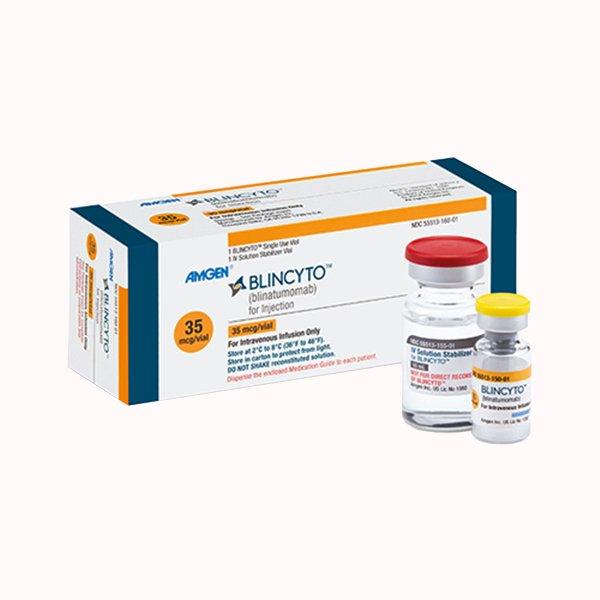
Blinatumomab (Blincyto) — bispecific immunotherapy for acute lymphoblastic leukaemia
What is blinatumomab (Blincyto) in simple words
Blinatumomab (Blincyto) — a drug that physically brings immune cells into direct contact with leukaemia cells.
It belongs to a class called bispecific antibodies — molecules designed to grab two different cell types at the same time. One end attaches to a marker on leukaemia cells. The other end attaches to a marker on immune cells called T-cells. When both are connected, the immune cell is held right next to the leukaemia cell and destroys it.
This is not chemotherapy. It does not attack all rapidly dividing cells. It directs the immune system to a specific target — the marker that most leukaemia cells in this type of blood cancer carry on their surface.
The drug is given as a continuous infusion — not a one-time injection. It runs through a pump for weeks. That is an unusual treatment delivery method, and patients need to understand it before starting.
How blinatumomab works
Leukaemia cells in this context carry a surface marker called CD19. T-cells — the immune system’s primary attack cells — carry a different marker called CD3. Blinatumomab grabs both simultaneously, pulling the T-cell and the leukaemia cell together.
Once in contact, the T-cell recognises the leukaemia cell as something to destroy and eliminates it. The drug effectively acts as a bridge — forcing an encounter that the immune system on its own was not producing effectively enough.
This is a different approach from checkpoint inhibitors, which remove a suppressive signal. Blinatumomab does not just unblock immune cells — it actively directs them to a specific target. The distinction matters for understanding both how it works and what side effects to expect.
What conditions blinatumomab is used for
Blinatumomab is used in:
- a type of blood cancer affecting B-cells — when it has returned or not responded to treatment;
- the same cancer type in patients who have achieved remission but still have detectable disease traces;
- adults and children with this blood cancer after prior treatment;
- a specific chromosomal change in this cancer — in certain protocols as an earlier treatment option.
The setting where blinatumomab made its clearest impact is in patients whose leukaemia had returned or never responded. Before this drug, options in that situation were limited and outcomes were poor. Clinical data showed meaningful responses — including complete remissions — in patients who had already exhausted standard approaches.
It is also used in a situation called minimal residual disease — where a patient appears to be in remission by standard testing, but highly sensitive methods still detect leukaemia cells. Eliminating those remaining cells improves the chance of a durable remission. That is a different clinical goal from treating visible, active disease.
When blinatumomab may be especially relevant
It tends to come into discussion when:
- leukaemia has returned after prior treatment;
- leukaemia did not respond adequately to initial chemotherapy;
- sensitive testing shows remaining leukaemia cells despite apparent remission;
- a stem cell transplant is being planned and disease control is needed first;
- the patient has a specific chromosomal rearrangement that affects treatment sequencing.
The minimal residual disease setting is worth understanding separately. A patient can feel completely well and have normal blood counts — and still have detectable leukaemia cells at a level that standard tests miss. Blinatumomab is sometimes used specifically to clear those cells before they become a visible relapse. The goal is prevention of relapse, not treatment of active disease. That requires a different conversation about expectations.
The path to a stem cell transplant often runs through blinatumomab. Achieving a deep remission before transplant is critical — and this drug can help get there when chemotherapy alone has not been sufficient.
What needs to be checked before starting treatment
Before blinatumomab is considered, the oncologist will typically assess:
- confirmed diagnosis and disease extent — bone marrow biopsy is standard;
- level of residual disease detected by sensitive testing;
- prior treatment history and response to each step;
- neurological status — blinatumomab carries specific neurological risks;
- liver function;
- kidney function;
- infection status — active infections need to be addressed before starting;
- performance status.
Neurological assessment before starting is not optional. Blinatumomab can cause serious neurological side effects — confusion, difficulty speaking, seizures in some cases. A baseline neurological status gives the clinical team a reference point. If something changes during treatment, they need to know what normal looked like before. I also explain this in detail to patients and their families before the first cycle — what to watch for and exactly when to report it.
How treatment is carried out
Blinatumomab is given as a continuous intravenous infusion — the drug runs through a pump 24 hours a day for 28 days, followed by a 14-day break. That cycle repeats depending on the protocol and the response.
This delivery method is unusual and requires specific preparation. The pump needs to be carried. Lines need to be managed. The patient is typically hospitalised at the start of each cycle — particularly the first — when the risk of serious reactions is highest. After that, outpatient continuation may be possible depending on the clinical setting and the patient’s situation.
Monitoring during treatment:
- neurological status — daily assessment in hospital, closely after discharge;
- temperature — fever can signal a serious reaction;
- blood count;
- liver function;
- signs of cytokine release — temperature, blood pressure, breathing;
- response assessment at end of each cycle.
The first 48 hours of the first cycle are the highest-risk period. I always hospitalise patients for at least the first week. Not because complications are inevitable — but because if something does happen, having the medical team immediately available changes the outcome.
Possible side effects
Side effects that may appear:
- cytokine release syndrome — fever, low blood pressure, breathing difficulty;
- neurological effects — confusion, difficulty with speech, tremor, seizure;
- fever and infection risk;
- low blood counts;
- liver enzyme elevation;
- headache;
- fatigue;
- nausea;
- infusion site reactions.
Two side effects stand apart from the others. Cytokine release syndrome — where the immune system overreacts to the sudden activation — can range from mild fever to a serious drop in blood pressure requiring intervention. Neurological toxicity — confusion, slurred speech, disorientation — can appear without warning and progress quickly. Both require immediate medical attention. Both are the reason the first cycle happens in hospital.
Most neurological effects resolve when treatment is paused. That resolution can be rapid — sometimes within hours. But the pause needs to happen quickly. A patient who waits to see if confusion passes on its own at home is taking a risk that is entirely avoidable.
When to contact a doctor urgently
While on blinatumomab, contact the medical team immediately if:
- confusion or difficulty thinking clearly — at any level;
- difficulty speaking or finding words;
- tremor or unsteady movements;
- seizure;
- high fever;
- sudden drop in how you feel generally;
- difficulty breathing;
- significant drop in blood pressure — dizziness, faintness.
I tell every patient and every family member the same thing before the first cycle: confusion means calling immediately. Not waiting until morning. Not watching to see if it passes. Immediately. The drug can be paused within minutes if needed — and that pause is often all that is required for neurological symptoms to resolve.
Why blinatumomab is not right for everyone
What affects whether this drug is appropriate:
- cancer type other than B-cell leukaemia — blinatumomab targets a marker not present in other leukaemia types;
- active severe infection — needs to be controlled before starting;
- significant pre-existing neurological disease;
- severely reduced liver function;
- inability to tolerate continuous infusion logistics;
- poor performance status.
The continuous infusion requirement is a practical barrier for some patients. Living with a pump for 28 days requires support at home, reliable access to the clinic for line management, and a caregiver who understands what to watch for. I assess the home situation as part of the pre-treatment evaluation. A treatment that cannot be safely delivered outside hospital is not the right choice for every patient — even if it is clinically appropriate.
Can blinatumomab be combined with other treatments
In some protocols blinatumomab is used alongside low-intensity chemotherapy — particularly in older patients where standard intensive chemotherapy carries too much risk. In others it follows chemotherapy as a consolidation or bridge to transplant.
Combining it with checkpoint inhibitors or other immunotherapy agents is being studied in clinical trials. Those combinations are not yet standard practice. Any combination decision is made based on what the evidence supports for the specific clinical situation.
What ‘no quick response’ means
Response to blinatumomab is assessed at the end of each 28-day cycle — through bone marrow biopsy and sensitive residual disease testing. Some patients achieve remission after a single cycle. Others require two.
In the minimal residual disease setting, the goal is not remission — it is clearance of the remaining cells. That requires sensitive testing that standard blood counts do not capture. I always explain what we are measuring and why before results come back, so the numbers make sense when they arrive.
Oncology consultation for blinatumomab (Blincyto) in Israel
At Tel Aviv Medical Clinic in Israel, consultations are available on blinatumomab for patients with acute B-cell leukaemia — including those considering it as a bridge to stem cell transplant, those with detectable residual disease after remission, and those whose leukaemia has returned after prior treatment. Haematologists at the clinic follow ESMO and NCCN guidelines and have experience managing both the neurological and cytokine-related risks specific to this drug. Israel has active haematology centres where blinatumomab is used in clinical practice — not only discussed.
In Tel Aviv Medical Clinic, you can discuss:
- whether blinatumomab is appropriate for your specific disease stage and prior treatment;
- the residual disease setting — what testing is needed and what clearance means;
- planning treatment as a bridge to stem cell transplant;
- neurological risk assessment before starting;
- second opinion on a proposed treatment plan;
- treatment options available in Israel and internationally.
Sometimes patients arrive not knowing that residual disease testing even exists — or what it means for their prognosis. That conversation is worth having before any treatment decision is made.
Frequently Asked Questions — Dr. Stefanskoy
- What makes blinatumomab different from chemotherapy?
Chemotherapy attacks rapidly dividing cells broadly — which is why it affects healthy tissue alongside cancer cells. Blinatumomab does not work that way. It directs immune cells to a specific marker on leukaemia cells and holds them there until the leukaemia cell is destroyed.
The side effects reflect that difference. Chemotherapy produces low blood counts, nausea, hair loss. Blinatumomab produces immune-driven reactions — cytokine release, neurological effects. Neither profile is easy, but they are different in character and managed differently.
- Why is treatment given as a continuous infusion for 28 days?
Because blinatumomab has a very short half-life — it clears from the body quickly. To maintain a consistent level in the blood that keeps directing immune cells to leukaemia cells, the drug needs to be infused continuously rather than given in periodic doses.
This is one of the most practically demanding aspects of this treatment. Living with a pump for a month requires preparation — reliable line care, a safe home environment, a caregiver who knows what to watch for. I assess all of this before the first cycle. It is part of the treatment decision, not an afterthought.
- How serious are the neurological side effects?
They can be serious — and they can appear without much warning. Confusion, difficulty finding words, tremor, and in some cases seizure have all been reported. Most neurological effects resolve when the infusion is paused, often within hours.
The key is acting immediately. A patient who recognises confusion and calls right away gives the medical team the chance to pause treatment and reverse the effect quickly. A patient who waits to see if it resolves on its own risks a longer and more difficult recovery. I make this conversation a priority before the first cycle — with both the patient and whoever is with them at home.
- What is minimal residual disease and why does it matter?
Standard blood tests and bone marrow biopsies can show a patient is in remission — no visible leukaemia cells. But highly sensitive molecular testing can detect leukaemia cells at levels far below what standard methods find. That low-level residual disease is called minimal residual disease.
It matters because patients with detectable residual disease at this level have a higher risk of relapse than those with fully cleared disease. Using blinatumomab to clear those remaining cells — before they become a visible relapse — can extend remission duration. That is a genuinely different therapeutic goal from treating active disease, and it requires different expectations from the patient.
- Can blinatumomab be used in children?
Yes — it is approved for both adults and children with this type of leukaemia. The clinical experience in paediatric patients exists, and it is used in that population. Dosing is adjusted based on body weight in younger patients.
The neurological monitoring requirements apply equally in children — and arguably require even more attentive family involvement, since a child may not be able to clearly describe what they are experiencing. I spend specific time with parents explaining what to watch for and how to communicate changes to the medical team.
- What happens if blinatumomab does not produce remission?
That depends on what has already been tried and the overall disease picture. Other approaches in relapsed or refractory disease include alternative chemotherapy combinations, CAR-T cell therapy — where immune cells are modified and reinfused — or clinical trials investigating newer agents.
The path forward is not the same for every patient. I look at the full treatment history, the patient’s current condition, and what the realistic options are before recommending a next step. Sometimes the most important conversation is about what is achievable — not just what is technically available.
- Is blinatumomab available in Israel?
Yes. Blinatumomab is used in haematology centres in Israel, both for relapsed and refractory disease and in the residual disease setting. The infrastructure for continuous infusion delivery and neurological monitoring exists in Israeli hospitals experienced with this drug.
If you are considering this treatment and want to understand whether it fits your specific situation — or want a second opinion on a plan that has been proposed — a consultation can address that directly.
Important information
Blinatumomab (Blincyto) is considered only after confirmed diagnosis, disease assessment, neurological status evaluation and a full review of prior treatment and current organ function.
Do not start, stop or change treatment without consulting your treating physician.
For a consultation in Israel:
📞 +972-73-374-6844
📧 [email protected]
💬 WhatsApp: +972-52-337-3108