


 Contact Us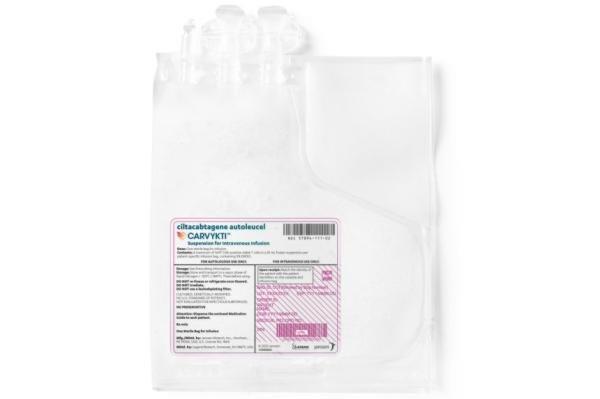
Ciltacabtagene autoleucel (Carvykti) — CAR-T therapy for multiple myeloma
What is ciltacabtagene autoleucel (Carvykti) in simple words
Ciltacabtagene autoleucel (Carvykti) — a personalised cell therapy made from the patient’s own immune cells.
Blood is drawn, immune cells are extracted and sent to a laboratory. There, they are modified to carry a new receptor that directs them specifically to a protein found on myeloma cells. The modified cells are grown and then returned to the patient. Once back in the body, they multiply and attack the myeloma.
This is not a drug that comes off a shelf. Each batch is made specifically for one person. The process takes several weeks. And unlike most treatments, it happens once — not repeatedly.
It is used when myeloma has returned after several prior treatments and the standard options are running out. The evidence in that setting is among the strongest seen for any treatment in this disease.
How ciltacabtagene autoleucel works
Myeloma cells carry a specific surface protein that serves as the target. The modified immune cells introduced by this treatment are engineered to recognise that protein and bind to it — then destroy the cell carrying it.
What makes this drug distinctive within its class: the receptor it carries has two separate binding points for the same target protein. That double attachment is thought to produce a stronger and more stable connection to myeloma cells than single-binding designs.
Clinical data supported this — response rates were notably high, including a substantial proportion of patients achieving no detectable disease by sensitive testing. In a population that had already been through multiple prior treatments, those numbers were significant.
What conditions this treatment is used for
Ciltacabtagene autoleucel is used in:
- multiple myeloma — after four or more prior lines of treatment;
- myeloma that has returned after prior therapy including specific drug classes;
- myeloma where prior treatment included drugs targeting blood vessel formation and immune system regulation.
The evidence base here is strong. In patients who had received multiple prior treatment lines, the response rate in clinical data was notably high, with a large proportion achieving no measurable disease. Responses lasted considerably longer than historical outcomes in this setting. That shifted how this therapy is viewed — not as a last resort, but as a genuine disease-modifying option.
When this treatment may be especially relevant
It tends to come up when:
- myeloma has returned after four or more prior treatments;
- the disease is not responding to current therapy;
- prior treatment included all three major drug classes used in myeloma;
- a bispecific antibody targeting the same myeloma protein has been used previously;
- the patient is fit enough to tolerate the treatment and recovery period.
The comparison with bispecific antibodies targeting the same surface protein comes up frequently. Both approaches aim at the same myeloma target. The key difference: this treatment is a one-time procedure that can produce deep and durable responses. Bispecific antibodies are ongoing treatment given regularly. Which approach fits a specific patient depends on disease pace, organ function, prior treatment history and what the patient can realistically manage.
What needs to be checked before starting treatment
Before this treatment is considered, the medical team will typically assess:
- confirmed myeloma and current disease status;
- expression of the target protein on myeloma cells — especially if prior therapy targeted the same protein;
- prior treatment history — which drugs were used and in what order;
- organ function — heart, lungs, liver, kidneys;
- neurological baseline — this treatment carries specific neurological risks;
- bone marrow reserve;
- active infections — these need to be resolved before starting;
- performance status.
The target protein status matters most in patients who have already received another treatment aimed at the same target. That protein can be reduced or lost after prior targeted therapy — which would affect how well this treatment works. I always check the current status rather than assuming it matches the original diagnosis.
Neurological baseline is the other assessment I take seriously before starting. This treatment can cause serious neurological effects — and knowing what the patient’s normal baseline looks like before treatment begins is essential for recognising change when it happens.
How treatment is carried out
The process has several stages. First, cells are collected from the patient’s blood — a procedure that takes several hours. Those cells are then sent for manufacturing, which takes around four to six weeks. During that wait, the patient may receive bridging treatment to keep the myeloma under control.
Before the modified cells are given back, the patient receives a short course of chemotherapy to prepare the immune environment. Then the cells are infused — once, as a single treatment.
After infusion, monitoring includes:
- close observation for immune activation reactions in the first days;
- neurological status — assessed frequently in the first two weeks;
- blood count — the immune system is temporarily depleted;
- liver function;
- infection surveillance — the risk is elevated for months after treatment;
- disease response assessment — through blood markers and bone marrow testing.
The first two weeks after infusion are the most demanding. Most patients spend this period hospitalised. Immune activation reactions and neurological effects are most likely to appear in this window. Having the medical team immediately available is not precautionary — it is what allows rapid response when reactions occur.
What patients may experience
- immune activation reaction — fever, blood pressure changes, difficulty breathing;
- neurological effects — confusion, difficulty speaking, movement problems;
- prolonged low blood counts — lasting weeks to months;
- elevated infection risk — bacterial, viral and fungal;
- reduced antibody levels — may require replacement treatment;
- fatigue;
- rarely — a delayed movement disorder that has been observed specifically with this treatment.
The delayed movement disorder — a pattern of neurological symptoms appearing weeks or months after treatment — has been reported with this treatment more than with some others in the same class. It is uncommon but worth monitoring for specifically. Any new movement difficulty, tremor or balance problem appearing after discharge should be reported promptly.
Low blood counts and infection risk persist for months after the acute phase. This is not a side effect that resolves at discharge. I explain this clearly before treatment starts — because the monitoring after leaving hospital is as important as the monitoring during the hospitalisation.
When to contact a doctor urgently
During and after treatment, contact the medical team immediately if:
- fever — at any point in the first months after treatment;
- confusion or difficulty thinking clearly;
- difficulty speaking or finding words;
- new tremor, movement problems or balance difficulty;
- difficulty breathing;
- significant drop in blood pressure;
- any sign of infection — including wounds that are not healing normally;
- sudden significant deterioration.
Fever after this treatment is never something to monitor at home. The immune system is suppressed for an extended period. What would be a mild infection in a healthy person can escalate rapidly. Same-day assessment — always.
Why this treatment is not right for everyone
What affects whether it is appropriate:
- fewer than four prior treatment lines — standard indications require this threshold;
- active severe infection — cannot proceed until resolved;
- organ function insufficient to tolerate the preparatory chemotherapy;
- neurological disease that complicates monitoring;
- disease progressing too rapidly during the manufacturing wait;
- poor performance status.
The manufacturing timeline is a real constraint. Four to six weeks is a long time when myeloma is active. For patients whose disease is moving very fast, a bispecific antibody targeting the same protein may be more immediately accessible. The choice between them is determined by disease pace and what time is realistically available.
Can this be combined with other treatments
The preparatory chemotherapy before infusion is part of the protocol — not optional. Bridging treatment during the manufacturing period is chosen individually based on disease pace and what has already been used.
After infusion, no additional treatment is given alongside this therapy. If the myeloma eventually returns, next steps depend entirely on the full prior treatment history at that point.
What ‘no quick response’ means
Response is assessed through blood markers and bone marrow testing at defined intervals after infusion. Some patients show rapid improvement. Others take longer for the response to deepen.
The goal — complete absence of detectable disease — sometimes takes several months to achieve even when the treatment is working. I always explain this before the assessment, so that an intermediate result is understood as a stage in the process rather than a failure.
Oncology consultation for ciltacabtagene autoleucel (Carvykti) in Israel
At Tel Aviv Medical Clinic in Israel, consultations are available on CAR-T cell therapy for myeloma — including ciltacabtagene autoleucel. Haematologists at the clinic follow ESMO and NCCN guidelines and have experience advising on whether this treatment is appropriate, how it compares to bispecific antibody options, and what the manufacturing and bridging logistics look like in practice.
In Tel Aviv Medical Clinic, you can discuss:
- whether this treatment fits your current disease status and prior treatment history;
- target protein status assessment before starting;
- comparison with bispecific antibody options for myeloma;
- bridging treatment planning during the manufacturing period;
- neurological and infection monitoring after treatment;
- second opinion on a proposed treatment plan.
Sometimes the most useful conversation is not about which treatment to choose — but about the realistic timeline and what to do if the disease moves faster than the manufacturing process allows.
Frequently Asked Questions — Dr. Stefanskoy
- How is this different from other CAR-T treatments for myeloma?
The target is the same — the surface protein on myeloma cells. The difference is in how the receptor that recognises that protein is designed. This treatment uses a receptor with two attachment points rather than one. That double-binding structure is thought to produce a more stable connection to myeloma cells.
Clinical data showed response rates and depth of response that were higher than what was seen with the earlier approved treatment in this class. Whether that translates into longer-lasting benefit over time — the follow-up data is still maturing. But the early signal was strong enough to make this the more frequently discussed option when both are available.
- What happens during the manufacturing wait?
The patient’s cells are at the laboratory. The myeloma is still present. Four to six weeks is a real clinical gap that needs active management.
Bridging treatment — a regimen the disease has not yet been exposed to — is given to hold the myeloma as stable as possible. I plan this before cells are even collected. The bridging plan is part of the treatment plan, not an afterthought.
- What is the delayed neurological effect specific to this treatment?
A pattern of movement difficulties — tremor, balance problems, changes in how the person walks — has been observed appearing weeks or months after treatment, after the acute phase has passed. It is uncommon but has been reported at a somewhat higher rate with this treatment than with some others in the same class.
I explain this specifically before treatment starts. After discharge, any new neurological symptom — however mild it seems — should be reported. Not observed at home. Reported. Early identification gives the best chance of managing it effectively.
- How long do low blood counts last after treatment?
It varies. Some patients recover within weeks. Others have low counts for several months, with elevated infection risk throughout. Some need replacement antibody therapy during recovery.
Regular monitoring continues for months after discharge. I always prepare patients for this extended phase before treatment starts — some of the most important decisions happen not during hospitalisation, but in the weeks after.
- Can this be used after a bispecific antibody targeting the same myeloma protein?
Sometimes — but the situation requires careful assessment. If the bispecific antibody reduced or eliminated the target protein from myeloma cells, this treatment loses some of its effectiveness. I check whether the protein is still present and at what level before discussing this as an option.
If the protein is still present, prior bispecific antibody use does not automatically rule out this treatment. The sequence and timing matter. This is a conversation that requires reviewing the full treatment history, not a yes-or-no answer based on a single data point.
- Is this available in Israel?
Yes. CAR-T cell therapy for myeloma is available in Israeli haematology centres with the infrastructure to manage the manufacturing coordination, preparatory treatment and post-infusion monitoring. The clinical experience exists.
If you want to understand whether this is the right next step for your specific situation — or whether a bispecific antibody option makes more practical sense given your disease status — a consultation is the right starting point.
Important information
Ciltacabtagene autoleucel (Carvykti) is a complex cell therapy considered only after full assessment of disease status, target protein expression, organ function, neurological baseline and overall patient condition.
Do not start, stop or change treatment without consulting your treating physician.
For a consultation in Israel:
📞 +972-73-374-6844
📧 [email protected]
💬 WhatsApp: +972-52-337-3108