


 Contact Us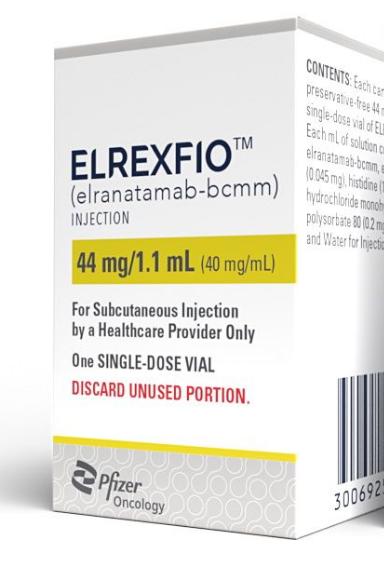
Elranatamab (Elrexfio) — immune treatment for multiple myeloma
What is elranatamab (Elrexfio) in simple words
Elranatamab (Elrexfio) is not a classic chemotherapy drug. It is a two-sided antibody used in multiple myeloma when earlier treatments have already done a lot of work and the disease is still active.
One side of the medicine recognises a marker often present on myeloma cells. The other side brings a T-cell close enough to react. That sounds neat on paper. In real life, the important question is whether the patient can safely handle that immune activation.
So Elrexfio is never chosen only because the name looks suitable. The timing, blood counts, infection risk, previous therapy and treatment logistics all matter.
How elranatamab works
Myeloma cells can carry a surface marker called BCMA. Elranatamab is built to hold that marker and, at the same time, engage CD3 on T-cells. It is a bridge. Not a permanent bridge, but enough to bring the immune cell into the same conversation as the cancer cell.
Once that contact happens, the T-cell may release signals and attack. This is the intended effect. The difficulty is that the same immune push can also cause fever, pressure changes, confusion, low oxygen or infections. This is why the first doses are handled carefully, step by step.
The mechanism is easy to describe. The clinical decision is not. A patient who has a quiet, slow myeloma picture is different from someone arriving with infections, weak marrow reserve or rapidly rising disease markers.
What conditions elranatamab is used for
Elrexfio is mainly discussed in adults with multiple myeloma after several important treatment groups have already been used. In practice, this may include:
- myeloma that has returned after earlier regimens;
- disease still moving despite major myeloma drug classes;
- previous exposure to anti-CD38 treatment;
- patients who are not going straight to CAR-T therapy;
- situations where an off-the-shelf immune option is being considered.
This list does not replace a treatment plan. It only explains where the conversation usually begins. The oncologist still needs to look at pace of disease, marrow function, kidney function, infection history and what happened with each previous treatment.
When elranatamab may be especially relevant
Elranatamab can become more relevant when myeloma has already been through several lines and the next choice needs to balance disease control with practical access to therapy.
It may be discussed when:
- standard combinations have already been used;
- the disease returned after a good initial response;
- CAR-T is delayed, unavailable or unsuitable;
- the patient can attend close early monitoring;
- the team has experience managing immune reactions.
I would not treat it as a simple “next drug” decision. With bispecific antibodies, the first weeks matter. The clinic has to be ready, and the patient has to understand why reporting symptoms early is not optional.
What needs to be checked before starting treatment
Before elranatamab is considered, the oncologist usually wants a very clear picture of where the patient stands today, not six months ago.
- current myeloma activity;
- blood counts and marrow reserve;
- kidney and liver function;
- calcium level and infection markers;
- recent imaging when clinically needed;
- previous treatments and why they stopped;
- current medicines, including steroids;
- history of serious infections;
- neurological symptoms before treatment.
One detail is easy to underestimate: infection risk. Many patients reaching this stage have already had long treatment histories. Their immune system may be tired before the new drug even starts. That changes the plan.
How treatment is carried out
Elranatamab is given as an injection under the skin. The first part is gradual. The dose is increased in steps so the team can see how the body reacts before moving to the full schedule.
During the early phase, doctors may use preventive medicines and observation rules. Some patients need hospital monitoring at the beginning, depending on local protocol and personal risk.
During treatment, the team follows:
- temperature and general condition;
- blood pressure and breathing;
- confusion, tremor or unusual sleepiness;
- blood counts;
- kidney and liver tests;
- infection signs;
- myeloma markers over time.
The schedule can look manageable. Still, the first weeks should not be treated casually. The safest results usually come when the patient and the clinic both know what to watch for.
Possible side effects
Elranatamab side effects are not the same as standard chemotherapy side effects. Some are linked to immune activation. Others come from the effect on blood cells and infection defence.
Possible problems include:
- fever or chills;
- tiredness;
- low blood counts;
- infections;
- headache or dizziness;
- nausea or poor appetite;
- injection-site irritation;
- confusion or speech changes;
- muscle or joint pain.
The most worrying reactions are usually early immune reactions and neurological changes. Many can be managed well if they are recognised quickly. Waiting at home because “it may pass” is the wrong instinct here.
When to contact a doctor urgently
During elranatamab treatment, the patient should contact the medical team quickly if something new feels wrong, especially in the first weeks.
Urgent contact is needed with:
- fever;
- shaking chills;
- shortness of breath;
- fainting or severe weakness;
- new confusion;
- trouble speaking;
- severe headache;
- signs of infection;
- rapid decline in general condition.
The point is not to panic over every symptom. The point is to avoid guessing. With this type of treatment, a small early symptom can be the first sign of something that needs fast attention.
Why elranatamab is not right for everyone
A medicine can be promising and still be the wrong choice for a particular patient. That is very true here.
The decision may change because of:
- active infection;
- very weak blood counts;
- poor general condition;
- recent severe immune reaction;
- uncontrolled neurological symptoms;
- very fast disease needing another approach;
- difficulty staying close to a treatment centre.
Sometimes the answer is “not now” rather than “never”. An infection may need treatment first. Counts may need support. Another option may be safer while the patient is unstable.
Can elranatamab be combined with other treatments
In routine discussion, elranatamab is often considered as a focused immune treatment rather than something casually added to several other strong agents. Combining therapies in late myeloma is not about being aggressive for the sake of it.
Doctors may still use supportive treatment around it: medicines to reduce reaction risk, infection prevention, transfusions, bone support or pain control. Those details matter. They can decide whether the patient actually gets through treatment safely.
If another anti-myeloma drug is being considered at the same time, the question should be simple: what is the evidence for this exact combination, and can this patient tolerate it?
What “no quick response” to treatment means
Myeloma markers do not always move in a straight line. Some patients show a clear drop. Others first stabilise. A few have early complications that make the first month hard to interpret.
With elranatamab, doctors usually read the response together with symptoms, blood work, infections, kidney function and the patient’s strength. A number on a lab report matters, but it is not the whole story.
If the disease is racing ahead clinically, waiting may not be safe. If the patient is stable and the markers are moving in the right direction, the team may give the treatment more time. Context decides.
Oncology consultation for elranatamab (Elrexfio) in Israel
At Tel Aviv Medical Clinic in Israel, a consultation can help clarify whether elranatamab belongs in the treatment discussion for a patient with advanced multiple myeloma. This is especially useful when the patient has already received several regimens and the next step is not obvious.
The consultation may cover:
- whether Elrexfio fits the current myeloma situation;
- how previous treatments affect the choice;
- whether CAR-T or another bispecific is more reasonable;
- infection and blood-count risks;
- what monitoring is needed early on;
- questions to take back to the treating oncologist.
We do not replace the local treating team. The goal is to make the reasoning clearer, especially when several modern myeloma options look similar from the outside.
Frequently Asked Questions — Dr. Stefanskoy
- Is elranatamab the same kind of treatment as CAR-T therapy?
No. Both use the immune system, but they are not the same experience for the patient. CAR-T requires collecting the patient’s cells, preparing them outside the body, and then giving them back. Elranatamab is ready-made and given as an injection.
That sounds easier, but it does not mean it is light treatment. The immune system can still react strongly. The first doses need real attention, not just a routine clinic visit.
- Why is BCMA important in myeloma treatment?
BCMA is one of the markers doctors can use to direct immune therapy toward myeloma cells. It is not the only thing that matters, but it gives the treatment a target.
I explain it to patients this way: the target helps the immune drug find the right area, but it does not guarantee success by itself. The condition of the marrow, previous therapies and infection risk still shape the result.
- When would you think about Elrexfio rather than another myeloma drug?
Usually when the disease has already passed through the major treatment groups and we need a different mechanism. I would also look at practical issues: can the patient come for monitoring, is there an active infection, how strong are the blood counts, and is CAR-T realistic at this moment?
The drug name alone is not enough. Two patients with the same diagnosis may need different next steps.
- What is the main safety concern in the first weeks?
The early concern is an inflammatory immune reaction and, less often, changes in the nervous system. Fever, unusual weakness, confusion, difficulty speaking or breathing symptoms should not be watched passively at home.
Most centres give very clear instructions before the first doses. I want patients and families to read them before treatment begins, not after something happens.
- Can elranatamab work if previous treatments failed?
It can. That is exactly why this type of treatment is discussed in later myeloma. But “previous treatments failed” is a broad phrase. A slow return after a long remission is different from disease that never really came under control.
I look at the pattern. How fast did the myeloma move? Which drugs helped? Which caused toxicity? That history tells us more than a simple list of names.
- How long does treatment continue?
There is no single answer that fits every patient. Treatment may continue while it is helping and while side effects remain acceptable. Sometimes the schedule changes after the early period according to the protocol and clinical response.
The bigger question is whether the patient is gaining meaningful control without losing too much strength or safety. That balance should be reviewed repeatedly, not assumed.
- What should a patient prepare before starting?
Bring a full treatment history, recent blood tests, infection history, current medicines and the latest myeloma markers. Also prepare practical details: who can bring you to the clinic, who can stay reachable after early doses, and how quickly you can get medical help if fever appears.
These practical questions sound ordinary. With elranatamab, they are part of the treatment plan.
Important information
The information on this page is for general medical reference only and does not replace a personal consultation with an oncologist. Elranatamab (Elrexfio) may be considered only after review of diagnosis, disease behaviour, previous treatment, laboratory results, infection risk and overall patient condition.
Do not start, stop or change treatment without speaking to your treating physician.
To arrange an oncology consultation regarding multiple myeloma treatment options in Israel:
📞 +972-73-374-6844
📧 [email protected]
💬 WhatsApp: +972-52-337-3108