


 Contact Us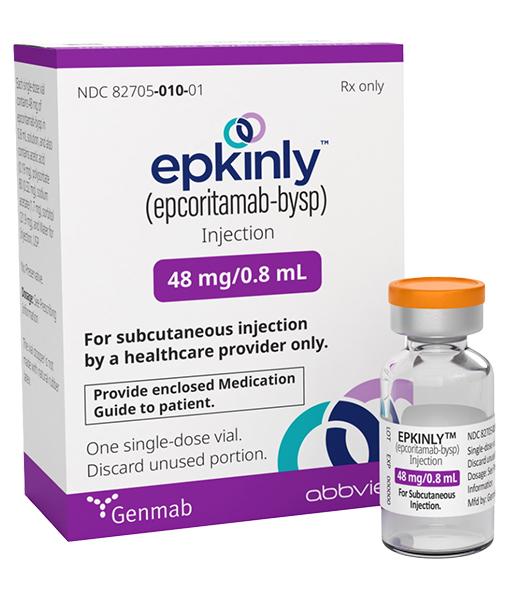
Epcoritamab (Epkinly) — bispecific therapy for B-cell lymphoma
What is epcoritamab (Epkinly) in simple words
Epcoritamab, sold as Epkinly, is used in certain B-cell lymphomas when earlier treatment has not given enough control. It is not classic chemotherapy. It is not a tablet. It is a small injection under the skin, but the idea behind it is quite active.
The drug helps create contact between a lymphoma B-cell and a T-cell. One part recognises CD20 on B-cells. Another part reaches CD3 on T-cells. The aim is to put the immune cell close enough to the lymphoma cell so that an attack can start.
That does not mean it is suitable for every patient with lymphoma. The subtype, previous treatments, CD20 status, tumour pace, infections and general strength all change the answer.
How epcoritamab works
Many B-cell lymphomas still show CD20 on the surface. T-cells, meanwhile, carry CD3. Epcoritamab is built to hold these two signals at the same time.
This is why it is called a bispecific antibody. It does not simply “mark” the lymphoma cell. It tries to bring the patient’s own T-cells into the fight.
The same mechanism also explains the caution around the first doses. When immune cells wake up quickly, the body can react with fever, shaking, low blood pressure, breathing difficulty or changes in alertness. Doctors often shorten this to CRS, and they watch carefully for it at the start.
The step-up schedule is there for a reason. It gives the immune system a slower entrance rather than a sudden push.
What conditions epcoritamab is used for
Epcoritamab is discussed mainly in B-cell lymphomas after previous systemic treatment. In real appointments, the exact history matters as much as the diagnosis name.
- diffuse large B-cell lymphoma after earlier therapy;
- large B-cell lymphoma that has changed from a slower lymphoma;
- high-grade B-cell lymphoma in selected cases;
- follicular lymphoma after several treatment lines;
- CD20-positive disease on recent pathology.
A patient who relapsed soon after treatment is different from someone who had years of control. A patient after CAR-T is different again. That is why the decision is never made from the name “lymphoma” alone.
When epcoritamab may be especially relevant
The drug becomes more relevant when standard options have already been used, but the lymphoma still carries a target that makes this type of immune approach possible.
- disease growth after two or more treatment lines;
- CD20 still present;
- CAR-T not possible or already used;
- need for a non-infusion option;
- patient can be monitored safely;
- infection risk is under control.
I would not describe epcoritamab as a simple “next drug”. It is a treatment that asks for planning. The early weeks decide a lot: where the patient is treated, how quickly they can reach care, and whether the team is ready for immune reactions.
What needs to be checked before starting treatment
Before epcoritamab is seriously considered, the oncologist needs the full lymphoma story, not just the latest scan.
- exact lymphoma subtype;
- CD20 result;
- PET-CT or CT findings;
- bone marrow status if relevant;
- previous treatment sequence;
- blood counts;
- liver and kidney function;
- infection screening;
- neurologic history;
- current performance status.
Practical details matter too. A person living alone far from a hospital may need a different safety plan than someone near the clinic with family support. With bispecific antibodies, logistics are part of medicine.
How treatment is carried out
Epcoritamab is given by subcutaneous injection. The beginning is gradual. The dose is increased in steps before the regular dose is reached.
Around the early doses, patients usually receive medicines to reduce the chance of fever and immune overreaction. The team checks temperature, blood pressure, breathing, strength and mental clarity. Sometimes observation in hospital is advised, especially near the first full dose.
During treatment, monitoring usually includes:
- full blood count;
- blood chemistry;
- liver tests;
- infection signs;
- neurologic symptoms;
- PET-CT or CT response checks.
Later the routine may become easier, but it is still not a casual treatment. Low blood counts, infections, fatigue and delayed reactions can still interrupt the plan.
Possible side effects
The side effects of epcoritamab are linked to immune activation and to the fact that many lymphoma patients already have a weakened blood system.
- fever or chills;
- early immune reaction;
- tiredness;
- low white cells;
- anaemia or low platelets;
- infections;
- headache or confusion;
- nausea;
- injection-site reaction;
- temporary tumour-area swelling.
A fever after a dose should not be treated as “probably nothing”. It may be minor. It may also be the first sign of a reaction that needs quick attention. Timing is important.
When to contact a doctor urgently
During the first weeks, I prefer an early call over late bravery. Patients who have already been through several treatments sometimes try to tolerate too much at home. That is risky here.
- temperature above 38°C;
- new confusion;
- severe dizziness;
- shortness of breath;
- chest pressure;
- fast worsening weakness;
- seizure;
- severe headache;
- signs of infection;
- rapid swelling near tumour sites.
Most problems are easier to manage when the team hears about them early. Waiting until the next scheduled visit can turn a manageable issue into an emergency.
Why epcoritamab is not right for everyone
A promising drug is still not the same as the right drug. Some lymphoma situations need another approach first.
- very weak general condition;
- active serious infection;
- high neurologic risk;
- severe organ dysfunction;
- very fast tumour progression;
- no safe monitoring access.
Sometimes the lymphoma is moving so quickly that the first goal is immediate disease reduction. Sometimes the patient needs infection treatment before any immune therapy. Sometimes CAR-T, an antibody-drug conjugate or a different regimen fits better. The sequence matters.
Can epcoritamab be combined with other treatments
Combination treatment is possible in selected lymphoma plans, but it is not something I would add lightly. More treatment can also mean more infections, more low blood counts and more interruptions.
A good plan is not the longest plan. It is the plan with a clear reason. If epcoritamab is combined with another medicine, the question should be simple: what does the second drug add for this patient, at this point, that is worth the extra risk?
What “no quick response” to treatment means
With lymphoma, early impressions can be misleading. Symptoms may improve before the scan looks convincing. Or a scan may look better while the patient still feels tired and fragile.
There can also be short-term swelling around involved areas when immune cells move into the tissue. That does not prove success. It also does not automatically mean failure. The oncologist looks at the full pattern: symptoms, blood tests, imaging and time.
One result rarely tells the whole story. The direction over several weeks matters more.
Oncology consultation for epcoritamab (Epkinly) in Israel
At Tel Aviv Medical Clinic in Israel, patients can receive a second opinion on whether epcoritamab belongs in their lymphoma treatment plan. This is especially useful after several previous therapies, after CAR-T discussion, or when the next step is unclear.
A consultation may help with:
- reviewing lymphoma subtype and CD20 status;
- checking whether epcoritamab fits now;
- comparing it with CAR-T;
- planning tests before treatment;
- understanding CRS and neurologic risks;
- getting a second opinion on sequencing.
The goal is not to force the choice of one medicine. The goal is to understand the safest and most reasonable next step.
Frequently Asked Questions — Dr. Stefanskoy
- Is epcoritamab the same as rituximab?
No. The two drugs both involve CD20, so patients often compare them. But the treatment idea is different. Rituximab helps the immune system recognise B-cells. Epcoritamab goes further and tries to bring T-cells directly into contact with the lymphoma cell.
That is why the first doses feel more controlled and more watched. We are not only thinking about an allergic-type infusion reaction. We are also watching for a broader immune reaction and for neurologic symptoms.
- Why is the first cycle so important?
Because the immune system is being invited to react. Most reactions are manageable when noticed early, but the first cycle is when the body is learning the treatment.
This is why there is step-up dosing, premedication and very clear instructions about fever. I do not want patients deciding alone at home whether a temperature is “serious enough”. With this drug, it is better to call too early than too late.
- Can epcoritamab be used after CAR-T therapy?
Sometimes. After CAR-T, I want to know what happened: how deep the response was, how long it lasted, how the blood counts recovered and whether CD20 is still present on the lymphoma cells.
A patient who relapsed quickly after CAR-T is not the same as someone who had a long remission. The answer depends on the whole story, not just on the fact that CAR-T was already done.
- Does treatment always require hospital admission?
Not for the whole course. Epcoritamab is given under the skin and much of the treatment can be outpatient. The early doses are different. Some patients need hospital observation around the first full dose or during the riskier part of the schedule.
This is not a formality. If fever, blood pressure changes or confusion appear, the team needs to react quickly. Distance from hospital and support at home matter a lot.
- What symptoms should a patient never ignore?
Fever comes first. Confusion, severe weakness, breathlessness, dizziness and chest pressure also need quick contact with the medical team.
Patients with lymphoma are often used to feeling unwell, so they may normalise symptoms. I usually tell them: during the first weeks of epcoritamab, do not judge alone. Report it, and let the team decide.
- How soon can we know whether it is working?
Usually not after one dose. We follow symptoms, blood results and imaging. Sometimes the patient feels a little better before the scan gives a clear answer. Sometimes the scan needs more time.
I avoid promising a fixed timeline. Lymphoma can be fast, and immune-based treatment does not always show its direction immediately. The trend is what matters.
- What if the lymphoma is growing very quickly?
Then the decision becomes more urgent. If there is organ pressure, severe pain, dangerous blood results or rapid clinical decline, another treatment may be needed first.
Epcoritamab may still be relevant later, but the safest treatment today is not always the most attractive treatment on paper. That distinction is important.
- Are there other options if epcoritamab is not suitable?
Yes. Depending on the subtype and previous treatments, options may include CAR-T therapy, other bispecific antibodies, antibody-drug conjugates, chemotherapy-based treatment, targeted medicines or clinical trials.
The useful question is not “is there another drug?” There usually is. The useful question is which option gives the best balance between lymphoma control and risk for this specific patient now.
Important information
This page is for general medical information only. It is not a prescription, a treatment plan or a replacement for consultation with a treating haematologist or oncologist. Epcoritamab may only be considered after review of diagnosis, disease course, pathology, imaging, blood tests and the patient’s general condition.
Do not start, stop or change cancer treatment without medical supervision.
To arrange an oncology consultation regarding lymphoma treatment and the possible use of epcoritamab in Israel:
📞 +972-73-374-6844
📧 [email protected]
💬 WhatsApp: +972-52-337-3108