


 Contact Us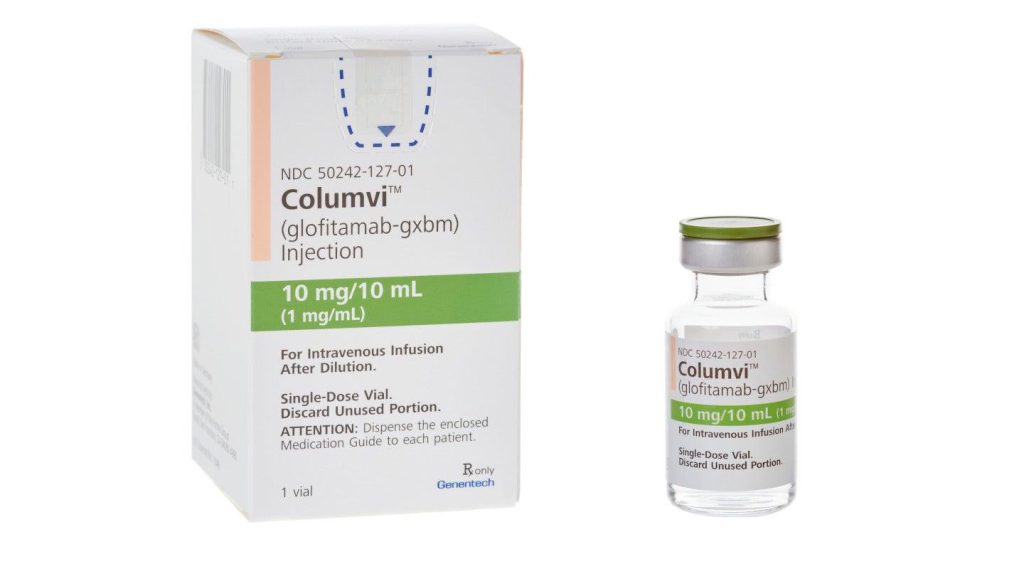
Glofitamab (Columvi) — immunotherapy for lymphoma treatment
What is glofitamab (Columvi) in simple words
Glofitamab (Columvi) is a treatment for some B-cell lymphomas when the usual earlier options have not held the disease for long enough.
It is not chemotherapy. It works more like a connector. One part recognises a mark on the lymphoma cell. Another part reaches a T-cell, one of the immune cells that can attack cancer.
The idea is simple. The actual treatment is not casual. Early doses are handled step by step because the immune system can react strongly at the beginning.
How glofitamab works
Many B-cell lymphomas carry CD20. T-cells carry CD3. Glofitamab is made to bring those two sides close together.
Once the T-cell is brought into that position, it may act against the lymphoma cell more effectively. That is the benefit the doctor is looking for.
The same immune push can also cause trouble. Fever, chills, pressure drops or breathing symptoms after an infusion are not ignored. They may be part of cytokine release syndrome, and the team needs to know early.
What conditions glofitamab is used for
This treatment is usually discussed in adults with fast-growing B-cell lymphoma after two previous treatment attempts have already been used.
- DLBCL;
- high-grade B-cell disease;
- follicular lymphoma that has changed into a faster form;
- selected CD20-driven lymphoma cases.
A diagnosis on paper is not enough. The doctor has to look at the biopsy, the scan, the speed of relapse and the patient’s strength before saying whether Columvi makes sense.
When glofitamab may be especially relevant
Columvi tends to be considered when the lymphoma is still active after standard treatment and the next move needs to be chosen carefully.
- return of disease after earlier treatment;
- growth despite recent therapy;
- CD20 still seen on pathology;
- CAR-T is not available or not suitable;
- a fixed course is preferred.
Two patients with the same lymphoma name can need different plans. One may be heading toward CAR-T. Another may need treatment sooner. A third may be too fragile for a very intensive route. That is why sequencing matters.
What needs to be checked before starting treatment
Before a decision is made, the oncologist usually wants the full clinical picture, not only the drug name.
- biopsy report;
- CD20 result;
- PET-CT or CT;
- previous treatment list;
- blood counts;
- liver and kidney tests;
- infection history;
- neurological symptoms;
- general fitness.
Tumour burden is important too. Bulky disease can make the first immune reaction more difficult. That may affect where early doses are given and how long the patient is observed afterwards.
How treatment is carried out
Glofitamab is given through a vein. The start is gradual, not full dose on day one. This is done to reduce the chance of a sudden immune reaction.
Some patients are watched for several hours after the first infusions. Others may need hospital-level monitoring. The choice depends on disease burden, symptoms, blood results and previous reactions.
Treatment is followed with clinical review, blood tests and imaging. If toxicity appears, the schedule can be delayed or adjusted.
The team usually follows:
- temperature;
- blood pressure;
- breathing;
- blood counts;
- liver tests;
- infection signs;
- neurological changes;
- scan results.
Possible side effects
Side effects are linked not only to the medicine itself, but also to the immune response it can trigger.
- fever;
- chills;
- low blood pressure;
- shortness of breath;
- fatigue;
- rash;
- infections;
- low blood counts;
- headache;
- confusion.
The early reaction after infusion is the one patients are warned about most clearly. It can be mild. It can also become serious. New confusion, shaking, speech problems or unusual sleepiness need quick medical contact, even if the symptoms seem to come and go.
When to contact a doctor urgently
Call the treating team promptly if symptoms appear after treatment and feel more than mild.
- fever above 38°C;
- shaking chills;
- new breathlessness;
- faintness;
- confusion;
- severe headache;
- speech difficulty;
- chest discomfort;
- rapid weakness;
- infection symptoms.
With bispecific antibody treatment, early reporting is part of safety. Waiting at home can turn a manageable problem into a complicated one.
Why glofitamab is not right for everyone
Not every patient with lymphoma should receive Columvi. Sometimes the risk around the first doses is too high. Sometimes another treatment should come first.
- uncontrolled infection;
- very poor performance status;
- unclear CD20 result;
- high CRS risk;
- unstable breathing or heart problems;
- significant neurological concerns.
The doctor is not only asking whether the lymphoma fits the medicine. The real question is whether this patient, at this point, can go through the treatment safely and still gain enough benefit.
Can glofitamab be combined with other treatments
In everyday decisions, glofitamab is usually treated as a defined lymphoma treatment course. It is not simply added to anything that came before.
Combination studies exist, and this area is moving. Still, more drugs do not automatically mean a better plan. They can also mean more infection risk, more blood-count problems and more interruptions.
A good plan is the one that fits the disease history, not the one with the longest list of medicines.
What “no quick response” to treatment means
Lymphoma response is not always clear in the first days. A patient may feel feverish after treatment because the immune system has reacted, because there is infection, or because the lymphoma is still active.
That is why the doctor reads the whole picture: symptoms, blood work, PET-CT and the speed of change. One number or one swollen node rarely tells the full story.
If the patient is stable, the team may wait for the planned scan. If things are moving in the wrong direction, the plan has to be reassessed sooner.
Oncology consultation for glofitamab (Columvi) in Israel
At Tel Aviv Medical Clinic in Israel, patients can review whether glofitamab belongs in their lymphoma treatment plan. This is often useful when earlier treatment has failed and the next option is not obvious.
The consultation focuses on sequence. What has been tried? What is still reasonable? Is CAR-T still on the table? Is Columvi safer, faster or more realistic in this case?
A consultation may help if you need to:
- review pathology;
- check CD20 status;
- discuss Columvi suitability;
- compare with CAR-T;
- plan after relapse;
- assess early-dose safety;
- get a second opinion.
We do not replace your treating oncologist. We help clarify the reasoning so the next decision is not made blindly.
Frequently Asked Questions — Dr. Stefanskoy
- Is glofitamab the same as CAR-T therapy?
No. The aim is related, but the method is different. CAR-T treatment takes the patient’s own immune cells, changes them outside the body and returns them. Glofitamab is an antibody infusion. It tries to bring existing T-cells close to lymphoma cells inside the body. In practice, this difference matters for timing, risk and logistics.
- Why does treatment start gradually?
Because the first immune reaction can be strong. A full start would raise the chance of fever, pressure changes and breathing problems. Step-up dosing gives the team a safer way to introduce the drug. It does not remove the risk, but it makes the start more controllable.
- How important is CD20?
Very important. Glofitamab needs CD20 on the lymphoma cell to make sense. I prefer to see the pathology report myself, especially if the patient has already had several treatments. Lymphoma can change, and old information is not always enough for a new decision.
- Can it be used after CAR-T?
Sometimes it can be discussed after CAR-T, but not as an automatic rule. The timing of relapse, disease volume, blood counts and infections all matter. If the lymphoma returned slowly after a good response, the conversation is different from rapid progression during treatment.
- How soon will doctors know if it is working?
Usually not immediately. Early symptoms tell us about safety more than response. PET-CT is often used later to judge the lymphoma. I do not like making big decisions from one isolated sign. The scan, the patient’s condition and the blood work need to be read together.
- What symptom should not be ignored?
Fever after an infusion should be reported. So should confusion, unusual sleepiness, shaking, speech difficulty or breathing trouble. These symptoms may pass, but that does not make them harmless. With this treatment, the safest habit is to call early.
- Is Columvi only a last-resort drug?
I would not use that phrase. It is generally discussed after earlier systemic treatment, but the real issue is sequence. For one patient the next best step may be CAR-T. For another it may be glofitamab. For someone else it may be a trial or a different systemic option.
- What should I bring to the consultation?
Bring the biopsy report, scan results, a list of all previous therapies and notes about response. Blood tests and hospital letters are also useful. Without this information, the doctor can only speak generally. With it, the discussion becomes practical.
Important information
This page is for general medical orientation only. It is not a personal treatment recommendation.
Glofitamab (Columvi) may be considered only after review of diagnosis, pathology, previous treatment, current scans, blood tests and overall condition.
Do not start, stop or change lymphoma treatment without your treating physician.
To arrange an oncology consultation regarding glofitamab and lymphoma treatment in Israel:
📞 +972-73-374-6844
📧 [email protected]
💬 WhatsApp: +972-52-337-3108