


 Contact Us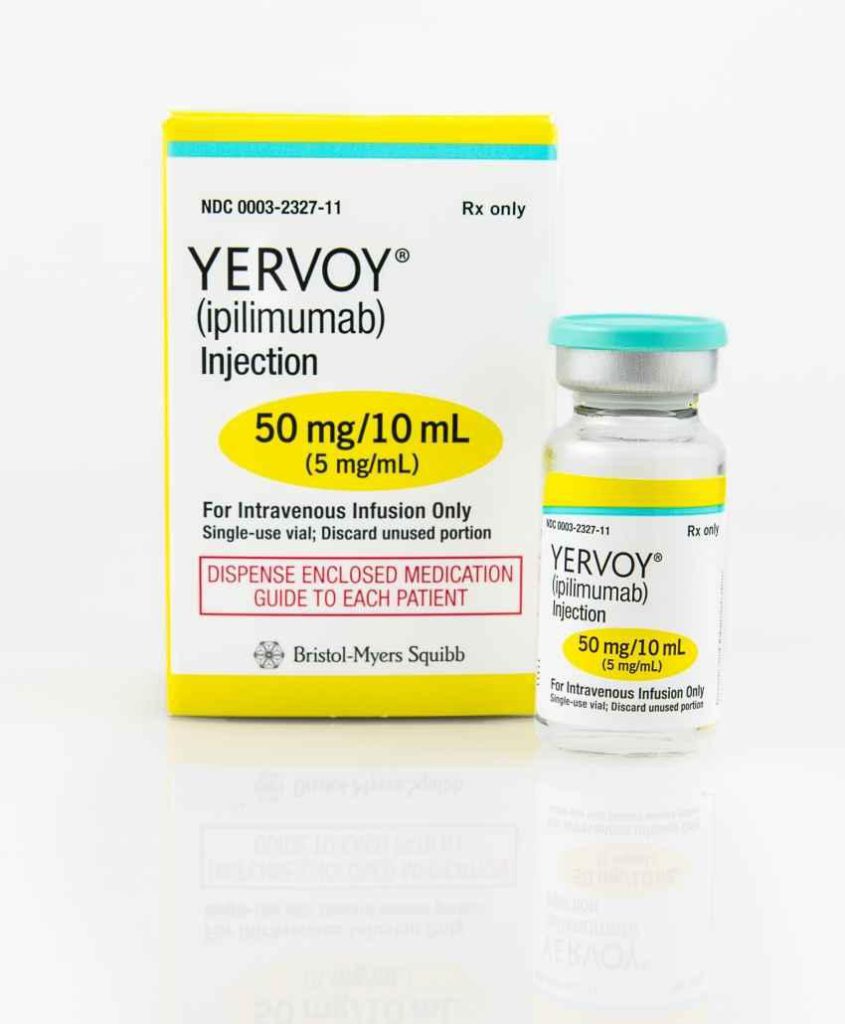
Ipilimumab (Yervoy) — immunotherapy for selected cancers
What ipilimumab is in simple words
Ipilimumab, sold as Yervoy, is an immunotherapy medicine. It does not work like a classic chemotherapy drug and it does not try to poison the tumour directly.
Its role is different: it pushes the immune system out of one of its “brakes”. In some people, that extra immune push helps the body recognise cancer more clearly and keep attacking it for longer.
This can be useful in several cancers, especially melanoma. Still, it is not a universal option. The diagnosis, the stage, previous treatment and the patient’s general condition all matter.
How ipilimumab works
T-cells are immune cells that can attack abnormal cells. But they also have safety switches, because an uncontrolled immune system can damage healthy tissue.
One of these switches is called CTLA-4. Ipilimumab blocks that signal. After the block is lifted, T-cells may become more active and more able to take part in an anti-cancer response.
That sounds simple on paper. In real practice, the effect is more complex. Some tumours respond well. Others do not. The same medicine can be useful for one patient and wrong for another, even when the cancer name looks similar.
What conditions ipilimumab is used for
Yervoy may be discussed in several clinical settings, most often in cancers where immune treatment has a real role. The main examples include:
- melanoma that cannot be managed by surgery alone;
- melanoma after surgery when the risk of return is high;
- kidney cancer in selected combination treatment plans;
- certain forms of colorectal cancer with mismatch-repair problems;
- some lung cancer treatment strategies;
- pleural mesothelioma in selected cases;
- liver cancer in certain later-line settings.
The cancer name is only the starting point. The real question is whether the patient fits the exact clinical picture where this treatment makes sense.
When ipilimumab may be especially relevant
Ipilimumab is often considered when the goal is to create a deeper immune response rather than a quick, short-lived tumour shrinkage. It may be used alone in some settings, but very often it is discussed as part of a combination, especially with nivolumab.
It can be relevant when:
- melanoma has spread or returned;
- a stronger immune approach is needed;
- nivolumab plus ipilimumab is being compared with single-drug immunotherapy;
- previous treatment did not give enough control;
- the patient is fit enough for a more demanding immune regimen.
The last point is important. More immune activity can also mean more immune toxicity. A stronger plan is not automatically a better plan.
What should be checked before treatment
Before starting Yervoy, the oncologist usually looks beyond the diagnosis written on the report. Several details can change the decision:
- exact cancer type and stage;
- previous treatments and how the cancer behaved;
- CT, PET-CT, MRI or other recent imaging;
- liver, kidney and thyroid blood tests;
- general blood count;
- history of autoimmune disease;
- current steroid or immune-suppressing medicines;
- daily activity level and overall strength.
Why so much checking? Because ipilimumab can wake up the immune system in a way that is useful against cancer, but sometimes troublesome for normal organs. It is better to know the risks before the first infusion, not after a complication appears.
How treatment is usually given
Ipilimumab is given as an intravenous infusion. The schedule depends on the cancer, the dose, and whether it is used alone or together with another immunotherapy medicine.
During treatment, the team usually follows:
- blood tests before planned doses;
- liver and thyroid function;
- bowel symptoms;
- skin changes;
- breathing symptoms;
- scan results after several weeks or cycles.
The first scan is not always the final answer. With immunotherapy, doctors often look at the whole picture: symptoms, blood tests, imaging and the speed of change. One image rarely tells the entire story.
Possible side effects
Ipilimumab has its own pattern of side effects. They are not the same as chemotherapy side effects. The main concern is inflammation caused by an overactive immune response.
Possible reactions include:
- diarrhoea or bowel inflammation;
- skin rash or itching;
- liver test changes;
- thyroid or other hormone changes;
- tiredness that feels unusual;
- cough or shortness of breath;
- headache or vision changes;
- joint or muscle pain;
- fever or general flu-like symptoms.
Many problems can be controlled if they are recognised early. Waiting “to see what happens” is not a good strategy with this medicine. A small symptom can sometimes be the first sign of immune inflammation.
When to contact the doctor urgently
During treatment with Yervoy, it is better to call early if something feels wrong. Urgent contact is especially important if there is:
- watery diarrhoea that repeats or gets worse;
- blood in the stool;
- new or worsening shortness of breath;
- yellowing of the skin or eyes;
- severe headache or confusion;
- new visual disturbance;
- high fever;
- rapidly increasing weakness;
- a widespread or painful skin reaction.
Not every symptom means a serious complication. But with CTLA-4 immunotherapy, the safer approach is to check quickly. Early treatment of immune side effects is usually much easier than late treatment.
Why ipilimumab is not suitable for everyone
Yervoy can be a powerful option, but it is also a demanding one. Some patients benefit from a different immunotherapy plan, a targeted drug, chemotherapy, radiation, surgery, or a clinical trial.
Reasons for caution may include:
- active autoimmune disease;
- poorly controlled inflammatory bowel disease;
- serious liver problems;
- need for high-dose steroids;
- frail general condition;
- previous severe immune toxicity.
This does not always mean the medicine is impossible. It means the risk-benefit balance has to be discussed carefully. Sometimes a safer plan is the smarter plan.
Can ipilimumab be combined with other treatments
Yes. In several cancers, ipilimumab is used together with another immunotherapy medicine. The best-known partner is nivolumab. The idea is not simply to “make treatment stronger”. The two medicines affect different immune checkpoints, so the immune response can become broader.
But combinations also increase the chance of immune side effects. This is why the oncologist looks at age, performance status, organ function, disease tempo and patient priorities before choosing such a plan.
What “no quick response” may mean
Some patients expect the tumour to shrink immediately. Immunotherapy does not always behave that way. A scan can show stability first, and only later a clearer response. Sometimes the picture is mixed: one area improves, another is slower.
The doctor usually compares more than one point in time. Symptoms, blood work and scan dynamics matter together. A single early scan can be frightening, but it may not be enough to judge the full value of the treatment.
Oncology consultation about ipilimumab in Israel
At Tel Aviv Medical Clinic, a consultation can help clarify whether ipilimumab or a combination containing Yervoy is reasonable in a specific case. The discussion is usually most helpful when the patient already has pathology reports, recent scans and a list of previous treatments.
The consultation may help to:
- understand whether Yervoy fits the diagnosis and stage;
- compare single-agent and combination immunotherapy;
- review previous treatment and current scans;
- assess the risk of immune-related side effects;
- prepare questions for the treating oncologist;
- consider treatment options in Israel.
We do not replace the treating doctor and do not start treatment by message. The goal is to explain the medical logic and make the next decision clearer.
Frequently asked questions — Dr. Stefansky answers
- Is Yervoy the same as nivolumab or pembrolizumab?
No. They are all immunotherapy medicines, but they do not block the same checkpoint. Nivolumab and pembrolizumab work on PD-1. Ipilimumab works on CTLA-4, which is involved earlier in T-cell activation.
This difference matters. CTLA-4 blockade can add depth to the immune response, especially in combination treatment. At the same time, it can bring more immune-related side effects. So the question is not which drug sounds newer, but which immune strategy fits the patient.
- Why is ipilimumab often combined with nivolumab?
The combination is used because the two medicines act on different immune brakes. For some cancers, this can create a stronger and more durable response than one medicine alone.
But I always explain the other side as well. Combination treatment is more intense. Diarrhoea, liver inflammation, hormone problems and skin reactions are more common than with a single PD-1 drug. A patient must be fit enough for that risk to be reasonable.
- How soon can doctors tell if ipilimumab is working?
Usually not after the first infusion. The first meaningful assessment often comes after several weeks, with scans and blood tests. Sometimes the disease stabilises before it shrinks. Sometimes the early picture is unclear.
I do not like making final conclusions from one scan unless the clinical situation is obviously worsening. With immunotherapy, the trend matters: how the patient feels, what the scans show over time, and whether symptoms are improving or not.
- What side effect worries doctors the most?
There is no single symptom to watch, because immune inflammation can affect different organs. For ipilimumab, bowel inflammation is one of the classic concerns, so repeated diarrhoea should never be ignored.
The liver, skin, lungs and hormone glands also need attention. The safest rule is simple: any new symptom that is persistent, unusual or getting worse should be reported. Early treatment often prevents a manageable problem from becoming serious.
- Can a patient with autoimmune disease receive Yervoy?
Sometimes, but this is a careful discussion. If the immune system is already attacking normal tissue, stimulating it further may trigger a flare. The risk depends on the autoimmune diagnosis, how active it is, and what medicines the patient takes now.
In some mild and stable cases, treatment may still be considered with close monitoring. In severe or active disease, a different approach may be safer. I would not decide this from the cancer diagnosis alone.
- Is ipilimumab used only for melanoma?
Melanoma is the setting most people know, but it is not the only one. Ipilimumab can also be part of treatment discussions in kidney cancer, some lung cancer settings, mesothelioma, certain colorectal cancers and a few other situations.
Still, the exact indication matters. The same word “cancer” is too broad. The pathology report, stage, biomarkers and previous therapy determine whether Yervoy is relevant or just an idea that sounds attractive on paper.
- What happens if side effects appear during treatment?
The first step is to tell the oncology team quickly. Depending on the symptom, the doctor may order blood tests, imaging, stool tests, hormone tests or a clinical examination. Sometimes treatment is paused. Sometimes anti-inflammatory medicines are needed.
Stopping and restarting immunotherapy is a medical decision. Patients should not manage immune toxicity alone at home. With ipilimumab, timing matters: early reporting can protect both safety and the chance to continue treatment later.
Important information
This page gives general medical information and cannot replace a personal oncology consultation. Ipilimumab (Yervoy) may be used only after an oncologist reviews the diagnosis, stage, previous treatment, test results, organ function and overall condition.
Do not start, stop or change cancer treatment without speaking with the treating doctor.
For consultation about immunotherapy options in Israel:
📞 +972-73-374-6844
📧 [email protected]
💬 WhatsApp: +972-52-337-3108