


 Contact Us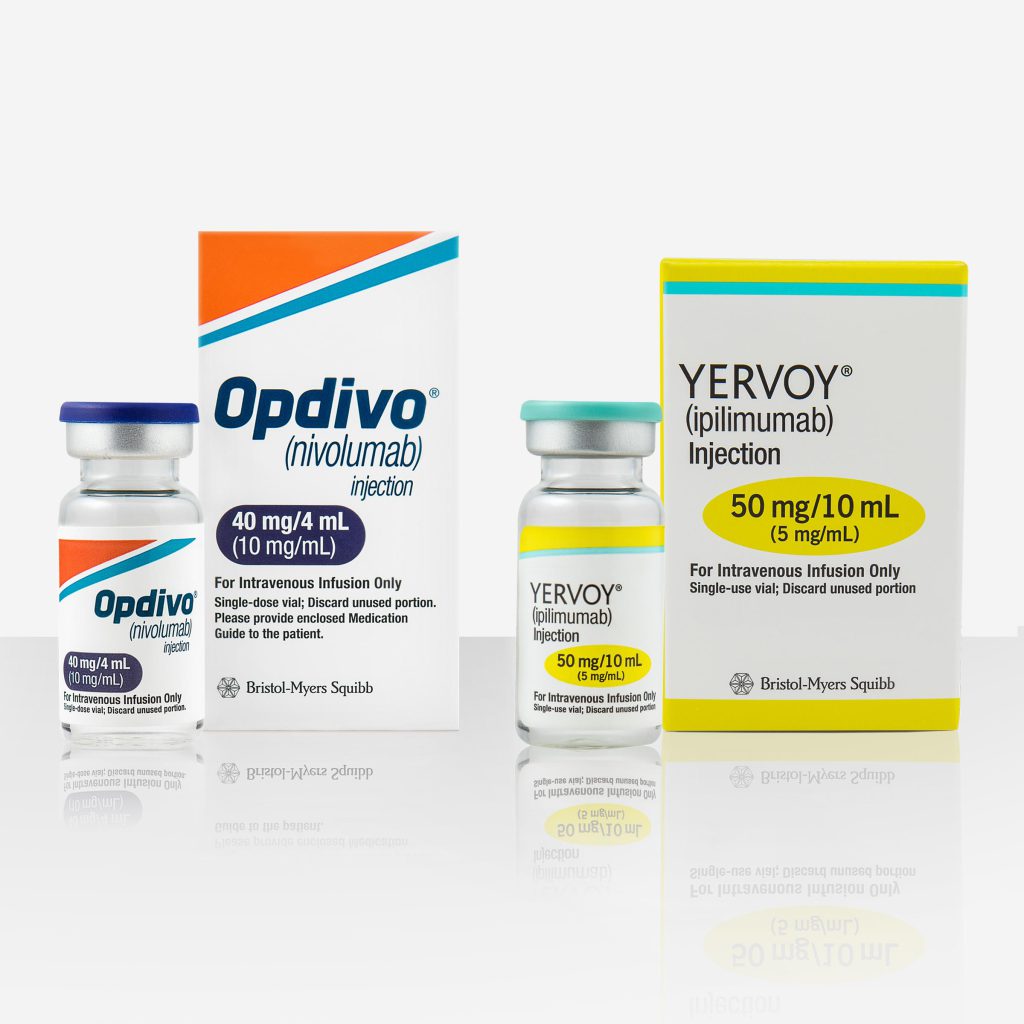
Nivolumab + Ipilimumab — combination immunotherapy for advanced cancer
What is nivolumab + ipilimumab in simple words
Nivolumab + ipilimumab — an immunotherapy regimen that uses two drugs at once, each targeting a different immune checkpoint.
Here is the basic idea. Tumours use multiple signals to stay hidden from the immune system. One drug is often not enough to disrupt all of them. Nivolumab addresses one pathway, ipilimumab addresses another. Together they remove more of the brakes the tumour relies on.
Whether that added disruption helps — and whether the body can tolerate it — depends on the specific cancer and the patient. This is not a universally better approach. It is a more intensive one, with more potential benefit and more risk.
How this combination works
Nivolumab targets PD-1, a receptor on immune cells. Ipilimumab targets CTLA-4 — a different checkpoint that acts earlier in the immune activation process. Blocking both at the same time produces a broader immune response than either drug alone.
In practice, this also means the immune system can overshoot more easily. Inflammatory reactions that are manageable with one drug become more frequent and more severe with two.
That is the fundamental trade-off with this regimen. More immune activation. More toxicity. The clinical question is always whether a given patient can benefit enough to justify that.
What conditions it is used for
Nivolumab and ipilimumab together are used in:
- advanced melanoma;
- kidney cancer;
- non-small cell lung cancer;
- mesothelioma;
- colorectal cancer with MSI-H or dMMR features;
- hepatocellular carcinoma in selected settings.
Melanoma is where this approach has the longest track record. Ten-year follow-up data showed nearly half of patients treated with this combination still alive — a figure that would have seemed unrealistic not long before. For kidney cancer, the combination outperformed the previous standard in patients with intermediate or poor prognostic features.
The same diagnosis in two different patients can lead to two completely different decisions. Stage, prior treatment, biomarkers and the patient’s overall health all factor in.
When this combination may be especially relevant
It tends to come up in these situations:
- first-line treatment for advanced melanoma without prior immunotherapy;
- kidney cancer — intermediate or poor prognostic risk group;
- lung cancer without driver mutations, in specific biomarker subgroups;
- MSI-H colorectal cancer;
- unresectable mesothelioma — first-line.
Sometimes the decision is made right after diagnosis. Sometimes it comes after another treatment has stopped working. The reasoning behind choosing this combination differs significantly depending on which of those situations applies.
What needs to be checked before starting
Before this combination is seriously discussed, the oncologist will want to review:
- tumour type and histology;
- disease stage;
- imaging — CT, PET-CT or MRI;
- PD-L1 expression;
- MSI-H / dMMR status;
- driver mutations in lung cancer — EGFR, ALK, BRAF;
- prognostic risk score in kidney cancer;
- cardiac function — baseline ECG and troponin;
- liver and kidney function;
- autoimmune history;
- performance status.
Cardiac assessment is more important here than with single-agent immunotherapy. Myocarditis — immune-related inflammation of the heart muscle — is rare but has a high fatality rate when it occurs. It happens more often with dual checkpoint blockade. I check cardiac function before recommending this combination. Every time.
How treatment is carried out
Both drugs are given together by intravenous infusion, every three weeks for four cycles. After that, nivolumab continues alone — every four weeks — until progression or toxicity.
Monitoring during treatment:
- blood count and full chemistry at every visit;
- liver enzymes — tracked closely;
- thyroid function at regular intervals;
- kidney function;
- cardiac markers if symptoms suggest involvement;
- imaging to assess response.
The induction phase — the first four cycles with both drugs — is where most serious reactions occur. Monitoring is more intensive during this period. After switching to nivolumab alone, things generally become more manageable.
Possible side effects
Side effects that may appear:
- fatigue — often significant;
- skin rash and itching;
- diarrhoea or immune-related colitis;
- thyroid dysfunction;
- lung inflammation;
- elevated liver enzymes;
- joint and muscle pain;
- hormonal disturbances;
- nausea;
- rare but serious: myocarditis, neurological involvement.
Serious immune-related events occur in roughly half of patients on this combination — compared to about a fifth on nivolumab alone. That gap is real and it matters for patient selection.
Most reactions respond to corticosteroids when caught early. The ones that become dangerous are almost always the ones that went unreported. I tell patients at the first visit: if something feels off and does not resolve in a day or two — call. Not at the next appointment. Call.
When to contact a doctor urgently
Do not wait if any of these appear:
- new or worsening shortness of breath;
- chest pain or irregular heartbeat;
- severe or rapidly worsening diarrhoea;
- blood in the stool;
- yellowing of the skin or eyes;
- high fever;
- confusion or rapidly increasing weakness;
- sudden significant deterioration.
With this particular combination — early is always better. Always.
Why this combination is not right for everyone
What affects the decision:
- active severe autoimmune disease;
- prior organ transplant;
- poor performance status;
- significant cardiac or pulmonary disease;
- driver mutations in lung cancer — targeted therapy takes priority;
- favourable-risk kidney cancer — less intensive options may be more appropriate.
Sometimes nivolumab alone is the right call. Lower toxicity, still meaningful benefit. The decision to add ipilimumab always has to be weighed against what the patient can realistically tolerate.
More intensive is not the same as more effective. That is worth saying plainly.
Can it be combined with other treatments
In some protocols, chemotherapy is added alongside the combination for the first few cycles — particularly in certain lung cancer regimens. In most other indications, nivolumab and ipilimumab are given without additional systemic treatment.
Each addition brings its own risk profile. The decision to add further treatment is clinical — built on what the evidence actually supports for the specific diagnosis.
What ‘no quick response’ means
Immune responses build over weeks. Early scans can look ambiguous or even suggest growth before shrinkage becomes apparent — this is a recognised phenomenon, not an automatic sign of failure.
I look at imaging alongside symptoms, blood results and how the patient actually feels. One scan at eight weeks starts the picture. It does not finish it.
Oncology consultation for nivolumab + ipilimumab in Israel
At Tel Aviv Medical Clinic in Israel, consultations are available on this combination across cancer types — melanoma, kidney cancer, lung cancer, mesothelioma and others. Oncologists follow ESMO and NCCN guidelines and have experience managing the intensive monitoring that dual checkpoint blockade requires.
In Tel Aviv Medical Clinic, you can discuss:
- whether the combination fits your diagnosis and test results;
- nivolumab + ipilimumab versus nivolumab alone — what the data says for your situation;
- cardiac and autoimmune risk before starting;
- second opinion on a proposed plan;
- what comes next if this combination stops working;
- treatment options in Israel and internationally.
Sometimes a patient comes not for a prescription, but to understand whether this approach actually makes sense right now.
Frequently Asked Questions — Dr. Stefanskoy
- Why use two immunotherapy drugs at once?
Because tumours do not rely on a single mechanism to suppress the immune system. Targeting two checkpoints at once gives the immune response more room to develop.
Long-term follow-up in advanced melanoma showed that patients on the combination had better survival rates than those on either drug alone. For kidney cancer, the same approach outperformed the previous standard in intermediate and poor-risk patients. These differences are clinically meaningful. But so is the added toxicity — and that shapes who is actually a good candidate.
- How serious are the side effects compared to nivolumab alone?
Significantly more frequent. Serious immune-related adverse events occur in roughly half of patients on the combination, compared to about one in five on nivolumab monotherapy.
Most respond to corticosteroids when caught early. The key phrase there is ‘when caught early’. That requires patients who know what to watch for and who do not wait before reporting something new.
- What is CTLA-4 and why does it matter?
CTLA-4 is a checkpoint that acts at an early stage of immune activation — before T-cells have even fully engaged with the tumour. Ipilimumab blocks it, allowing the immune system to build a stronger initial response.
This is different from PD-1, which acts later and more locally — at the tumour site. Blocking both gives the immune system a more complete release from suppression. Whether that matters for a specific patient depends on the cancer type and biological context.
- Can this combination be used after prior immunotherapy?
Sometimes — but with important caveats. If a patient progressed on single-agent PD-1 therapy, adding ipilimumab is occasionally considered. The evidence base for that approach is more limited than for using the combination first-line.
If prior immunotherapy caused significant immune-related toxicity, adding ipilimumab is generally not advisable. I look at what happened before and why before making any recommendation about what comes next.
- How long does treatment continue?
The combination phase — both drugs together — typically runs for four cycles over about twelve weeks. After that, nivolumab continues alone, usually up to two years or until progression or unacceptable toxicity.
I always explain this timeline at the start. Most serious reactions happen during the combination phase. Knowing that in advance makes the experience less alarming when it happens.
- What if neither drug seems to be working?
That depends heavily on the cancer type and what has already been tried. In melanoma, options after dual checkpoint failure include BRAF-targeted therapy if a mutation is present, clinical trials, or palliative approaches. In kidney cancer, tyrosine kinase inhibitors remain an option. In lung cancer, chemotherapy.
There is no universal next step. I look at the full history before making a recommendation about what comes after.
- Are there alternatives if the combination is too toxic?
Yes. Nivolumab or pembrolizumab alone in melanoma and lung cancer. Tyrosine kinase inhibitor combinations — axitinib plus pembrolizumab, or cabozantinib plus nivolumab — in kidney cancer. Single-agent checkpoint inhibitor in MSI-H tumours.
The goal is not to give the most intensive available regimen. It is to give the option with the best fit for this patient’s disease, history and what they can tolerate.
Important information
Nivolumab and ipilimumab together are considered only after a full assessment — diagnosis, stage, biomarkers, cardiac and autoimmune history, organ function and overall patient condition.
Do not start, stop or change treatment without consulting your treating physician.
For a consultation in Israel:
📞 +972-73-374-6844
📧 [email protected]
💬 WhatsApp: +972-52-337-3108