


 Contact Us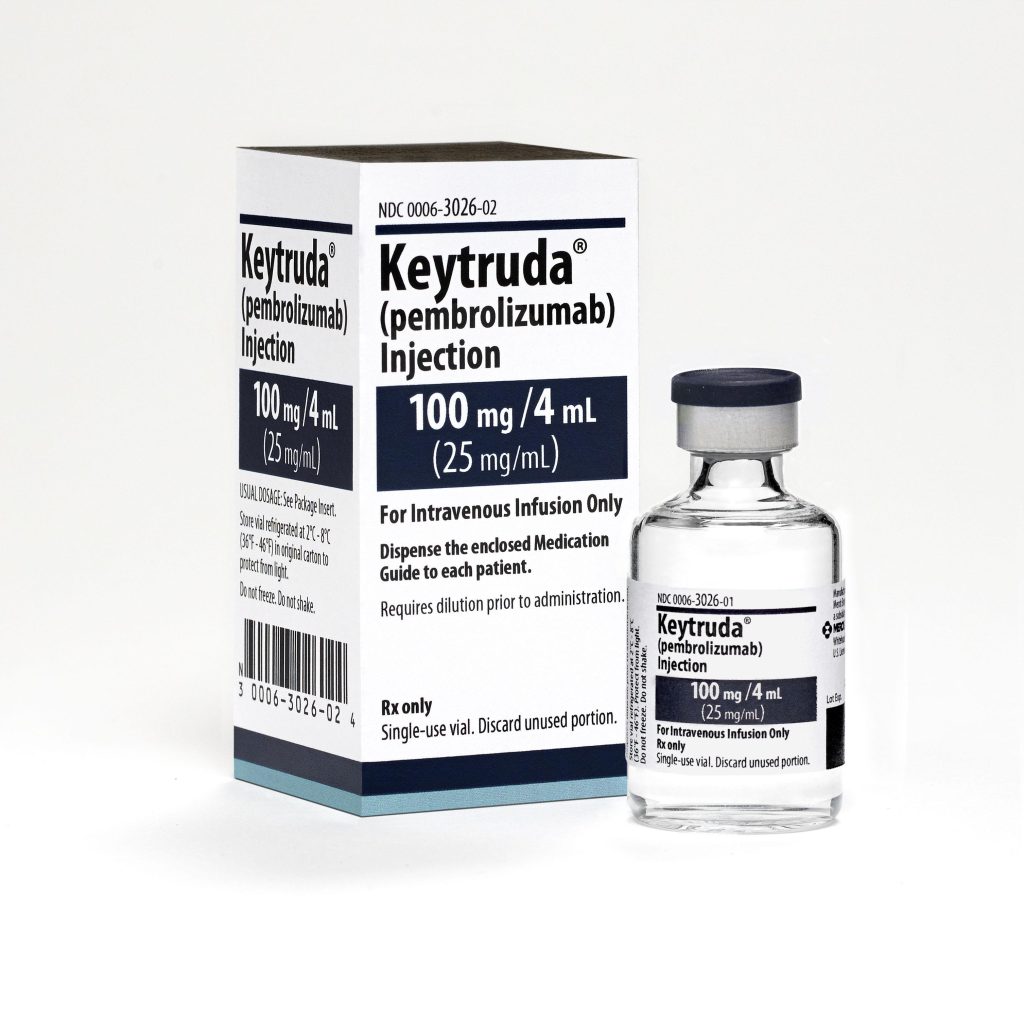
Pembrolizumab + chemotherapy — combined cancer treatment
What is pembrolizumab + chemotherapy in simple words
Pembrolizumab combined with chemotherapy — two different approaches to fighting cancer running at the same time.
Pembrolizumab works on the immune system. It removes a suppressive signal that some tumours use to stay hidden. Chemotherapy works differently — it targets rapidly dividing cells directly, regardless of how visible they are to the immune system.
Running them together is not just about being more aggressive. There is a specific reason: chemotherapy can make tumour cells more recognisable to the immune system. That can amplify what the immunotherapy achieves. At least in theory. In practice, how much this matters varies considerably from patient to patient.
This combination tends to come up when immunotherapy alone is not expected to be enough — either because the tumour’s biology suggests a lower likelihood of response to immunotherapy on its own, or because the disease is growing fast enough that a slower-building immune response is not adequate.
How this combination works
Pembrolizumab blocks a receptor on immune cells that some tumours exploit to switch those cells off. When that block is removed, immune cells can start responding to the cancer again.
Chemotherapy destroys cells that divide rapidly — which cancer cells do. As those cells break apart, they release material that can alert immune cells to the tumour’s presence. This is thought to enhance the immune response that pembrolizumab is enabling.
The two approaches complement each other from opposite directions. Neither replaces the other. That is the rationale for combining them.
What conditions this combination is used for
Pembrolizumab combined with chemotherapy is used across several cancer types:
- lung cancer — advanced disease, across a range of biomarker profiles;
- a subtype of breast cancer that lacks hormone receptors and does not overexpress a certain growth protein;
- stomach and oesophageal cancers;
- cervical cancer;
- cancer of the bile ducts;
- selected cases of uterine cancer.
In lung cancer, adding chemotherapy extended the reach of immunotherapy to patients who would not have been strong candidates for it alone — particularly those whose tumours showed lower levels of the protein the immune system uses to identify cancer cells. That was a meaningful clinical expansion.
For the breast cancer subtype mentioned above, this combination was the first immunotherapy-based approach to show meaningful benefit in a disease with limited systemic options. The fact that it required a specific biomarker result to qualify made patient selection important.
Even the same diagnosis in two patients can lead to different decisions. Stage, molecular profile, what treatment has already been tried — all of it shapes the plan.
When this combination may be especially relevant
It tends to come up when:
- lung cancer is advanced and a biomarker test shows a result that does not support immunotherapy alone;
- breast cancer is of a specific subtype and has spread, with a certain biomarker present;
- stomach or oesophageal cancer requires first-line systemic treatment;
- cervical cancer has recurred after prior treatment;
- the disease is progressing too fast for a single-agent immunotherapy response to keep up.
I always explain the reasoning before starting. A patient who understands why two drugs are being given together tends to manage the experience better — particularly when side effects from both overlap in the early cycles.
Sometimes this decision is obvious from the test results. Sometimes it is a more nuanced call between two approaches that each have legitimate support.
What needs to be checked before starting treatment
Before this combination is considered, the oncologist will typically want to assess:
- tumour type and tissue characteristics;
- disease stage and how far it has spread;
- a specific biomarker result that influences immunotherapy eligibility;
- whether certain genetic changes are present in lung cancer — some of these mean a different drug class should come first;
- growth receptor status in stomach and breast cancer;
- molecular features that affect sensitivity to immunotherapy;
- organ function — kidneys, liver, heart, bone marrow;
- prior treatment history;
- history of autoimmune conditions;
- overall functional status.
The genetic change question in lung cancer is one I raise with every patient before discussing this regimen. Certain mutations mean a targeted drug works considerably better than immunotherapy with chemotherapy — and starting in the wrong order can cause harm. The sequence of treatment is not a minor detail.
How treatment is carried out
Pembrolizumab is given intravenously, usually every three weeks. The chemotherapy drugs and their schedule vary depending on the cancer type. In most protocols both run together for an initial phase, after which pembrolizumab continues alone.
Monitoring throughout treatment:
- blood count at every cycle — chemotherapy affects bone marrow and this needs tracking;
- liver and kidney function;
- thyroid levels at set intervals;
- imaging to assess how the cancer is responding;
- watching for immune-related reactions from pembrolizumab;
- watching for chemotherapy-specific reactions at the same time.
Two overlapping toxicity profiles require more attentive monitoring than either drug alone. Fatigue from chemotherapy and fatigue from immune activation feel similar but have different management approaches. I ask patients to keep a simple symptom log between visits. It makes a real difference to clinical decision-making.
Possible side effects
Side effects can come from both components:
- fatigue — from both drugs, often more pronounced than with either alone;
- nausea and reduced appetite — mainly from chemotherapy;
- low blood counts;
- hair loss — depending on which chemotherapy agents are used;
- skin rash or itching — immune-related;
- diarrhoea;
- thyroid going out of balance;
- lung inflammation;
- liver enzyme changes;
- numbness or tingling in hands or feet — with certain chemotherapy agents;
- rarely — serious cardiac or neurological involvement.
The challenge with combination treatment is distinguishing which drug is causing which side effect. Diarrhoea might be from chemotherapy. It might be immune-related colitis, which is managed very differently. Getting the source right changes the response. That is one reason close monitoring matters so much with this approach.
When to contact a doctor urgently
Do not wait if any of the following develop:
- fever — especially when blood counts are expected to be low;
- worsening shortness of breath;
- chest pain;
- severe or rapidly worsening diarrhoea;
- blood in the stool;
- yellowing of the skin or eyes;
- mouth sores severe enough to prevent eating;
- confusion or rapidly increasing weakness;
- sudden significant deterioration.
Fever during the low blood count phase of a chemotherapy cycle is not something to monitor at home. It can escalate quickly. I tell every patient the same thing: temperature above 38 degrees means calling the clinic that day. Not waiting to see how the evening goes.
Why this combination is not right for everyone
What affects whether this is the right approach:
- certain genetic changes in lung cancer — a targeted drug should come first in those cases;
- biomarker result high enough to support immunotherapy alone — adding chemotherapy may increase toxicity without proportional added benefit;
- organ function that limits chemotherapy tolerance;
- active severe autoimmune disease;
- prior organ transplant;
- poor overall functional status.
Sometimes pembrolizumab alone is the better choice. Adding chemotherapy significantly increases the treatment burden. If the biology of the tumour suggests immunotherapy alone can work — that is often the cleaner, more tolerable path. More intensive is not always more appropriate.
Can the combination be modified or extended
Most protocols have a defined combination phase — typically a few months. After that, pembrolizumab continues alone, often for up to two years or until progression or unacceptable side effects.
Whether chemotherapy can be reintroduced later, or whether the protocol can be adjusted for tolerability, depends on how the cancer has responded and what the patient can manage. These decisions are made one at a time, based on the clinical picture at that point.
What ‘no quick response’ means
Chemotherapy often produces visible scan changes relatively quickly. Immunotherapy builds more slowly. With both running together, early imaging can look mixed — some areas responding, others unchanged.
I look at imaging alongside symptoms, blood markers and the overall trend over several cycles. One scan captures a moment. It rarely tells the whole story. And I always say this before the first scan, not after a disappointing result.
Oncology consultation for pembrolizumab + chemotherapy in Israel
At Tel Aviv Medical Clinic in Israel, consultations are available on combined immunotherapy and chemotherapy regimens for lung cancer, gastric cancer, breast cancer subtypes, cervical cancer and other indications. Oncologists at the clinic follow ESMO and NCCN guidelines and have experience selecting between combination and single-agent approaches based on biomarker profile and clinical situation.
In Tel Aviv Medical Clinic, you can discuss:
- whether the combination is more appropriate than immunotherapy alone for your specific situation;
- biomarker testing and how results affect the treatment decision;
- which chemotherapy drugs are paired with pembrolizumab in your cancer type;
- second opinion on a proposed treatment plan;
- managing side effects during combination treatment;
- treatment options available in Israel and internationally.
Sometimes the question is not which treatment to choose — but how to interpret the test results that determine whether a combination is appropriate at all.
Frequently Asked Questions — Dr. Stefanskoy
- Why add chemotherapy if immunotherapy already works?
Because it does not work equally well in every patient or tumour profile. When the relevant biomarker level is lower, immunotherapy alone tends to produce less benefit. Chemotherapy fills that gap — it acts through a different mechanism and does not depend on that biomarker.
There is also a synergistic element. As chemotherapy breaks down tumour cells, it releases material that can help immune cells identify the cancer more clearly. Whether that enhancement is meaningful in a given patient is something the clinical response reveals. But it is the rationale behind offering both.
- How do I know if the combination is working?
Response is assessed through imaging at defined intervals — the timing depends on the protocol. Most often a formal assessment happens after two to three cycles.
Symptoms matter too. Sometimes a patient feels meaningfully better before any scan confirms it. Sometimes scans look unchanged while pain or other symptoms improve. I look at both together. One imaging result is a data point, not a conclusion.
- Is the combination significantly harder to tolerate than immunotherapy alone?
Generally yes. Chemotherapy adds its own side effects on top of the immune-related ones. Fatigue tends to be more pronounced. Nausea, low blood counts and potential hair loss are effects that do not occur with immunotherapy alone.
That said, many patients manage it reasonably well with proper supportive care — anti-nausea medication, growth factors for blood counts, and close monitoring. The key is reporting side effects early rather than waiting until they become severe.
- Does the biomarker level still matter when chemotherapy is added?
Yes — but differently than with immunotherapy alone. With a single agent, the biomarker level often determines whether the drug is appropriate at all. With the combination, the threshold for using immunotherapy is lower because chemotherapy compensates for some of what immunotherapy alone cannot achieve.
How much the biomarker matters varies by cancer type. In some protocols it is used across all levels. In others it still plays a role. I always explain what a specific result means for the specific cancer and protocol being considered.
- What happens if the combination stops working?
That depends on which drugs were used, how long the response lasted, and the cancer type. A different chemotherapy combination is often the next step. In some cases, molecular testing reveals a mutation that was not previously actionable — and a targeted drug becomes relevant.
Reintroducing immunotherapy after progression is sometimes considered, particularly after a meaningful initial response and a significant treatment break. This is not standard across all cancers — it is decided case by case.
- Can this be used with an autoimmune condition?
It requires careful assessment. The immunotherapy component activates the immune system, which can trigger flares of existing autoimmune conditions. Chemotherapy adds further complexity to that picture.
I always want to know how active the autoimmune condition currently is, what the patient is taking to manage it, and whether there have been serious episodes before. Sometimes treatment is possible with additional monitoring. Sometimes a different approach is more appropriate. There is no standard answer.
- How long does the combination phase last?
In most protocols, the combination phase runs for four to six cycles — roughly three to four months. After that, immunotherapy typically continues alone for a defined period or until progression.
I always explain this at the start. The combination phase is the most intensive period — when most side effects occur and when monitoring is most active. Knowing what to expect makes it more manageable.
Important information
Pembrolizumab combined with chemotherapy is considered only after a full assessment of diagnosis, disease stage, biomarker profile, organ function and overall patient condition.
Do not start, stop or change treatment without consulting your treating physician.
For a consultation in Israel:
📞 +972-73-374-6844
📧 [email protected]
💬 WhatsApp: +972-52-337-3108