


 Contact Us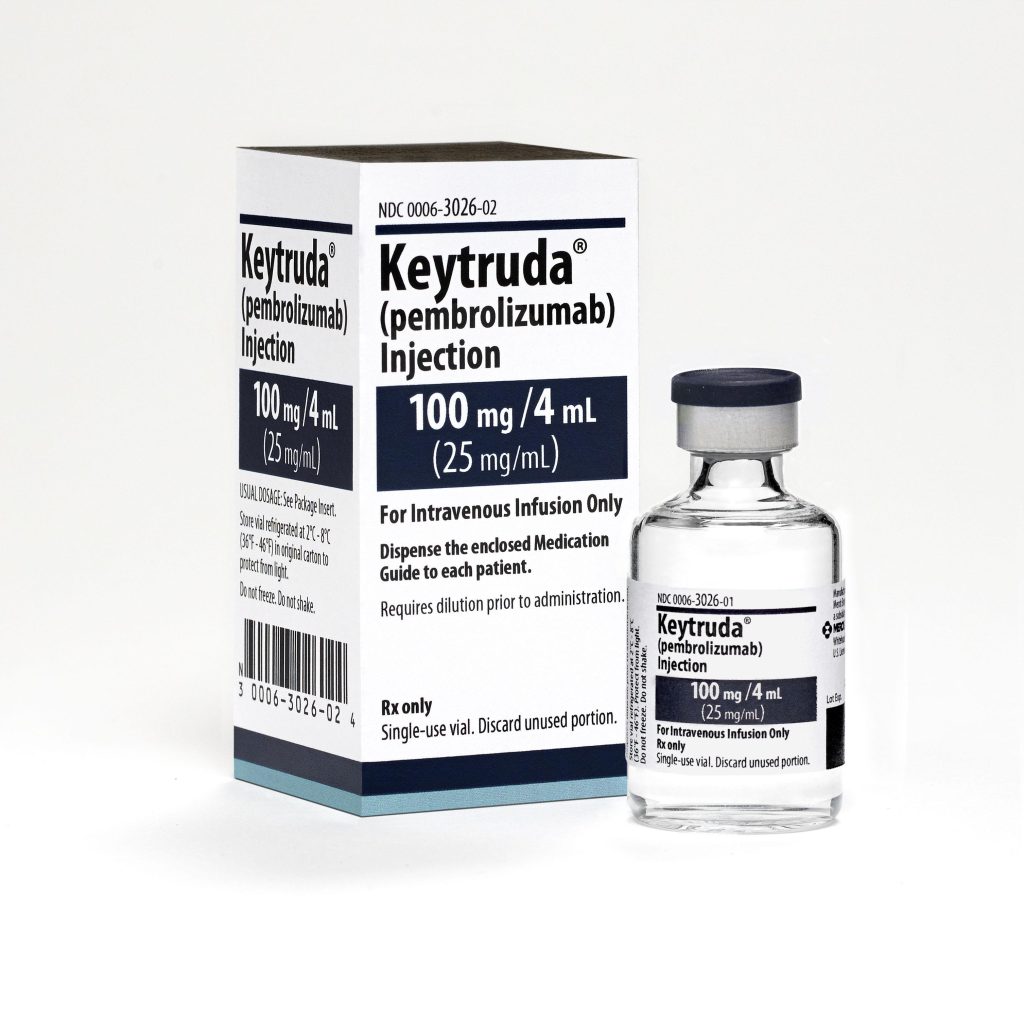
Pembrolizumab (Keytruda) — immunotherapy for cancer treatment
What is pembrolizumab (Keytruda) in simple words
Pembrolizumab is the medicine many patients know as Keytruda. It is used in oncology, but it is not a classic chemotherapy drug.
Its work is more indirect. The drug tries to keep certain immune cells from being switched off too easily. When that happens in the right tumour, the immune system may begin to notice cancer cells it had been tolerating for too long.
That sounds simple. In real life it is not. Keytruda is only useful when the diagnosis, the test results and the patient’s condition all point in the same direction. A drug name alone is never enough.
How pembrolizumab works
T-cells have built-in brakes. The body needs those brakes, otherwise immunity would damage normal tissue. Some cancers borrow that same safety system and use it to stay quiet in front of the immune system.
Pembrolizumab blocks PD-1, one of those brake signals. With that signal blocked, T-cells may stay more active around the tumour.
The difficult part is selection. A useful PD-L1 result may strengthen the case. MSI or mismatch-repair findings may matter even more in some cancers. In other patients, a driver mutation or a fragile medical condition can push the plan elsewhere.
What conditions pembrolizumab is used for
Keytruda can be discussed in several cancer types. The list is broad, but the decision is usually quite narrow once the actual reports are reviewed. It may come up in:
- lung cancer where immune testing changes the plan;
- melanoma;
- kidney cancer;
- urothelial cancer;
- head and neck tumours;
- triple-negative breast cancer;
- some stomach and oesophageal tumours;
- endometrial or cervical cancer;
- bowel cancer with repair-system failure;
- selected skin cancers and lymphomas.
This list is not a shortcut to treatment. Two people with the same cancer name can need very different therapy. Stage, symptoms, tumour pace and biomarker results change the answer.
When pembrolizumab may be especially relevant
The drug becomes more interesting when the tumour gives the oncologist a reason to believe that immune treatment might help. That reason can come from the marker profile, from the treatment line, or from the type of cancer itself.
Situations where the discussion is more realistic include:
- a meaningful PD-L1 result;
- MSI-H or dMMR biology;
- advanced cancer needing whole-body treatment;
- high-risk disease after local treatment;
- progression after earlier therapy;
- a plan where chemotherapy is being added.
In lung cancer, PD-L1 can strongly influence the first plan. In bowel cancer, repair-system testing may carry the conversation. In breast, stomach or gynaecologic cancers, the answer is often more layered. I would not ask only “Can I receive Keytruda?” I would ask, “What exactly in my report makes it sensible, or not sensible?”
What needs to be checked before starting treatment
Before pembrolizumab is placed into a treatment plan, the oncologist needs the whole file. A single positive marker does not replace clinical judgement.
Usually I would want to review:
- pathology report;
- current stage;
- recent CT, MRI or PET-CT;
- PD-L1 result, if relevant;
- MSI or MMR status;
- driver mutations when they matter;
- previous treatments;
- blood tests;
- liver, kidney and thyroid function;
- autoimmune and transplant history.
Medication history also matters. Long-term steroids, immune-suppressing drugs, recent infections or active inflammatory disease can change the risk. Sometimes the right answer is not “yes” or “no”, but “not yet, not without more information”.
How treatment is carried out
Pembrolizumab is given as an infusion in an oncology unit. The schedule depends on the exact regimen and on whether it is used alone or with other treatment.
During treatment, the team usually watches:
- blood count;
- thyroid tests;
- liver markers;
- kidney markers;
- breathing symptoms;
- bowel changes;
- skin and joint complaints;
- planned scans.
A good visit is not only a scan review. New cough, diarrhoea, rash, unusual tiredness or headache can be the first sign that immunity is irritating normal tissue. Small changes are worth mentioning early.
Possible side effects
Many patients expect immunotherapy to feel easier than chemotherapy. Sometimes it does. But easier is not the same as harmless.
The main issue is immune inflammation. It can involve different organs, and it may appear after treatment has already started calmly.
Possible problems include:
- tiredness;
- itching or rash;
- loose stools;
- new cough;
- breathlessness;
- joint or muscle pain;
- thyroid changes;
- liver irritation;
- hormone-gland problems.
Most reactions are easier to manage when they are caught early. The dangerous pattern is waiting until a symptom becomes impossible to ignore.
When to contact a doctor urgently
The treating team should be contacted quickly if any of these appear:
- worsening breathlessness;
- persistent cough;
- diarrhoea that does not settle;
- blood in the stool;
- yellow skin or very dark urine;
- severe weakness;
- confusion;
- high fever;
- chest discomfort;
- rapid general decline.
The patient does not have to diagnose the problem. It may be infection, cancer progression, a reaction to treatment or something unrelated. With this type of therapy, checking early is simply safer.
Why pembrolizumab is not right for everyone
Keytruda is famous, and that creates a problem. A well-known drug can start sounding like a universal answer. It is not.
The plan may change because of:
- a targetable mutation;
- low chance of immune benefit;
- active autoimmune disease;
- previous organ transplant;
- poor performance status;
- uncontrolled infection;
- serious lung or heart illness;
- severe toxicity from earlier immunotherapy.
There are patients who need Keytruda with chemotherapy rather than alone. Others need surgery, radiation, targeted treatment or a trial before immunotherapy is considered. The best plan is not the most modern-sounding one. It is the one that fits the biology and the person sitting in front of the doctor.
Can pembrolizumab be combined with other treatments
Yes. In many cancers pembrolizumab is not used by itself. It may be paired with chemotherapy or another systemic treatment. In some situations it is part of treatment around surgery.
This has to be chosen carefully. Adding drugs can improve control in the right setting, but it can also add toxicity. I usually want two questions answered clearly: what is the reason for this exact combination, and is the patient strong enough for it?
What “no quick response” to treatment means
Immunotherapy can be slow. A patient may feel no clear difference after the first infusion. The first scan may show only stability. Sometimes one area improves while another is less convincing.
That does not automatically mean failure. It also does not give permission to ignore clear deterioration. The decision has to combine scans, symptoms, blood results, tumour pace and general condition. One image matters. It is not always the whole story.
Oncology consultation for pembrolizumab (Keytruda) in Israel
At Tel Aviv Medical Clinic in Israel, patients can discuss whether pembrolizumab has a reasonable place in their treatment plan.
A consultation may help if you need to:
- review PD-L1, MSI or MMR results;
- understand the treatment line;
- compare single-drug and combination plans;
- check a proposed first-line approach;
- discuss options after progression;
- prepare questions for your oncologist.
We do not replace the treating physician and we do not prescribe treatment remotely. The goal is to make the reasoning clearer, especially when the report shows several possible paths and the patient needs to understand which one is realistic now.
Frequently Asked Questions — Dr. Stefanskoy
- Is Keytruda chemotherapy?
No. It is a different kind of cancer treatment. Chemotherapy mainly attacks fast-growing cells. Keytruda works through immune control. It removes one of the signals that can keep T-cells too quiet around a tumour.
That difference matters because the side effects are different too. Some people feel better on immunotherapy than they expected. Others develop immune inflammation that needs fast attention. I would never call it a soft option. I would call it a different option.
- Does a high PD-L1 result mean Keytruda will work?
No. A strong PD-L1 result can support the decision in some cancers, especially in lung cancer. But it is not a promise. I have seen patients with encouraging markers do less well than expected, and patients with a less neat report still benefit when the full picture made sense.
The marker is one part of the conversation. The cancer type, disease pace, symptoms, other mutations and the patient’s general condition still matter.
- Why is Keytruda sometimes combined with chemotherapy?
Because the two treatments are trying to do different things. Chemotherapy may reduce tumour burden more quickly. Pembrolizumab is aimed at changing the immune environment around the cancer.
The combination is reasonable only when the evidence and the patient’s condition support it. I do not add treatment just because the situation feels serious. Extra treatment has to bring a real advantage, not only more pressure on the body.
- How soon can a response be seen?
I try not to promise an early visible response. Some patients feel better within weeks. Others only show stable disease at first, and that may still be meaningful if the cancer had been moving quickly before.
The important thing is balance. We should not stop too early when the patient is stable and the picture is believable. But we should not continue blindly if symptoms, scans and blood results are all moving in the wrong direction.
- Can Keytruda be used with autoimmune disease?
Sometimes, but this is never a casual decision. If the immune system is already attacking the body, blocking an immune brake can make that problem flare.
I would want to know which autoimmune disease is involved, how active it is, what treatment the patient takes and which organs have been affected. Often the relevant specialist should be part of the discussion before the first infusion.
- What should a patient do if side effects appear?
Report them early. A mild rash, cough or bowel change may turn out to be nothing serious. But during immunotherapy we do not guess from a distance for too long.
If a reaction is found early, the team often has room to pause, treat and reassess. Waiting is what makes many problems harder. I would rather receive a cautious call than meet the patient late with a severe complication.
- What happens if Keytruda stops helping?
The next step depends on the cancer and on what has already been used. It might be chemotherapy, targeted treatment, radiation to a specific area, another combination or a clinical trial.
Restarting immunotherapy later is sometimes discussed, but it is not a universal answer. I would look at the length of benefit, the reason treatment stopped and whether toxicity was part of the story.
Important information
This page is for general medical orientation only. It is not a personal treatment recommendation. Pembrolizumab should only be discussed after an oncologist reviews the diagnosis, stage, biomarkers, previous treatment and the patient’s overall condition.
Do not start, stop or change cancer treatment without speaking to your treating physician.
To arrange an oncology consultation regarding immunotherapy and the possible role of pembrolizumab in Israel:
📞 +972-73-374-6844
📧 [email protected]
💬 WhatsApp: +972-52-337-3108