


 Contact Us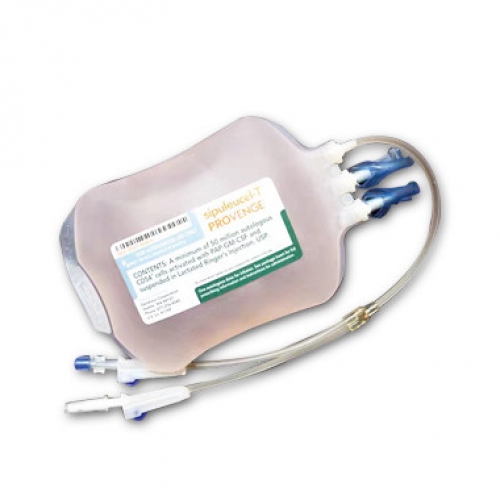
Sipuleucel-T (Provenge) — a prepared-cell option in prostate cancer care
What is sipuleucel-T (Provenge) in simple words
Sipuleucel-T, sold under the name Provenge, is not a tablet and not chemotherapy. It is a treatment made from a patient’s own immune cells.
The idea is quite specific. Blood cells are collected, prepared outside the body, and then returned by infusion. The aim is to make the immune system pay closer attention to prostate cancer cells. It is a quiet sort of treatment, not usually the kind that makes a tumour shrink on the next scan.
That is also why the timing matters. Provenge is usually discussed when prostate cancer has already spread and is no longer being controlled by hormone treatment, but the person is still feeling fairly well.
How sipuleucel-T works
With Provenge, treatment begins before the infusion. The important part happens in the collection and preparation step.
Some immune cells are taken from the blood. In the laboratory they are exposed to a signal connected with prostate cancer, together with a substance that helps wake those cells up. After that, the prepared cells are infused back into the patient.
This does not work like a standard drug circulating in the bloodstream every day. It is closer to a short immune training course. The body is being nudged to recognise something it had not been reacting to strongly enough.
The effect is usually judged over time. PSA may not fall. A scan may not change much at first. That can feel confusing, but with this treatment the goal is not always an early visible response.
What conditions sipuleucel-T is used for
Provenge is mainly considered in prostate cancer with a very particular clinical picture:
- prostate cancer that has spread beyond the prostate;
- disease growing despite hormone control;
- no symptoms or only mild cancer-related symptoms;
- a patient well enough to complete cell collection and infusions;
- no urgent need for fast tumour shrinkage.
The last point is important. If someone has severe pain, rapidly worsening disease, or organ problems from tumour growth, the oncologist may need a faster-acting option.
When sipuleucel-T may be especially relevant
This treatment tends to enter the conversation at a narrow window. Too early, it may not be needed. Too late, the disease may be moving too quickly for this approach to make sense.
It may be worth discussing when:
- metastatic prostate cancer is confirmed;
- testosterone is already kept low;
- PSA or scans show progression;
- daily life is still mostly preserved;
- pain is absent or limited;
- the patient wants a non-chemotherapy option.
A man with slow progression and good general condition is a very different situation from someone arriving with heavy symptoms and urgent clinical pressure. Same cancer category, different decision.
What needs to be checked before starting treatment
Before recommending Provenge, the doctor needs more than a diagnosis name. The practical question is whether the timing makes sense for a cell-based approach.
Usually the review includes:
- current PSA pattern;
- recent CT, bone scan, PET-CT or MRI;
- sites of metastatic disease;
- level of cancer-related symptoms;
- current hormone treatment;
- previous systemic therapy;
- blood counts and chemistry;
- heart and vascular history;
- fitness for leukapheresis;
- venous access.
Leukapheresis is not a small detail. If veins are difficult or the patient is frail, the collection step can become a real part of the decision, not just a technical appointment.
How treatment is carried out
Provenge is given in a planned sequence. First comes cell collection. A few days later, the prepared product is returned by intravenous infusion. This is repeated until the course is complete.
In practice, the patient should be ready for:
- a collection visit before each dose;
- separate infusion appointments;
- identity checks before infusion;
- short observation after treatment;
- coordination with the treatment centre;
- possible temporary fatigue after visits.
The schedule matters because the product is made individually. It is not something taken from a shelf at the last minute. If an appointment is missed, the team needs to know quickly.
Possible side effects
Most reactions with Provenge happen around the collection or infusion days. They are often short-lived, but they still need attention because some patients have heart, vascular or age-related risks.
Possible effects include:
- chills or shaking;
- feverish feeling;
- tiredness;
- headache;
- nausea;
- back or joint discomfort;
- dizziness;
- breathing discomfort;
- skin flushing;
- weakness after the visit.
The collection procedure can also leave a person drained for the day. Some patients describe it as less dramatic than chemotherapy, but that does not mean it is nothing.
When to contact a doctor urgently
Do not wait for the next routine appointment if symptoms feel unusual after treatment.
Call the medical team promptly if there is:
- chest pressure;
- trouble breathing;
- fainting or near-fainting;
- new weakness on one side;
- confusion;
- high fever;
- severe chills that do not settle;
- swelling or pain near a line site;
- rapid worsening after an infusion.
Most infusion reactions are manageable. The unsafe part is pretending that a new symptom is “probably normal” when it clearly feels different.
Why sipuleucel-T is not right for everyone
Provenge has a specific role. It is not used simply because prostate cancer has spread.
It may be less suitable when:
- symptoms are already significant;
- disease is moving quickly;
- there is heavy tumour burden in vital organs;
- urgent tumour reduction is needed;
- collection procedures are unsafe;
- overall condition is poor;
- another treatment has clearer priority.
This is not a failure of the drug. It is a question of timing. Some prostate cancer treatments are chosen because the doctor needs an answer soon. Provenge is usually chosen when there is still room to think ahead.
Can sipuleucel-T be combined with other treatments
Most patients continue background hormone control while decisions about additional therapy are made. Other prostate cancer medicines may also be part of the overall plan, but not everything has to be started at once.
The order is often more important than patients expect. If chemotherapy, radioligand therapy, PARP inhibition or another systemic option is being considered, the oncologist has to decide where Provenge fits, if it fits at all.
There is no useful “one-size” sequence here. A rising PSA alone does not tell the whole story. Symptoms, scan tempo, previous drugs and patient preference all change the plan.
What “no quick response” to treatment means
This is one of the hardest parts to explain. Provenge is not usually chosen because the doctor expects a dramatic early scan change.
A patient may complete treatment and still see PSA behave in a way that feels disappointing. That does not automatically mean the treatment was pointless. With this kind of prepared-cell therapy, benefit is often discussed in broader survival terms, not in simple “the number went down” language.
Still, the disease must be watched carefully. If symptoms increase or scans show clear progression, the next treatment decision should not be delayed just because an immune treatment was given.
Oncology consultation for sipuleucel-T (Provenge) in Israel
At Tel Aviv Medical Clinic in Israel, an oncology consultation can help clarify whether sipuleucel-T belongs in the treatment plan for metastatic prostate cancer.
This may be useful if you need to:
- review the current stage of disease;
- understand the role of Provenge;
- compare it with other prostate cancer options;
- discuss timing before symptoms increase;
- check whether cell collection is realistic;
- prepare questions for the treating oncologist.
We do not replace the treating physician. The purpose is to make the reasoning clearer, especially when several reasonable paths are being discussed at the same time.
Frequently Asked Questions — Dr. Stefanskoy
- Is Provenge the same as a cancer vaccine?
Patients often use that word, and I understand why. Provenge does train the immune system in a certain direction. But I usually avoid explaining it like a simple vaccine, because that creates the wrong expectation. It is made individually from the patient’s own cells, and the aim is not immediate protection in the usual sense. It is a treatment for a cancer that is already present.
- Will PSA go down after sipuleucel-T?
Sometimes it may, but I would not promise that. PSA is useful, but with Provenge it can be a frustrating marker. I look at PSA together with scans, symptoms and the whole pace of the disease. If we focus only on one blood number, we can easily misunderstand what is happening.
- Why is Provenge usually used when symptoms are mild?
Because it is not a fast rescue treatment. If a patient has major pain, worsening organ function or very quick progression, I usually need a therapy that can act more directly. Provenge fits better when the patient is still stable enough and we are trying to use time wisely before the disease becomes more aggressive.
- Is cell collection difficult?
For some men it is straightforward. For others it is tiring or technically awkward. The blood has to be processed through a collection system, and good venous access matters. Before recommending treatment, I always want to know whether the patient can actually complete the procedure safely. This practical part is easy to underestimate.
- Can Provenge be used after chemotherapy?
It depends on the full story. Previous treatment does not automatically rule it out, but the timing has to make sense. If the disease has become symptomatic or fast-moving, another option may be more appropriate. I would review the scans, PSA trend, current symptoms and blood results before answering.
- Does Provenge replace hormone therapy?
No. Hormone control usually remains part of the background treatment in this stage of prostate cancer. Provenge is discussed as an added immune-based approach, not as a substitute for keeping testosterone suppressed. Patients sometimes think one treatment simply replaces another, but prostate cancer care is rarely that linear.
- What should a patient ask before agreeing to treatment?
I would ask three things. Is this the right moment for Provenge? What are the other reasonable options now? And what will we do if the next scan or PSA trend looks worse? A good plan should not end with the infusion schedule. It should also explain the step after that.
Important information
This page is for general medical orientation only. It is not a personal treatment recommendation. Sipuleucel-T (Provenge) should be discussed with an oncologist who has reviewed the diagnosis, disease course, imaging, symptoms, previous treatment and general condition of the patient.
Do not start, stop or change prostate cancer treatment without speaking with your treating physician.
To arrange an oncology consultation regarding Provenge treatment planning and prostate cancer care in Israel:
📞 +972-73-374-6844
📧 [email protected]
💬 WhatsApp: +972-52-337-3108