


 Contact Us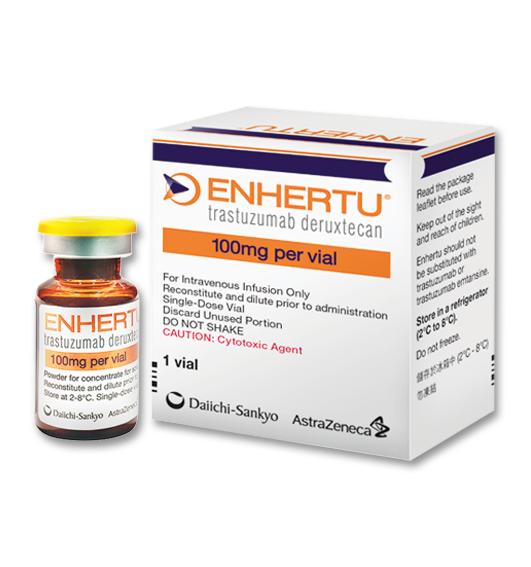
Trastuzumab deruxtecan (Enhertu) — targeted ADC treatment for HER2-driven tumors
What Enhertu is in simple terms
Enhertu is a targeted cancer medicine built around a simple idea: use a HER2-seeking antibody as a courier, then let it carry a strong anti-cancer payload into the right cells.
It is not regular chemotherapy poured through the whole body. It is not plain trastuzumab either. The important part is the delivery system. The antibody helps the medicine reach tumor cells that show enough HER2 activity to make this approach reasonable.
That does not make the decision automatic. A doctor still has to look at the tissue report, the cancer type, earlier medicines, breathing history, heart function and how strong the patient is today.
How trastuzumab deruxtecan works
Some tumors carry HER2 on the cell surface. In a few cancers that signal is very loud. In others it is present at a lower level. Enhertu uses that marker as a doorway.
Once the antibody attaches, the cell pulls the drug inside. The payload is then released and damages the cell from within. A small amount can also affect nearby tumor cells, which is why this medicine may be discussed even when the HER2 signal is not at the highest level.
This is why the pathology wording matters. A strong HER2 result, a borderline result, a low-level result and a true zero result do not lead to the same conversation.
What conditions trastuzumab deruxtecan is used for
Enhertu may be considered when the tumor biology points toward HER2 and the treatment history makes an antibody-drug conjugate a sensible option. This may include:
- breast tumors with a clearly strong HER2 result;
- breast tumors where HER2 is present at a lower level;
- stomach or gastro-oesophageal junction tumors with a confirmed HER2 finding;
- lung tumors where an ERBB2 change is driving the disease;
- selected solid tumors after review by an oncology team.
The name of the diagnosis is only the first line of the story. Two patients can both have a HER2 finding and still need different plans. One may be ready for Enhertu. Another may need a different HER2 medicine first. A third may have a lung risk that makes this choice unsafe.
When Enhertu may be especially relevant
Doctors usually discuss Enhertu after earlier systemic treatment, or when the HER2 report gives a clear reason to move toward an ADC. Situations often include:
- previous HER2-directed treatment no longer controls the disease;
- a breast tumor with some HER2 staining after other options;
- gastric or junction disease after the first plan has stopped helping;
- a lung tumor with an ERBB2 driver change;
- a tumor-board discussion where several choices are possible.
The word “HER2” does not answer everything. The timing, the exact lab result and what has already been tried usually matter more than the label itself.
What should be checked before treatment
Before starting Enhertu, the oncology team usually reviews the whole situation, not just one test. The checklist may include:
- the original HER2 report and whether it should be reviewed;
- cancer type, stage and current spread;
- previous treatment and the length of benefit;
- any cough, breathlessness or older lung diagnosis;
- heart function, especially after earlier HER2 medicines;
- blood counts and liver tests;
- daily functioning and ability to tolerate treatment.
The lung review is not a small formality. This medicine can inflame lung tissue. At the beginning that may look like a mild cough or slightly heavier breathing. Knowing the baseline helps the doctor react faster if something changes.
How treatment is given
Enhertu is given by intravenous infusion, usually once every three weeks. The infusion visit may look routine, but the monitoring around it is important.
During treatment, the team usually follows:
- new breathing symptoms;
- blood counts;
- liver tests;
- nausea, appetite and weight;
- heart function when needed;
- CT or PET-CT results.
The first scan does not always give a neat answer. Sometimes the useful sign is that the cancer has stopped speeding up. Sometimes the next scan gives the clearer picture. The doctor reads the images together with symptoms and blood work.
Possible side effects
Enhertu can be a strong option for the right patient, but it is not a light medicine. It is better to discuss possible reactions before the first infusion than to discover them late.
Possible reactions include:
- nausea or vomiting;
- tiredness;
- hair thinning or hair loss;
- low white blood cells;
- reduced appetite;
- diarrhea or constipation;
- changes in liver blood tests;
- heart-function changes;
- lung inflammation.
Nausea can be stronger than people expect, so anti-nausea medication is often planned from the first cycle. The breathing risk deserves separate attention: a new cough should not be ignored for several weeks before the doctor hears about it.
When to contact the doctor urgently
The patient should contact the treatment team promptly if any of the following appear:
- new cough;
- shortness of breath;
- chest pain or tightness;
- fever;
- vomiting that does not settle;
- severe weakness;
- signs of infection;
- fast heartbeat or swelling in the legs.
Not every symptom will be dangerous. Still, breathing changes during this treatment are taken seriously until the doctor is confident they are not connected to lung inflammation.
Why Enhertu is not suitable for everyone
Enhertu may be the right next step for one patient and a poor choice for another. Reasons can include previous lung disease, weak heart function, pregnancy, frailty, severe toxicity from earlier treatment, or a HER2 result that does not support this approach.
There may also be better alternatives. Some patients need another HER2-directed option. Some need endocrine treatment, chemotherapy, immunotherapy or a different targeted medicine. Newer does not always mean better for this person.
Can Enhertu be combined with other treatments
In routine practice, Enhertu is usually used on its own rather than mixed with several cancer medicines at the same time. Trials may study combinations, but adding another drug is not automatically a better plan.
The reason is practical. More treatment can also mean more toxicity. If nausea, blood counts or lung safety are already concerns, a cleaner regimen may be easier to continue.
What “no quick response” may mean
Many patients hope the first scan will show a dramatic shrinkage. Sometimes it does. Often the first useful sign is quieter: slower growth, stable lesions, fewer symptoms or better markers.
The oncologist usually watches the trend. One scan can frighten a family, but it rarely carries the whole story. The real question is whether the disease is behaving differently than before and whether the patient can safely continue.
Oncology consultation about Enhertu in Israel
At Tel Aviv Medical Clinic, patients can discuss whether trastuzumab deruxtecan fits their HER2 report, cancer type, previous therapy and current condition. This can be useful when the pathology report is unclear, when cancer has returned after earlier HER2 treatment, or when several options are being considered.
A consultation may help clarify:
- whether the HER2 result supports this treatment;
- how to read IHC, FISH, ISH or mutation findings;
- whether lung risk is acceptable;
- which option should come before or after Enhertu;
- whether a biopsy review is worth doing;
- how to compare available treatment paths in Israel.
The aim is not to prescribe treatment through a message. The aim is to understand the medical logic and prepare a clear discussion with the treating oncologist.
Frequently asked questions
- Is Enhertu the same as trastuzumab?
No. Trastuzumab is an antibody against HER2. Enhertu uses a related antibody as the carrier, but it also carries a potent payload that is released after the drug enters the cell. That extra part changes both the purpose of the medicine and the safety issues doctors watch for.
This is why a patient may receive trastuzumab earlier and still be considered for Enhertu later. They are connected treatments, but they are not interchangeable.
- What does a lower HER2 result mean?
It means the tumor shows some HER2 staining, but not enough to be called strongly HER2-positive. In the past, many of these tumors were simply treated as HER2-negative. Enhertu changed the discussion because it can sometimes be useful even when the HER2 signal is modest.
The exact report matters. IHC 1+, IHC 2+ without amplification and IHC 0 are not the same. If the report is old, borderline or taken from a different stage of the disease, a review of the tissue may be helpful.
- Why are lung symptoms taken so seriously with Enhertu?
Because this medicine can irritate lung tissue. It may begin quietly: a cough that was not there before, slightly heavier breathing, or a change the patient might blame on tiredness.
That does not mean every cough is an emergency. It means the doctor should know early. The team may order imaging, pause treatment, or simply follow the symptom more closely. Waiting too long makes lung reactions harder to control.
- Is nausea common with Enhertu?
Yes. Nausea is one of the side effects patients often notice. It can usually be managed, but it is better to plan for it from the first cycle rather than wait until the patient stops eating.
If the first anti-nausea plan is not enough, it can be changed. There is no benefit in quietly losing weight, fluids or strength while pretending the symptom is manageable.
- When will it be clear whether Enhertu is working?
Usually the first serious check is done after a few cycles, often around two to three months. The exact timing depends on the cancer type and the treatment plan.
A response can appear on scans, in tumor markers, or in the way symptoms change. Sometimes stability is already meaningful, especially if the cancer had been growing quickly. The doctor should explain what a useful result would look like for this particular patient.
- Can Enhertu be used after pertuzumab or T-DM1?
Often it can. In cancers driven by HER2, Enhertu is commonly discussed after earlier HER2-directed treatment. The decision depends on which medicines were used, how long they helped, and whether side effects limit the next choice.
The sequence is not random. A short relapse after prior therapy may lead to one plan, while a relapse years later may lead to another. The timeline matters.
- Are there alternatives to Enhertu?
Yes. Depending on the diagnosis, options may include other HER2 medicines, chemotherapy, endocrine treatment, immunotherapy or a different targeted drug. Brain involvement, lung risk and previous toxicity can all change the preferred option.
I would not choose Enhertu just because it is modern. I would choose it when the HER2 result, treatment history and safety profile make it the most sensible next step.
Important information
This page is for general medical education and does not replace a personal oncology consultation. Trastuzumab deruxtecan may be used only after a doctor reviews the diagnosis, HER2 status, previous treatment, lung and heart risks, test results and the patient’s overall condition.
Do not start, stop or change cancer treatment without speaking to the treating oncologist.
For consultation about HER2-targeted treatment and possible use of Enhertu in Israel:
📞 +972-73-374-6844
📧 [email protected]
💬 WhatsApp: +972-52-337-3108